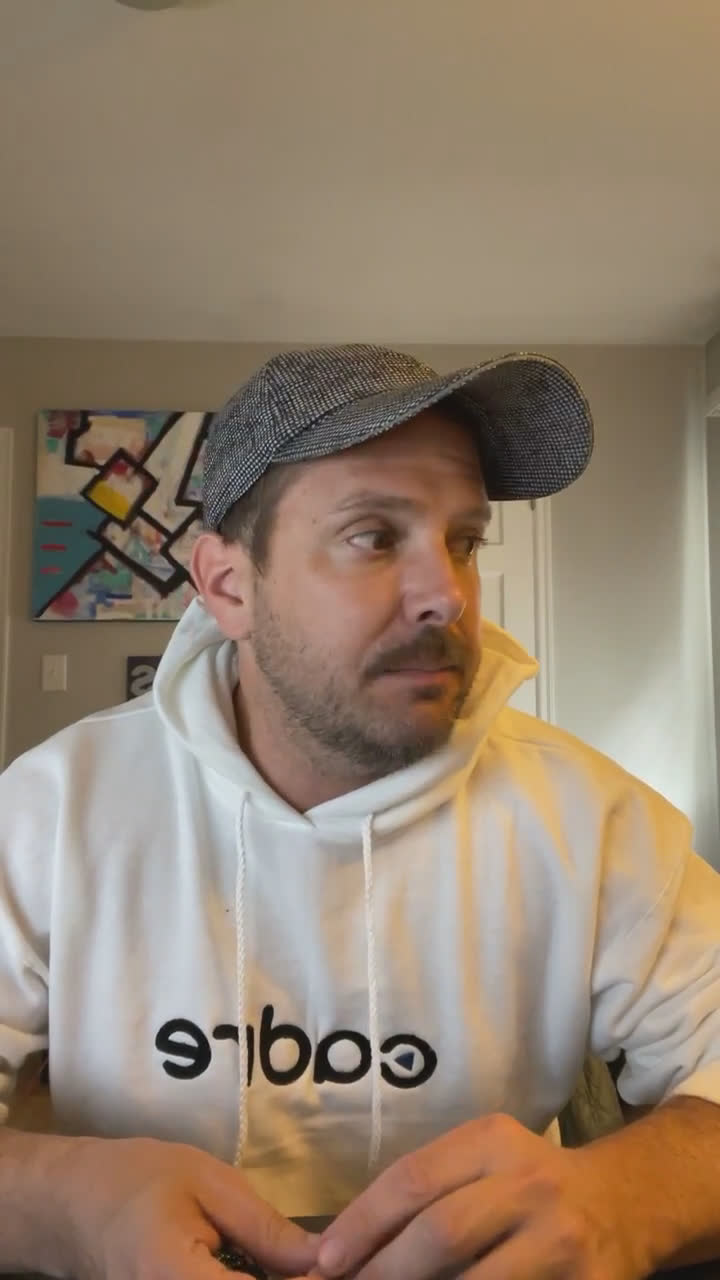
We spend 99% of our time in the role of follower but we only ever work on our leadership muscles…JC shares thoughts and techniques on how to boldly follow like a pro.
Every Monday we talk professional development. We talk about you focusing on ways that you can do better. On Mondays, you've had a really great lineup this morning. But always remember, if you're looking for something a little bit deeper, alittle bit different, it's here.
On Mondays, I talk about the idea of a following and how we can maximize the moments when we are the follower to get further. A lot of the problems or deficiencies that our society faces are caused by the fact that people passively follow rather than actively following.
There are two ways of spreading light, to be the candle or the mirror that reflects it. Followership does not mean changing the rank of followers, but by changing their response to their rank. We need to help followers understand the capacity they have to be influential beings.
Today I want you to think about the influence you have in situations. Can you help your followers understand that where they are in the space of followership is a powerful position? Who benefits from that? Everybody.
Well, hey there, Cadre. How are you? Happy, happy Monday and happy professional development day. I'm going to drag my laptop a little bit closer. My name is JC Lippold, and every Monday we talk professional development. We talk professional growth. We talk about you focusing on ways that you can do better. Saturdays, we talk about personal development. I like to think about that as ways that we can be better. But on Mondays, if you think about all the things that you're called to do, right, your work, your passion, your vocation, how do we do those things?
With more efficiency, more direction, more potency. That's what we do here in the Cadre sphere. On Mondays, you've had a really great lineup this morning. In early afternoon, Luke and Jean and Mister Matthew Tappy. In a little bit, you'll see Nick Hanson signing on as well. But always remember, if you're looking for something a little bit deeper, a little bit different, it's here. And if it's not here, that's what the community feeds for. Place where you can ask questions, where you can dig in your pathway.
So, hey, Jules, nice to see you. Hope your week is starting well. Hey there, Colleen. Nice to see you, my friend. On Mondays, because you see my face a couple of times throughout the week, but on Mondays, I talk about the idea of a following and how we can maximize the moments when we are the follower to get further, to accomplish the things that we want to accomplish. Followership is actually a pretty cool area of study. Hey, speak wonder. Often I raise the point, if you walk through a Barnes and noble, you'll see thousands and thousands of books on leadership and only a handful on followership, which I think leads most of us to think that followership isn't something that we do, but something that happens to us.
It's not a position that we take, but it's a position that if we're not the leader, subsequently we are the follower. Well, we spend most of our lives in the seat of follower. And I like to think that a lot of the problems or deficiencies that our society faces are caused by the fact that people passively follow rather than actively following. That's what we talk about here. So I would love to share two quotes. One is one of my favorite quotes of all time. I use it all of the time. I've shared it here before.
And the other is kind of a deep track from who I consider to be the godmother of followership. Her name is Barbara Kellerman. If you're ever looking for a good book to read on followership, Barbara Kellerman is the book to pick up. So I'll start with my favorite quote. There are two ways of spreading light, to be the candle or the mirror that reflects it. I'll say it again. There are two ways of spreading light, to be the candle or the mirror that reflects it. It's a quote by Edith Wharton, a little bit more old school than Barbara, but it speaks to the fact that we often do so much of our work by reflecting the things that we see, by reflecting the light that shines in our existences.
I always like to say a lot of the work of my favorite leaders is to point at things that fill them up, that offer them clarity, and say, look at that. Listen to that. Read this. Consider this, be excited by this. And that's what Edith is speaking to here. Now, here's Barbara's quote. Followership does not mean changing the rank of followers, but changing their response to their rank, their response to their superiors, and their situation at hand. I'll say it one more time. Followership does not mean changing the rank of followers, but by changing their response to their rank, their response to their superiors or their leaders, and to the situation at hand.
I love words, because words don't mean what someone else says that they mean. They mean words or vessels. Words mean what we place in them. So, so often our culture has placed within the word follower this idea of passivity, this idea of second place, this idea of not enough. And Barbara's work starts by going, hey, we don't need to make followers, not be followers. No. We need to help followers understand the capacity they have to be influential beings. So again, sometimes I always think about this specific livestream.
Am I speaking to the follower? Am I speaking to the leader? Am I speaking to both? Because we are always kind of in this muddy mix of both. I don't know. Today I really want you to think about the influence you have, the power that you have in situations, in situations, maybe over other people. So often we can talk about followers, or talk to followers and say, hey, follower, be active. Follower, raise your voice. Follower, share your feedback. Follower, do X and Y and Z. But we know so often followers don't feel that they have the agency.
They don't have the choice. They don't feel empowered. They haven't been given the, the safety or the bravery or the permission to be an active follower. So I want you to think about those situations where you have some leadership in your satchel, where you have some power and influence over those people around you. Can you do yourself a favorite by helping your followers understand how much you need them. As Edith Wharton said in the first quote, to be the mirror reflecting the candle. And then, as Barbara Kellerman shared in our second quote today, can you help your followers understand that where they are in the space of followership is a powerful position?
Their rank doesn't have to change for them to have power. Their understanding of their relationship with the situation needs to change. And then all of a sudden, who benefits from that? Everybody, y'all. We are always in the space of leader and follower at the same time in different situations. In your organization, you are a leader sometimes and a follower others. Can you maximize both positions? Can you be the candle and can you be the mirror? Y'all, you have one more shot of livestream magic today.
m. central standard time as we jump into the outward facing click. And look at that. The one and only speak wonder. You can check out speak wonder on Wednesdays. Wednesdays speak wonder. Why does that not feel right to me? Are you on Wednesdays? I can never remember. We have so many wonderful contributors and seven days a week you can find us here. Have a great rest of your day, y'all, and we will see you soon.
Reactions and comments are for members. Joining is free and takes a minute.