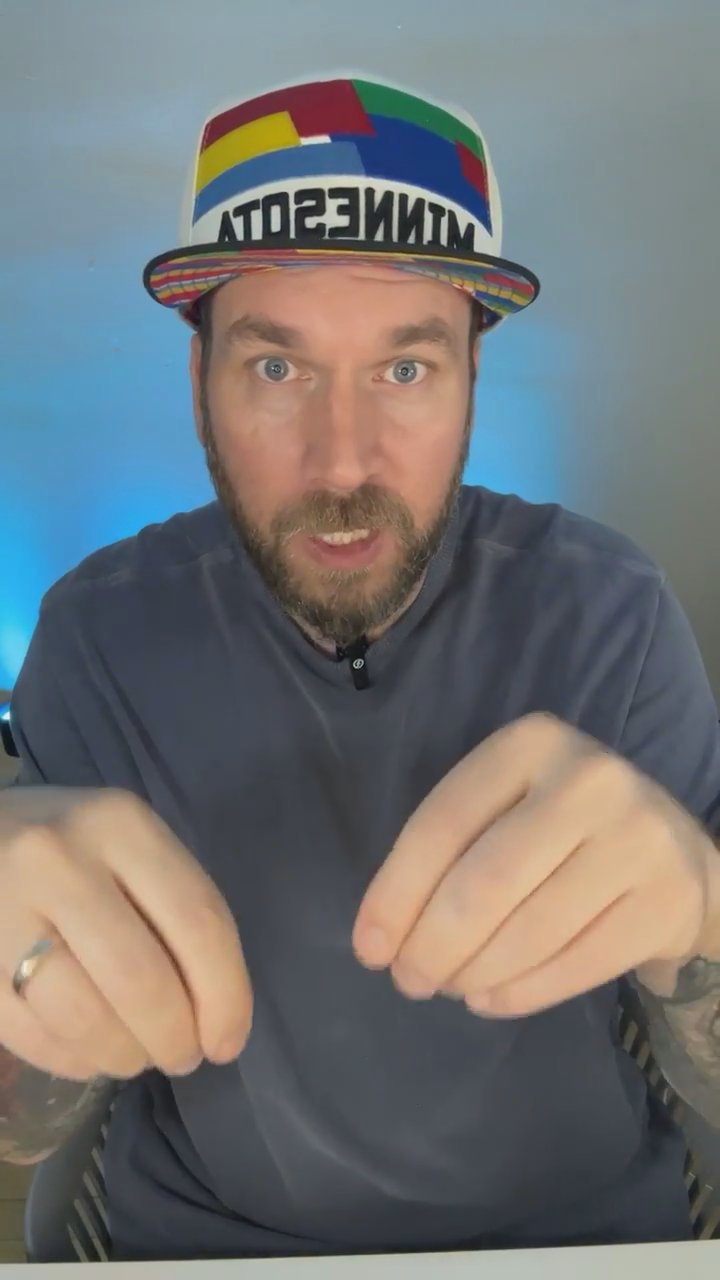
Pastor Seth Perry explores mental health and addiction recovery through spirituality and cultural identity, sharing personal stories about how exposure to Indigenous cultures broadened his view of recovery.
Pastor Seth Perry talks about mental health recovery, addiction recovery, and spirituality. Things can be pretty narrow in the christian sphere of recovery and wellness. Thanks for joining.
How has your perspective been broadened through experiencing other cultures and other cultures perceptions of wellness? I believe that everyone has a different path. Other people have different spiritual, cultural, and ethnic identities that impacted how they were going to live in recovery.
Hi, everyone. My name is Pastor Seth Perry, and I want to welcome you all to talk stigma. m. central time, and it's a time for me to talk about mental health recovery, addiction recovery, and spirituality. I'm a pastor and I like to talk about our cultural identity as it relates to spirituality and also to talk about spiritual and religious trauma. And that's one thing I'm going to focus on a little bit here today. So I've been a pastor for a while, and I've noticed that a lot of people come to church for help for mental health issues, addiction issues.
But things can be pretty narrow in the christian sphere of recovery and wellness. So welcome to Chris. Thanks for joining. And my question for today then, thinking about cultural identity as it relates to spirituality, is how has your perspective been broadened through experiencing other cultures and other cultures perceptions of wellness. So how has your perspective been broadened through experiencing different cultural perceptions, wellness. And I'm going to tell a little bit of a story today because I believe that everyone has a different path.
And when I was in recovery, early recovery, I thought that there was only one path, and that path was my path. I soon learned that other people are going to walk different spiritual paths when they're in mental health and addiction recovery, and that's what I discovered. But things were super narrow and rigid for me in their early goings. So I started to notice that other people had different spiritual, cultural, and ethnic identities that impacted how they were going to live in recovery. And I thought some people were doing it wrong.
So I'm going to go all the way back to the nineties when I first sort of understood that there's some major different cultural identities that people live through, have a lens that they live their life through. So it starts when my dad, who was a linguist, he invited me along to a graduation ceremony. And that graduation ceremony was going to be held by an indigenous band, and so this was going to be held on indigenous land in Canada. So I grew up in Canada. My dad's a linguist, so he taught language, and he was kind of reintroduced, helping reintroduce language into a culture that had been disconnected from their language.
And I went to this graduation ceremony for the first set of graduates who were going to be teaching language in language schools on indigenous reservations in British Columbia, Canada. I had no idea what I was getting into when I went. And when we pulled up, I saw this building, and it looked like an old school, looked like kind of like an old high school. I didn't really understand what that building was. And I got there, and I felt that there was a coldness in the air. The residents of the reservation seemed to be holding back.
They seemed to be skeptical, and I didn't really understand the full story. What actually was the full story was that I was visiting a residential school. I was visiting a school that was started by the canadian government that had ripped indigenous people away from their lands. And that school had been abandoned for many years, but it was being used by my father's university now to reintroduce languages. And that cold reception was actually people being incredibly trepidatious about partnering with people who were settlers.
And I didn't really understand my identity as a settler at that time, as someone who had been, you know, that I am. My ancestry is that of european settlers of North America. That was the first graduating class, the first of many. They're still graduating people through that language school at my father's university. And they're able to educate people in their early childhood education in their indigenous languages. And it was very important for them. But I didn't understand it at the time. I didn't understand the history and their wellness needed to be centered in that history.
Now fast forward now to when I was an adult and I began working for an indigenous organization called Poundmakers Lodge Treatment center in Canada, and I went there for the interview, and I drove onto the land that Poundmakers Lodge treatment Center was, and I saw a very similar looking building that was abandoned, that looked like a school. And I pulled up to the main building where they had their treatment center, their residential treatment center for addiction and mental health issues. And I interviewed.
I got the job, and it turned out that I was on a former residential school site. And now with a little bit more perspective, I entered into that job knowing that there were certain cultural, spiritual, and ethnic barriers that individuals were coming up against that actually were related to generational trauma, and that was affecting their perception of wellness. But there were certain things that I learned there, and one of the most important things was the decolonization of psychiatry. And I was speaking with an elder about one of the clients that I was treating.
I was brought on as a chaplain, and I worked with addictions counselors there. And so we were talking about this one client, and the one client had been given a psychiatric diagnosis. Now, to me, that meant one thing. That meant treating it in the way that I learned how to treat psychiatric diagnosis. You know, like, for me, I would take my medicine, I would go to group therapy. You know, I would go to support groups, all that stuff. But to this indigenous elder, it meant something completely different.
In fact, there were cultural components of that diagnosis that were sacred to them. And I didn't understand that because I was coming in from, coming at it from a settler's perspective, from a colonizer's perspective. I didn't understand that there was actually some value spiritually to the experiences of someone who has a particular psychiatric diagnosis, and in this case, it was schizophrenia. So I was pushing my client to take their medication and to do all the things that myself, as a ancestor of european settlers, would think would be important.
But the elder gave other advice, and it superseded my advice. So really, when I am faced with the challenge of answering a question like I asked at the beginning, you know, what are some of the cultural and spiritual factors that I have learned about this concept of wellness? I have to learn that my experience is just that. It's my experience. I have to be open to the experience of others and how they have come to discover wellness in their own way. It's going to be different than my own, and I can learn from other people, but I have to remember that I have to be centered in this idea, in this concept, and in this open minded sort of stance where I have to be able to understand that I can't call the shots for another person when it comes to their addiction and mental health recovery because I don't know the history.
It's often that, you know, in a support group, sometimes, you know, and I'll speak for myself. In the early goings, I would make assumptions about people and I would do a lot of advice giving. And really, that ends up being harmful. In my experience, that's been harmful. Why? Because I haven't been listening. And that is probably the core lesson to this. All. I need to be able to listen to others experience. I need to be able to listen to other people's history, and I need to, need to be able to be willing to learn about the stories that people will tell.
And for that, I'm grateful. That's my lesson for today. Thanks for tuning in and watching. I'm grateful that I get to be here on the Cadre sphere again. Look for me next Sunday and there'll be something good that I'll have in store for you again. And, you know, reach out to me on the platform here and make sure that you comment and. And I'll see you around. I'll be definitely checking out other live streams this week. Thanks for stopping in. I appreciate it. Have a wonderful day.
Reactions and comments are for members. Joining is free and takes a minute.