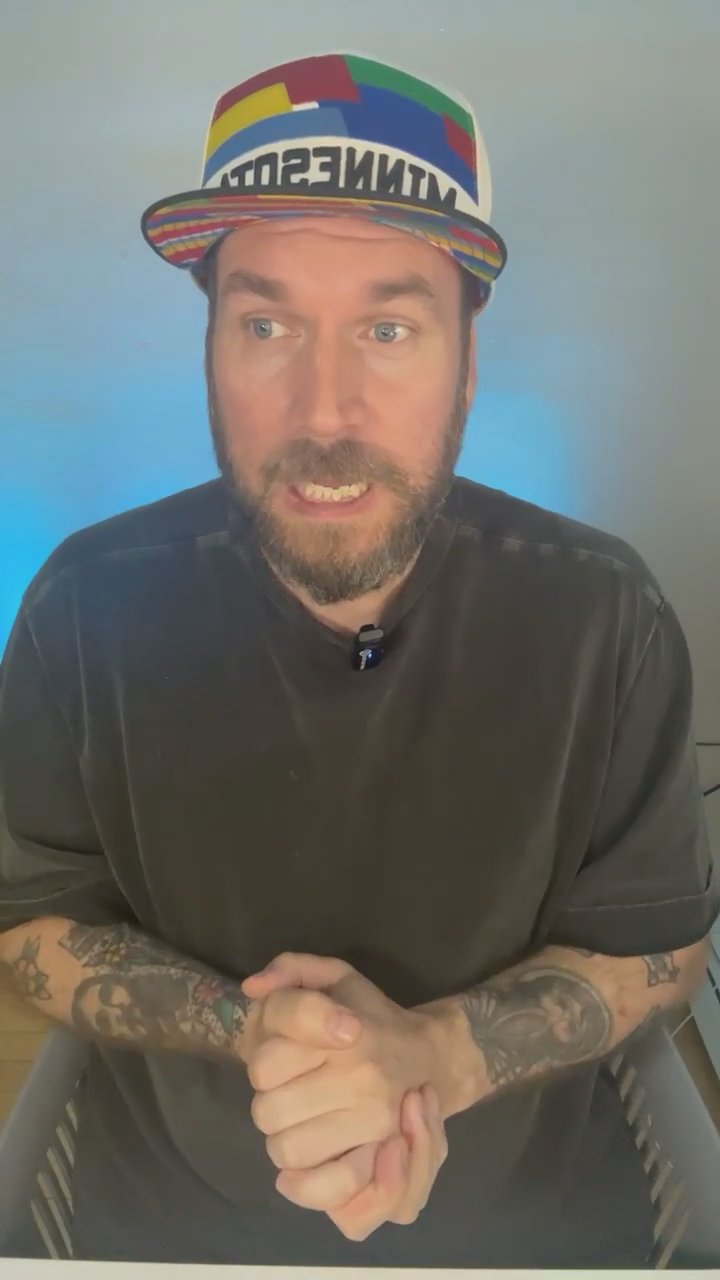
Pastor Seth Perry outlines five keys to planning a nonreligious memorial service, focusing on the role of poetry, music, and assigning one editor for content to create a reflective, healing ceremony.
Seth Perry is a pastor, I'm in recovery from addiction. I have bipolar disorder, type one, and I'm also in recovery for that. We'll talk about what I'll be talking about here on talk stigma today, Sunday, July 28.
Pastor: Funerals are supposed to be healing, but they're challenging and complex things. I'm going to tell you five keys to planning a non religious memorial service. If you want to, in the chat right now, make a comment about something that may have been challenging for you in a past funeral.
If you're doing a non religious memorial service, you're going to need some poetry. There's something about poetry and how it speaks to people's emotions. Someone will always know that that is my poem that is related to this person. So then forever there will be some emotion and memory.
Give one person editorial control as to the content of the service. Is someone going to be speaking other than a eulogy? Will there be someone making a reflection of some sort? The point of a memorial service is to provide a healing space for those who are grieving.
Five keys to planning a non religious memorial service. Discover the purpose of music in the service for the bereaved. Give one person editorial control about the content of the service. Give some recommendations for content to look forward to this week.
Good day. Hello, and if you don't know who I am, I'm Seth Perry and I want to welcome you to my live. It's 01:00 on a Sunday and welcome to the Cadre Sphere and welcome to everyone who is coming into the stream right now. And I want to talk to you about what I'll be talking about here on talk stigma today, Sunday, July 28. So if you don't know who I am, what I do. Again, my name is pastor Seth Perry and hi, Anila, welcome. Thanks for hopping in. And so I'm a pastor, I'm in recovery from addiction.
I have bipolar disorder, type one, and I'm also in recovery for that. Hello, Alec. Welcome. And I'm glad that you're all joining. So today I'm going to be talking about grief and I'm going to be talking about funerals, and I'm going to be talking about non religious funerals specifically. So if you want to, in the chat right now, make a comment about something that may have been challenging for you in a, in a past funeral experience. Funerals are supposed to be healing, but they're challenging and complex things that I have a lot of experience with.
I plan them regularly, but today I'm going to be answering the question, you know, what's the key to plan non religious memorial services? So I'm going to tell you five keys to planning a non religious memorial service. And I would say that right now I'm doing about two memorial services per month. And, you know, I am a pastor. You know, I belong to a denomination. However, I am completely open to any and all ways of memorializing someone's life. And, and I think that it's really key to understand that I don't have a monopoly on anyone's spiritual process or grief as it relates to their spiritual process.
So I need to be a facilitator, and here is how I facilitate that. So if you're watching right now, maybe let me know. Anything that you might think is a key to include in a memorial service and I might, uh, comment on that. So my first key, and this is the number one thing that I thought about when I thought about today's livestream, was find some poetry. That's key number one, find some poetry. If you're going to be doing a non religious memorial service, you're going to need some poetry. There's something about poetry and how it speaks to people's emotions, how it speaks to the future, it speaks to the past.
I think that it centers people. It's reflective it's meditative, and that's something that I've seen be incredibly healing to people. And it's also something where if you choose a particular poem, whenever that poem is read, then what we've got is we've created a memory that is including both memories that's included with the poem and with the person. Right. So. So then forever there will be some emotion and memory, and. And that's what we're really trying to create when we're doing a memorial service.
Right. Someone will always know that that is my poem that is related to this person. So. And thank you, Anila. I'm glad that you're all on board for this idea of non religious memorial services. And, and I'm planning one this week, and that's why I thought that I would, you, you know, choose this as my topic. So another thing that I do when I'm planning a memorial service, and a lot of people when they're planning memorial services for people, is that they have to figure out what content is going to go into the service.
So my second key point is give one person editorial control as to the content of the service. So you might be planning it rather loosely with some family. Sometimes people do it on a beach. Sometimes people do it in the mountains. Sometimes people will have a memorial service at a home or at a community gathering place. Right. Well, there can be too many cooks in the kitchen, and one person is going to have to make the decisions about what goes into that service. And it's often that someone passes, and then you have a pretty quick time limit as to when you want to have that service and have that person memorialized.
So that one person is going to have to be decided on, and that's going to have to be one of those key things that you include early on in your planning. Why? Because someone's going to have to make the difficult decisions about who's going to say the eulogy, who's going to choose what the, you know, what happens in terms of music and other things like that. So I have always benefited having one person from the family be that one person who is in charge of editorial control. So that's my second point.
My third point is, you got to figure out, is someone going to be speaking other than a eulogy? Will there be someone making a reflection of some sort? And I need to explain the difference between a sermon and a reflection. So it used to be that you would expect at every memorial service or funeral because there was, you know, the dominance of Christianity in North America that there would be a sermon at the. At every memorial service. And I've even heard colleagues, other pastors that I know say, you know what?
I find that funerals are great ways to evangelize other people, and I completely disagree about that. That's not the point of a memorial service. The point of a memorial service is to provide a healing space for those who are grieving. So you can offer to anyone who is going to be having a memorial service, you can offer to any family members the option of having a reflection. What's the difference between a reflection? Well, a reflection would tie together the music, the poetry, and the memory of that individual and tie it together in a nice bow, three or four minute minutes.
And. And that would be a way for. For everyone to reflect deeply about the person who has passed, to start. To begin that grieving process, to start to heal. And it doesn't have to be about convincing people about an ideology, which is what some of my colleagues have done, as I just mentioned, what it is, is it's providing a balm to those who are struggling with the loss of someone that they love. Okay. My number four key thing to plan a non religious memorial service is you have to discover, like, what's the purpose of music in the service?
What is the purpose? And, Jules, thank you for joining. Joining. We are talking about five keys to planning a non religious memorial service. If you have. Good afternoon, too. And if you have any points and keys to grieving and memorial services, let me know. And I'm on to point number four, where we're talking about the purpose of music in the service for the bereaved. Is it, is it going to be a time where you play pre recorded music and you reflect on the individual? Is it going to be something that is a chance for people to process in with the urn and place it in front of everyone?
What is the purpose then, the content of the music? Are we reflecting on the individual, or are we reflecting on what happens after we die? Are we reflecting on grief in general? And if you're doing a non religious memorial service, you might want to think, okay, maybe two songs, one at the beginning, one at the end. I have always seen that that seems to work out the best. But everyone should talk about, what are we using the music for? What is the purpose of the music in a memorial service? My final tip, number five, about what the keys are.
The keys are for planning a non religious memorial service. Is this when and how many people are going to speak? When and how many people are going to speak? When someone passes away. It's often feel, it's often that people feel like they need to speak publicly about the individual who's, who has passed. And that is great. That's a great way to embark on the grieving process. But is there a limit to how many people can speak? Are we going to open up the microphone and let people speak for an hour?
Have 1015 people speak, or is there going to be a list of people that will speak during the service? And then afterwards there'd be a reception where people have food, and then you would let other people speak. That's something. Again, if you had one person in editorial control over the content of the service, you would be able to make that decision and go ahead and just go with it. And that's what I have seen works best when planning a non religious memorial service. So those are my five keys, and I'll review them right now.
Find some poetry. Give one person editorial control about the content of the service. Explain the difference between a sermon and a reflection to the individuals. What is a meditation? What is a meditative sermon or reflection, and then discover the purpose of music for the bereave. What are you using music for? And of course, number five, how, how many people are going to speak at this memorial service before or after the service? So I want to give some recommendations this coming week about, about some content to look forward to this.
Last week I did watch Anila's live, her live stream was pretty good, and it was pretty honest. That's what I really liked about Anila's live stream. So Anila watching today, thank you. Your live stream was great. I checked that out on Wednesday and it's coming up this Wednesday. I believe it's at 230 this Wednesday. m. this Wednesday, July 31. Check out her live stream. She spoke a little bit about grief last week, and I invite you to check that out. So for everyone here on the Cadre sphere, I invite you to get out there, check out some more lives.
Reactions and comments are for members. Joining is free and takes a minute.