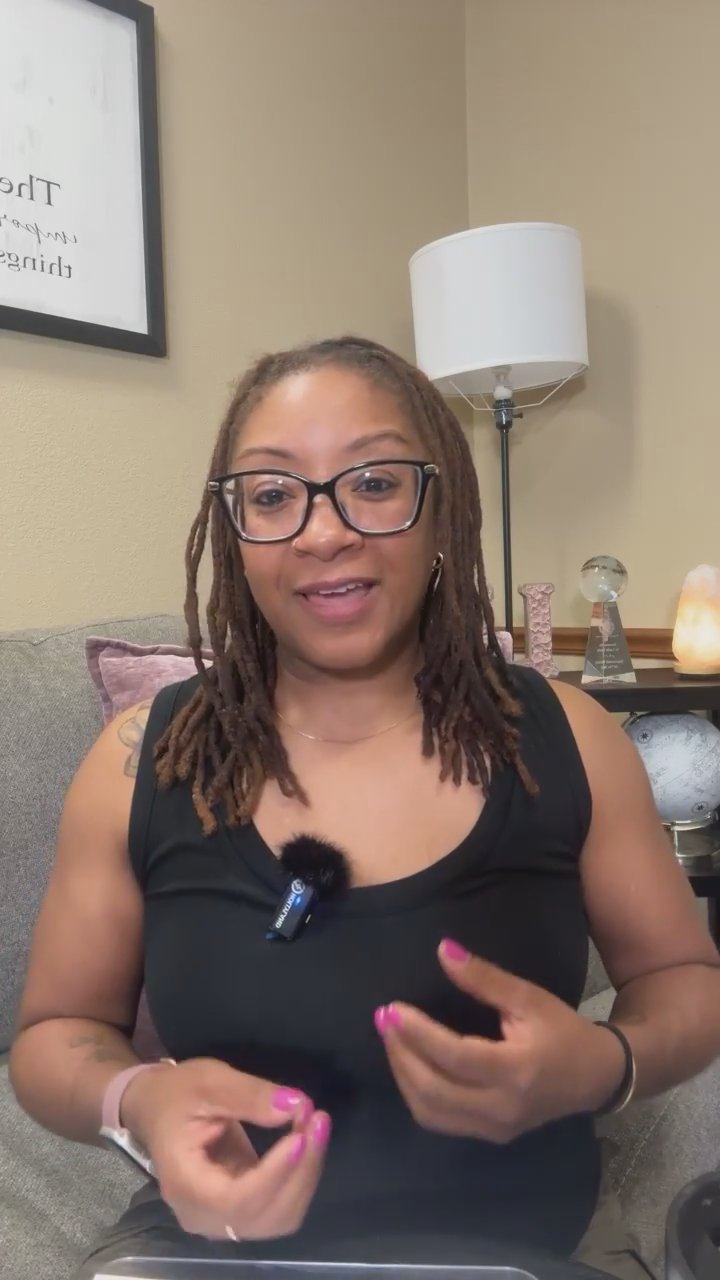
Dr. Leslie Davis outlines the five-stage model of change, explaining pre-contemplation, contemplation, preparation and action. She explores how these stages show up in relationships, friendships and family interactions.
Hey, cadre. What's up? Dr. Leslie Davis here. And my coffee. It's me again. I am going to take a sip real quick because I just got out of a session. I'm going to let a few people join me. So if you don't know, therapists talk a lot. We're not supposed to talk that much into session, but sometimes you get a good client that just really, you know, has a good conversation flow. And so you end up talking so much during your session . So your mouth gets dry. And I literally just got out of session before starting this live stream.
But today I want to revisit something that I intended to talk about last time, but life got in the way. If you tuned in to my last coffee chat, I had to, hello there. I had to deal with just real life. We had flash flooding. So there was water in the house, like it was bad. Everything's good now. My son was also sick at the same time. But he's doing better too. Hello, everybody. It's joining me. And so today I want to revisit the topic that was on my mind last week. So today I'm going to be talking about the stages of change and looking at how that impacts us when we are in different stages with our partner or with a family or even a friend.
And this has shown up a lot in friendships with me. And I'll ask you guys to chime in. Hello there. If you can chime in in the chat and let me know if any of this has impacted you. So what I'm going to do first, I want to go over the stages of change. And this is a model, a five step model that looks at how we can change our behavior or how someone else might need to change. And we can show them these five steps to help them decide do they need to change and how they can get it done. So the first one, if you guys want to take some notes, you're more than welcome, the first stage of change is called pre-contemplation.
And basically that stage of change looks at building awareness of the need for change. So you might experience stress or maybe you don't feel good about something that happened in a conversation. And that is a trigger that says, hey , something needs to change. I don't like this. I keep going through the same thing. I got to do something about it. But you don't know how just yet. So you're just building awareness for the need to change. And the second stage is contemplation. So in that stage , you're looking at the pros and cons.
What's good about me making this change? What could go wrong if I make this change? All right. The third step is preparation. And in this stage, you're actually committing to making a change. And then you start to develop your plan. And in that stage, you might have to pull on some experts. You might have to ask your friends and family to give their opinions about how could you change and how does that work best for them so you can make a plan for yourself. The fourth stage is action. So you're actually going to take that plan that you designed and put that to work.
And it may or may not work the first time, but you're going to continue to do that until you get an action that's going repeatedly. So action is number four. And then the last stage, number five, is called maintenance. So after you've implemented that plan and you've done this several times, you get into the process of change where it's not just a change that happened one time, but it becomes a new lifestyle, a new way of being. Okay, so I'll go through all those again. So you have pre contemplation, contemplation, preparation, action, and then maintenance, five stages.
All right, so let me get rid of this. So I wish I had slides that I could show you guys because this would be a little more helpful, but maybe I'll do a YouTube video about this later. So if you don't know, I do have a YouTube channel, it's called The Real Doctor Leslie. So I might record something and I'll put some information on there later. So let's talk about what happens in relationships when we are in two different stages of change. So let's say you have decided, I'm have to bring this back.
Let's say you've decided, you know what change needs to happen. I keep getting into this argument with my friend. We talk about the same thing over and over. And it just seems like over the last few years, nothing is changing. And I'm tired of it. So you're in this pre contemplation, like something has to give. And you know the other person may not step in and say, you know what? I'll be the first to change. So you have to do that. You have to make that decision. So you decide, okay, let's make a change.
Then you start looking at the pros and cons. So if you decide, well, if I stop calling this person, I'll give an example. Let me just give you a story. Let's say you have an argument with a friend and it only comes up. Let's say it 's two females and you guys are going out and you recognize that when you guys are out in public, that your friend seems to get all the attention, right? And you feel some way about that. You don't like it. It's uncomfortable, but you never say anything. So you continue to feel negative about the situation.
She may have no idea what's going on. And so you're in this point of life now. You're like, I got to change this. This doesn't feel good. I don't like how I'm interacting with her once this happens. And I haven't said anything. So now it's time for me to speak up. That would be the pre-contemplation stage. So the contemplation, you get into the stage of the pros and cons. Well, if I speak up, that might change the dynamics of our friendship. That might make her mad at me if I say something about it.
Or she might think I'm jealous. So I'm not going to speak up about that. But then maybe the pro is, well, if I do say something, then maybe I'll feel better. Maybe we could have better communication and that could actually bring us closer together. Maybe she has a good reason why this is happening. Maybe she's unaware of something she's doing that is bringing her this attention from other people that I'm not getting. Maybe she's overshadowing me and she's not realizing that. So maybe I should speak up, right?
That's the contemplation . The pros and cons. Should I? Shouldn't I? Then you step into preparation. You commit. Okay, I'm going to say something to her. I'm going to maybe schedule time to meet with her. And I should probably do it in person instead of doing all the phone or their texts. And so you schedule time to talk about how you've been feeling. You know, bring it to her attention of what's been happening on your end and maybe have some time to give her space to answer questions or to ask you questions.
And then you have an action. Maybe you develop a plan together of how things can change. So maybe it's you know what? Your friend decides I didn't realize I was doing that. Let me pull back in and maybe even introduce you to some of the people that I'm meeting. So there's a plan that gets developed together because you decided to make a change and you stepped into it and you were bold enough to speak up about it. And so now the plan is executed and you guys go out the next time and it worked . Okay, that doesn't always happen.
But let's say it worked. So what if you're going through these stages of changes and you are in a different place where you have said something to your friend. So you taken action. And now you've taken action. You guys go out again and it worked the first time and then you go out again and didn't work. So you are now personally in a maintenance stage where you're like, I'm going to keep implementing this. I'm going to keep saying how I feel. I'm going to tell her when I don't feel good. I'm going to tell her when she's doing something that is really triggering for me.
Now, what if your friend initially decided she was okay with that? And then the next time you guys go out, she pulls back. Well, she might be in a different stage of change. Maybe initially you thought you were on the same page, but maybe she went back and thought about it later and was like, you know what? I don't need to do anything different. I'm just being myself. So she's going back to pre-contemplation, which is the first stage, but you're already at stage number five with a maintenance plan, right?
So she sees there's no need for me to change. I'm just being myself. How dare she ask me to change who I am? How dare she think that, you know, I want the worst for her or that I'm ignoring her making her feel some type of way. Maybe we shouldn't even be friends. That could happen, right? So now you guys are in two different stages. You're in stage five in maintenance. She's in pre-contemplation at the top. Is it possible for you guys to get back together? We don't know. That takes action again.
You have to go back to the pre-contemplation stage. Your awareness of I made a change and it works for me, but it's not working for her. You now have to go back to pre-contemplation. Well, do I need to make a different change or do we need to revisit this? Then you're back on the same page of where are we at? Do we need to make a change, okay? Is this making sense for you guys ? And this is making any sense drop a coffee mug in the chat for me. Let me know that you get in this. And this is really sticky sometimes when it comes to romantic situations or if there's violence in the relationship or if there's any type of trauma where you might want to speak up, you might recognize in that pre-contemplation stage that, oh, we need to have a change here.
I need a new dynamic. This is not healthy for me. In fact, this is toxic, but maybe you're stuck because you don't know how to get out of that toxic relationship or you don't know how to stop toxic behavior for yourself or for your partner or maybe there's fear involved where it's not safe enough for you to step into the next stage of change. And so that becomes problematic, right? So consider whatever you guys are going through right now. If you're in a relationship that's romantic or it's toxic or it's not safe, consider those factors as you're moving through the stages of change.
Is it safe to move to the next stage? Do you need to pull in other people to help you move to the next stage? Sometimes we need better advice. Maybe we need to step in and get the support of a therapist or get the support of someone from church or just another family member or someone who is non-judgmental that can give you sound advice. So who are those people in your life you can pull in to help you move through those stages of change? Even if your partner, whether it's your romantic partner, your friend, or a family member is willing to go through the stages of change with you at their own pace, right?
They can go through the same process but at their own pace. So keep that in mind, change could be happening when you're not aware of it because you're moving through the stage at your own speed where the other person is moving at their own speed as well. So maybe you're moving faster and they're still stuck here, right? And that could just be a timing issue. It doesn't necessarily have to be, you guys are in two different stages because one person doesn't want to change. That may not be the case.
It can feel like that though. If you move down to stage five or four and they're still stuck at one or two, you might think or assume they don't want to change. They just want to be who they are. They're never going to change. You might even say that to yourself. They're never going to change. Is that true? Maybe not. So keep that in mind, stage of change. I will do another video on YouTube. I will catch you guys up and have some more slides that'll make it look a little easier to follow. But I hope this was helpful and if you want more information about this, I can revisit this at another time.
But I do want to thank you all for tuning in today and I'm going to finish my cup of coffee because I got another session to go. But I hope you guys have a wonderful day. Bye.
Reactions and comments are for members. Joining is free and takes a minute.