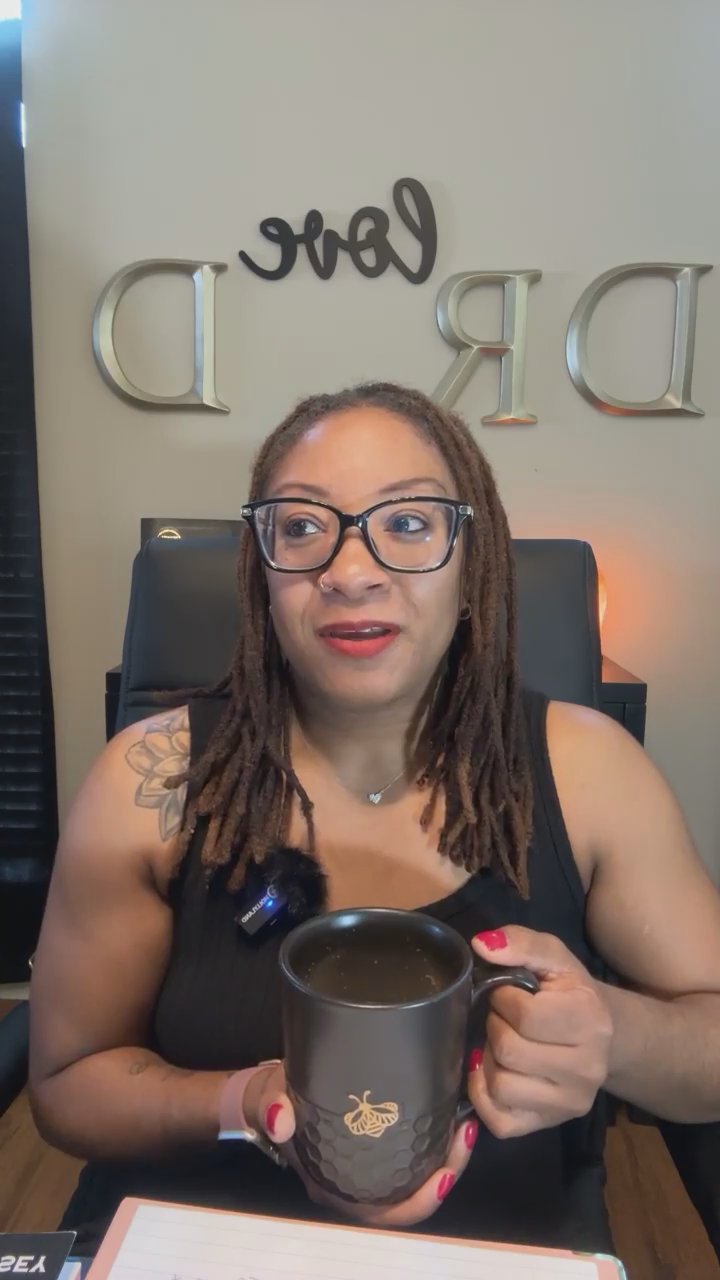
A coffee chat explores the murder of Sonya Massey and the host reflects on amplifying black single mothers’ voices, then shifts to listening skills, nonverbal cues and practical tips for improving attention, eye contact and clarifying questions.
Hello, Cadre. Welcome to my coffee chat. It's noon, where I am in central standard time. As you're joining, if you could just let me know where you are joining from.
On July 6, there was a young lady, a black single mom in Springfield, Illinois, who was murdered by the police. I have been feeling this pull in the past week to use my voice to speak up on amplifying the voices of black single mothers.
About 70% to 90% of communication is nonverbal. What are we really listening to? We should be listening to what's not being said. What gets in the way of us listening is poor eye contact and distractions. Our judgments come from different places.
therapists share tips on how you can improve your listening skills. Be intentional with your eye contact and ask clarifying questions. Be honest when you miss something. It doesn't happen naturally. It takes practice and repetition.
So Sonia Massey, her life mattered. Thank you, guys. Go get your coffee. Enjoy the rest of your day. Bye.
Hello, Cadre. Welcome to my coffee chat. I got my coffee today, and yes, of course I need it. It's noon, where I am in central standard time. As you're joining, if you could just let me know where you are joining from. If you're watching the replay, please let me know where you are. I'm really interested in where people are located when they're listening, so I love to think that we are global at Cadre. So it would be really interesting to see where we're coming from, like what state or what countries we are.
But today, I want to give a little trigger warning first, because what I have to talk about, just the introduction, is it could be a little traumatizing, it could be controversial, but it's something that has been on my heart that I need to talk about today. So I want to first, thank you all who are joining. Hi, Luke. But if you don't know, a few weeks ago. So on July 6, there was a young lady, a black single mom in Springfield, Illinois, who was murdered by the police. Her name is Sonya Massey.
And I just learned of this story just this past week. And it's interesting that this story came out at a time right after my book release. So let me show you guys this real quick. And it might be backwards to you, but it's called the voices of women. It's an anthology that I'm a part of with 22 women total from around the world, sharing our stories of leadership. And this book was released on the 22nd. And the very next day, I was informed of the murder of Sonya Massey by the police in Springfield, Illinois.
And at that time, there was a video that was released, and the video was the body cam of the police officers on the scene and watching the footage. And there's, of course, shortened clips at the time, but it got to my heart. And I've watched this over and over and over. And I work with black single moms. I work with single moms, period. But the stories of black single moms are often silenced. And so I have been feeling this pull in the past week to use my voice to speak up on amplifying the voices of black single mothers.
But today, I want to talk to you all about the power of our voices, but also the power of listening. So the question for you to consider is, are you listening? Are you listening when people are speaking? Are you listening when they're not speaking? So there's research, and it's widespread, but there are research out there that shows that about 70% to 90%, up to 90% of communication is nonverbal. So if that leaves 10% of just words being said, what are we really listening to? We should be listening to what's not being said.
And when I watched the video of Sonya Massey, when she was calling, actually, she called for help. The police came to her home because she thought there was an intruder. And she did have some clear mental health issues. And I'm not going to get into all the details of the story, but I. What I observed, and I've watched this video. I've watched the full video that was released, and it's on YouTube if you want to check it out. But I had to watch it several times, and I had to watch it without words because I wanted to hear and see what was listening or what was happening.
And so what I saw was agitation. I saw a woman who was scared, who was afraid to say anything. And then when I watched the video with the words, with the sound, what I saw and what I heard was different. So the first time I saw it was different completely from when I watched it several times. And I could actually hear the last time. So just yesterday, I watched a full video, and I heard things differently. There were things that were said, and there were things said to two different officers that were in the room.
And you see the camera turn at one point where one officer is looking into another room where she was located. And her house was really messy. And you can tell there's some mental health issues. I believe she had a diagnosis of schizophrenia, which is debatable as well. But what you heard was her say, I rebuke you in the name of Jesus. And the first time I saw the video, I thought she was saying it to the officer who had turned their body cam to look in another room. But after I had watched it a few times, I actually realized that she was saying that to the officer who ended up shooting her.
So, of course, I wasn't there. None of us were there. I'm not debating what happened, why it happened, but what I want to get into is our need to listen to others, our need to listen to each other when there's pain, our need to listen when our own emotions are getting in the way. So what gets in the way of us listening, and I want to share a few things with you. Number one is poor eye contact. So if about 90% of communication is nonverbal, if we aren't making eye contact, if we aren't watching and looking and scanning, we are missing the majority of what is being communicated.
So if someone is saying something, but you see behavior that doesn't match up with the words, you're missing the real message. So keep that in mind. The second thing that gets in the way of us listening is distractions. It could be our phones. You know, we always have our phones. They're dinging, we're getting messages, we're getting phone calls, we're getting emails. It could be the kids interrupting us. Maybe you're having a really in depth conversation with your partner or with a family member, and the kids kind of bust in and interrupt that conversation.
And what happens is we stop listening, we get distracted. We turn our attention to something else or someone else. And so the person that is trying to communicate with us will feel a certain way. Right. If that's happened to you, you probably felt ignored or felt like what you had to say wasn't as important as the interruption that happened. The other thing that gets in the way is our to do list, right? That is a distraction as well. We could be listening to someone having conversation, but in our minds, we're thinking about, I need to do this, I need to do that.
I don't have time to sit here for this long conversation. I hope it ends quicker than expected, because I have things to do, and that gets in the way of us actually listening to what's being said. The third thing that gets in the way is our judgment. Our judgments come from different places. We can make judgments about what someone is saying and what their behavior is communicating with our cultural background, with our trauma that we've experienced, and even just the knowledge that we have. So if we have more knowledge than the other person speaking, we are using those judgments of our knowledge and our power in ways that can really miscommunicate what's happening.
We can misunderstand what someone is saying because we think we know better than them. Has that ever happened to you? If that's been part of your experience, please drop that little coffee mug in the chat there. And another thing that gets in the way of us listening, which I clearly saw in that video, was fear. Fear will immobilize us. Fear will heighten us. And we all know about the fight or flight response. Sometimes when fear gets involved in a conversation, we either go into fight mode, where clearly the officer got into fight mode.
He felt like he needed to defend himself for some reason, or we back off. And so what happens when we back off is we tune the person out. We're not listening anymore. And if we're in fight mode, we're trying to defend ourselves with our own words or even with our body language, we might even tune the person out, like, maybe turning our body to the side or our eye contact changes. We shift our eye contact because we're in a place of fear and we're trying to deal with our own emotions when someone is communicating with us.
So those are some things to think about, like, as far as the distractions, things that are getting in the way of you listening. And I know this has happened to me. It happens to me even in session with therapy. As a therapist, there are things that get in the way of me actually hearing my client, and I'm in tune with myself to know when it's happening and I can bring myself back. And one thing I've learned over time as a clinician is to be honest about that. There are times and sessions where I have to tell my client, I know you were sharing something that was really heartfelt for you, and I missed it.
Can you say that again? And it's so easy to do that, but we're scared to do that in everyday conversations with people that we're close to. We might just go along, and maybe we don't want to admit that, hey, I checked out. I tuned out right there. Right? But it's okay to do that. And so I want to give you a few tips on how you can improve your listening skills. Because this is a skill. It doesn't happen naturally. It takes time. It takes practice and repetition. Okay. One thing is, I want you to be mindful.
Like I said, I've learned to be mindful. I've learned to recognize when I've tuned out. I've learned to be mindful with how I feel when someone says a certain word or even their body language is communicating something to me. Right. And I'm mindful of how I respond. I'm mindful if I feel defensive. I'm mindful if I want to help them so someone can communicate with us where we want to jump in, in the conversation and fix the problem. And that might not be what they need. So we're not really listening.
We have to listen to what does the person need? What is the person communicating not just with their words, but their actions, their tone? Right. Their eye contact. Are they speaking to us and they're avoiding eye contact with us? Why is that? What do we need to hear in that moment? The second thing to do in improving your listening skills is to be intentional. Be intentional with your eye contact, and that doesn't mean stare the person down aggressively. When I say, be intentional with your eye contact, I mean, for example, if you're making eye contact with someone when they're speaking, are you scanning everything?
Are you scanning the corner of their mouth move? Are you scanning if their eye contact drops? Are you scanning if they turn their head when they say something? Are you being intentional with watching their hands? Are you being intentional with watching if their feet change? Like they're even? Feet position. Foot position. That communicates something. If we're standing in front of someone and their body turns to the side, that is communicating something to us, you can use your knowledge and interpret that.
But you could also be wrong. So be intentional with how you're listening to someone. And the third thing to improve your listening skills is just be honest. Like I said, be honest when you miss something. Be honest if you have a question right. Be honest and ask clarifying questions. What did you mean by that? You said that. I don't understand what that means. Can you break that down for me? Or can you give me an example of how that's been working for you? Or can you give an example of how I've hurt you and not asking questions and being honest with how you've missed something, necessarily?
Let me clear that up. So, being honest with, did you miss the intention behind what they were saying? Does that make sense? Because we can. We might miss it because all those other things, those distractions, the things that I mentioned before, are getting in the way of us listening. So I hope that helps. I know this is, it's hard to navigate when we're listening to someone else because we also want to be heard in the conversation. And we have to be intentional and be mindful that sometimes when someone is communicating to us, it's not about us.
It's not always about us. It's about them. And we need to honor that person in that moment. We need to give them the time and the space to be heard. So if you're struggling to listen, I want you to practice that with someone that you trust. I want you to practice that with someone that you, you know, you have ease in conversation and kind of check in with yourself. Am I being mindful right now? Am I being intentional with listening? Am I being intentional with asking clarifying questions and even being mindful?
If you're not asking questions, why is that? Is it because you're not interested in the conversation? Is it because you're distracted? Are you not asking questions because you don't care what they're saying? I'll be honest. I've been in that place sometimes. I don't care what someone has to say, and I might tune them out, or I just sit there and nod like, yep, just so they can get out what they need to say. But I really don't care what they're saying. Just being honest, right? We've all been there.
So I hope this helps you guys. I hope you guys also take the time and look at the story of Sonia Massey. I don't know much about her life. I wish I knew more to share with you. But if you research it, I will give you that trigger warning that there are some videos out there that are really hard to watch. But if you maybe read something online, I would love for you guys to listen to her, listen to her life story and really spread the message, because there is this movement out. I don't know if you guys know about it, but it's called say her name.
And I am speaking up, and I'm saying her name. So Sonia Massey, her life mattered. Thank you, guys. Go get your coffee. Enjoy the rest of your day. Bye.
Reactions and comments are for members. Joining is free and takes a minute.