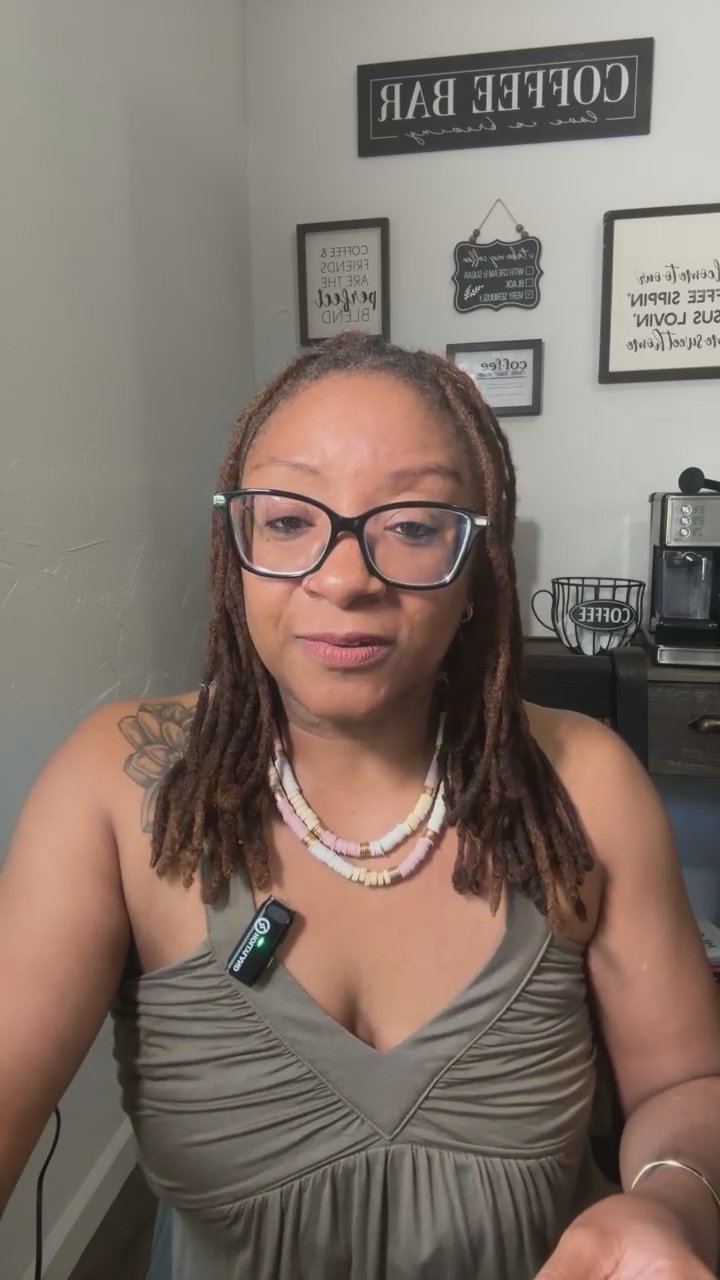
Doctor D explores how situational awareness applies to relationships, covering trusting instincts, noticing patterns in others' behavior, being mindful of what one sees/hears/feels, and speaking up when needed.
Hey, Cadre doctor D is in the building with my coffee. Just chilling out at home today. It's beautiful. I feel like I'm going on a vacation or something with what I'm wearing.
Last week, I had the honor of talking to some of the women at my 10th planet dojo about situational awareness. It got me thinking about how does this apply to relationships? So that's what we're going to talk about today.
Luke: The first thing I want us to think about with situational awareness in relationships is about trusting your instincts. This can be tricky, especially if you have an anxious attachment style. Luke: Sometimes we need to trust our instincts in relationships, and sometimes that comes with one of the next steps.
Step number two of situational awareness in relationships is to be mindful. Be mindful of what you see, what you hear and what you feel. And the third thing is, don't be afraid to use your voice.
Wonder: How do you learn how to be situationally aware in relationships? Wonder: We don't always consider how we're feeling. We have feelings and emotions for a reason. They're there to get us to pay attention to something. I hope you guys enjoyed this coffee chat, and you guys have a wonderful day.
Hey, Cadre doctor D is in the building with my coffee, and I actually have just a little bit left from my last session, so I'm gonna take a sip real quick while you guys are coming in. So today is a really nice day. It's beautiful. I feel like I'm going on a vacation or something with what I'm wearing, but I'm nothing. Just chilling out at home today. But today I have a interesting topic, and it's not necessarily planned. It came up in conversation last week. So for those of you who do not know much about me, hello, everyone.
Coming in. I am a jiu jitsu coach for women's team at my 10th planet dojo. And last week, I had the honor of talking to some of the women there about situational awareness. And for women who train jujitsu and just women, period, it is definitely. Thank you again. Your coffee mug in? Yes. For situational awareness, it's important that we consider this as women, but just people in general. So you guys can't see how short I am, but I'm super short. I'm only 411. And I am always thinking about my surroundings, thinking about how I can protect myself, how I can observe what other people are doing, things that I hear, what I see.
And so, as I was speaking to the women at my jujitsu gym about situational awareness for their physical safety, it got me thinking about, how does this apply to relationships? So that's what we're going to talk about today. And I do have my notes, because if I don't stay on track, I will be talking about a whole lot of things. But the first thing I want us to think about with situational awareness in relationships is about trusting your instincts. And this can be tricky, especially if you have an anxious attachment style.
So for those of us, and I will raise my hand. Who have an anxious attachment style. Luke. Oh, seriously? Starting Jiu jitsu. Awesome. We can talk about that for those of us who have anxious attachment styles. So you are probably looking for problems in your relationship. You're looking for things that are going wrong, and sometimes that can serve you. But with anxious attachment, it can also get in the way. So if we're thinking about situational awareness for relationships and trusting your instincts, sometimes we get this feeling like something's not okay.
Right. And a lot of times, we'll dismiss that and we'll just tell ourselves something different to get rid of that feeling or to minimize it. Right. So maybe we tell ourselves, well, maybe that person's just having a bad day, or maybe I did say something wrong, but sometimes we need to trust our instincts in relationships, and sometimes that comes with one of the next steps that I'll talk about soon. So step number two of situational awareness in relationships is to be mindful. Be mindful of what you see.
Be mindful of what you see that person doing. Look at their patterns of behavior. Look at how they're responding. And again, if you listen to previous coffee chats here, I recently talked about nonverbal communication, how that is the majority of how we communicate. So with situational awareness in relationships, be mindful of what you see that person doing. How are they responding to things that you say, things that you do, how are they responding to their work environment? And they're maybe bringing that home, how they're responding to, you know, things that are happening in the world, and maybe they're taking that out on you.
We never know what someone's going through, right, if they're not telling us what they're going through. So be mindful of that. Also, be mindful of things that you hear. So what are they saying? What do you hear? And even with nonverbal communication, so it's not just the words. So it might be a groan. It might be a hmm. It might be silence that you need to listen for. Okay. And then also be mindful of what you feel. That goes back to looking at your instincts. Do you feel safe with this person?
Do you feel like there's shame when you're in this relationship? Are you hiding this person from your friends and family? Be mindful how you're feeling around them and about them. Be mindful of how you feel. Maybe you're starting to feel angry with this person. Maybe they're an angry person, and that's starting to rub off on you, being situationally aware how this person is interacting with you and how they make you feel and how you feel about yourself in that relationship. And then the last thing is, don't be afraid to use your voice.
Now, when situational awareness with physical safety for women, especially if we don't speak up when we're in danger, bad things can happen and happen very quickly, and the same thing can happen in relationships. When we start to notice any shifts, any changes in someone's behavior, any changes in how they're interacting with us, and we don't say something, we can't change the situation if we don't speak up about how we feel in the situation or in this relationship. So, for example, if we're starting to feel afraid of this person, maybe they responded to us in a way that triggered us from past trauma or past toxic relationships.
And if we don't speak up about what they did, and maybe they're not even aware of how they're responding to us, we can't change that situation. We can't change the dynamics of our relationship. So that's the third thing is, don't be afraid to use your voice. So I'll go through those again just to wrap this up. So, one is trust your instincts. Number two is be mindful. Be mindful of what you see, what you hear, what you feel. And the third thing is, don't be afraid to use your voice. Speak up and speak.
Wonder is here. So I know you like that part, but I do want to thank you guys for tuning in. This is a super short one today, but I want to give you those three tips, and if you have used any of this, let me know. Also, I want to put in a plug for jiu jitsu since Luke brought it up. I'm so glad your son is training. So, Jiu jitsu is one of those martial arts. We call it the gentle art, and it's not so gentle, but it is a tool that is very powerful for women and especially for victims who have been victims of violence or sexual assaults, where you can learn how to protect yourself, and you will learn how to be more situationally aware, training a martial art or learning how to defend yourself.
But also think about how do you learn how to be situationally aware in relationships? So I think I'm going to do another coffee chat about this and dig into this a little bit more, because I think this is an important topic, and we don't always consider how we're feeling. We dismiss things, or people tell us, well, don't think about that, or maybe you should consider something else. And so we dismiss our own feelings, and that could be sometimes the worst thing to do. We have feelings and emotions for a reason.
They're signals. They're there to get us to pay attention to something. And that is part of situational awareness in relationships. So I hope you guys enjoyed this coffee chat, and you guys have a wonderful day. Bye.
Reactions and comments are for members. Joining is free and takes a minute.