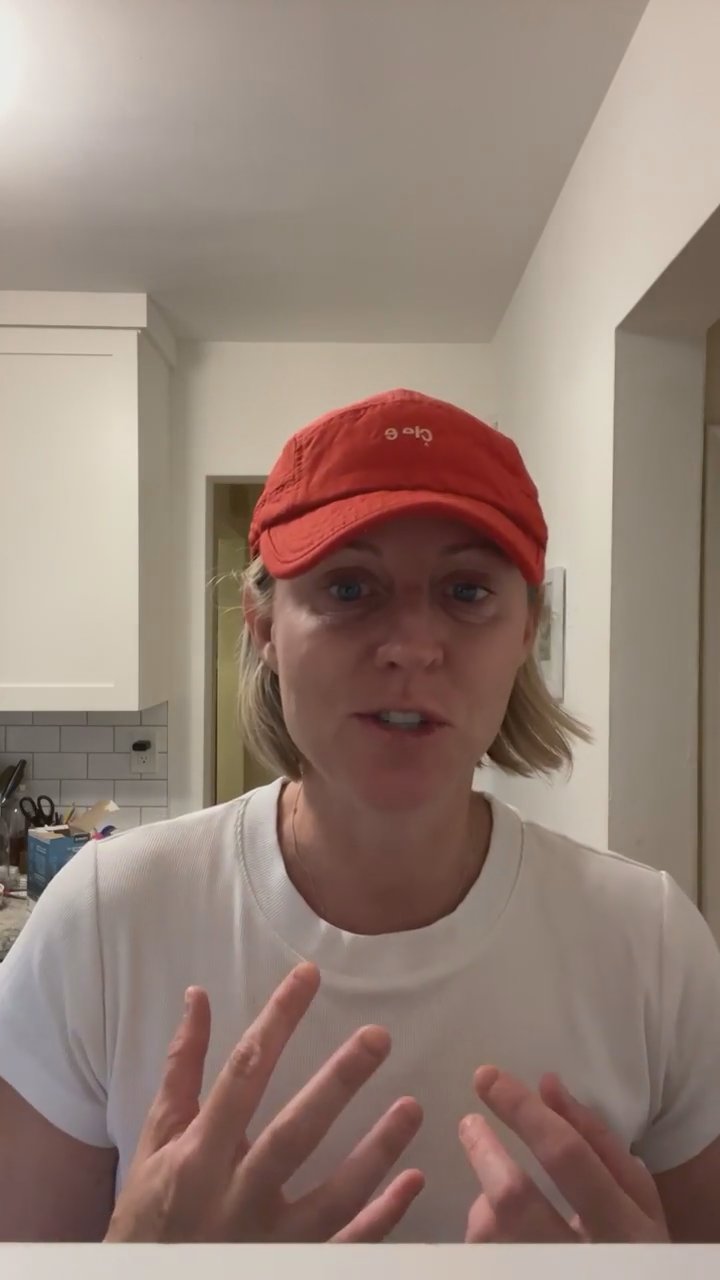
Shannon, a caregiver and parent living with GAD and CPTSD, reflects on shifting responsibility as her 15-year-old son begins advocating for his own goals and starts therapy, exploring the balance between parental priorities and his social desires.
Shannon joins us from Cadre here on Caregiver day. Shannon is a human who is the caregiver for a son with autism. She also lives with generalized anxiety disorder and CPTSD. Mental health is a big part of her life.
Today on Caregiver day, we talk about a switch in responsibility. My son Wyatt is hitting a point in his life where he is going to be advocating for his own needs and his own goals. It's a tricky balance between advocating and letting go.
Cadre. Good morning, everybody. It is Shannon joining you from Cadre here on Caregiver day. m. central standard time here in the Cadre sphere. All right, good morning, guys. So, for those of you who don't know me, who have not met me before, my name is Shannon. I am not a clinician. I am not a mental health professional. I am a human who is the caregiver for a son with autism. I am a person who lives with generalized anxiety disorder and CPTSD. So what that means is mental health is a big part of my life, and navigating it on behalf of myself and then also my son is what I do.
It's part of. It's one of the many things I do, but it is a thing I do. Okay, so today on Caregiver day, I am going to talk about a switch in responsibility, maybe is the way to put it. So my son Wyatt, is 15 years old. He is a teenager. He is a, you know, he's like a middle teenager. And so he today is starting with a new therapist. So as a caregiver, we're in this place where there is a transition of me as his caregiver, his mom being the one who advocates on his behalf and who says, hey, this is what we need to work on to him, slowly but surely becoming part of that decision making process.
And so it's a transition time, right? So today he starts again, I think I said, with a new therapist who, ironically, is named Mason, which is also his best friend's name. So that bodes well for the situation. But as we're getting the therapy set up, the clinician said, like, what are his goals? What do you want his goals to be? And I can say what I believe for them to be right from my perspective as his mother. And I can say, wow, I really wish he would make his bed, and I really wish he would do all of these things that I wish he would do.
But the truth of it is, is he's hitting a point in his life where he is going to be advocating for his own needs and his own goals. So it's just an interesting moment as a caregiver, because it's like this shift in my mind, likely primarily, of, here's what I want him to learn. Here's how I want him to start navigating the world. Here are the things that I wish that I could see him do. And the truth of it is, is that he is going to continue to have his own perspective. He is going to say, actually what I care about is like, how do I get a girlfriend?
Which is probably number one on his list right now? What do I do? How do I do that? How do I become more social? How do I feel included in these groups of people? So a lot of his needs and desires at this moment are focused around social interaction. So that's not what I think about. Right. My 30,000 or 10,000 or 5000 foot view over here as his mom, I'm like, hey, I want him to think about executive functioning and, you know, being in the world, et cetera, et cetera. So it's just this interesting moment in time that I'm sure you speak wonder.
You, Colleen, and you, Jules, can all resonate with. And good morning to all of you where there's a balance of your perspective and your loved one's perspective that you have to adopt and you have to make space for and you have to know that this person is a whole human who is to advocate and should advocate for themselves. And Gilbert is here. Good morning, Gilbert. And also, like, let go a little bit to be able to make space for them to come in while at the same time maintaining your role as a caregiver.
So I'm working on that today. I am working on. Yes, let's go into this with Wyatt advocating for himself and Wyatt saying like, hey, this is what I need and this is what I, what I want to focus on. And I think it's something that's resonant. And so I just. Excuse me. I wanted to call that out today and say, yes. Wonder you said it's a tricky balance between advocating and letting go. It is. It is. And so it's a day at a time endeavor. I'm excited to see what he comes back with today post therapy with Mason, his new therapist.
And I'm just really cognizant of myself that I have to be aware of it and have that self awareness with myself to let him. Let him. Right. Even that language letting him. Because I'm not letting him. He is a person and he gets to have all of the things, letting myself let go of that control. So thank you for you guys, for being here and seeing that and understanding Colleen. Yes. We have to feel our way through. We do. Every single day. Okay, guys, today, the rest of caregiver day, we actually have Colleen Lindstrom coming up.
She is our sandwich generation, caring for a mother with dementia and a child with autism. We have Kathy joy coming up. Pilots, you guys. I'm just going to acknowledge that Gilbert seems to need some love as well in this moment. I think he needs some care. And we've got later tonight, and I hope you guys have a fantastic day. I'm gonna go care for Gilbert, because clearly, you know, he's letting it be known he's advocating for himself. So I'm gonna do that now. But I hope you have a fantastic day, and we'll see you again soon here on the cadres fair.
All right. Bye, friends. Thank you. Speak, wonder. Yes. Oh, Gilbert.
Reactions and comments are for members. Joining is free and takes a minute.