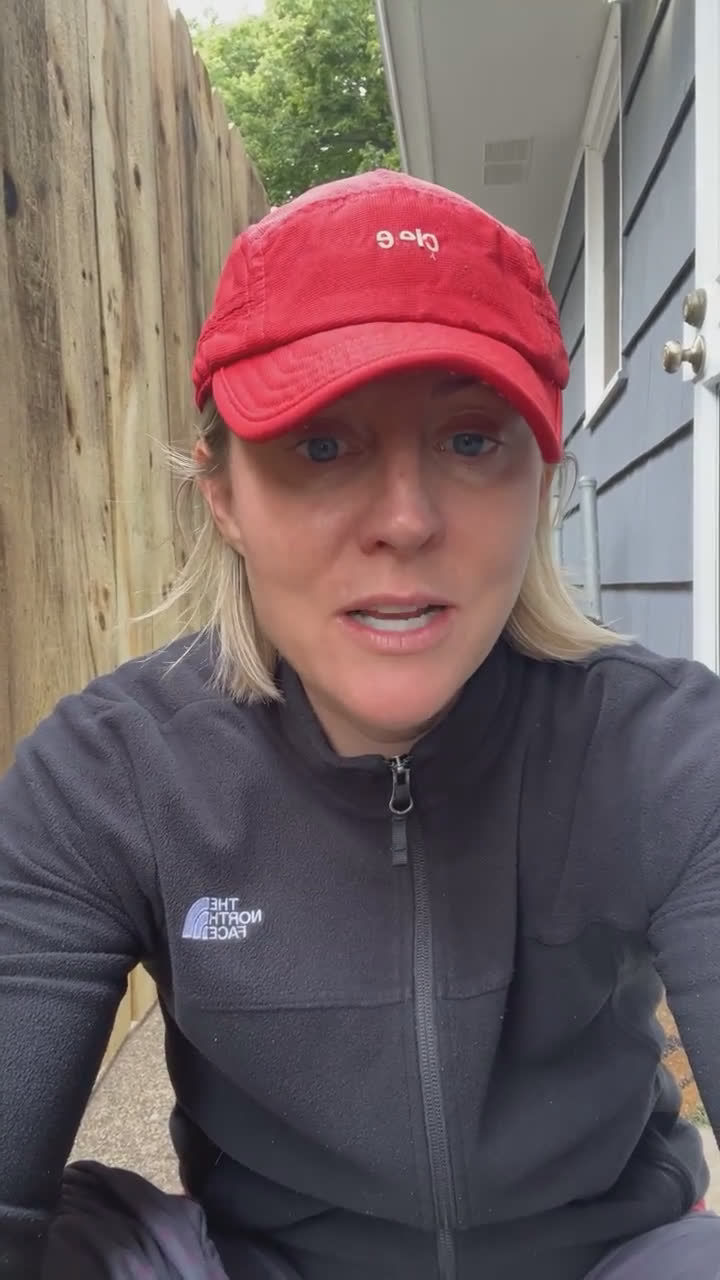
Shannon, a caregiver and Cadre team member, reflects on parenting a 15-year-old with autism while living with anxiety and CPTSD, exploring the limits of caregiver expertise and the emotional complexities of supporting a child with social-emotional needs.
Cadre. Good morning. Shannon is a human being who parents a child with autism. She also live with anxiety myself, and she has something called CPTSD. Like many of you, she is also part of the Cadre team, which is an amazing gift.
Colleen Lundstrom is a caregiver de on Cadre. She has a 15-year-old son with autism. Her son's diagnosis is a social emotional diagnosis. She struggles at times with things like faith.
Caregiver day on Cadre is about support from peers and professionals. We're going to have speak wonder, Kathy Joy to talk to us about caregiving through the eyes of harpers. I love seeing you guys show up here. Have a great day.
Cadre. Good morning. Hello. Welcome to Cadre. Good morning. It is Shannon. I am here at 09:06 Central Standard Time in Minneapolis. Welcome to Cadre. So for those of you who don't know me, my name is Shannon. I am not a mental health professional. I am not a clinician. I am not anyone with any, you know, clinical degree or, you know, grounding in anything that is going to make me an expert in anything. What I am is I'm a human being who parents a child with autism. I live with anxiety myself, and I have something called CPTSD.
So it means I got a lot of stuff. Like many of you, I'm also part of the Cadre team, which is an amazing gift. Good morning. Speak wonder. Good morning, Jules. Good morning, everybody out there. You have found us on caregiver de on Cadre, which means it's for people like me, like you, who take care of others. And frankly, listen, we all take care of someone at some time in our lives. All right? So today, here's what I'm going to talk about. I'm going to talk about a beautiful part of autism. So for those of you again who haven't met me before, I have a son.
He's 15. He has autism. And I would say he's sort of, like, on the support scale. You know, he needs supports in some ways, and executive functioning, but he's highly, highly intelligent. So to that end, I'm going to share this morning just sort of a feeling that I've had over the last week as I have been caring for my son with autism. Okay? So I think often when you're a caregiver, you're like, hey, I'm a boss here, right? Like, meaning it's my job to know all the things. It's my job to have sort of the answers.
It's my job to be the person that, like, takes the broom and sweeps up behind all the things and makes sure that the ship is running as it's supposed to run. But as we all know, we're also humans, right? And so when we're humans, we don't know everything. We don't. As much as we think we might, we don't. And so I'm going to tag for a second into my CPTSD, which I've talked about a little bit. I used to talk about more, but essentially, it's growing up in a family with a lot of trauma, where there wasn't a lot of emotional safety with my own caregivers.
And so to that end, I, although I don't have an autism diagnosis or a neurodiverse diagnosis. I struggle at times with things like faith. I struggle at times with knowing what's safe in human to human relationships, which, frankly, is probably why I've been married twice. And that's okay. But it's not something that is easy for me. And the interesting part about that is that my son's diagnosis is a social emotional diagnosis, right? So autism is very much about communication. It's about reading other people's emotions.
It's about a lot of things. So the irony, my son's disability, now if I could quote, I can't use my fingers because I'm holding the phone, but if I could put quotes up, I'm going to put disability in quotes for this conversation because his disability in this social emotional disorder or diagnosis when juxtaposed to my supposed full abilities as a human who technically actually studied communication and my own abilities with social emotional health, I've been learning in the last week that he might be more advanced than me.
And I'm going to give you a couple of examples. And these are such beautiful examples. You all know Colleen Lindstrom, our friend. She's on right after she's in the sandwich generation, and she's part of the Cadre team. So Colleen Lundstrom, not to give away her bio, but she's also a pastor, right? So she has a background in being a pastor. And so part of my trauma is religious trauma coming from growing up in a household where sort of like God always has the answer and your emotions are sort of irrelevant, so why does that matter?
So my son is thinking about God a lot right now. He's thinking about a higher power. He's thinking about is there a heaven? He's thinking about is there a h***? He's thinking about faith. He's thinking about these big questions that people think about when they are 15 years old, right? It's very, very typical. So as we're having these conversations, right? And I'm going to go back to the grounding of, I'm supposed to be the caregiver. I'm the one in charge. I'm the one that's got all the answers.
He's asking me questions, by the way, as we're walking through the fall of America. So we're shopping for cologne and he's like, mom, do you believe in God? And I'm like, yeah, I believe in God. It's a complicated answer, if you want me to be honest, because I grew up with this religious trauma and I didn't say those words to him. I'm saying them to you. But it's wildly complicated. And then he's like, okay, so we talk about that a little bit. And I'm like, yeah, you know, I believe in God. He's like, do you believe in heaven?
And I'm like, you know, Wyatt, if you want me to be really honest, I don't really know exactly what I believe because I don't know. I don't actually have all the answers. And then he follows up with, well, do you believe in the big bang theory? So he's going science now, right? So we've gone faith, we've gone, you know, religion, now we're going science. And I said, I gotta be honest with you. I don't even really, I have to Google, like, big bang theory. I don't remember it. Right? So the point is we start having this deep conversation about our belief systems.
We have this deep conversation about sort of like juxtaposing faith and science. And it sort of like, gets us into this larger conversation about our familial relationships. And like, did I feel safe at home and all these things? And I say all of this to say, going back to my original premise, my son technically has this social emotional communication diagnosis, right? And he is, like, leading me and guiding me in this conversation around faith and science. And what do I believe and why do I believe it and how does it impact my relationships and all of these things?
And I was blown away by his fantastic ability to see things with these clear eyes. And part of that is because of his autism, right? Like, he sees the world in a different way. And as we were sitting against the wall by the Macys in Mall of America in the west court, if you ever are in Minneapolis, we sat down on the floor and we googled the big Bang theory together and we had this conversation about science and faith. Ps, I have no agenda or answer in any of it. So there's nothing that I'm looking for here.
So whatever your belief system is, is freaking fantastic. Which is frankly what I told him. Like, listen, you are a person who gets to get all the information and you get to make a decision. But this conversation was just such a fantastic reminder, like, speak wonder you're saying in your comment, we are mentored by our own kiddos, 1000%. And so over this last week, that conversation happened last week. And over this last week, the questions have continued. And I did text my friend Colleen Lindstrom, who will be here live at 930, and said, hey, Pastor Colleen, would you talk to my son, Wyatt.
I think you're gonna have better answers than I am. And she said, I would love to, which is a freaking great gift for me. But my point is the eyes with which they see the world through their, again in quotes, disability is so incredibly valuable and stops me in my tracks. So as a caregiver, I'm reminding myself, which I tend to do on my live streams, but also you, that there are moments and things and perspectives that are going to come from those folks we care for because of the experience they're living in right now.
Right, whatever that is. Whether it's caring for someone with dementia, whether it's caring for, again, a child on the autism spectrum, whether it's caring for someone with a long term medical diagnosis, they're going to have viewpoints that are colored by that experience. And so our openness as caregivers to hear, receive, be open to that perspective, which I think, and I'll speak for myself at times that wholeness of their humanity can be overshadowed by the care sort of routine that we're in together, right, where I take care of you and I do this, and I think at times, at least for myself, I will get so caught up in that small routine that I will forget to see the wholeness of that person.
So I was just wildly grateful this week that my son asked me these questions and came with his perspective, colored by his autism. That is pure and beautiful and just, it's staying with me. So that's what I wanted to share today is just sort of the beauty in the wholeness that exists and to remind ourselves that it's an equal proposition. Right? We're a caregiver. And guess what else? He gave me care this week. That's it. So I appreciate all of you for showing up today. Again, caregiver day on. Caregiver day on Cadre is about support from peers and professionals.
So later on today, we're going to have our mat clinicians, Minnesota Autism center clinicians. We are going to have Colleen Lindstrom coming up, sandwich generation, talking about what it's like to live in the middle of caregiving on both sides. We're going to have speak wonder, Kathy Joy to talk to us about caregiving through the eyes of harpers, which I'm not even joking, is kind of one of the coolest things I've experienced. It's fun to be brought into something that you don't know anything about.
And that's what Kathy Joy does for me. So speak wonder. Shout out to you. Steph Irwin was already here this morning from our southern friend who has a cold today but showed up for us in this Cadre sphere. Miss Shannon Paul is coming up. JC Lippold is coming up. You guys, it's a beautiful day here on Cadre. Thank you for being here. Thank you for being part of this group of people who takes care of each other. Thank you for being people that helped me get through my day. I love seeing you guys show up here.
And so, Jules, speak wonder. Ileana, thank you for being here. Love seeing your faces. And join us again soon here in the Cadres fair. Have a great day, guys.
Reactions and comments are for members. Joining is free and takes a minute.