Every teardrop is noticed, held and sacred. Crying cleanses toxins. Caregivers are acquainted with tears; let's talk about the gift of saltwater drops in the caring of one another.
Kathy Joy: My mom, I was hands on for a few years, visiting her home for several days a week. Now she's in a nursing home. Mom has something called sundowners, and she becomes disoriented and confused. Sometimes there are tears. Welcome to Cadre.
We shed tears as caregivers, and we sit next to those who are weeping as caregivers. The way that we show up for each other is by sitting with the person who's crying. Vulnerability is a superpower because it allows you to be vulnerable.
Leo Biscaglia tells the story of a little boy who helped his neighbor cry. The best helper you can be is the one who holds somebody's tears. Talk to you today about tears and honoring the saltiness of our tears as caregivers.
Kathy Griffin: Where are the men who step in as leaders and as mentors for these young boys? Griffin: If you were to follow a band or group, I would be the Cirque du Soleil geek. An example of tears, the raw, bitter tears of Tiffany.
I'd like to end this Cadre talk with Walt Whitman. His poem is tears. If we hold back our tears, we will release an ocean. Let them dribble, whether they're yours. I'll see you next week.
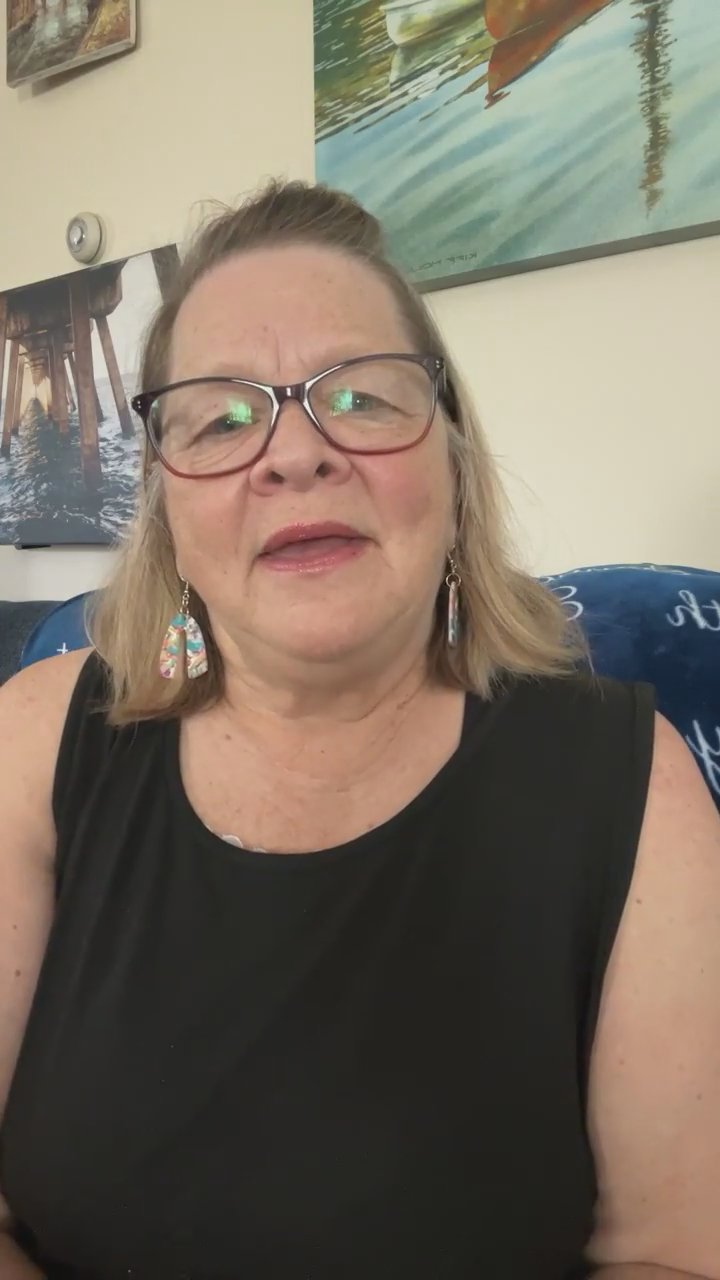
Hi, Cadre, it's Kathy Joy here. Speak wonder. With harbor pilots as my backdrop. I bought a thing. It's kind of a piece of crap. It's this. I haven't really started the live yet. Officially, it's this thing I got online. It holds my phone up, but it keeps falling out. I just need to go to best buy and get something decent. Anyway. Hello, Cadre. I'm officially starting the live now. It is Thursday at eleven, and one of my favorite places and spaces to be is in the cadres in community with you as somebody who's a caregiver in the trenches with you, emotionally caregiving.
My mom, I was hands on for a few years, visiting her home for several days a week and assisting my brother and sister in law. Now she's in a nursing home. Mom is, and she's 93 years of age. I get to see her about once a week because of the travel time and distance now from where I live. Hello, Jules. Welcome to Cadre. Thank you for joining me. m. and she becomes disoriented and confused and sometimes a little bit combative, which is really not her at all. Very difficult. Sometimes there are tears.
Today I chose tears for my topic because we have them. We shed them as caregivers, and we sit next to those who are weeping as caregivers. And what does that look like? Well, to describe what you already know tears look like, I thought I'd use a few recent examples from my world and also from yours. One is in the saltiness of tears and in the way that we show up for each other and honor each other is by sitting with the person who's crying. So one of the individuals we got to sit with a couple of weeks ago on a Sunday evening was Tiffany Norton.
And Tiffany is funny. She's a comedian. She has this distinctive, wonderful voice, and she injects humor into the real grit of life. That night, that would have been July 14, Tiffany shed some tears. We had just seen a shooting, and rather than politicize it or do anything with the issue, she talked about the boy who was lost, the shooter. And Tiffany talked about how she is trained in school safety, juvenile probation, law enforcement, as relates to young men. Grew up with a brother who was, and still is mentally ill.
And Tiffany was the first in her family to recognize that even before her parents did. And he's getting the help he needs. He's still fragile. And when her tears began to flow, I noticed in the comments, people were writing things like, Tiffany, you don't need to be sorry. You are being authentic and raw. And that's something lovely about the Cadre community, is that we can sit with each other in our discomfort and in the discord and in the stuff we can't fix, the stuff that's real and raw and can't be sanitized or cleaned up.
It just sucks. And we can sit with each other in that. So thank you, Tiffany, for your vulnerability. Vulnerability is a superpower. I believe Doctor Charryse said that. I have so many quotes in my journal, and vulnerability is a superpower because it allows you to be vulnerable. When I show up my authentic self, you get to show up as your authentic self. When my mama cries tears of frustration or confusion, I don't have to show up with ways to fix her or make her better. In the sitting with her, whether it's on the phone or in person, I'm assisting her, I'm caregiving her.
It seems passive, but really it's active. It's actively being willing to enter a space where someone is suffering, sit there with them. Another example of tears is from one of my favorites. Leo Biscaglia was known as the love doctor. He was a psychologist and he taught at university in California. One of his signature things to do after his lectures was to hug every student in the room, in the auditorium. Come on, bring it in. Give me a hug. This is way pre Covid because we still back off from even human touch, I feel lately, in these past years.
So again, thank you and I welcome everyone who's coming in for the chat. Talking to you today about tears and honoring the saltiness of our tears as caregivers and as people who sometimes feel overwhelmed. The dailies of life. Leo Biscaglia tells the story in one of his books about a little boy in his neighborhood, just a small one, maybe four or five years old at the most, who knew that his neighbor was grieving the loss of his wife. He knew that. Let's just say Mister Jones no longer had misses Jones.
So he says to his mama, can I go over to Mister Jones house? And his mom is a little tentative. She's not sure how this kiddo is going to behave. Will he be appropriate? And she can't really get away with the boy. So she says, okay, honey, for a few minutes, you may go. And I want you to come right back home. So he trots over to Mister Jones's house, comes home, and mama says, well, what did you say to Mister Jones? Nothing. Nothing. The boy responded, I just sat and helped him cry. The wisdom of a child, the discernment of a childlike heart, to recognize that the best helper you can be is the one who holds somebody's tears.
Getting back to Tiffany a little bit, I didn't mean to veer off of what she was crying about. She was talking about the lost boy that shot at the crowd and at the speaker in Butler and trying just so hard not to go into politics because Tiffany didn't. She had tears for that boy, tears for her brother, tears for the shooter. Tiffany talked about suicide by Copenhagen, and she said, how is it easier to get ahold of a gun than a therapist? Where is the help for these desperate, lost young men? And I'm just feeling it now.
The upheaval in Tiffany's heart that night, so very close to that national drama on screen, over and over and over and tragically, you know, our lives lost, including the shooters. And Tiffany had the courage to talk about it. And she said, where are the men? Men, where are you? Can you please step in as leaders and as mentors for these young boys? And she wasn't really talking specifically to dads or traditional roles or teachers, but men who look around and see young men who are lost boys and come alongside them and help them to see that they're looking at permanent solutions to temporary problems.
Death is a permanent solution to temporary problems, like not being liked or welcomed or accepted on campus. So I don't want to go down that rabbit hole, except to say, thank you, Tiffany, for bringing up something that nobody was talking about that weekend, and that was the lost boy and the fact that he had access easily to a gun, but not to a therapist and not to help, apparently, we don't know the whole story. An example of tears, the raw, bitter tears of Tiffany. They lifted out of her heart.
And I don't think, Tiffany, you even knew you were going to be crying that evening. Tears present themselves when we have been holding in big emotions. They just do. And they're good. They do cleanse our toxins. That is medically proven, but emotionally and spiritually, it cleanses us. David the psalmist is a poet, was a poet. And he says in this poem, you keep track of all my sorrows. You have collected all my tears in a bottle. You have recorded each one in your book. Bill is a guy in Cirque du Soleil.
Now, friends, if someone said, Kathy, you can go on a road trip to all the major cities in the US of a. What would you do? If you were to follow a band or group, I would be the Cirque du Soleil geek. I love Cirque. I've been to a performance at Chautauqua. The theme was Beatles. I went to Ohio with a group of senior citizens when I was director of a senior citizen place. And we got to see them. They're in Vegas. They had lockdown during COVID and had to regroup. And there are documentaries on one of your streaming channels if you want to see it, because I've been geeking out on those.
I watched a documentary about the comeback of Cirque du Soleil after being away from performing for about a year and a half. And it was about how they got their bodies back in shape, how they stayed in shape during lockdown. And these acrobats are just wonderful performers. They are athletic, they're so expressive, and the costumes are amazing. If you don't know what Cirque du Soleil is, look it up. And there are tons of videos, but if you can see them live, ah, that is so cool. So Bill was on this documentary, and he's an acrobat, and I believe he was with the group in Vegas for twelve straight years.
He was one of the key players. I mean, each and every one of them are key players. And I include the spotters and the ones in the water performance, where you have divers underneath the water, spotting the acrobats who are up there on the trapeze. It is crazy stuff. They defy gravity, these performers. So Bill has been in the aquatics part for twelve years. They put him on camera to talk about his career and the fact that he had an opportunity not too long ago to become an instructor with another aquatics competitive group.
And he saw it as a good career move. He's young. He's got so much left in him to teach, mentor. But he had to cut away from Cirque Duke Soleil performing in order to take this position on camera. Here's Bill. He's talking about his new career opportunity, and he recognizes in that moment, live in front of a camera, that this is his last performance with the troupe, with his friends, with the people who've made mistakes and changed it up and included him. And I welcomed him and changed him and made him strong.
And so as Bill began to say to the camera, this is my last, he couldn't get the words out. He couldn't say the word last because his emotions welled up. He was trying to say, and he finally said, my last performance with Cirque, it took him a while it was a hushed and holy moment to watch the emotions changing on his face, to watch his body give way to the salty flow of tears, to release that emotion, I was glad they kept it in. I was glad they didn't cut it. Why is it that we stigmatize tears in men and women?
Why do we do that? Why do we say, don't cry? When tears are valid, they're sacred. They're an expression that sometimes words cannot convey. So I invite you to sit with the tears, whether it's a friend, somebody here on the Cadre, doing alive. We don't know when tears will visit, but we need to welcome them. I've had to learn when my mom cries, to put down my weapons of mitigation, to lay down my tools of how do we fix this and simply be, simply validate her big feelings. I'd like to end this Cadre talk with Walt Whitman.
His poem is tears. This was written in 1900, and it appears in the book leaves of grass, and, curiously, on the Cadre here with harbor pilots. It's from the chapter Seashore memories, with a lot of. With not a lot of side commentary. I'd like to preface the reading of this poem by saying that the author here was basically conveying what happens when we shore up our tears, put them away, and we cry in silence and in darkness, and how that's detrimental and how we need to cry. This is not a downer live.
This is. This is a glorious embrace of emotions and of honoring the human spirit in all its forms. Walt Whitman. Tears in the night, in solitude, tears on the white shore, dripping, dripping, sucked in by the sand tears, not a star shining all dark and desolate, moist tears from the eyes of a muffled head. Oh, who is that ghost that form in the dark with tears? What shapeless lump is that bent and crouched there on the sand, streaming tears, sobbing tears, throes choked with wild cries. O storm embodied, rising, careering with swift steps along the beach, o wild and dismal night, storm with wind, o belching and desperate, o shade, so sedate and decorous by day, decorous by day, with calm countenance and regulated pace, but away at night as you fly, none looking.
Oh, then the unloosened ocean of tears. Tears, tears. Walt Whitman, you gave us a gift. If we hold back our tears, we will release an ocean. Let them dribble, whether they're yours, sit with them, honor them when there's somebody else's tears. Lay down your weapons of mitigation, put away your tools of fixing and just be. I'll see you next week, right here on the Cadre with harbor pilots.
Reactions and comments are for members. Joining is free and takes a minute.