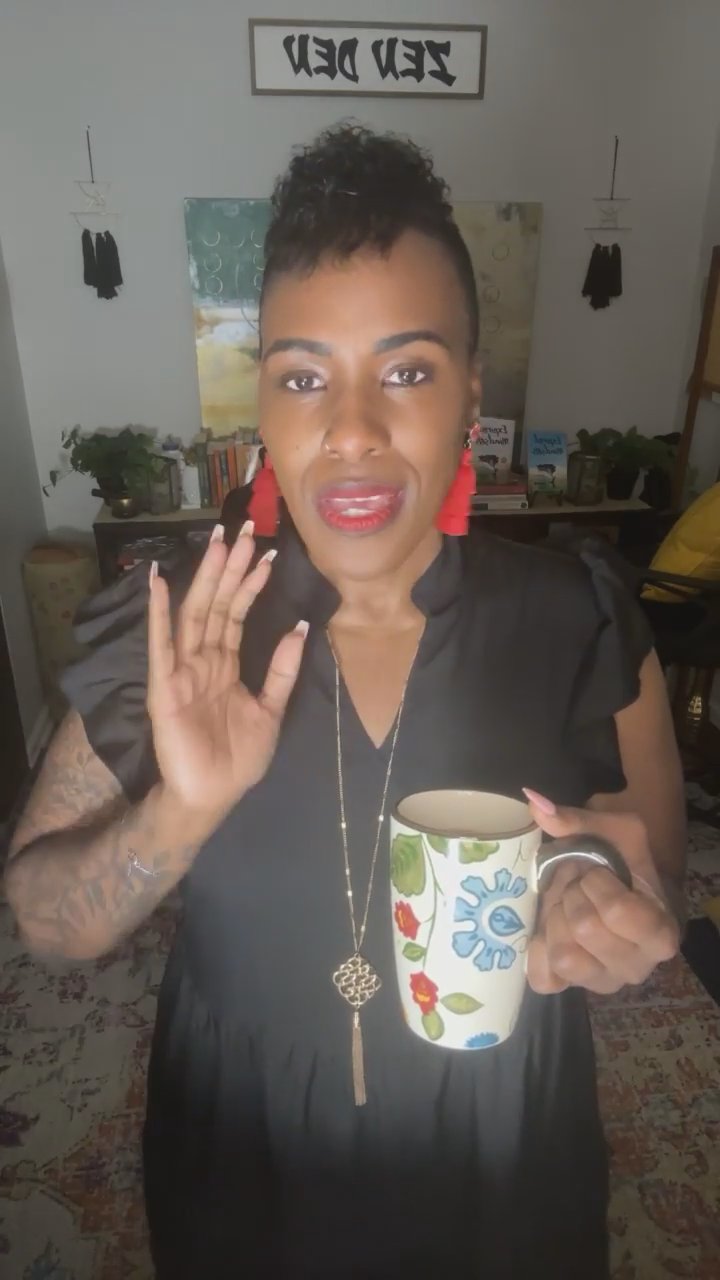
Dr. Charryse Johnson discusses why asking for help can be difficult, explores fears like disappointment and judgment, and offers five practical ways to lean into vulnerability, recognize limits, and shift how asking for help shows up in daily life.
Hello, beautiful people. Good morning and welcome wherever you are in the world. Right now, it's Friday, and you're here for. If you play kitak, I'm going to sip my coffee. And if you too, have some beautiful, warm, non alcoholic beverage of choice. Cheers.
Doctor Charryse Johnson is a licensed clinical mental health therapist, mindfulness practitioner, and author. On Fridays, we talk all things. Life, grief, trauma, food, life, the whole world. What it's like to balance your plate metaphorically and tangibly.
For multiple reasons, I can struggle to ask for help still. Does anyone else ever struggle to asks for help? I hope that I'm not alone in this. I think this is something that we can all utilize and be very beneficial.
How well are you doing asking for help in life right now? Our mood, our mental well being impacts how much we're willing to approach ask for help. There are certain times and dynamics. And there are other times where we struggle.
When we ask for help, it does help us recognize our limitations. It fosters collaboration, challenges rigid mindsets, deepens our relationships. It takes a lot of courage to asking for help. We all have a story that plays into why we might struggle in that specific area.
The benefits of asking for help is that it reduces our emotional load. It changes the way that we operate in life. It's an opportunity to learn and grow. I like me better when I ask for help because it creates so much relief.
Why do we struggle for asking for help? One fear of disappointment. We get caught in wanting certain things from certain people that are not going to give it to us. Today's a new day and a new opportunity for you to shift and change.
Sometimes rejection is protection. Sometimes we do not ask for help because there's this part of us that is afraid of being judged for not knowing something. If you have a need, I want you to call me and reach out.
Number 12345. Victim mentality. Zip. There are some people who do not ask for help because they actually like being the martyr and the victim. There's some level of insecurity in them that needs to be seen in a way.
There is a lot of stigma against asking for help. How do you overcome that fear? Five simple, not so simple things. Embrace vulnerability as a strength and not a weakness. Ask the right person.
I always want to end with asking you this question. What is your lack of asking for help doing to your body, your mind and your spirit? How is it impacting and influencing the foods that you're eating right now? Take some time and reflect.
Hello, beautiful people. Good morning and welcome wherever you are in the world. Right now, it's Friday, and you're here for. If you play kitak, I'm going to sip my coffee and give everyone a moment to come in. And if you, too, have some beautiful, warm, non alcoholic beverage of choice in your hands. Cheers. And let's take a siphen. Oh, so good. So this coffee was sent to me by a friend, and it is from a restaurant in Maryland called Zapani. So good. So good. Y'all might be in trouble. I haven't had any in a while.
It's great to see everybody coming on. Of course. Say hello. Good morning, good afternoon, good evening. Depending upon when you're listening, let us know where you are in the world. Hello, Steph Irwin. Hello, Gwen. Hello, Lindsay. What's up, Buffalo? And of course, as we typically do, rate your week, because it gives me a good opportunity to see how things are going in your world. One being, it's been a rough week, and ten. You're on top of the world. I'm a ten this week, y'all. Part of that is it is like a real, real, real Friday.
Hello, northern Minnesota. Hello, Philly. Thank you for the happy 26th anniversary. Hello, from Canada and Detroit. I need to come to Detroit. You give me a reason to come to Detroit, and I will come to Detroit. Good morning from Chicago, upstate, pa, Erie, all the people. I love it. That being said, it is like a literal, literal, actual weekend for me. It's a work ish weekend, but I'll be in another city working, which is always fun. And I'm just hyped, so it's been a ten. Hello, Ken. Hello, Audrey.
Okay, two more sips and then we're gonna start. Oh, so good. I think. I haven't had coffee, y'all, in, like, two months. At least. It feels like it. I'm like, when did I go to London? Okay, my head hasn't even been that long. It just feels like it, but it's so good. Okay. Okay, I'm done. Let's get into it. You're here for. If your plate can talk. If this is your first time here. I'm Doctor Charryse Johnson, a licensed clinical mental health therapist, mindfulness practitioner, and author. And on Fridays, we talk all things.
Life, grief, trauma, food, life, the whole world. And what it's like to ultimately do the work in your own life and balance your plate metaphorically and tangibly. So let's start with funny story. Not really funny, but kind of funny to me. So I'm trying to make the long story short, the other day I needed to get my vehicle, the vehicle that I'm using that is not parked at our house because there's limited parking. We live in a townhouse organization, yada, yada, yada. It was raining. My husband had left.
My daughter wasn't home. Usually I would just grab one of their cars, but that wasn't possible. But I was committed, and I was determined to get where I needed to go on time because I was not about to miss this personal appointment. So I was like, it's a little rain. The car that I need to get to is only a mile away. I can walk a mile. You know, like, the way I was dressed, I couldn't run the mile, but I was like, I could walk a mile. Take me a hot 15 minutes, 20 if I'm being really slow, depending upon the rain.
So I get this little umbrella, get dressed, head out the door, start walking in the rain, and on my way there, my husband comes and is like, what are you doing? And I was like, I need to get my car so I can get to my appointment. And you weren't here. And he was like, why didn't you call me? Because you were busy. You were doing something. No, no, no, honey. Why didn't you call me? And then he said this, which is going to be the focus of today. Why didn't you ask me for help? Now, I know all of you would like to believe that I am great and wonderful and do everything right.
Negative. And I'm not going to lie. For multiple reasons, I can struggle to ask for help still, even though I know how important it is and even though I know how beneficial it is, there are certain situations where I am inclined to ask for help. I will ask for help. I know the people that are there, but there are some moments where I just fall back into this dynamic of self and self preservation, and I don't ask for help in moments that I could. So cue focus of today. Am I alone? Does anyone else ever struggle to ask for help?
I hope that I'm not alone in this, but I think this is going to be something that we can all utilize and be very beneficial. So the question I want to start you with is, how well are you doing asking for help in life right now? How well are you doing? How well am I doing asking for help in life right now? And I use the word right now as a caveat because I also think that our mood, our mental well being impacts how much we're willing to approach asking for help. There are certain times and dynamics.
I know some people are like, ooh, why you reading my mail? Surprise. And there are other times where we struggle, and it can be a variety of reasons. So I want to start off first with the benefits of asking for help, because there generally are benefits and we need to really keep them in mind. I want to give you, let's see. 123456. I'm going to just try and make these succinct. When we ask for help, one of the benefits is it does help us recognize our limitations. We do have limitations, whether we would like to acknowledge it or not.
Side note that you need to put somewhere on your paper, I cannot do everything. Okay, I know that that just hurts some hearts, but that is today's hard truth, is that you cannot do everything. We all have limits, and you specifically have limits to how much you can do and still take care of yourself. If we think about the concept of a plate and what we put on our plates metaphorically or what we put on our plates tangibly, you can only put so much on your plate without consequence. So you have to know your limits or you run the risk of getting sick of overextending, of overeating, of not feeling well.
Your plate can only hold so much. And in order for us to stay well and stay within the boundaries of that plate, which helps us balance out life, we have to know I'm at my limit and I need to ask for help. Number two, it fosters collaboration. It is important for us to have people that we collaborate with, and not just when we want to, when we have to, but even in the moments that we know this would be better if I bring someone else in, if I bring in another set of eyes, if I bring in someone else to help me just talk it through.
I've learned that so much. Side note from the business aspect, that sometimes just having a few other people in the room to talk through a situation and collaborate it and have help thinking it through changes the mental load that is experienced when you don't try to figure it out all by yourself. Number three, it's actually a sign of courage. It takes a lot of courage to ask for help. It also takes a level of humility because we have to believe that we are worthy of the help that we are asking for.
And really in sometimes and in some situations, work against the self sufficiency and the shame that exist next, it challenges rigid mindsets. It challenges the part of us that says, I don't need anybody, I will out myself. My dynamic, the core root of me not asking for help is the number of times in life growing up that there was no one to ask that because of my life circumstances or situations. There were so many things that I had to figure out on my own because there were not reliable people in my life.
Then add losing a mother while in college or right on the tail end of it in my young adult years, that added another layer of my help system doesn't exist. The most trusted help system that I had was my mother. And then you add losing her. It added onto all those other dynamics and really created this hyper independence that still naturally thinks, oh, I've got to figure this out. Oh, this is up to me, oh, I've got to take this on. I share my story so that you can consider your story. It would be a really interesting thing for you to really reflect on the root of your issues around asking for help, and I'm going to give you some guidance on how to do that.
But we all have a story that plays into why we might struggle in that specific area or what kind of people help us feel like we can ask for help versus the people that we feel like. No, I don't feel like I can trust you with what I mean. So helps, recognizes limitations, fosters collaboration, sign of courage, challenges rigid mindsets, deepens our relationships. Because when you do find people that you know you can actually ask them for help and they're not going to see you any different, and that you can trust them, it does something to you.
There really are a lot of people in life, I'm so blessed to say that. I know if I call them, they would help me. But there are maybe a handful of individuals from all different walks of life, in all different places and locations, that my relationship with them is so special because of the way that they've helped me, because of the way that they see me and speak to me when I need help, that allows me to operate in that vulnerability. And if you don't have that, seek it out or notice if it's around you and you're ignoring it.
Because sometimes there are people around us who are waiting to deepen that relationship and be there for us, but because of our own fears, we don't see them, or we don't want to see them, and we don't let them in. We're wired neurobiologically for connection. And as part of that connection and that desire to belong, there's also a desire to know that we can depend on other people and not always ourselves. The other things two more that happens when we ask for help. The benefits of asking for help is that it reduces our emotional load.
Let me take a sip right here. If you are a person under the sound of my voice and you feel like you're overwhelmed and you have so much going on and you have too many tabs open in your head, and all the things I want you to ask yourself, where do you need to offload and where are you choosing to take on so much responsibility that you will not let anybody help you? Let me also say, because this is a co ed space, it does not matter what gender you are, you need help. We all need help. And when we get it, it reduces that mental load, that invisible load that I like to say that we carry, that then weighs us down and changes the way that we see ourselves.
It changes the way that we operate in life, it changes our confidence, it changes our cravings, it changes our nourishment barriers, it changes our sleep pattern, when our overload and our mental load is so high because we won't let anybody in and we will not communicate what we need. So you always want to ask yourself how much of my plate being full is because there's just so much there, or how much of my plate being full is because when somebody says, hey, can I take some of that off your plate for you?
You say no. Cheers. Last benefit of asking for help is it's an opportunity to learn and grow, to learn about yourself, to learn about the people in your life, to grow and to recognize, like, oh, I like this a lot better. Maybe this is a process that I want to keep in place. I like me better when I ask for help because it creates so much relief. Now let's get into why we struggle. Because we do. We often struggle. And there are some reasons why. I'm going to give you, of course, a non exhaustive list of some of the top common reasons that we see in the world of psychology, psychotherapy and life, that people struggle to ask for help.
And of course, add your own and continue to flip through the comments and look at what others are saying because I can resonate with all of them in so many different ways. Ways. And yes, if this is hitting you hard, let me pause for a moment and say, it's going to be okay. It's okay to need help. It's okay to need help. And even though it may be hard to believe, there are people in this world and your world that could help you if you let them in, that's the thing we have to do. The work. I could have told my husband, keep driving and go home.
I'm fine. I want to walk. Leave me alone. I've been known to do things like that before, but I stopped and was like, girl, you're making your life complicated by trying to walk and be in a rush and then be all wet and all the things he is trying to help you and make this easier. And I got in the car and went because I actually knew that by accepting his help, I was going to be able to meet the need that I was trying to meet in my own life without struggle. So sometimes we complicate our plate because we won't even accept the help that is being offered to us.
And if that's you, today's a new day and a new opportunity for you to shift and change. So why do we struggle for asking for help? One fear of disappointment. I saw that somebody else already said that. Multiple people have said it in different ways. You've been let down in the past before and you don't trust others to be there. Here's the challenge to that mindset. The challenge to that mindset is we take the disappointment that we've experienced one or a few times and we then blanket it onto everybody else.
And it's just simply not true. It's so hard. Don't get me wrong, not to over generalize, but you really want to be cautious and going, okay, I'm disappointed in the person who I asked for help and they let me down. I'm going to take a sip. You might want to, too, before I say this. But then we also have to ask ourselves, did I ask the right person? Did I ask a person who actually had the capacity to support me or was I h*** bent on a specific person helping me? And because it wasn't them, then I wasn't okay with it.
I want you to think about that for a moment. We get caught in wanting certain things from certain people that are not going to give it to us. And we continue to think, well, if I do this, then maybe they will love me like this. If I do this, then maybe they will support me like this. There's no guarantee. So sometimes the disappointment that we experience is because we are trying to lean on people who don't have have it. They don't have the capacity to help you. It is sad, it is unfortunate, it is heartbreaking because it could be a spouse, it could be a parent, it could be a boss.
But when someone shows you something, believe them, but don't have, take what you experience from them. And then generalize and make everyone like them and put everyone in the same boat. Number two, fear of rejection. We fear and worry about being turned down again because perhaps we've had past experiences where we have gotten the courage to ask for help and someone has said no. Guess what? When we ask, people have the right to say yes or no. You can take it one of two ways. You can continue to ask until you get a yes, or you can take that no and take it personal.
And sometimes the no that people give you is not personal. They just know that they don't have the bandwidth to do what you need to do. It's not a fault of you. They're not your people. So it's also learning how to take a no and not take it personal and not allow that to keep you from doing something. Sometimes this sounds cliche, but I believe there is so much truth to this statement. Sometimes rejection is protection. The people that do not come through for you don't need to be in your life, and there's a reason that you weren't allowed to collaborate and connect with them.
So see it for what it is and see the moments when you're like, you know what? They turned me down, but it actually worked out in the long run. That's the piece that we don't always pay attention to. Number three, fear of burdening others. Right. We feel like we're a bother or vulnerable if we look through this. With the story I gave, there wasn't a fear that I would burden my husband. We've been married 26 years. Like, he has to be burdened. But there was this dynamic of, oh, he's out taking care of some personal things.
I don't want to bother him. Whereas he clearly was like, you are not a bother. If you have a need, I want you to call me and reach out. That's a me thing. That's not a him thing, that's a you thing. That's not a them thing. Number four, fear of appearing incompetent. Sometimes we do not ask for help because there's this part of us that is afraid of being judged for not knowing something. We think that if we don't know something that we are seen as weak. I will say this because I believe that there's at least a handful of you on this live.
If you're the kind of person that gets into a new role or starts to do something new and then feels like you're supposed to know how to do it automatically out the gate, and if not, you're not enough. We got some work to do. We have some work to do. And, yes, Audrey, I think pastors and leaders hear that so much. And I think people mean well. They hear that I didn't call because I didn't want to bother you. You know, I think that there's some beauty to that because they're trying to balance things, but then also they're hurting themselves because we can be like, that's what I'm here for.
That is what I'm here for. Now, don't call me at 03:00 in the morning, although people who I really know well could call me at 03:00 you know what I mean? But it's just being able to remind people, I am here for you. You know, communicate and send some information in some form or fashion with my clients. People might think this is crazy. My clients have my cell phone, my clients have my email. I trust them to use it adequately. And I tell them, if you are in a bind or if you have something that happens and you're like, I just need to get this out here.
I don't need you to respond, but I want to make sure that we talk about it. Send me a message in whatever form or fashion that you have, and then we will get to it. But that's the difference of them feeling like they're off and isolated and no one is there for them. I want to let them know to the degree that, that it's appropriate for us in this therapeutic relationship. I got you, and I'm going to be here for you, but I cannot help you if you will not let me in. People cannot help you and support you if you don't let them in and let them know what's really going on with you.
Number 12345. Victim mentality. Zip. Zip. There are some people who do not ask for help because they actually like being the martyr and the victim. We know them. We know who they are because they make sure that they tell everyone, yes, I had to do all of this by myself, and, you know, no one helps me, but I was able to get it done. Oh, my gosh, this is so difficult. Blah, blah, blah, blah, blah. There are those people who specifically take on way too much, who do the most because they like the story.
They like appearing more competent than they truly are. There's some level of insecurity in them that needs to be seen in a way. And the thing that you have to ask yourself is, is that you, is there a little part of you that is used to being the victim? And, oh, this is just how it is for me. And as a result of that, you continue to live out that narrative. Aren't you glad I can't see your faces? Stigma. There is a lot of stigma against asking for help. And specifically, depending upon who you are, what you do, what you look like, your geographical location, your age, it could go on and on.
So when it comes to the stigma we have associated failure and inadequacy with asking for help. We see this a lot in gender roles. We see this a lot when we are othered in a role. So if you're a female in a male dominated industry, or maybe even if you're a male and a female dominated industry, or you don't fit in any of those boxes and you're in that industry, there can be a part of us that also thinks because I'm different, then I have to be better, faster, stronger, do more, be more reliable to prove that I belong where I am.
Be careful, because that can put you in a situation where you're taking more on your plate than you really need to. Because you're trying to prove to yourself, self that you belong in the space that you are occupying. Let me tell you, baby, you belong. You belong at whatever table God has told you to pull up to. You belong in whatever room that you choose to walk into. Regardless of what anyone else says, don't try to out prove everyone else that you think has something against you, then hurt yourself in the long run.
Ask for help. And ask for help from the people that you trust. The last one, just being too independent. That was me, right? That was totally me. Totally out of myself. You immediately think you can do everything on your own. Not gonna lie. My immediate thought in about 99% of the things that I do are, how can I get this done? Da da da. And then I have to work myself down from there and get to the point where I'm like, okay, now, who do I need to help me so that this can be done well without stressing me out?
Okay, so what do you do? Let me wrap it up. How do you overcome that fear, that avoidance of asking for help? Five simple, not so simple things. Number one, recognize the benefits, go back to those benefits. I would have them somewhere. If you know that this is an area that you're struggling on and literally be able to go, okay, I'm feeling overwhelmed. There's too much on my plate. I want to ask for help. Why? Let me look at these benefits. How will I receive the benefits? What of these benefits is most important to me that I will receive if I push past myself and ask for help.
Two, challenge your negative beliefs. Go through this list and ask yourself, where am I at right now? What's the hold up? Oh, I'm fearing disappointment because this happened to me the last time I asked somebody last year. Oh, I fear that I'm incompetent. I'm new on this job. I want to prove myself. Oh, I fear that people won't believe and trust in me to take on this new project or this new leadership or this new role. So I don't want to ask anybody to look over what I'm working on because I don't want them to think that I'm not confident.
Challenge all of those mindsets. Number three, embrace vulnerability as a strength and not a weakness. It takes more strength to be vulnerable, to be open and to be honest than it does to pretend that everything is great and that you're tough and you're all that. Number four, start small. Maybe it's not asking someone to do something big, but taking something very small that isn't so significant that it will rock you to the core if it doesn't work out the way that you want it to in your. Ask and start there.
And number five, cannot say this enough. Ask the right person. Make sure that you're asking someone that you have seen evidence of their dependability, their reliability, and their openness to help others. Don't ask somebody that you know is selfish. Don't ask someone that you know I've been asking them for years to help me and they haven't in this area. So how many more times am I going to ask and feel like I'm getting something different? Okay, so we ran through the whole gamut. Benefits of asking for help, why we struggle to ask for help, and how you can overcome the inability or the lack of desire to ask for help.
Find your section and decide where do you need to work? Take these pieces and put them in action for the next month. Honestly, because this is something that is a lifelong skill. Even notice this in your team. Notice this in your family dynamics. Notice this in your parenting. Whether you're an auntie, whether your dad, whatever the case may be. Notice how this even exist in your family system. Because sometimes we're also kind of displaying those things with others and we're recreating patterns that are not healthy.
Most importantly, let me remind you again that it is not a sign of weakness to ask for help. I want to challenge you between now and Monday to ask for help that you need in some area of your life. I'm going to do the same. And then when we get back together next Wednesday, then we can all check in. Or maybe I should do next Friday since, you know, we won't confuse people. Then I'll check back in. But I'm giving you the weekend because I want you to go ahead and do it. And then if you do more between Monday and next Friday, that's a bonus.
But let's. Let's break out the shell. Let's move away from the fact that we don't need help and that it's up to us to do everything on our own. That's a lie. That's overwhelming and it is putting more on our plate than we need. I always want to end with asking you this question. If your plate could talk, what would it tell you about your need for help? What is your lack of asking for help doing to your body, your mind and your spirit? How is it impacting and influencing the foods that you're eating right now?
Your energy, your movement, your relationships and all the things. Take some time and reflect. And until we meet again, have an amazing and incredible weekend. And as always, I love that you came. I love our time together and I will see you soon. Have a good one.
Reactions and comments are for members. Joining is free and takes a minute.