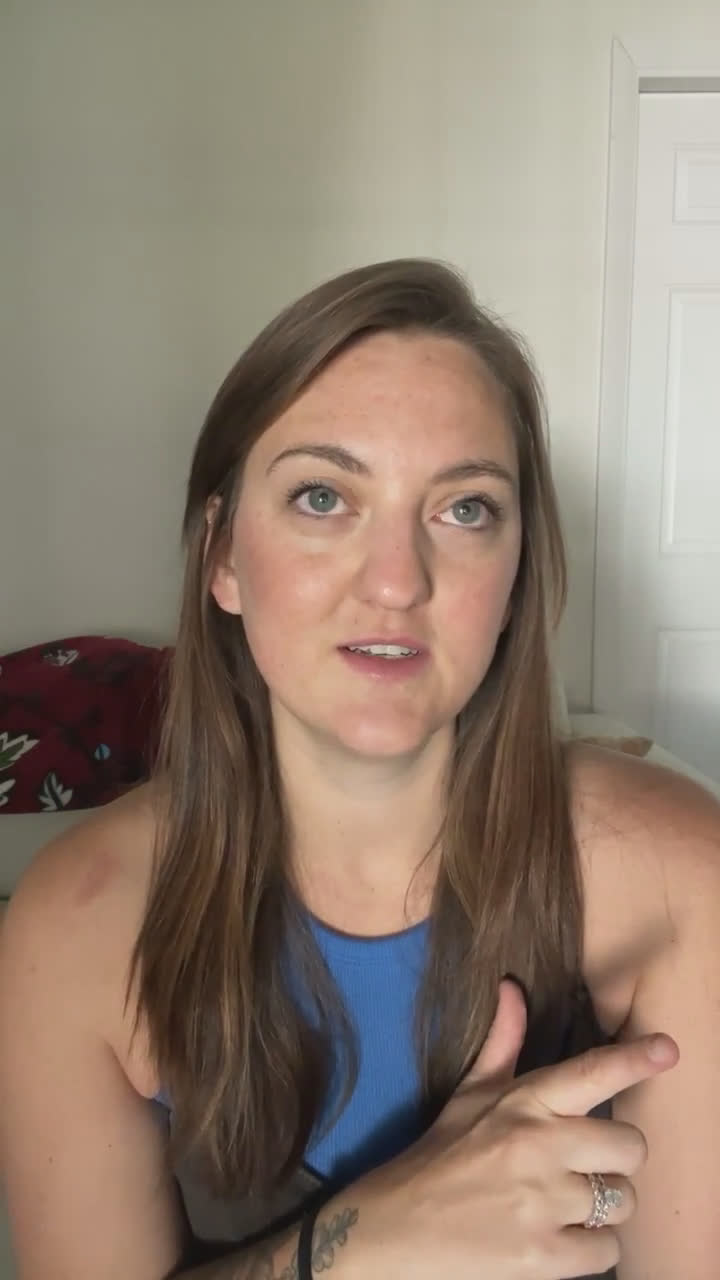
A dietitian discusses why food alone isn't always medicine, distinguishes controllable factors like diet and lifestyle from genetics, accessibility and environment, and offers compassion and practical perspective on nutrition's role in health.
Second week of the Olympics. Tell me what your favorite sport to watch is. We are staying home this weekend. Colorado has a lot of wildfires right now. Hopeful and hope everyone else is staying safe.
Today I want to talk about when food isn't medicine. Diet, lifestyle, exercise, and then everything else. Genetics, accessibility, socioeconomic status, just your environment. All of those things that play a role in our health are not within our control.
Jules: What do you mean when you say food isn't medicine? She says there are so many things out of your control. Food can improve digestion, it can improve mental clarity. But it can't cure anything necessarily.
There's so many things that are not within your control. Have grace for yourself because it's not your fault. If you have any nutrition questions, let me know. I will be back next week.
Good morning, friends. Happy Saturday. Happy second week of the Olympics. If anyone else is watching them, I. As soon as I'm done here, the women's vault, I think, is happening for gymnastics. So I'm gonna pop off and watch that. Super excited. If you are watching the Olympics, tell me what your favorite sport to watch is. Gymnastics is, like, up there. And then this year, we watched women's rugby and slalom kayaking, slalom canoeing, but kind of looks like they're in a kayak. And that was really fun to watch.
So those are my top three this year, I guess men's gymnastics. The pommel horse. He was great as well. Well, I hope everyone is doing well. We are staying not in the mountains. We're staying home this weekend. Colorado has a lot of wildfires right now that are not contained. So we staying home, staying safe, not adding to the chaos, but hopeful. Hopeful and hope everyone else is staying safe as well. Today I want to talk about when food isn't medicine. Good morning. Happy Saturday. Welcome. And anytime I say food isn't medicine, I get a lot of pushback.
And I've been accused of being paid by big pharma. I've been just yelled at and told I'm wrong. And this has been weighing on me a little bit this week because of some personal experiences that I've had, and it has made me very stressed. Even as a dietitian, I know the benefits that. That nutrition and dietary patterns have. We know that eating a nutrient rich diet reduces risk of many diseases. And it's just one piece of the puzzle. And I think I have a really great graphic kind of breaks down all of the things that go into what make up our health.
So the things within our control. Diet, lifestyle. Lifestyle, exercise, and then everything else. Right. Genetics, accessibility, socioeconomic status, just your environment. Right. Stress from physical pollution. All of those things that play a role in our health are the things that are not within our control. Make up the bigger piece of the pie than the things that are within our control. Good morning. Speak. Wonder. It makes me so happy that you're here every week. So thank you. I appreciate you.
Yeah. So it's been weighing on me a little bit, and I just wanted to talk about what I mean when I say food isn't medicine. I have seen kind of this influx in the last couple years, really, of people blaming the person on x, y, z. This is why they have some sort of condition. They're just not eating right, they're not exercising. Those things are important. And there are so many things out of your control. Do you have accessibility to food? Do you have availability to go and get the food? Do you know how to cook the food?
Do you have the nutrition education of how these foods are affecting your body? Good morning, Jules. And this has been weighing on me because I can't remember if I mentioned this, if you're here. Last week I talked a whole lot about fiber and its benefits for, again, kind of those things I named overall health, digestion, reduce the risk of chronic disease. All of those things are important. And I was talking about that because I have genetically high cholesterol. I've had high cholesterol since I was born and I got it checked and it's a little bit higher than I would like it to be.
And they were like, ooh, you're like one point over where we normally start someone on a statin. And I think even as a dietitian, I know all of the food, the impacts that food can have when it comes to that. And I felt like a failure when in reality it is so far out of my control. Like, I wasn't a failure when I was born. It's just how my body is. And research has shown that most people, this specific genetic variation, end up on medication. And, you know, if it's really bad even when they're like ten, but for most people, like thirties or forties.
But I felt a lot of guilt and some shame around that. And I think a big piece of that is the way that society kind of puts all of that blame on the person. And our food choices speak wonder. I'm in a grief storm this month. Greatly affects my food choices. Exactly. There's so many things that are outside of our control that are impacting those things. And that's not to say that nutrition doesn't matter. I think. I would think they would take my license away if I actually said that. But it matters a lot less than people put the weight on it to matter.
So we can do all these things, we can do our best, what's in our control. And there are some things that diet and nutrition can't cure, and that's okay. You know, we are lucky enough to live in a time where I. We have modern medicine and utilizing that when we need it, utilizing that in combination with food and movement, you know, people say movement is medicine. I don't really love that either, because can it help a lot of things? Yes, and it can't cure anything necessarily. And so I just really like to normalize the fact that two things can be true at once.
Food can be wonderful. It can improve digestion, it can improve mental clarity, it can improve mood, it can reduce risk of chronic disease, can reduce fatigue, brain fog, all of those things are true. And food will never replace medicine. If it could, we wouldn't have medicine. We wouldn't need it. And I think for a lot of people, being able to confront that idea, at least I'll speak from my own experience. It's really helpful to remove some of the stress and anxiety that I am feeling, because I am putting all of it on myself when I don't need to.
Again, to reiterate, not saying nutrition doesn't matter, but it matters less than a lot of people will make you think. Matters a lot, but it's not everything. Yeah. So that's my little stream of consciousness for you today. Something that I talk about a lot with clients, and it comes up a lot, too, with you. You know, any sort of, like, depression or anxiety medication. I think people sometimes struggle with, well, society says, I shouldn't need that, I should just eat. Right? What does that even mean?
And also, no, we are also different. Our bodies are so bio individual. The way that things function within our bodies are so dependent on, you know, our entire family tree environment can impact gene expression. There's so many things that are not within your control. So I guess my takeaway is, have grace for yourself because it's not your fault. I will put up the graphic that I mentioned earlier. That is, what is it called? It's not just the social determinants of health, but this pie shaped graphic that just goes into all of the things that play a role in our health and seeing how much are individually within our control versus what's nothing, um, I think can be really eye opening and just kind of helping you to navigate when things are hard or when you're feeling a certain type of way, or when you hear something about how, well, if you just did this, how much of an impact is that really happening?
Having? I haven't finished my coffee yet. Words are not working. So this is a. This was a short one, a quick one, but this was just something that was weighing on my mind. And I've had conversation, conversations with clients about in the past, and so I wanted to put it out there in the world, probably more to come on that subject when my thoughts are a little more put together. But it was something that I just woke up this morning really having spinning around in my head. So I am going to go watch some Olympics.
Thank you for everyone that joined. I know it was a quick one. I will be back next week, not sure what we'll talk about yet, if you have any requests, if you have any nutrition questions, let me know. I want to be able to provide space on Saturdays, to be a resource that if you don't have otherwise, not medical advice, but love talking about the science, love talking about the research, love talking about applications of all things nutrition, so if you have anything specific, let me know, otherwise, speak wonder, great to see not see you well, see your name fools you as well, trooper, I saw you popped in too, so thank you all, have a wonderful weekend, stay safe, stay cool, it's hot here, I'm gonna stay inside.
What to do? Plateauing your weight loss goals? Okay, yeah, if you have, I'll drop the graphic, but then I'll also do it right now. Make a post of any nutrition questions, I posted one a little bit ago and I didn't see any responses, but I haven't gone back and checked since then, so drop your questions, I'll see you next week, have a wonderful rest of your weekend, great to see you all.
Reactions and comments are for members. Joining is free and takes a minute.