JC Lippold explores the idea of the thin space—the in-between moments of life—and guides a mindfulness-framed Sunday self-care reflection on noticing thoughts, stillness, and the limits of simple fixes for complex problems.
Sunday is self care day. JC Lippold talks about the idea of thin space, the space in between everything that has happened and everything that will happen. First comprehensive research on body, food and fitness shaming ever done in western hemisphere. Simple sounding solutions to complex problems never lead to anything good.
So often when we self care, we become more aware of the thoughts that we aren't thinking. When you find some stillness, that's when all the thinks show up and say, hey, can we be thought? That's what finding self care looks like. Find those things today.
Well, hey, hey, hey there, Cadre. How are you today? How are you today? It's probably different than yesterday. It's probably different than even moments ago. One of the cool things that we're doing at Cadre is changing the way that we see ourselves. Right? We are always on that ride. We are complex beings. One of my favorite things to say is, simple sounding solutions to complex problems never lead anywhere good. Simple sounding solutions to complex problems never lead us anywhere good. Oh, Lindsey, Jules, Colleen, all y'all who are clicking on into a little live stream magic this morning.
It is so nice to see you. Hi, Kim. How are you? Oh, my gosh. Look at that wonderful little puppy. I feel like I recognize that puppy from the Facebook. Oh, my gosh. Even though our little profile pictures are only that big, to see Colleen's face, to see Kim's puppy, it's always so, so great to see you sign on in. And, Jules, by golly, every time you say good morning or good afternoon or depending on whatever time we're connecting, it is always a treat. Well, hey, Sundays is self care day, meaning, hopefully, you're doing something good for yourself today, something that's nourishing, something that sparks you back into clarity and joyous.
But also, if you're like, I don't do self care well, I don't know anybody who really does. It's always a tough thing to do. But the good thing is, is you're good at doing tough things throughout the day. You're going to see people like. Like Gene and Seth and Darrell. You're going to see Tiffany and Jason and Beverly, all these little lily pads to jump on throughout the day to remind you, hey. Or to invite you. Have you considered? Or to maybe teach you, hey, you may not know yet. Wherever you are, whatever's going on, jumping into Cadre is always probably a really good idea.
So my name is JC Lippold. If we never shared time and space together before, thank you for the opportunity to do so. Right now, on Sundays, I talk about the idea of thin space, the space in between everything that has happened and everything that will happen, between the good stuff and the bad stuff, between maybe summer and fall, all of those moments that we actually find ourselves in when we place ourselves there, there's something pretty powerful to find. So, my friend Steven, Amelia, who you can find on Cadre on Mondays, definitely one of my most trusted teachers, confidants, and friends when it comes to the idea of the study of mindfulness.
And Stephen led us through a mindfulness meditation practice. A couple weeks ago on a Monday. And one of the things that Steven said reminded me of my training as a meditation teacher. Oh, good morning. Can you please repeat? Anila, I didn't even see you pop into the room. By golly, I'm so glad you just asked. Okay, Anila, I say it all the time, so it's really easy for me to say it again. Simple sounding solutions to complex problems never lead to anything good. So that phrase is actually born of.
I've been lucky enough to be a part of the first, the team doing the first comprehensive research on body, food and fitness shaming ever done in the western hemisphere. If you go, wow, there's never been research done on body, food and fitness shaming before. And then you think about for a few seconds, no. Why? Because those industries, and I'm a part of those industries, use shame as a, as a selling tool, right? So one of the kind of big headlines that came out of this research is simple sounding solutions to complex problems is the root of all shame.
We have this cycle, Anila, I'll share it with you someday. But this cycle always brings us back to the space where we go, ah, I'm looking for the simple sounding solution. Why? Because we're desperate. Because we're told that if we don't get better, that we are not enough. And what happens? We think that, well, it's a simple sounding solution, so it should be simple for me to fix the problem. And we know that that's not true. And then people don't fix the problem. So it sends them spiraling more and more and more.
Yeah, exactly. So as we talk about self care, it's not easy. It's not simple, but it is worthwhile. And it is worthwhile for you to find ways for you to do simple things. Not simple meaning easy, but simple meaning few moving parts that you can implement in your day. So as I was mentioning, Stephen walked us through this beautiful little meditation and it made me think so often we think meditation requires us to clear our mind, requires us to be still, requires us to find a space that is isolated, where no one can bug us.
And I don't know, I don't know if I know anybody who can do those things, who can quiet their brain, who can find this space of stillness and isolation. I don't know that person. So I wanted to take a moment to invite you to be still for 1 minute, to be quiet for 1 minute, to meditate for 1 minute. Three, two, one, go. I think that was about a minute. If you're like me, I was twiddling my fingers. I was noticing that when I was still. That's when all of the thoughts started moving in my mind, and I was very much aware.
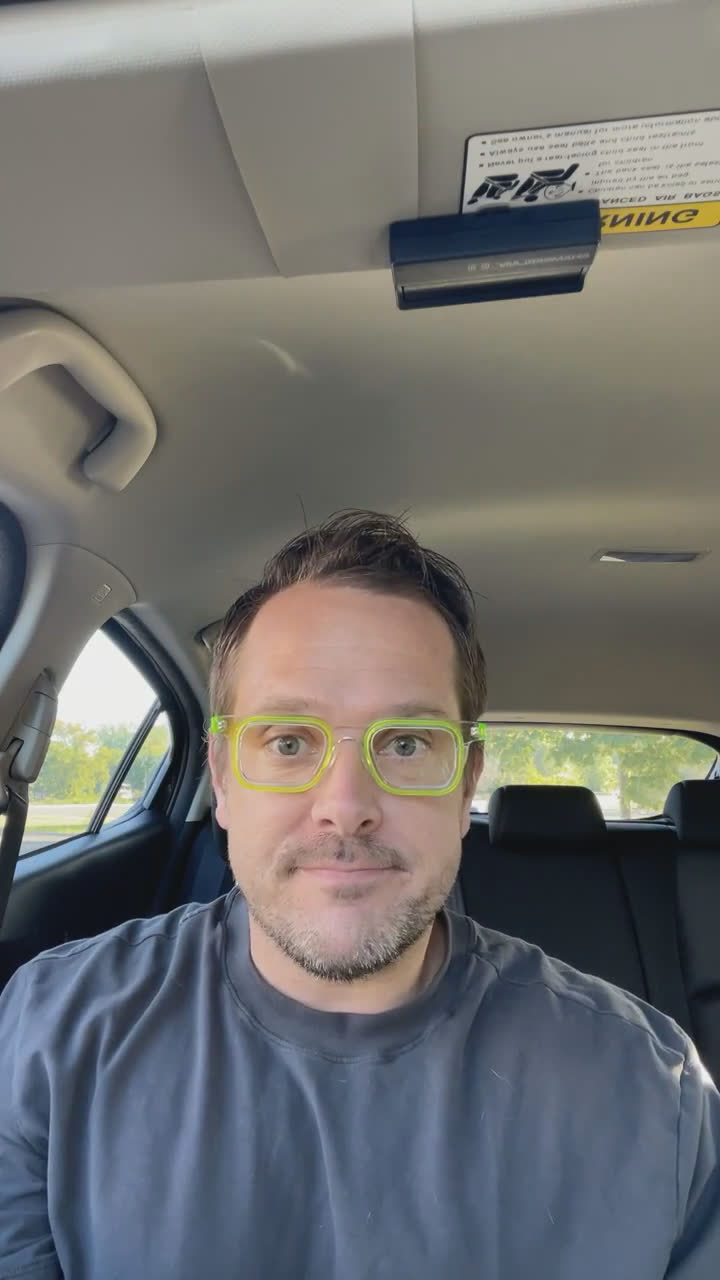
Now, again, I'm sitting in my car in a gas station parking lot, far away from all of the people. So I actually did find a space. I was relatively isolated, and, by golly, it's beautiful. But here's the deal. So often when we self care, we become more aware, more aware of the thoughts that we aren't thinking. You know, I'm working on a musical right now called Seussical, and it's based off of all of doctor Seuss's stories. And the opening song is called, oh, the thinks you can think. And then the whole story goes from this place of, oh, my gosh, there's so many thinks in the world.
So think theme. When you find some stillness, that's when all the thinks show up and say, hey, can we be thought? Now? That's what finding self care looks like. Self care allows you to do the things that you haven't been doing. Jules said, I close my eyes and ask myself, what do I hear? I heard all kinds of nature. Jules, you are a masterful doer of the human experience. Let's consider Jules experience here, everybody. Jules could have said, no, don't focus on those things. Don't focus. Don't hear them.
I need to find stillness and isolation and silence and nothing. Why would anybody ever want to find nothing when there's the opportunity to find something? My invitation for you today is to find some somethings within that 4 seconds of stillness that I just gave you. Maybe you heard something. Maybe you smelt something or felt something or thought about something. How often in the busyness of the week do you never think or feel the things that are right there for you to think and feel? And, of course, you don't, because you're doing really important work.
And guess what? You are also important. So find those moments today, y'all. Again, you have the opportunity to check in with Jean and Seth and Darryl and Beverly and Tiffany and Jason and probably other people that I'm forgetting today. Or maybe it's the walk outside or the tasty meal or the conversation or the. Or the text conversation that you haven't had because you haven't had time. Find those things today. We'll talk to you later.
Reactions and comments are for members. Joining is free and takes a minute.