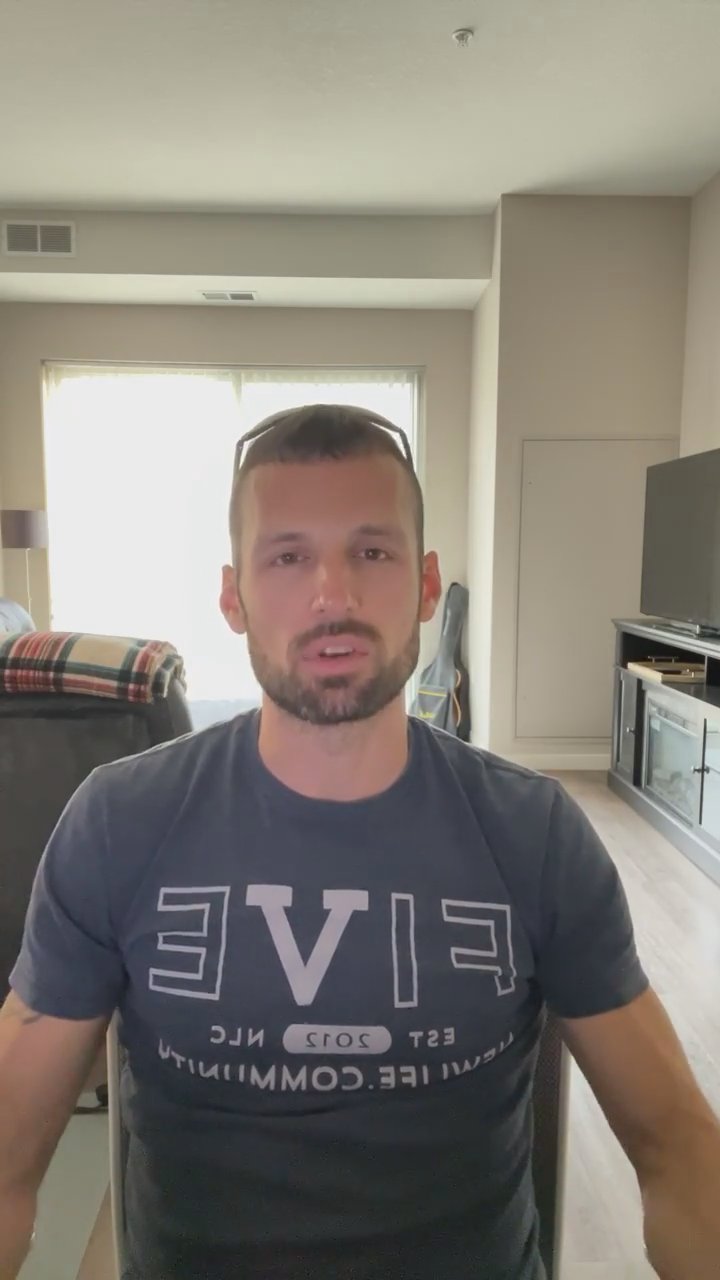
Join me every Sunday evening to set the tone for the upcoming week, with stories that bring out the serenity inside all of us!
Jason Lennox: I'm your resident recovery champion here to talk to you about all things recovery, mental health, wellness. This weekend we had our annual raspberry festival in Hopkins, Minnesota. And as we were wrapping it up today, we were out to eat and the place had a bucket of questions. It's really just conversation ways to engage in conversation.
Always great to see you here. The question is, what is one lesson you've learned that was so important that it changed who you were? Sherry, I knew what my answer was.
Lukewarm: The quality of my life will depend on what I'm willing to do for others. He says his recovery sponsor would sign him up for service engagements. Lukewarm: What does doing for others actually bring back to me?
The quality of my life depends on what I'm willing to do for others. I stopped thinking so much about Jason and all Jason's perceived problems. Second thing is, it makes my world a whole lot bigger. What's the greatest lesson you've learned? Would love to hear yours.
The greatest and most surprising lessons mentoring can often happen from the younger to the older. There's a lot of wisdom in all of us and we should have our minds and our ears open to every single person. Hope you all have blessed weeks. See you next week.
Happy Sunday to everybody here, the Cadre sphere. I am Jason Lennox and I'm your resident recovery champion here to talk to you about all things recovery, mental health, wellness, and excited to talk to you this weekend. Hope you've all been having wonderful weekends. I live in Hopkins, Minnesota, and this weekend we had our annual raspberry festival, which is actually the first one I've been able to attend. So a lot of fun here. Had some family up. We got to see a lot of vendors, got to see some live music, and just spend a lot of good quality time.
And as we were wrapping it up today, we went out, we were out to eat. And the place we were eating had this bucket of questions. And so it's really just conversation ways to engage in conversation. So these, these questions, we each pull one out and then we ask the question. We answer, we pass it around the table. All three of us have an opportunity to share and. Good evening, Jules. Always great to see you here. So we are asking these questions, and one of the questions was, what is one lesson you've learned?
And I want to ask this, and I want you to think about this and comment here. I would love to hear real time. Good evening. Speak wonder coming from Pennsylvania. Great. Really, actually, notice that you're putting on some videos as well. So kudos. Look forward to that. The question is, what is one lesson you've learned that was so important that it changed who you were? Okay, so what is one thing? What's one lesson I've learned in life that's so important, that's actually changed who I am as a person?
And so we all took our turns and, you know, I took my turn and it was very clear from the get go. Hey, good evening, Sherry. Good to see you here as well. Right from the start, it was easy. I knew what my answer was. What's one lesson I've learned? And ironically, it was the two, the couple that I was with who happened to take me in after I was done with treatment. And I didn't really have a safe place to go. And so they were the ones that were up here and I was spending a little time with them.
And so it was very clear that the lesson I learned was something he said. And actually they displayed in their act, in their act of service by taking someone like me in, who, by the way, they didn't know. And I knew. I knew what I was capable of. When substances and alcohol were running the show, I was hurting a lot of people. I didn't hesitate to do the lying, the cheating, the stealing all the things that were really driven by addiction, but nonetheless, their active service is one thing that taught this lesson, but one thing that I always remember him saying, you know, we get into recovery and we start doing some of this work, and we get on the other side and we start to see some results and life changes a little bit, maybe.
I'm not dependent on these substances and this alcohol anymore, which is great. That's a necessary step, and that's what keeps people here and alive. But then there are further elements of wellness that happen along the way. And one of the things that my recovery sponsor, you know, said was, you know, your life, the quality of your life and your well being is going to depend on what you're willing to do for others. So I'm going to say that, again, the quality of my life will depend on what I'm willing to do for others.
And again, I have to be in a good place, and I was in a good place when he was sharing this because I had done some of the work, some of the hard things, and, you know, I was. I really wasn't a good place. And so when he brought that to me, I was receptive, I was open, I was capable of hearing that. And what I did was take that. And some of it was really then of a choice. He would sign me up for different service engagements and, hey, good evening, Luke. Good to see you here. My friend, my dear friend.
But he would sign me up for service events, and that was anything from making coffee at the AA club to. To running, you know, being the treasurer for the district. So I progressed into chairing meetings, into all these things, and, you know, it really was interesting to watch it. So there was a lot of service work, and that really is what saved me a lot. And so, again, what am I willing to do for others that's going to help determine what the quality of my life is? And that progressed, and I took that outside of the, you know, the rooms of recovery as well, and started a couple charities.
And so I was doing some work in hospitals with kids with cancer. Oh, my gosh, I just learned so much. And now in my, you know, professional life, where I get to work with different organizations and individuals and really just support the broader recovery community, the broader healthcare community, and humanity at large. And, you know, I've learned so much along the way, but I want to boil it down to three critical things that I've learned from that lesson that I talked about. What am I willing to do for others?
What does doing for others actually bring back to me, one, it helps me get out of self. And what do I mean by that? I just, like every other human on this planet, get caught up in the. These are the hard things in life. I have to do this. I've got to get up and do this. And, you know, I can easily reframe those until I get to do those things. But I'm human, and I go there. I go there. This is life. This is hard. This could be easier. This isn't where I want it to be. And so as I get into those things, I remember very distinctly driving to an event at one of these hospitals with the kids.
And I was thinking about my car, and it had some troubles. And then my job, and I just had these things where I was kind of, you know, not feeling the greatest. And then I got to the hospital and I realized these kids who are terminal often, and they know they are, so they only have months or maybe at best, years to live. And they ran around at these events like the happiest ones in the room. And so I really just would always put things into perspective and help me realize, you know, and just remove me from those thoughts that I get going on.
So it gets me out of self. It also makes my world a whole lot bigger. What do I mean by that? Again, I started in service from making coffee to welcoming people into meetings, to chairing a meeting, to serving on a district board, to being the treasurer, to opening charity one. To opening charity, to now, to opening businesses that really get to support this community. And yes, of course, that's my. My income. And so it isn't as much volunteer work, but along the same lines, within the same spirit of really, how do I give back and pack a punch to put back into this world that has given me so much?
And so it makes my world so much bigger. Again, imagine that one of my service commitments is making coffee. And now imagine that the work I get to do determines whether or not a program would actually spin up and exist and be able to serve hundreds and then thousands and maybe more human beings who really need help. So it makes my world a lot bigger. I get to see so much more when I'm willing to get out there and pack into this stream of life. And it's so critical, and I've learned that. And every time I think that my world's gotten as big as it can, I'm surprised.
But again, it's because I'm willing to get up and say, what am I willing to do for the world today? And three, probably most important third lesson here, from being in service and really doing for others, is that fulfillment that comes. And I gotta tell you, I've studied humans, and I've studied the behavior, and I've just talked to a lot of people over time, and I've gone through so many different courses, seminars, things that just improve and self develop. And the theme I've seen among all people, not just in recovery, is that we regularly feel like we are not enough and we miss the boat, and we're constantly thinking and considering, what are we doing, and is it working, and is it worth it?
And am I good enough? Am I this? Am I that? And I believe that people who find substances in alcohol are able to quickly fill that problem. Like, that's a problem that creates something inside me, and I can ease that. That's actually pain, right? That's pain that's happening there. Me second guessing and feeling all these feelings. The alcohol, the substances make that very easy to just shut it down. And so that's how I landed where I did. I realized the pain went away very quickly. The more I did, the harder the drug, the faster all those things made me realize I could take the pain away even more and even faster.
Eventually, it stops working. Point is, all along that time, as I'm growing up as a kid, I just wanted to feel like I fit in. And then all of a sudden, I found this crutch here that made me feel like I was a little more okay in the world. And so it gave me a little bit of fulfillment again. We know that drugs and alcohol are a very temporary way to solve that problem over and over and over and continue down that path. But I continue destroying my life and the lives of others. And so that fulfillment is always something I sought.
And when I'm in service to others into this world, boy, I feel a whole lot better. It allows me, when I hang up here and, you know, wind down for the next hour, I'm gonna get in my bed, I'm gonna put my head on my pillow. I say this all the time, and I'm gonna fall asleep, and I'm gonna do it pretty quickly. There are people that are jealous, envious, and, you know, I know there are real sleeping problems, but I didn't used to have that. I didn't used to have that ability, and that was because I was constantly worrying about what I did.
Did I leave it all out there? Did I hurt this person? Did I not do this? Did I not? And I still ask myself some of those questions, but at the end of every day. I know for the most part, I've gotten up. I've tried to get out of self, I tried to think about other people. I've tried to dedicate my day to somebody, try to share with people what they mean. I try to pack into the stream of life. And when I do that, things just feel okay in that void, in that hole that sometimes we feel not there. At least it's not as big, it's manageable.
It's something I can look at and go, you know what? Yeah, I may be questioning some things, but the reality is I know that this is what my actions mean. And actions speak louder than this little voice that goes on up here. So again, greatest lesson I've learned, would love to hear yours. Feel free to chime in with that. But the greatest lesson I've learned is so important that it's changed me, is the quality of my life depends on what I'm willing to do for others. And with that, with that doing for others, three things that have come out of that I get out of self.
I stopped thinking so much about Jason and all Jason's perceived problems. Second thing is, it makes my world a whole lot bigger. When I'm in space with other people, trying to solve big problems, trying to make an impact on those who otherwise might not be impacted, those who are underserved, I see a whole lot more, and my world gets a lot bigger. And I run into the lukes of the worlds and the sherrys of the worlds, and virtually some of you, others jewels and speak wonder that are really trying to do big, powerful things, and that is so critical.
My world gets bigger. Most of all, I fulfill that void which I was trying to fill for so long with the substances and the alcohol, all the other things that we can become addicted to. And, you know, I still battle with, with thoughts and all those things, but at the end of the day, getting out there and packing into the stream of life allows me to put my head down on my pillow and crash pretty hard each night and get good, solid sleep so I can wake up and do it again. So appreciate you all joining in.
Really looking forward to next week as I do every week, sharing space and time with you. Hopefully you've, you know, gotten something and you can take some of this away. And again, answer that question on your own. What's that lesson that's so important that it's changed who you are and then why? Why is that so important? Why has that changed who you are? Because there's a lot of valuable stuff inside that. So look forward to next week. As I said, and I will finish with speak wonders because she just chimed in at the 11th hour.
The greatest and most surprising lessons mentoring can often happen from the younger to the older, 100%. Guess what? That's probably as uncomfortable sometimes for the young as it is for the old. The first person I ever saw sponsored mentored in recovery with someone old enough to be my father. And I felt a little bit uncomfortable about that. But guess what? And by the way, I had only been in recovery for three months longer than him. But at the same time it was, you know, it was, it was really valuable.
And I talked to that man this to this day and, you know, he says just that. Some of the things he heard and some of the things that I was saying and just sharing my own experience were things he had never heard otherwise. So it takes a lot of humility for somebody who might be in a position who's a little older to rely on something that someone younger says. So speak wonder. Kudos to you. There's a lot of wisdom in all of us and we should have our minds and our ears open to every single person. We run into people who've had less recovery, people who are younger, people who are older, who've had more recovery, and everything in between because we never know what we might hear.
Everybody carries a little nugget of wisdom at just the right time sometimes. So look forward to next week. Thanks for sharing. Speak wonder. Luke, love seeing you here. My friend Sherry, Jules, great to see all of you again. And like I said, look forward to doing this again next week. Hope you all have blessed weeks. Take care. See you next week.
Reactions and comments are for members. Joining is free and takes a minute.