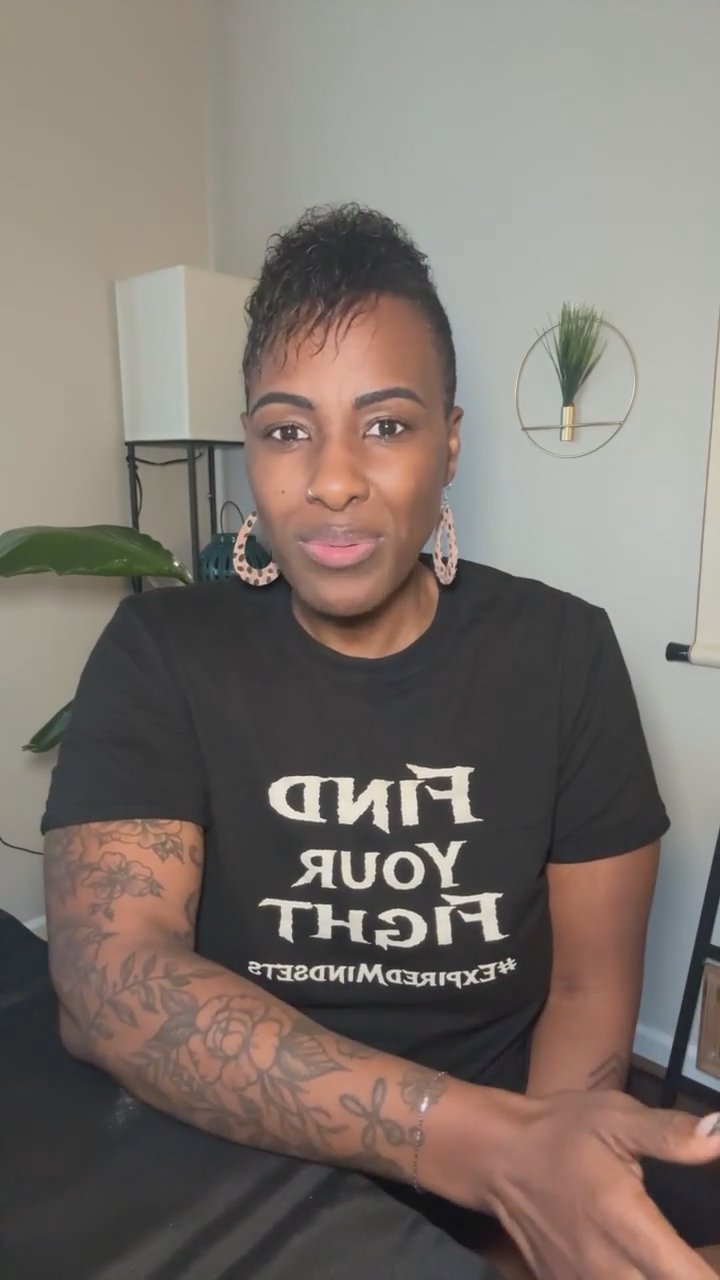
Dr.Charryse provides insight and guidance on how to consciously participate in living a life you don’t need to escape. These engaging and relatable lives emphasize growth mindset, mental health, and the power of choice.
Doctor Charryse Johnson is a licensed clinical mental health therapist, mindfulness practitioner, and author. We get together every week or so, mostly every week, and talk all about how to create harmony in life. As always, rep your city.
Last time we talked about how ignoring your needs can impact your mental health. How in the world do even know what you need? It is a process to really learn and identify what you needs. It requires self reflection and self awareness.
Self awareness is your ability to focus on yourself and how your actions, thoughts and emotions do or don't align with your internal standards. Motivation is a key one because your motivation behind your actions is going to tell you why are you doing what you're doing?
An invitation for you to put in the chat. How do I feel about how I'm currently taking care of myself? Where do I feeling fulfilled? My encouragement is to kind of categorize them.
Hello, cardio sphere. Welcome, or welcome back, depending upon whether it's your first time or you're a regular. I'm Doctor Charryse Johnson, a licensed clinical mental health therapist, mindfulness practitioner, and author. And we get together every week or so, mostly every week, and talk all about how to create the harmony that you desire in life so that you can live well, love well, play well, and create a life that you don't have to to escape. I'm always excited to be here in a different space, but still holding it down here in Charlotte, North Carolina.
Come in. Say good morning, good afternoon, or good evening, depending upon what time it is for you. It's wonderful to see all of you who are jumping in, and as always, rep your city. Let me know where you are in the world. Hello, Stephanie. Hello, Sherindria. Hello, Audrey. All the people. We'll give everyone a minute or so in order to pop in on us, and then we're gonna pick up with where we left off. Hello, Cindy from Annapolis. Hello, Ken. All the lovely faces. Oh, wonderful. In Charleston, Columbia, South Carolina.
We got a lot of the southeast going, but one of the things that I love is that we really will find that there are people here in the chaos here from all over the place. Hello, Beth Taylor. And so it's a wonderful opportunity. What's up, New York? You know, I was gonna add a little to it. Hello, Lisa from the ATL fun. I graduated from a high school in Atlanta called Norcross High. We're getting ready to have our 30 year reunion all in at the end of next month, which I can't even believe. I just. I don't know how we got here, but we did.
Last time we were together together, we talked about how ignoring your needs can impact your mental health. And so I promised that as a follow up today, we would talk about, well, how in the world do even know what you need? Let me say this first. Hello, New Jersey. It is a process to really learn and identify what you need. As I always say, it's not a follow step one through five. You know, if you think about how we develop our identity and develop our. Develop our values and what we need, it's something that comes over time and it changes.
So the first thing that I want to say is identifying what you need is not a quick fix. It is going to require effort. So I have a lot ish to give you. If you're the individuals who like to take notes, I think this will be one for sure that you're going to want to take notes. On. Because a lot of what I'm going to share today are things that you can do on your own time. So it takes time. And two, your needs change over time. Where a lot of people get stuck is they can identify their needs at one season of life.
Things change in other areas of life. And then they get to a point where they realize, okay, I lost myself. Now all I do is get through the day and do what other people need me to do. And so I have no idea what I need. You know, it's funny, when I'm working one on one with my regular clients, one of the questions I ask them every single week for the most part before they leave me is, what do you need this week? And it's really amazing to watch them go from, oh, I have needs. I mean, I have needs, but I'm supposed to be able to identify those to then later having individuals who are able to say, this is what I know I need, or here's what I need that I know I'm not getting.
And that's not just important for your own life. But if I don't know what I need, then how do I communicate what I need from the other people in my life that are also a part of giving me what I need or helping me exist in a way where my needs can be met without feeling like they're in conflict? So two key aspects to identifying what you need. It requires self reflection and self awareness. Both have to be in place. And that means that we have to take some intentional time to figure those things out.
What is self awareness? Start there. And I wrote it down so that I wouldn't change my definition on you. So self awareness is your ability to focus on yourself and how your actions, thoughts and emotions do or don't align with your internal standards. And that definition, let me repeat it one more time. Your ability to focus on yourself and how your actions, thoughts and emotions do. Orlando, don't align with your internal standards. Do you have internal standards? Like that's a question to ask yourself.
Do I have internal standards or are my standards external and focused on what other people expect out of me? Because if you have no internal standards of your own, you're going to struggle identifying what you need because you totally are undeveloped in that area. And you ignore what you need because you have created a life that's all about being what other people need and expect out of you. This branches me into, and let me go ahead and lay the foundation out there. I'll probably talk all about self awareness and the four kind of building blocks of self awareness next week because I think it's a big one.
Because I think it's a big piece that a lot of people overlook and don't recognize. Recognize. But your internal standards matter and if you don't have them, that's a problem. Self reflection means that you take the time to think about and evaluate your behaviors, your thoughts, your attitudes, your motivations and your desires and all of those matter behaviors. What are you doing and why? What are your thoughts about what you're doing? What's your attitude towards what you're doing? What's your motivation for what you're doing and what's your desire?
Because if we're honest with ourselves, there are situations where we realize I'm doing something not because I desire it, maybe just because I'm motivated not to cause any issues with anybody else. But as a result of that, my internal attitude about it isn't great. I'm resentful, but I feel like I don't have a choice. And those thoughts make me very frustrated. And then I feel guilty, but I really don't like this. And then I'm behaving in a way that shows other people I'm not fully in. So it can be complicated, but I really want you to hone in your behaviors, your thoughts, your attitudes about what you're doing.
Motivation is a key one because your motivation behind your actions is going to tell you, why are you doing what you're doing? Here's a great example. Let's say that you have somebody in your life that you know, this person doesn't really treat me the best. I tolerate them. I try to be patient with them. I try to be considerate, but they really don't treat me in the way that I love. So then you have to ask yourself, well, what's your motivation for keeping them in your life? Why are you allowing them to exist in your life and kind of pour that toxic nature your way?
Well, let's say that you think about it and what you find out is, well, they provide something for me that I don't get anywhere else or I can't provide for myself. And so we can find ourselves in a situation where we're putting up with crap, where we're accepting crumbs and we're being mistreated by other people because there's this one little slash significant unmet need that we sometimes get from them on a good day. So you endure the toxic nature and the bad because that person has something that you desire that you feel like you can't get anywhere else.
That's dangerous, especially if they're kind of dangling you on a carrot and not treating you well. That may not be your story, but I still want you to evaluate what's your internal standards? What's the motivation behind the things that you do, and are you solely being motivated by other people and meeting the needs of other people? If you weren't doing anything for anyone, who are you? I want you to be able to answer that question. You woke up tomorrow and your vocational title was stripped. Your responsibilities and family did not exist in the way that they do.
There was no one waiting for you to produce for them. Do you know who you are? Would you know what to do with yourself that day? Or would you struggle to meet your own needs? Now don't get me wrong. We all have a part of us that needs to have purpose and needs to have belonging. But that level of purpose and belonging can't or isn't ideally going to supersede what we know about our nature. Because at the end of the day, everything that we do at some point is going to come to an end. Parenting eventually comes to an end depending upon how long you live.
Being a spouse or a partner comes to an end. Your vocational role comes to an end. There's always going to be something ending and something beginning. And who are you through all of those says a lot about your self awareness and a lot about your ability to go, I know who I am and I know what I need. Despite the people or the experiences or the roles that help meet part of that need, you don't ever want to give anything or anyone the power to completely be everything that you need. I'm just going to pop that and just let that sit for a moment.
Okay. So as you go through the process of then going, okay, whew, maybe I do need to do some self awareness and self reflection. How do you do that? You will want to take some intentional time to ask yourself what we call clarifying questions. And I'm going to give you about eight or nine questions that I really encourage you to write down. Always your choice. And to take intentional time reflecting on these questions and evaluating on these questions. And I would say monthly at minimum. Because going back to what I said in the beginning, your needs change over time.
So what you needed, think about it. Three months ago is different than what you need today. What you needed last year is likely very different than what you need today. Maybe some similarities, but your context of life and your season of life will play a big role into what you need. So, clarifying questions. The first one, how do I feel about how I am currently taking care of myself? Let's answer that one together. If you would like to. An invitation for you to put in the chat. I won't ask you this for every clarifying question, but I think this is one that is great.
How do I feel about how I'm currently taking care of myself? Oh, yes, for sure. How what I needed last week is different. What I needed yesterday, seriously, is different. My day yesterday was one way, and because my day yesterday was one way, I have completely different needs for what today is like. And we have to pay attention to that and honor that. I'm going to continue with the clarifying questions, but if you want to take a moment and answer the question, how do I feel about how I'm currently taking care of myself?
I feel like that's an open ended question. You decide where you want to go and really just puts us all in a place of really normalizing. Where are we with how we're taking care of ourselves? Number two, where do I feel fulfilled? My encouragement, as well as you're answering these questions, is to kind of categorize them. Meaning if I talk about where I feel fulfilled, I want to look at what does that look like emotionally? What does that look like relationally? What does that look like spiritually?
If that's something that you ascribe to, what does that look like from a financial standpoint? So all those life delays, mentally, physically, spiritually, financially, socially, and emotionally. Right. And then I added relationally in there. But you can put that under socially. Look at these questions underneath these categories, because sometimes what you'll realize, too, is, oh, my actual greatest need right now is financial security. And because that's a high need that's not met, it is impacting every other area of my life because there's so much stress and strain in that area that I'm not taking care of myself well, or I am letting.
Reactions and comments are for members. Joining is free and takes a minute.