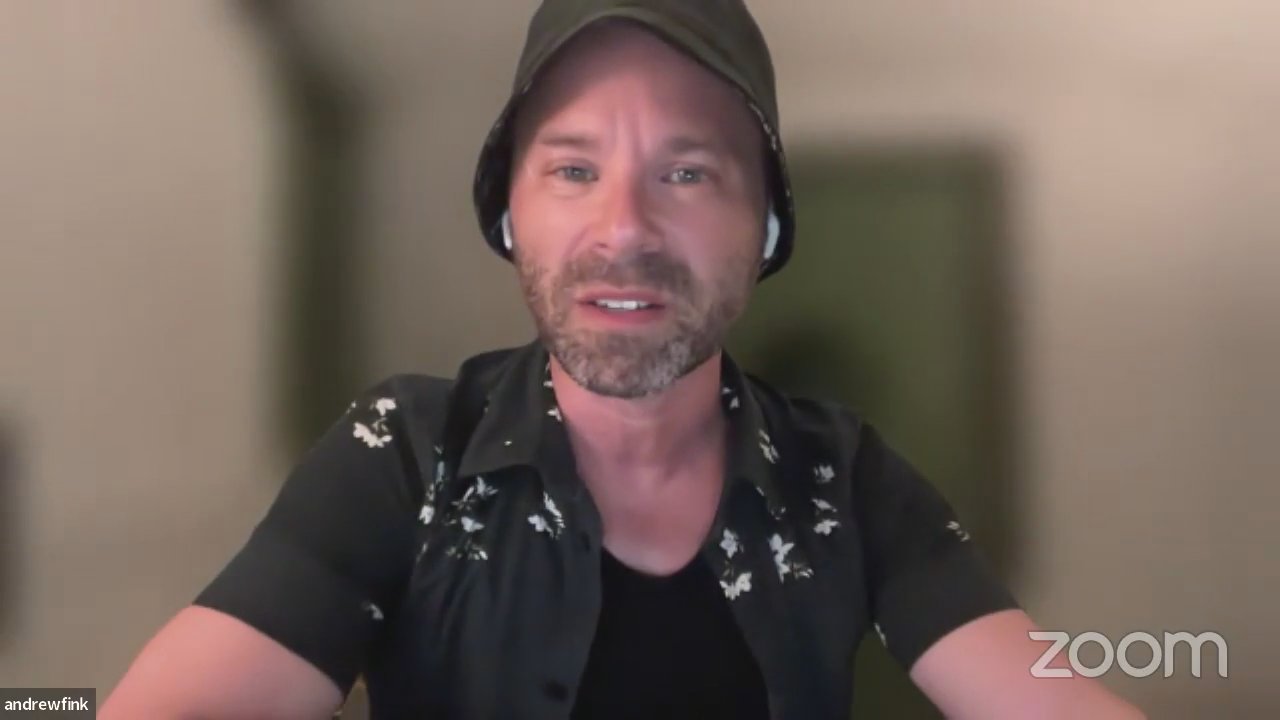
Join Minnesota Autism Center's Director of Psychological Services, Licensed Psychologist, Dr. Andrew Fink and Cadre's COO and Autism Mom, Shannon Stauff, for a live Q&A to talk through what to expect when you are in the diagnosis process with a loved one.
The live stream is now live on the Cadre app. We will do a formal introduction in 1 minute. We're just going to roll with it and see what happens. Someone out there as you join if it looks weird.
Cadre is a place where we bring together people, clinicians and professionals and peers living through things to be a supportive system. We're here tonight with a special q and A to talk specifically about mental health.
Andrew is the director of psychological services at the Minnesota Autism center. He says primarily what he does is do evaluations for autism. He likes to play guitar and hang out with his family. His wife suggested that he serenade all of you.
Working with autism wasn't where you thought you might be. Just when you think you knew what you wanted to do, what you're really supposed to do ends up finding you. For autism people, autism moms, caregivers, it's so personal.
Doctor Fink: My son has autism. He was diagnosed at two. My strength is communication and helping navigate systems. I want to help people who might be out there tonight. The key is living with versus solving for autism.
Doctor Andy Fink says he tries to make evaluations as informal as possible. He says he likes to bring kids into the gym or an area where they can play. Fink: The first thing he says to parents is, is there anything I can do to make it easier for them.
The biggest thing is being able to process after, like, this. I always say, speak the language in the home. Most important thing is that they know when they can know and understand that as soon as possible. Embrace it.
My biggest challenge is dealing with my son's emotions when they're out of control. I don't know if it's autism or if he's spoiled. Usually your reaction to behavior can tell you what it is. It's sort of like a no stone unturned sort of thing.
One of the things that's hardest, again, is you. You are so tied up in it. And so if you're able to take a step back and, like, notice it and pay attention to it from a. layman's point of view. Also tell parents to look around the room.
This is a Q and a for people who are on a waitlist who might be in the frozen early days of diagnosis. Tell me if I'm back. Can you hear me? You froze. Am I back? All right.
Okay. So we have another question, but, yeah, so this is for folks. Can you hear me now? You can? Great. Love it. Thank you.
The next question is what do you recommend in the meantime, while you wait to get an appointment to be diagnosed? Get on every wait list that you can. And then try to find some people to support you.
For many people on the spectrum, they shift from a very quiet, in their home sort of atmosphere to a more crowded or grouped sort of setting. When they're in a group environment, it can be so overwhelming. Do kids with autism really even feel?
When my son was three and a half, I was convinced he had autism. Having that diagnosis gives you access to services. What's the harm in knowing whether it is or it isn't?
Cadre: It's okay to not have gone for an evaluation because you were afraid or nervous about it. But I still would encourage you to go and get that evaluation and work through those feelings. One in 35 people now are diagnosed with autism.
What about when a spouse disagrees with the idea of seeking help getting a diagnosis? There could be fear and vulnerability going on in that person. There's some couples work that can be done around it.
How do you find resources for people that can help with childcare for a special needs child? Minnesota has a really great, and I know this is national, this conversation is national on scope. Do you have peer organizations in other states?
Andy: Now that I have the diagnosis, I feel like I can help him more. We are working in conjunction with Mac to build out a solution for people on waitlist. If you send me an email and just put in the subject line, new diagnosis, first diagnosis, Q and a, we'll connect with you.
Got it. Oh, my God. I think this is going to go. There you go. All right. And then I think we're going to be live here in a sec. Let's take a look. All right. All right. I'm going to head to my zoom. Do it up. Okay. But I want to see. I do want to turn in my video because we're going to see each other. Awesome. Okay. I think, Andrew, we have three minutes to go. But I think I'm going to pull up my Cadre app here. People might be joining now. So if they are welcome, friends. We are going to pull up.
It's. We're going to pull it up. It's going. All right. We're going to see each other. Let's mute this. Okay. Hello. Hello. Okay. This is an exciting moment because I want to make sure. Actually, hold on 1 second. It's showing up. Welcome, everybody, to the Cadresphere. I am trying to make sure this shows up appropriately on the app. So I'm making some changes here as we go and I'm trying to see if it is going to connect. I see my friend Ana Mayo has joined. Ana, if you can see this, I can see the chat.
If you could just pop a note in there and say it looks good or we need to reconfigure it. Either way, that would be awesome. We're going to wait for people to arrive. We have two minutes, Andrew. But it is live on Cadre right now. I want to start with actually what we call you. Do we call you doctor Finkley? Do we call you Andrew? Do we call you Andy? I don't even know who I am. I don't know what to tell you. I don't even know what to call myself. You can just call me Andy. Andy. Okay, perfect. And we will do.
We will do a formal introduction in 1 minute. I see people are joining. So welcome, you guys. Yeah. Awesome. Okay. I am just taking a look over here to see how the visual looks. You know what, we're just going to roll with it and see what happens. And someone out there as you join if it looks weird. Yep. Donna says you can only see the sides at both of our screens. Thank you. We're just going to play around with this and see what happens for sure. Not a problem. I mean, we're only human, right? We're just trying to figure it out.
So that's good. That's exactly right. That's exactly right. Okay, guys, well, we have one more minute. I'm just going to start introducing. Thank you guys. Are so awesome for giving me tips on how to make this live stream work appropriately. We're not even going to go for it. We're just going to roll with this and see what happens. Okay? So I'm going to kick us off. So welcome, you guys. It's 08:00 thank you so much for joining us first and foremost here on Cadre. I know some of you, this will be our first time coming to Cadre.
And so welcome. Welcome in. We're here tonight with a special q and A to talk specifically. My dog Gilbert is in the background. Her life. So hopefully you can't hear him too loudly. He will calm down eventually. But. So we're here tonight. We're really here to talk about something that can be really hard to talk about. And it's for people who are living a life where they have concerns about a person in their life, whether that's themselves, whether that is a child or someone they care for who is struggling with a concern about autism, about maybe it's adhd, some sort of neurodiverse, something that's showing up in your life.
And you might not have access today to a clinician or you might not have access today to a support system. And so you're kind of at the beginning and you're like, oh, my gosh, what do I do? And so that is what we are here to do tonight. And I'm joined and we'll introduce you officially, but I'm joined by doctor Andrew Fink. Andy. We're going to call him Andy. Yep. And so, yes, and so I'm going to just start in really briefly again. Like, for those of you who have not been to Cadre before, Cadre is.
We call it the Cadre sphere. We made that word up, as you may imagine. But it's a place where if you are a person living with any sort mental health, I don't even want to say issue. You're a human and you are living with anything that humans live with. Right. Whether it's grief or anxiety or caregiving or whatever that is. Cadre is a place where we bring together people, clinicians and professionals and peers living through things to be a supportive system. So that is Cadre. That is the Cadre sphere.
Okay, so now why don't you go ahead and introduce yourself, Mel, and then I'll introduce myself? Yes, please. Sure. Absolutely. So my name is Andrew, or Andy. If you call me Andrew, I might think you're my mom or my dad, so I usually go by Andy, but you can call me Andrew if you want. I'm a licensed psychologist, and I'm the director of psychological services at the Minnesota Autism center. I've been there for about, oh, man, I think it's been about five, six years going on there now. And primarily what I do is I do evaluations for autism, and that's the predominant clinical content area that comes my way.
Most people that are coming to see me either had a prior diagnosis of it or are for the first time coming to see if they. If their child does have it right. And so that's what I do. I run the assessment center in Minnetonka, here in Minnetaka, Minnesota, and I train the PhD students that are, you know, practicum students or interns, and teach them how to use the tests to, you know, assess and evaluate for autism and provide the recommendations and help families get where they need to go. And so that's me.
I'm married. I have three wonderful daughters, and am I downtime? I like to just play guitar and hang out with my family. Maybe at the end of this, you'll whip it out for it. You'll play some guitar for us. We'll see. My wife suggested that I serenade all of you, and I said, absolutely not. I think you should. I think that's a nice little added value piece to this. We'll see how the q and a goes, and then if it ends strong. Yeah, we'll go, okay, and then one more question for you. Tell me about, say no part of your story is that, like, this isn't what you intended to do.
This wasn't, like, necessarily. This isn't necessarily this career, this place, you know, working with autism wasn't where you thought you might be. So could you just talk about that? Because I think for. For autism people, autism moms, caregivers, and all of it, it's like, it's so personal, and so, like, the personal connection is always a big thing. Yeah. I think a lot of it started off with being, I'm small, and, like, I'm just. I'm small. And when I was. And so kids, when, you know, in the pediatric world, when they see me, they just see some guy who sort of looks, oh, he looks like another kid.
That's great. Like, I feel comfortable with that guy. He's not intimidating, you know? And I remember prior to that moment of really recognizing that in my career, I remember supervisors of my own asking me, who do you want to work with? What, do you want to work like adults? Just adults? Yeah. And then, sure enough, no, like, I'm in my pre doctoral internship, and there's lines at the door to see me for kids. And I found that amusing. And I'm like, just when you think you knew what you wanted to do, you know what.
What you're really supposed to do ends up. It kind of ends up finding you. Yeah. And claiming you instead of you claiming it. And I think that's what happened with me, you know? And so that's really how it all started. And then I have a nephew. My brother's. My brother's son has been diagnosed with autism. And that journey was interesting to watch because he was always coming to me and asking me questions, and I'm like, you know, I'm your brother. I'm so naturally biased. I feel like anything I say, I really want you to go to a psychologist or a psychiatrist.
Like, let's do it outside of the family here. Right? And so it piqued my interest. I ended up in a residency with a neuropsychologist training me on everything with autism. And I'm like, oh, my gosh, this is amazing. This is amazing. And that was in the Chicago land area, so that's really how it all came to be. I love it. Thank you for sharing that. Thank you for sharing that. I think part of. And I can share. I'll share a little bit about my story now as well, and then we'll get into some questions.
But I think part of the thing about autism, like you just said, is it is an amalgam of clinical stuff and then human stuff. And I think that's the hardest part. Often I can speak as a parent, and that's sort of when we talk about Cadre in general, and then I think when we talk about this community and the folks that are in it, it's like, you have to have both. You have to have community. You have to have that clinical part. And I know tonight we're here to talk about people who might need that clinical part and don't have it yet, and, frankly, might need the community as well.
So I'll just briefly share my story. My son is. My son has autism. He is 15. He was diagnosed at two. I myself, have my own mental health struggles. I live with anxiety and CPTSD. And so, I mean, our house is just full of emotion and all the things, but my professional. In my professional life, I have always been in communications, mediataindeen, advertising, that kind of thing, and have worked with healthcare providers, like insurers. Providers actually have worked on behalf of autism organizations before in the communication side but then when my son had it and I was navigating the diagnosis and trying to get into the system for help, I was like, how in the h*** is this the thing that, like, I was so overwhelmed?
I remember, you know, at one point, I was taking my son to, you know, it started with, like, five appointments a week for probably five, seven years. And I remember leaving one ot session, and that's an acronym that we'll explain. If you don't know if that is yet, that's okay. But leaving one session and, like, dropping my son off and being so overwhelmed, I was, like, in my heels and skirt, like, walking to my job and just started crying and had to, like, sit down a little kid chair, like, in the autism room, and they were like, okay, okay.
Why? It's mom. And they were kind and loving and all the things. But I think why we're here today and what my personal journey, my personal story is that I absolutely, like, my strength is communication and helping navigate systems. And so for me, I'm like, I want to help people who might be out there tonight, who are here to say, like, oh, my God, I don't know what to do. I don't know where to start. So that's what we're here for tonight. And then Mac. You work for Mac? Minnesota Autism center.
Right. Which is a Cadre, one of our core partners, who we're so grateful for. And so Mac is an amazing organization. Their mission is to improve the lives of people living with autism. I think if you're here tonight and you don't know yet if you have. If your child has a diagnosis or you don't know what it is, I think the key is living with versus, like, solving for. So that's sort of my deal, but let's start. Okay, you guys, I see some people are writing things. Thank you. Anila, Jules, et cetera.
Thank you for being here. I think please pop questions in the chat. But doctor Fink, let's just start. Doctor Fink. Andy, let's just start with, like, if you. You know, I know you talked about your nephew or your nephew and how you were like, hey, I think you need to, you know, this is a personal thing, but knowing what you. Knowing what you know, knowing what you have seen from the parents who come into your office in that very first time and how they're feeling, what's the first. What's the first thing you might say to somebody?
Like, what's the first thing as they're coming into that moment and coming in with fear and they don't know what to expect. Like, where would you. Where would you start? I usually try to keep it as. Even though it's like a formal setting, I try to make it as informal as possible. We have, like, a gym. Okay. You know? Um, and I don't like them to have to sit in the waiting room, so I like to bring the kids, like, into the. Either the gym or an area where they're just. They. There's more of a safe space for them to sort of play.
Right. And I kind of. What I say first just depends on what I see when I walk into the. Into the waiting room, because I never know what I'm gonna get. You know, some kids have such a hard time just getting out of the car into the building. I've actually done evaluations on the sidewalk because I'm like, look it, I. This family needs help, and I could do this in a woods blindfolded if I had to. Like, I don't. I do this. This is what I do. This is what I know, you know? So usually the first thing I just.
I say to them is, like, well, I introduce myself, and I say, is there anything that I can do to make this go easier for you? There's some things that I need to kind of be mindful of in terms of lighting or sounds, even bringing them into the gym. The echoes. Right. Like, that can be too much. And then they're plugging their ears and. Right. Like, I just need to know a lot of the. More of the OT, sensory integration sort of things that they may have. I want to know what those are. So that way I can sort of assault any situation or be preventative of that, I should say, ahead of time.
So that way it's more fluid and seamless because a lot of parents show up and they're nervous or they've waited years to get in, and I just want them to feel comfortable. And part of that is me being non reactive and just comfortable and being like, hey, we can do this on the sidewalk outside. There's nobody here. Unless it's like, -30 degrees and your corneas are going to freeze off. Then obviously, you can't do that on sitewalk, but you hear what I'm saying. So it's. That's pretty much how I go with it.
And I usually let. The child is the chief for chief of staff. Right. Like, they're the lead. They're the leaders. Right. We're gonna. I'm gonna follow their lead, you know, to make them sit at a desk and to sit, like, in this really sanitized, you know, weird office. Like, it's just not gonna shake out well. So I really try to make sure it's as comfortable as it can be for them, you know? I will say one more thing. Yeah, please. And I just had an experience years ago where this woman came in with her child to get evaluated, and she sits down at the table and starts crying.
I'll never forget this woman. And I was like, oh, is everything? And she's, like, saying. She's trying to get the words out. And to say, you have no idea how happy I am to be here. I've waited two years, and I'm like, geez, man, I forget that that is such a big deal. So, like, now my motivation was even stronger than before, and I was really motivated before, but, geez, like, it hit me. It was so good to hear that. It was so humbling. Yeah. Like, I really liked hearing it, and I loved that she felt vulnerable to cry, you know?
And she still said, I don't know where to go. Yeah, I'm here. I worked so hard to wait for something. I don't even know what's gonna happen. I don't know where to go. Like, am I even in the right place? Yeah. Yeah. You know, and so there's these large questions along with the fears of, if, you know, if what if my child does have autism, then what? Like, and how am I going to handle that if you tell me that, you know, like, there's just, like, a whole range of things. So I'll get off my. No, I think that's awesome.
And I think that's part of it. So I can. Again, I'll go to my experience. That's what I know is, like, when you go in that room, I think for the first time, and to your point, again, people watching tonight might not have. Or watching this later might just be like, I'm worried about this being a thing. And to your point, like, they might be waiting for the eval. They might have just stepped in the room for the eval. They might be waiting for the results of the val. And I think along each of those moments of the journey, I think there's sort of, like, practical pieces, and then there's emotional pieces.
And so I think, how would you advise folks, like, for me, again, like, the language. You're going to learn a whole new language with the diagnosis that you have never had before. And I know from me, like, I would. I have a master's degree in communication. I should be able to just roll this thing out. Right? And, like, I remember, like, perceptive input. And if you don't know what that word is, it is like, you know, it's basically like making the kids joints feel things. That's my interpretation of it.
Right. Yeah. And so it's like, even from the language where you have to start to say, like, oh, my God, I don't know what ot is. I don't know what speech is, all the acronyms. And then to your point, there's so many emotions that I think I'm separating out sort of the caregiver from the diagnosed, and it may be the same person, but then as the caregiver, like, you're also like, oh, my God. All the things you just said that that woman articulated to you in the room. And so if you had to say, and I know this is like calling a million things into one, like, what.
What can someone do in those moments? Like, where do you start? And maybe that is a practical, clinical point of view of, like, hey, start paying attention to your kid's behavior. Start writing it down. Start understand, like, what's a good. What's a good place if you're feeling lost? I think the biggest thing is being able to process after, like, this. It is such a big question you're asking, but there's a lot. And there's a lot of places you can go with that, but being able to, just, like, you bring up the language.
I always say, speak the language in the home. Now, let's say I've told this family your child has been diagnosed with, provided the medical diagnosis of autism as of today. Yep. The most important thing is that they know when they can know and understand that as soon as possible. There should not be any shame, there should not be any embarrassment. Get that mental health stipulate gone. Like, dude, there's no reason for that. Embrace it. It's beautiful, and it's a gorgeous way of looking at the world.
It's different. It's not less. Right. There's challenges and there's tears and there's all these things. But I always say, the sooner that you have been able to process this and you can sit down and, you know, let's say the child is at a point where they're able to understand, you know, what their parent is saying, right? Yep. Explain it to them. You know, let them know what this is. Let them know they're not. What if you don't know what it is? What if you are like, oh, my God, I don't know what it is.
I just got a comment, and I want to. And I'm going to tie it in really quick. So, Roberta, it's either Robert A. Peterson or Roberta. So whichever one it is, it says, my biggest challenge is dealing with my son's emotions when they're out of control. You don't know if it's autism or being spoiled. So, like, how do you even say, so? That's an example of trying to understand these behaviors. And, like, how do you know, to your point, like, okay, my kid has autism. That means x, because I know. And again, I'll speak from what I know as a parent.
I remember what I remember, and it's been many years, is, like, there's this spectrum and there's these behaviors, and your son has this, this, this, and this. And that's enough to meet the criteria. Right. But, like, how do you articulate it? If you had to say, like, autism is XDev, what would you. What would you even say it is? I know. That's, like, again, autism is a communication disorder. Yep. You know, it's. I would say it's a social communication disorder. Right. That's what I would tell parents.
Okay. It's a. It's a huge challenge with communication. Yep. And that's where I've typically started with that answer. And what you asked me before, somebody asked, what if you don't know what it is? I'm trying to reach back into that for a moment. Please, please. Because I think I want to know what that meant. Was she asking or he or she, whoever were they asking, what if I don't know what the diagnosis is? Or are they asking, like, from their perspective, your perspective? Like, what if. I don't know if it is autism or if it's something else.
Yeah. That they've been diagnosed with, too. So I'm trying to get clarity on. Yeah, I think the question is, it says, my biggest challenge is dealing with my son's emotions when they're out of control. I don't know if it's autism or if he's spoiled. And I do understand that, like, sometimes when emotions are big, it's hard to say, like, is that just, like, going back to what you said, like, is that a communication issue? Is it. Is it things like I can say now as a mom? What's that? Go ahead. Yeah, please.
I was gonna say it's okay to not know what it is. It's also okay. But I also understand, like, what if you don't know what it is? That I always think to myself, okay, what is the function of the behavior. Okay. Right. So, like, it could be for. I mean, I'm not saying this is it. It could be for control. It could be for power. It could be for, you know, it could be for attention. It could be because there's a sensory deprivation or sensory seeking need that's not being met. Right. It's sort of like a no stone unturned, you know, no stone unturned sort of thing.
Right. But I often find the best way to figure out, if you don't know what it is, what is your reaction to the behavior? And usually your reaction to behavior can tell you what it is because there's, like, four. So, like, I can't remember what it's called. I think it's the four or five miss behaviors or something like that. And it goes. And so it's like the four or five misbehaviors or something like that. There's like. And it shows that I could, I can pull it up and set it out later, but it's really cool.
And I learned this in grad school, and it shows the, it shows the behaviors that are coming out, and then it shows the parents reaction. And if you look at the parents reaction, it shows you which, you know, like, what the actual function. If you're feeling angry, it's for. Because the kids looking for power. If you're feeling rage, it's because you're the kids looking for control. If you're feeling right, that's just one. One area to look at it. But that's what, when I say, I don't know what this is, well, if I'm feeling frustrated, it could be because maybe they want attention.
Or if I'm feeling angry, maybe it's because they're seeking power. And maybe. So my reaction is going to be telling of what my kid really needs. Right. That's one area. I don't know if that's one place to go with it. No, that's great. And I think we do have another question, but I think I would also throw in as a parenthood, having had that experience as well. Like, oh, my gosh, you know, and to be fair, like, my son was, too. So who's a toddler when, you know, we know significant things? But I think one of the things that, that's hardest, again, I'll speak as a parent, is you.
You are so tied up in it. And so if you're able to take a step back and, like, notice it and pay attention to it from a. Even though I know that's, like, really, really hard. I'm just saying that's hardest. I mean, it's really hard. Yeah, it is. Even if it was, like, three days or something like that. And just, like, when the things happen, take a step back, write it down, and say, like, hey, this is what happened. Because I will say something I learned over time in partnership with my clinical partners was, like, the more information I could give to them to articulate what happened when it's not happening in the room.
And I think that's a hard part about a diagnosis, too. Or the diagnosis process is like, oh, he's not doing it right now. Like, right. I know he's this. And so I just. I'm gonna. I would offer that as well from, like, a layman's point of view, but, yeah, I also tell parents to look around the room. Okay. You know, like, when you're lost in the woods, you know you've got to allocate your resources. Right. It's so easy to go into panic mode, but if you panic, you know you're gonna die in the woods.
Right. So it's sort of like, okay, if everybody's in a movie theater and they're all. And it's on fire and everyone's asking why? Well, I don't want to be with them. They're going to die. I want to go to people where they're asking how I'm going to get through this, how am I going to allocate my resources? How am I get out of this and help this child get where they need to go. Right. And so sometimes I say it can sometimes be helpful to even just look around the room. Is my kid reacting? Because if they're not verbal and the drapes are up and it's.
Or the blinds are up and they hate light, it's too bright in here. I probably need. And I've seen that happen. Or if I can just tell they're needing sensory deprivation. Right. Like, I'll just. If the lights are too bright or if there's sounds that are going on, I can. I can just sort of, like, shut that off. Yeah. So I always say, also pay attention to your surroundings, too. I mean, these are just little solutions here and there, but, yeah, it's either look around the room or look at your own reaction, and then I think with those two things, you might get somewhere.
Yeah, it's a little bit of trial and error with it, but I think there's a little bit more of a compass in getting out of the woods. That's awesome. So I'm just going to reset for a second that we are here tonight. If you're watching this later, this is a Q and a for people who are on a waitlist who might be in the frozen early days of diagnosis. Am I frozen? Uh oh. Tell me if I'm back. Um, hopefully I'm back. Can you hear me? You froze. Shoot. I think I'm back. Am I back? All right. I'm going to hope that it comes back.
Yeah. But you're frozen. Okay. Well, I'm just going to keep talking and we'll figure out the frozen. Beautiful. So I'm just going to keep talking. Yeah. Okay. So we have another question, but, yeah, so this is for folks. Oh, can you hear me now? You can? Great. Thank you. Love it. Thank you, everybody. The next question is, what do you recommend in the meantime, while you wait to get an appointment to be diagnosed? So this is from someone, a caregiver, a person who's saying, what do I do while I'm waiting?
Like, what can I do? You know, get on. Get on every wait list that you can. Okay. Get on every waitlist. Get on every waitlist. I always tell parents, don't, don't wait. Don't wait. Making it personal per second and less professional. If it were, even if it were me, I would. I would call every place that I knew get on the waitlist. And then whenever I get in and I get that call to get in, I would call back the places that I, you know, had gotten on those waitlists and just remove myself and then go.
But I always say, you know, divide and conquer. Yep. Don't you know that's what you can do? Find every place that you possibly can. And then I also say, look at, like, there's a autism society in Minnesota, right? Or there's an autism society of Iowa or Autism Society of Wisconsin. Right now. Every state has one. I always say, go to that and go to the resource directory and use their filters to find the providers for evaluations for autism or whatever it may be that you're looking for. It doesn't have to necessarily be just autism.
That's what I would say. That would be my answer. That's great. I think I'm going to pop into as a peer person just with my sense. I think the hardest part, because I know the hard part for this, for me was it's so emotional and it's so hard because you don't know and you can't articulate it to anyone. And so I think what I would say, and I promise, this isn't just a plug for Cadre, but, like, come to our caregivers. Caregiver live streams on Thursdays, and that's one place. But find, like, in my experience, it was hard to find people to talk about it because it does feel shameful.
And I know. I love that the first thing you said, and, you know, your first answer was, don't like, hey, it's not a shameful thing. And I think you're absolutely right. And I know that it takes time. Again, my experience. But for me, it took time to get to that, because what can happen in the world, in society is like your kids. And it goes back to even honestly, the comment that someone made earlier, which was, is my child spoiled? And I think people will, I very much recall, like, being in public with my kids and getting parents look at you and say, and you do feel like it's a judgment.
And so I think the more you can surround yourself with people who are going to lift you up, even if it's a person, even if it's one, anything, you know, anywhere. And again, like, I also would encourage you to reach out to. Again, I'm going to obviously say Mac, but any organization to say, where can I find people that are living through this? Like, yeah, there's tons of parent support groups. There's so, so, so many. And we have one coming on Cadre with Mac. So it is coming, but it's. I think that's what I would also double down is, like, get.
And so you said get on as many lists as you can. Just work that. Work those lists. And then I would say, try to find some people to support you. Absolutely. Oh, my gosh. Yeah. It's so overwhelming. You know, it's very overwhelming. And that's especially with the resources that you get when you've had an evaluation, parents are like, okay, they just give me a bunch of resources, but where do I even start with all those? Exactly. And I usually tell parents, stick with these two to three that I've given you, because within them, they're huge as it is.
Right. There's so much in there. Google didn't go to medical school. It certainly feels like it did sometimes. It didn't get his PhD. It didn't write like, so just stick with me on this one, please. Love a guy. Just stick around this, and then you can branch out after you've gotten your foot in the water, you know? But what? Put. Just. You gotta put 1ft in front with the other. Yeah. And start somewhere. Right. I agree. All right, we have another question. That says, why does my grandson talk so great when he's with us alone?
But as soon as we bring in others, he starts to react and acts out or will close off and not communicate. And so when he's around other people, it could be a range of things, right. There's so much more context that we need to know. But I would say I've seen many kids shut down, you know, shifting from, you know, it's kind of like shifting from a library to a rock concert for some people, you know, where it's just so overwhelming, it's so overstimulating. And especially if you're on the spectrum, anybody who's on the spectrum, and not for all people on the spectrum, for that record, but for many people, because you can have two people with autism in very different symptoms, but for many people that are on the spectrum, they shift from a very quiet, in their home sort of atmosphere to a more crowded or grouped sort of setting, and they shut down.
And it can be because of the things I mentioned earlier, the sound. Yep. It's a change. It could be the sounds in the environment. It could be too many voices at once. It could be not being able to know how to connect. They're less familiar, but they really want to be a part of the world just as much, if not more, than us. Right. That then those who are, you know, more neurotypical, you know, I think it can't be said enough. I've heard people say, you know, it's terrible to say, but people, you know, do kids with autism really even feel?
I'm like, of course they do. In fact, I would even argue more than you and I. I'm like, they really want to be a part of this world. Absolutely. But when they're in the world and in a group environment, it can be so overwhelming. And again, autism is a social interaction and communication disorder, and you put them into a group setting, it's just harder. It's so gray. And people who are on spectrum love dichotomous, rigid, black and white thinking. Often, you know, not all people on the spectrum, but many people on the spectrum really have that dichotomous, rigid, black and white thinking.
So when you're in a gray, like, a social setting, it's so much harder. And there can be tears and challenges. And I think that could be just some of the reasons as to why. I totally agree. Yeah, I think. I think. And again, I'm just. I'm chiming in with my peer perspective, but I think, you know, it'd be like I liken it. And this is, you know, from years of. My son is verbal. He talks a lot about how things feel to him. I liken it to, like, I hate roller coasters. Like, when I get on a roller coaster, like, I truly actually, like, vomited on my son with autism last year because I was like, I'm gonna do this.
I'm just like, I'm gonna do this thing that I don't like, but I'm going to do it because I want to. I want to, like, be part of this. Oh, no. And so I rode four rides, and then I got on the last ride, and I was like, this is not going to go. Like, this is not going to be a great situation. And beautiful. He was like, mom, you threw up. I was like, I did. And he was, like, the best about it. So sweet. But my point is, for me, I think it's sort of like that feeling of, like, I hate a roller coaster.
I hate it. And so it'd be like dropping me into a roller coaster and just being like, well, this is the deal. We're riding roller coasters. And so, like. Yeah, right. Like, I think that's what I try to, like, think. That's a really good analogy. It's a really good analogy. Yeah. So, of course, they might, you know, if I'm in that situation, I swear, which is not what I'm, you know, not what we want our kids to do, obviously, but, like, it's going to come out. Those feelings will come out in some way.
So I think that's. Yeah, so, Joe, hopefully that's helpful. Okay, we have another one coming in. Another question from Laughlin. I'm just going to screw up all these names. I know that not knowing my situation in full probably makes it hard to answer, but when my son was three and a half, we were having lots of difficulty, tantrums, sensory stuff, speech issues, et cetera. And I was convinced he had autism. Now he's four and a half. Things have gotten so much better. I am second guessing myself completely, but I've heard of masking.
I feel so confused as to if I should get an eval. So essentially. Yeah, go ahead. Yep. I think. I think it's. I think absolutely. Yeah. It can't hurt. Yeah, it can only, you know, like, what a wonderful thing to be able to tell a parent, you know, yes, your child has autism. Now we know what this is. We can help you. And what a wonderful thing to tell a parenthood. Yeah. Your child doesn't have autism. Okay. Right. Like, either way, it's so good to know, you know? And it's so good to know what it isn't.
Yeah. As much as it is to know what it is. Right. So I always say, rule it out. It's really, really healthy, and it's really important, and it can give you your answer, and then you don't have to wonder anymore. I couldn't agree more. I feel like I know my, my, we had friends, a close couple friends, when my son was diagnosed, and they were hesitant to get a diagnosis because of stigma. And I just remember thinking, and again, like, I'm not a scientist or anything, but, you know, I know zero to five is critical to development, and I know early intervention with autism is significant.
And I remember thinking, like, why wouldn't you, like, what's the harm? And what's the harm in knowing whether it is or it isn't? And I think I. Right. Having that diagnosis gives you access to services. So that's what I would probably say as well. Like, the beautiful thing about the diagnosis, a doesn't mean it's a name. Right? It's a name of a thing. But then it's like, think of it as your key to help. That's how I reframed it in my head, is like, this is my key to access to help if I don't have it.
Absolutely. You know, so. Yep. And again, sorry to interrupt. My name is, for those of you who joined, and I don't know. My name is, uh, Andy. I'm a licensed psychologist for Mac, and I'm here with Shannon from Cadre. Shannon, right. Is it Shannon? Yeah. Yep. Shannon. Great. Yep. Um, so, um, what I was going to say to you was, um, I. The question that was just asked of me, it's okay to not have gone for that evaluation because you were afraid or nervous about it or. Or whatever. Right. You just didn't even know yet, or.
Right. Like, it's. It's. That happens, and that's okay. Like, I can understand why it would be really. Some parents are just like, I don't know how, if I want to know. You know, I'm like. And I can understand that. And yet I still would encourage you to go and get that evaluation and work through those. Work through those feelings, because it'll help you sleep better at night either way. Right. And there was a child I remember evaluating at 15 in a different state, and I told him, and he goes, can't believe I'm like, yeah.
He goes, why didn't somebody tell me this before? And I'm like, I'm sorry, but, hey, you know, now he goes, yeah, but when I was on the playground, I was always alone. I didn't understand why, but I really wanted to be around people. I just didn't understand why I wasn't being with anybody. And now, looking back, this really helps answer some things and can kind of help me move forward a little bit more and pivot and sort of certain situations and work with things and. Yeah, so it's cool. You know, I'll get off my.
I think you're 100% right. I think it. I've also, you know, as diagnosis. I know there's more and more adults getting diagnosed now. I mean, obviously, fundamentally, I think it's one in 35 people now are diagnosed. I could be totally. But it's not. Yeah, I think it just has to be reframed as. It's, like, not a. It's not a. And that's a. And I think there's grief in that. Right? And so my friend, my friend Adam DRP, who is going to be at our next Cadre event, has a son with down syndrome. Obviously it's not autism, but he said there's this story, and I don't think he made it up, but he shared it with me, which is like, you're getting on a plane, you packed, go to Italy.
You probably know the story. Do you know this? Yeah, go, go. I think I know what you're going to say. So you're going to Italy, and you're like, oh, man, Italy's awesome. I'm going to eat a bunch of pasta, and I'm going to have, like, ride in a gondola. Whatever you do in Italy, right? Like, all the things. Yeah. And then you get off the plane and you're in Hollande, and you're like, okay, wait, but what? I just, like, packed for Italy. Like, I thought we were going to do this gondola ride, and then it's like, no, actually, we're doing this other thing.
And I think. I think that is the truth of it. And so, like, there is a grief, and I think I also just. I want to say that to anyone right now that's, like, it is hard and it sucks. Like, there's beautiful parts of it, and it's freaking sucks. And so, like, also, I just want to say, like, again to, you know, to that question of, like, oh, do I get a diagnosis? Like, you're doing great. No matter what. You're paying attention, you're loving your kid, you're doing the things. But so I think unequivocally.
Unequivocally. Absolutely. You know, it's just hard. It's just hard. Yeah. Cause you want your child to come into the world as happy, independent, as healthy, and all those, you know, you want them to. To have all that. And, you know when there's going to be challenges, and there's always going to be challenges no matter what. But yes, to not minimize it and to actually amp up what you're saying. It absolutely does suck to have to go through that and hear it. It does. Okay, we have five minutes left.
We have two more questions. I'm going to. I'm going to. Number one is, what about when a spouse disagrees with the idea of seeking help getting a diagnosis? Have you run into that? Yeah, that's funny that you said that because I was just. That's really funny you said that. It's not funny that that happens. It's funny that you're saying that question to me or asking, because I just had that come through my mind as you were talking. So the question was, what do you do in that situation if you want to read, like, when.
When your spouse disagrees with it? What about I. Yep. What about when a spouse disagrees with the idea of seeking help getting a diagnosis? I mean, um, that's. That goes, oh, it's a hot one. It's a hot one. It's a hot one. And, you know, I've seen some parents, I could never tell you what to do, but I can tell you what I've seen. Yeah, great. Yeah. Right. Where I've seen it, where parents have just gone through with it anyways and let their spouse know, we're going to do this, and you don't have to be a part of this, and the other spouse who didn't want to do that stayed back and just was like, whatever.
And then I've had other spouses, you know, or other couples, excuse me. That I've seen. Not in this context before I was at Mac that I was working with, and actually, I was doing some couples work with them and trying to really get down to the root of, what is this? You know, what is. What is this all about? Like, what. Let's. Let's open this up. Yeah. You know, and so some of that was also about maybe you and I just need to go and talk to somebody about this and, like, work this through if they're open to that, you know?
So there's. There's some couples work that can be done around it to just, you know, and. And right. So, yeah, I mean, it's. That sucks. It's hard. Listen, that really sucks when that happens, and it's hard, but it's also, you know, it's also. There's. There could be fear and vulnerability going on in that person, and that's a not wanting to do it. And it goes back to what we were talking about earlier. Right. Like, the fear of knowing. And, like, you know, I don't know if I want to know this answer, and so that could certainly be what's going on, but it has to come from that spouse, and it has to come out.
And then I think once that starts to come out, if that is the case, it makes it a little easier to start, you know, moving forward slowly and at least you understand the function of the behavior. Again, it's all about the function of the behavior. Right. So I hope I'm answering your question. You totally are. It's a hard one. I mean, I know my husband and I are not my. My kids dad. We are divorced now. I will say we're amazing teammates in that process. In our experience, it was hard because our relationship got put on the back burner.
Yeah. And that happens, right. And I'm sure not just because of autism. And so, you know, actually, I'm going to just leave that one alone because I know we don't want to go. We don't want to go too deep into marriage. Open it up. We'll get a bottle of wine. We'll just sit here. We'll all talk, and we'll get your guitar. You'll play, right? I'll get my gubele staring at you guys at the end. All right, we're going to do one more question, and then I'm just going to end with this beautiful quote that Roberta gave us.
Okay. Or Robert. A either one, I'm not sure. The last question, which is a really good one, is we have run into daycare centers not being able to handle our child. How do you find resources for people that can help with childcare for a special needs child? That's a great question. And a hard one. Yep. Ooh, that's a hard one. I always. So for that, I would always want to know. I always sort of defer to, like, there's this, and I don't want to just shove it off into this, but the best resource page I've ever found, and I'm very jealous of it for things like that, like daycare is dentists or musical therapists or.
I mean, they've got swimming. I mean, you name it. If you go to the resources directory, they have a list of those providers and care for children that zero to five or whatever. Right? Like you can filter through the, like the Autism Society of Minnesota. It's so amazing. I love that. I love their search engine because it's so user friendly. There's only three filters and you literally can, you put the age and, you know, if it's a child, I lost an adult, whatever, and then you, you'll see it all come down and you can find lists of those things there of, of daycare providers and, you know, pediatric valves and things like that, or providers.
But yeah, I encourage that. That's the best I have off the top of my head. That's okay. But if I can think of anything else, I'll certainly forward it on to you or I'll speak for myself as well. I think we ended up going to Fraser, which is a local Minnesota system. They were fortunate. Minnesota has a really great, and I know this is national, this conversation is national on scope. And maybe a good step is to reach out to organizations like you, like Minnesota Autism Society and Fraser, and say, hey, do you have peer organizations in other states?
That's something we could also look at as well, helping support. I think there are specialty centers for kids with autism. I will say you do typically have to get a diagnosis and it sounds like you may have one person with the question. And I would also just go back to community and I know that's not a perfect answer. None of these are perfect answers. So I also, no, but I know there's so many. There's like, I have a plethora of those resources and they're in my evaluations when I give them to the parents.
And you'll find those in there, in those two to three big ones that I give you and say, just stick to these two to three. There's more. I'll give them later. But I'm always like to start with these and usually with, there's autism speaks. There's, I really just like the Autism Society of Minnesota because they just have the best resources for daycare providers, for kiddos with. Right. Like places to go for kids that are struggling with challenging behaviors and daycares won't take them. That's awesome.
Okay, so I'm going to quote, I'm going to quote with, or I'm going to end with a quote and then just sort of give you guys a last, a last call to action here. So Roberta said, I waited for seven years to have an answer that I always knew the people around my son refused, but autism, for me was always clear, and I had to live through mourning alone. For me, it was just a name. And now that I have the diagnosis, I feel like I can help him more. And so I just want to double down on that and just. Yeah, and just say, you know, again, one person's perspective is like, I agree.
You have a name, and now you can get, you know, it allows you to start to get support. Absolutely. It's never too late. Like, it's never too late. It isn't to go right. It isn't. It isn't. And it's a name. It's a word. It's. I will say my life changed immensely by autism, and I will tell you that I'm a better person because of it. And so I know I can say that 13 years later, but, yeah, I think it's. I think, you know, it's just one of those things that is. And there's a million people like you and like me and like, everyone who's joined us here tonight, who is.
Who's. We're all going through this together. And so I want to just encourage everyone to everyone on this call if there's something, anyone, if you're watching this later, and if you would like to get some more information about what to do while you're on a waitlist, if you would like support, we are working in conjunction with Mac to build out a solution, a support system specifically for people on waitlist. So I'm going to just give you my email. It's Shannonadre, Ioshaadre IO. And if you send me an email and just put in the subject line, new diagnosis, first diagnosis, Q and a, anything like that, we'll connect with you guys to.
To give you some more support. Okay. Andy, thank you so much for being here. This was so amazing. This was awesome. I had a blast. You're gonna. Thank you for. What song are you gonna play for us? No way. No, no, no, no. If you guys missed at the beginning, Andy shared in his free time. He likes to play guitar, so I think next time he comes to our live Q and A, you can also email me your requests, and maybe we'll open with their song. Totally. Oh, absolutely. I'll be ready to roll that. I'll have practice, whatever needs to be done that day.
Absolutely. Awesome. But seriously, thank you so much. And thank you, everyone, for joining us here at Cadre, and we appreciate you. And you're not alone. Yeah. Thank you for having me tonight, you guys I appreciate it.
Reactions and comments are for members. Joining is free and takes a minute.