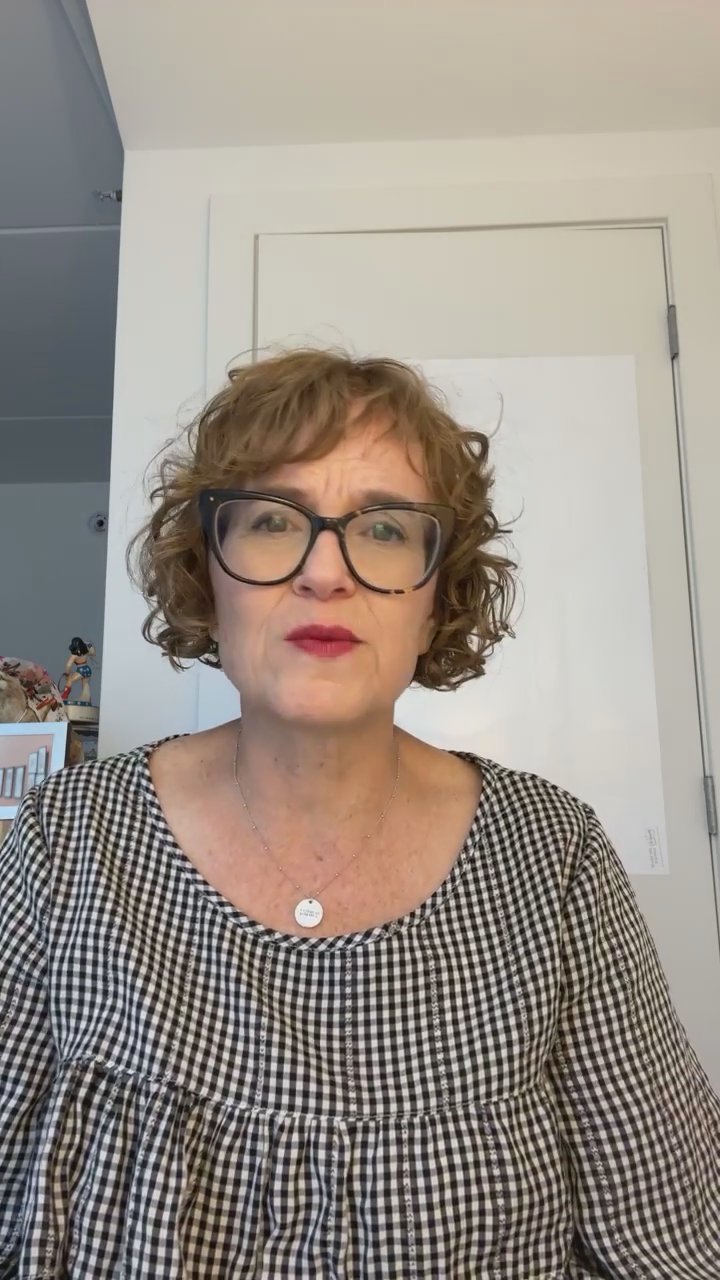
Betsy outlines personal rules of engagement and a 24-item wayfinder list, focusing on agency, using words to request needs, and recognizing when expecting others to change is the wrong problem. She explains how requests become information to guide relationship decisions.
Betsy: Today is the 24th anniversary of my first live broadcast. She shares her rules of engagement. She says if the solution to a problem is someone else changing, she's in trouble. Use your words, she says, and choose the higher vibe choice.
You can accept the person or you can detach with love. That's a big al Anon thing. This was a woman who broke a promise to me without any explanation. She apologized in a really great way. But she proved to me she wasn't a reliable friend.
Good morning Cadre, it's Betsy. I'm back to talk about rules of engagement. I have been sick for the last week and just feeling better today, so I hope everybody out there is doing well. And if you are sick, take care of yourself. It was nice to have my life set up where I could get the rest that I needed. And today is the 24th. And in my rules of engagement I have them set up in two different categories. One is sort of rules of engagement or guidelines for myself. And one is a list of wayfinders, I guess is how I think of them at the moment.
It's a little bit of a longer list and number 24 because today's the 24th, so why not? On the wayfinder list is if the solution to my problem is someone else changing, then I've identified the wrong problem. I word this a few different ways, I haven't quite landed on it because it could also be if the solution to my problem is someone else changing, then I am the problem. Or how else do I put it? I've lost sight of the main thread. I've lost sight of the main thread. Cause if I think there's something going on in my life and the solution to that problem is somebody else changing, I am in big trouble.
Because I cannot, I do not have any agency over whether or not someone else actually changes. If I need someone else to be different, do different, think different? I don't have a lot of agency over that. What I do have agency over is the decisions I make, the information that I gather, and then the decisions I make from that information. What do I mean by that? I can ask for what I want from somebody, I can ask for what I need. But that's me doing something and that's making a request, right? I can ask somebody to communicate more about something or other.
I can ask somebody, could you please be on time? I could ask somebody, could you please not talk about this? You know, when we are working or whatever it is, I can ask, and it is my job to ask. Dan Savage often says he talks about, use your words. You know, people will, you know, call in or write into him with a question and they'll say, dan, you know, my partner xyz, I don't know what, you know, what they're thinking. You know, I want to do this thing, but my partner and I'm worried and Dan will just come back with, use your words.
You know, you're an adult, you're grown, use your words. You can just ask them. And that's an important lesson, right? That's an important rule, is use your words. I should probably add it to my list, and I might actually at the end of this. But how they respond to my request is information and data that I can use to decide how I want to proceed in that relationship. My request is not a requirement. I can't make them do what I'm asking. And then if they don't do it, and my response is just disappointment and fuming in resentment, that's on me, right?
You know, that's. That's where that saying, you know, resentment is like swelling poison and expecting the other person to die. Resentment is like picking up a hot coal to throw at someone else, right? Like, sometimes my resentment can take the form of a harm to someone else, like, if that hot coal lands, but I will definitely have burned my hand in the meantime. You know, there's all sorts of great phrases, and I think we've talked about this here before, but resentment is a big one for me. I may do other live streams about resentment, but if all I do with the data I've gathered from someone else not responding to my request in a way that I want, if all that I do is sit around disappointed and glum and upset and resentful, and that is just making my life miserable, the higher vibe choice and the bigger life choice, because, of course, one of those rules of the road is choose the bigger life.
Well, the higher vibe choice is to say, okay, well, I just learned something about this person. Either they cannot do what I've asked, or they will not do what I ask. And it's important to figure out which one of those things it is. If you've asked, you know, if you've asked somebody who's an addict to stop using, well, they can't, right, left to their own devices without, you know, without going and getting help, they can't. If you've asked them to go get that help, and they don't. I am a recovering alcoholic.
I'm just here to tell you they can't. You know, they can't or they won't, either way. But that's information you need to have at that point. You cannot control their drinking or they're using. Side note, I didn't mean to get off on an addiction thing today, but just a side note, I am telling you as a person in recovery, whoever that person is in your life and you are wishing they would stop using, and why can't they just go to the program? Or why can't they just stop using, or whatever it is you think that they're going to do.
You've got to let that go. You are 100% powerless over the alcohol going in their mouth or the drugs going in their body. There's nothing you can do about it until they decide they're done. They are not done, and there is nothing you can do about it. This is one of those places where you can say to them, here's how you're having an impact on my life. I would like you to get help, and I would like you to figure out a way to stop using. You know, and if they don't, that is one of those places. Don't get glum.
Don't get, you know, the. You can have your feelings about it because it is sad to be close to someone who cannot be close to you because they are closer to whatever it is they're using. But then you have a decision to make and you have options. One is to adjust your expectations of that person and just be like, oh, I've learned something about this person. They can't actually be on time, or they won't be on time, or they won't get the help. Whatever it is. Whatever it is I think they should do, they're not doing either because they won't or they can't.
I'm going to adjust my expectations. I am not going to expect them to be on time, which means I am not going to go out of my way to be there, you know, five minutes early. Whatever it is you decide to do, that's your choice, and then you can do that. Communicating what you do in response to that, that's the boundary. Setting a boundary is not telling someone what they can or can't do to you or around you. No, the boundary is, if they do that thing, what are you going to do? That's your boundary.
Because you cannot control what they do. Right? You are, as John Acuff says, and I think I've said here before, you are 100% of the people you are 100% in charge of. So your response to them is about, what are you gonna do and who are you and who do you choose to be in the interaction? Do you choose to be the person who endlessly tries to get somebody to do something they can't do? Like, who do you want to be? So you can adjust your expectation. You can accept the person as they are. You can say, you know what?
That's fine. I asked for this thing. It's not a deal breaker for me. I'm going to stay in relationship with this person. If it's a work situation, and it's something that really is disturbing you. You can talk to your supervisor, their supervisor, or your boss. I mean, you have a whole range of tools at work to use. And if people have questions about that, let me know, because we can talk more about that. But you can accept the person or you can detach with love. That's a big al Anon thing. Detach with love.
And I have a story about this. At one point in my life, I'm going to keep this as general as possible because I don't want to put identifying features on the person I'm talking about. At one point in my life, I was pretty close with somebody. We were forging a friendship. We spent time together. We were there for very meaningful moments in each other's lives, and we were really becoming close. We shared a bunch of friends. This was a woman, and she made a promise to me that was very important, and she broke it without any explanation at a very crucial time.
It hurt me very, very badly on many levels in my life. It was very, very painful for me because she had said she would do something on my behalf and then she didn't. And people do that. Right? And I had a decision to make, and I was super mad. And eventually, you know, I said, well, this person is important to me, being mad. This is not, at this point, an extinction level event. I need to talk to her and hear what she has to say. And we sat down and she explained to me she apologized in a really great way.
Not the I'm sorry, you're upset kind of way, which is not an apology, but in the this was my behavior. I know it was bad. I'm not sure why I did it, and I'm very, very sorry. And me, having learned something about boundaries, said, okay. And needing to express myself and use my words, I said, okay, well, I was really mad, and I expect you to not do it again, right. For us to stay friends. And she said, that is completely reasonable. And my part was, you have made amends. You're doing your best to make it right.
In that case, you don't hear from me about it again when I accept an apology. Part of my acceptance of that apology is you're not going to hear about this again. Right. I'm not going to keep bringing it up over and over because I'm nursing. If I still have feelings about it, it's not your problem, it's my problem. I will take it to another friend or a therapist or whoever. So time goes on and we start reconstructing our friendship, and things are fine and we're not quite as close, but we're getting there and building up and building up.
And about a year, year and a half later, she had made another agreement with me. She made another promise to me and she didn't keep that promise and she didn't tell me she wasn't going to keep it. She just. There was a. There was something she was going to do for me and she had made this promise and she just ghosted me. It was wild. And eventually another friend of ours had to call and say, this is what's going on, and she's just not going to do this thing she said she would do, and she's not going to tell you that she's not going to do it.
And that's another decision point, because now I had two data points. And I understood something in that moment that I hadn't understood about her before, which was she was not reliable in very clutch moments for me, that she could not. I couldn't be close to her in that way because I couldn't expect her to keep her word when she said she would do things on my behalf. And I still love her very much. Very much. But I cannot be close to her, like, have her close in, in my life in that way because, you know, she proved to me in some pretty significant ways, in pretty significant moments in my life that she wasn't a reliable friend and that she wouldn't keep her word when given.
And those are forgivable sins, as far as things go. That's very common. Right. But I just couldn't have her that close to my heart because she had broken it twice. I mean, these were pretty big transgressions. So that's what I mean when I say I didn't expect her to change. And that's what. And, you know, I've done my best to detach with love. I love her very much, but I can't have her that close in. She's not an addict. It. It wasn't one of those kinds of things. And I wish her well, and I want her to have all the success in the world.
She is delightful, but we just can't be that close. And so, you know, when I think about, you know, if the solution to my problem is someone else changing, then I've identified the wrong problem. It was not realistic to expect her to change. The only person I could change in that relationship was me, and I could change my expectations of her. That's my deal. And I could change the distance and closeness that we have between us, which I needed to do for my own sake. But boundaries, as I said, they don't control other people.
Boundaries are guidelines for how I will behave under certain circumstances. They are not. Me telling other people how they can or cannot behave, that is a losing strategy. And I find that when I want to do that, I am very committed to feeling victimized and disappointed in the world. And since I was victimized as a kid, that material is pretty present for me in my life. And so I have to keep an eye out for it and really had to do a lot of work to make sure that I wasn't wearing my victim goggles whenever I looked at anything, you know, it's easy to do.
So that's kind of what I have this week, this idea that, you know, expecting other people to change as a losing strategy, changing myself and my behavior in relationship to them and their behavior. That's the winning strategy. So I hope everybody has a great week, and I'll see you again next week.
Reactions and comments are for members. Joining is free and takes a minute.