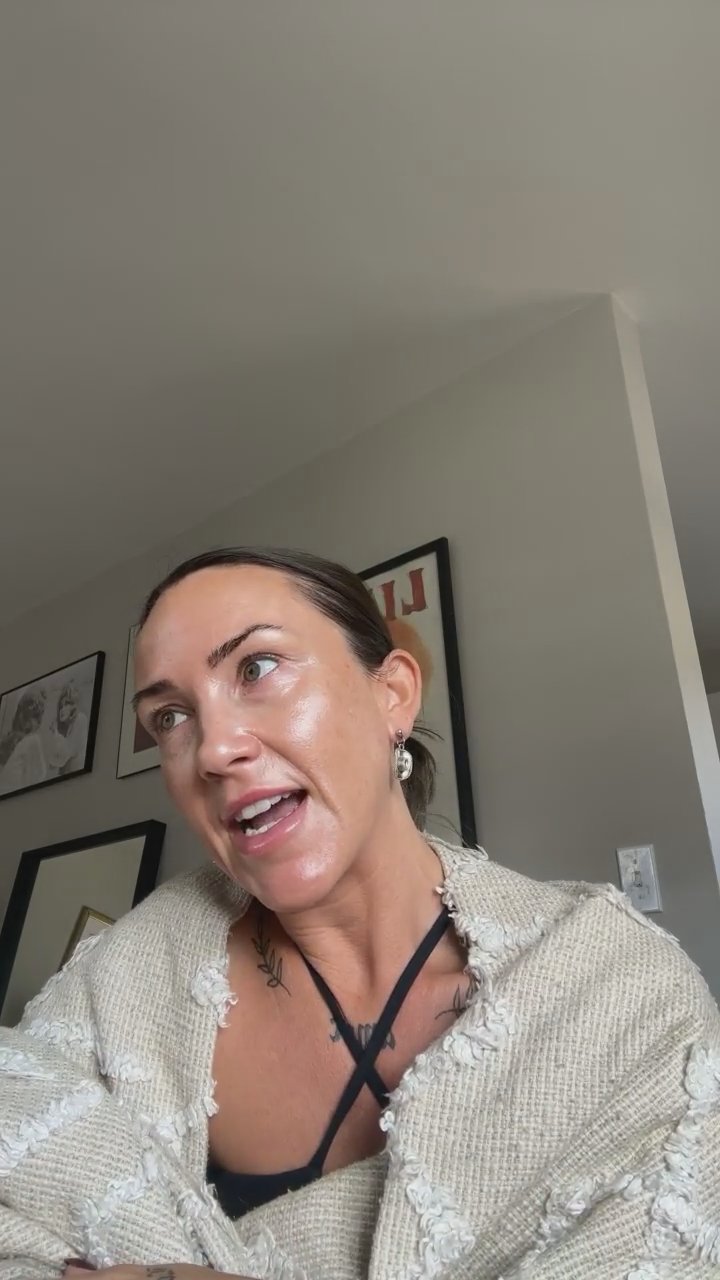
Host explains Internal Family Systems therapy, how it views a core Self and wounded parts, and recounts a powerful session while illustrating parts like the inner critic and its potential healthier role.
It is slightly sunny in Seattle. We've been having such weird weather here, so anytime it's sunny out, I'm like, ooh, last moments of summer. Gotta get it in.
Wolfpacker started with a new therapist yesterday. Internal family systems is a theoretical orientation to therapy. It's all around the idea that there is one true self and then there are parts of self that we have inside of us that we need to build relationships with and connect to.
Hello. Hello. Happy Wednesday, Cadre crew. I hope y'all are having a good midweek day. It is slightly sunny in Seattle, which has been. We've been having such weird weather here, so anytime it's sunny out, I'm like, ooh, last moments of summer. Gotta get it in. And, yeah, that's my. I don't know why I always update you on the weather where I am. I don't know. It feels appropriate. But I wanted to. To talk to you all today about internal family systems because I started with a new therapist yesterday, and.
Hi, Jules. And it was, like, unfucking believable, like, one of the most incredible sessions I've had in therapy in a really, really long time. And so I just wanted to talk a little bit about internal family systems. Why I wanted to find an internal family systems practitioner and then share a little bit about what the session was like. Internal family systems is a theoretical orientation to therapy. So if you've been in therapy or know anything about. About therapy, there are lots of different approaches to the therapeutic space.
So there's cognitive behavioral behavioral therapy, or CBT, which is all about the theory of that is, if we change our thoughts, then we can change our feelings and our behaviors. There are other kinds of therapies, like dialectical behavior therapy, DBT. I talk about that a lot, which is sort of more of a skills based model, and it's around building skills for managing our emotions, for communication, and really focuses on sort of honoring duality in life, and that two things can be true at once.
There are mindfulness based therapy approaches, there are existential based therapy approaches. So there's lots of different ways that a therapist might approach their work, and it's sort of like a philosophy around how people experience pain or suffering and then how they heal. So internal family systems is a theory of therapy. Hi, Va, wolfpacker. Hello. It's all around this idea that there is one true self, and then there are parts of self that we have inside of us that we need to build relationships with and connect to, because often those parts of us got wounded in some way, whether in childhood or growing up, and they can't properly serve the role they're meant to serve because they're stuck in a childhood state or a protective state.
So, for example, we might have, like, an inner critic who thinks that they need to criticize us, because if they don't criticize us, then we won't get things done. And if we don't get things done, then we might not survive. And if we don't survive, you know, so it has this idea that to keep us safe from things falling apart, it has to criticize us. And there's a more embodied, well, healthy version of that part and a role that it can take in a more positive way. Like, perhaps the inner critic thought that that's how it needed to motivate you in life to get things done, when in reality, if it didn't have to criticize you, it could be there to encourage you.
It could be a cheerleader instead. So it's about identifying these parts of ourselves that maybe are now starting to harm us in life, right? Like our inner critic, or some part of us that self sabotages, or a part of us that doesn't feel worthy, or a part of us that betrays ourselves or a part of us that feels lonely or abandoned. These parts of us come out in ways that we don't really quite understand. And when that happens, we experience things like loneliness or anxiety or depression. And so I was really interested to learn more about this kind of therapy because I'm in a season where I'm really working on this idea that I don't need something outside of myself to feel complete, that I am completely whole without a person, without material goods, without a substance.
And I've spent a lot of my life seeking something outside of me to feel complete, feeling like there's, like, an empty void inside of me that needs to be filled. And that's come up, you know, my whole life. And recently, it's come up in a way where I've thought about, you know, okay, I've been through all this therapy, but I still feel that sensation. And so I've been exploring the idea of doing internal family systems because it seems to offer some of those answers. So I booked this session with this woman yesterday, and I kind of already had an awareness of what internal family systems was and how the therapy session might go.
So I was, like, I was ready to dive in. And she basically had me sit down and close my eyes and ask me what I was coming in with. And she essentially guided me through connecting to different parts of myself. So I ended up interacting with a part of myself that was very, very young who felt like she was all alone. And I was able to, like, hold this part of me and let her know that I wasn't going anywhere. And I also was able to interact this part of me that wants to, like, shut the world out. Like, it's the part of me that makes me dissociate in conflict or shut down in relationships or run away when things get.
I get too close to success because this part of me thinks that I might experience pain or rejection. And to protect me from that, it tries to shut the world out, or it makes me. It makes it so that I can't be seen or see. I connected with a part of me that, like, really believes that it has something to say. Like, it's like an intuitive, wise part of me that feels like it hasn't had a chance to have a voice. And it was just so cathartic to connect with these parts of myself and realize, like, wow, I.
Like, there are these really strong, wise voices within me that I have not been paying attention to because I have been looking outside of me for all of these answers. And so they haven't had a chance to grow. And so no wonder they feel small and quiet and not very powerful. And it was just like a really. It was a really, really cool experience. And I have. Where's my book? I don't have it with me, but there's a book that I'm reading if you want to explore more about it, called no bad parts. And it talks more about the therapy in a better way than I can.
But it's been really, really impactful in terms of understanding why I abandon myself, why I cross my own boundaries, why I don't feel like I can trust myself, why I lose myself in relationships, why I feel lonely or alone, even, like, if I'm by myself, like, I don't experience a sense of peace or ease, I often feel a lot of discomfort and insecurity as well. So it was just. It was a really powerful session, and I'm very excited to keep going with it and share more with how it's been going. And I think it's been a really.
It's just been a really nice departure from traditional talk therapy because it's a lot more directive. And the book, I think the book that I'm reading has, like, a workbook component to it, but in the book itself, there are exercises you can do on your own. So if you want to try to sort of explore yourself, like, I definitely recommend the book. So, yeah, I just wanted to share that because I get really excited when I find new ways of approaching my mental health, and especially in times when I feel lost or stuck, it's really exciting to me when I find something that feels like, oh, this is new, this is challenging, I'm learning something more.
Like, there's still more for me to learn. And so I just wanted to share it with you. So again. The book is called no bad parts, and the therapy style is internal family systems, and I will leave you with that. And I hope that you have a lovely rest of your week, and I will see you next week. Take care. Cadre famous.
Reactions and comments are for members. Joining is free and takes a minute.