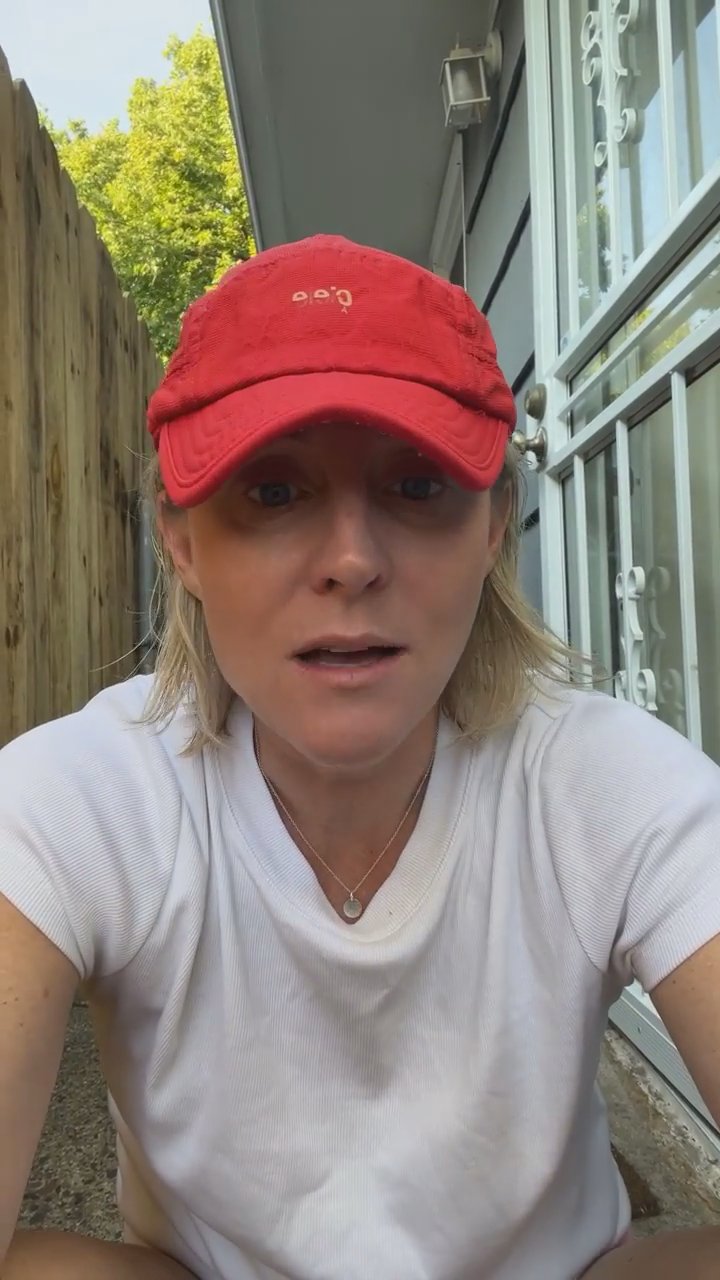
Shannon from Cadre speaks as a caregiver of a child with autism, sharing reflections from a neurodiversity convening and how she recognized her own limiting beliefs. She recounts wrestling with fear when her son wants to go to homecoming.
Shannon from Cadre is here today as a human to talk about caregiving. She is also the caregiver of a child with autism. So many of you will resonate with this as caregivers.
Sally Kohn: I'm here today to talk about caregiving for my child with autism. She says many parents and caregivers limit the potential of those with neurodivergence or disabilities. Kohn says we have to see the whole of the people in front of us.
Steph was on at 09:00 a. m. with talking about small hopes, small moments of hope. We have speak wonder coming up today who frantically. is a fantastic presenter. Anyone else I missed? Have a fantastic day.
Good morning, Cadre. Hello. It is Shannon from Cadre. You are catching me here. m. central standard time here in the Cadre sphere. I am here today as a human to talk about caregiving. Beautiful. I'm here. It's working. Good morning. Speak. Wonderful. Hello, everyone. Okay. So many of you will resonate this as caregivers. I am half ready today. I got out of the shower and I have my hat on. So that is success thus far. Good morning. So for those of you who I have not met yet, my name is Shannon. I am part of the Cadre team.
I am also the caregiver of a child with autism. I am a person who lives with CPTSD myself, and I live with anxiety and. Good morning. Tiffany Norton. Good morning. Speak wonder. And so I'm here today to talk about caregiving for my child with autism. So I was not here last week, and I apologize because I did not RSVP that I was not going to be where I was, was at a Cadre live event where we talked about neurodiversity, particularly in the workplace. And we met with some folks here in Minneapolis St.
Paul, some employers, our friends at Mac, those clinical, our clinical partners, and Katie Jacobs, the founder of a company called Kins, who is also the mother of a neurodivergent child. We met with Madi Warsama, who is the CEO of the somali parent Action Network here in Minnesota. I think I got that wrong. I think it's somali parent autism network, which makes way more sense. But I met with a lot of folks, Tanya from Pacer center, an advocacy organization. So we met with all these people, and we talked about our neurodivergent people.
My biggest takeaway from that day together, when we were talking about the potential of humans with neurodivergence, is that I have limiting beliefs about my own son. I will tell you that was not the realization that I would ever desire to have. It was a realization that, frankly, kind of punched me in the stomach a little bit because I realized that I might have fears about what might happen to my son out in the world that are limiting him. And it was kind of a shock, right? Like, I, I was embarrassed.
I was sitting there and no one knew this was happening in my brain, but I was listening to these speakers talk about how they witness parents and caregivers limit the potential of those with neurodivergence or disabilities. And I recognized myself in that conversation. And I felt that this week when my 15 year old son came home and said he wants to go to homecoming. And my first response was fear. And, like, oh, God, he wants to go to homecoming. But, like, will he know what to do? And I know there's this girl that he likes and he wants to talk to, and will he understand the social cues?
And, you know, immediately, a thousand things ran through my head. Of all the reasons why it would be scary for him to go to homecoming. I'm gonna sneeze. So apologies if it doesn't come out. I hope it does if I look weird, that's why. And I realized in that moment, I'm also having a limitation on him right, when it comes to that social piece. But as we thought about the workforce in particular and thought about our neurodivergent folks looking for jobs, you know, Tanya from Pacer center was speaking about an experience she had with a neurodivergent child.
Or actually, no, it wasn't a neurodivergent child. It was a blind child. This was a child with a disability whose parents didn't realize that their son knew how to code. And their assumption was like, he's going to be behind because he's blind. And the outcome in that moment was that what happened was the staff that day with their childhood was like, hey, your kid codes better than anyone else here. And I think, as parents, as caregivers, I'm putting on my caregiver hat. We are in protect mode. We are in care mode.
We are in. It's my job to keep you safe, happy, all the things. And so today, my message to you, to us, to myself, is that we have to get beyond our own mental limitations that are put on us by being caregivers. We have to see the whole of the people in front of us. We have to support them in the exact same way we would support other folks in helping them, supporting them in being the whole humans that they are. It is hard. It is practice. I had to say to myself, my neurotypical son can also show up to a dance and not know what to do.
My neurotypical son had job interviews this week and didn't really ask. Actually, I shouldn't say that. What he articulated to me was that maybe he didn't answer the questions well. Right? And so the things I'm afraid of, the things you all might be afraid of for the people you care for, are also things that humans experience, right? We experience awkwardness when it comes to dating. We experience maybe wearing an outfit that wasn't that awesome. Ps, I've done that a thousand times. And so I think it's on us to remember as caregivers for all folks, but particularly those who are neurodivergent, that we cannot come with our own limitations because that's not fair.
So I am heartened by my recognition of this because I'm now able to do something about it. And it's just a reminder. It's a great reminder for all of us, I think, as employers, it's a reminder, you know, I am a leader and it's a reminder to me to acknowledge what do people need to be successful, neurodivergent or not? What do we need? And so that's what I have for you today. I just have that reminder for all of us. And it's a good reminder. It's a good reminder not to limit myself. It's a good reminder not to limit anyone that I come into contact with.
And so I would encourage you to do the same or feel the same, be the same. Alright, friends, that's what I have for you today. m. with talking about small hopes, small moments of hope. She wrote a really beautiful excerpt in her live. You should go back and watch it. We have speak wonder coming up today who frantically. Who. Oh, my gosh. Frankly, that's the word I was looking for, is a fantastic presenter. Check in with her. We have Jaycee Lippold with family ties. We have all the people who are caring for people.
Miss Shannon, Paul. And so your people are here, friends. We're all here. We're all doing our best. And thank you for joining me today. Tiffany, speak wonder, Jules. Anyone else I missed? Have a fantastic day. You're awesome. You're doing a great job. See you soon here in the Cadre.
Reactions and comments are for members. Joining is free and takes a minute.