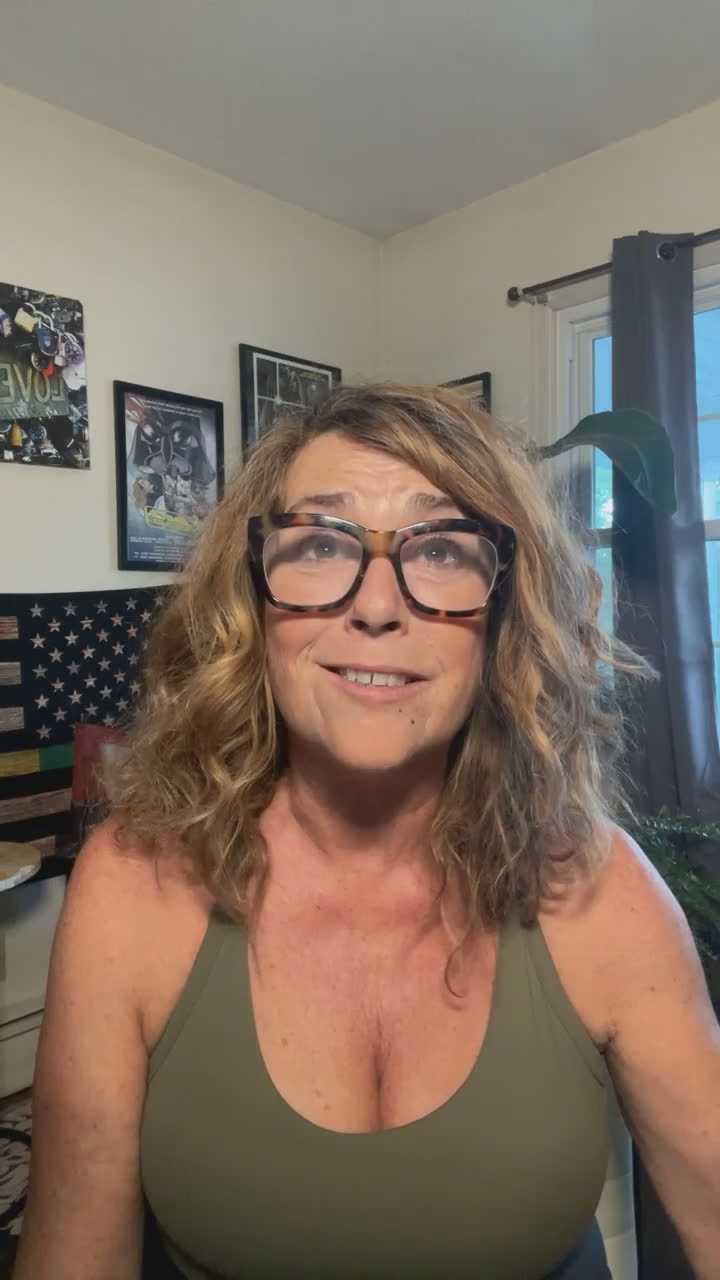
Tiffany Norton, a stand-up comedian with late diagnoses of ADD, neurodivergence and PTSD, reflects on the film The Substance to discuss double lives, identity shifts and the appeal of escapism. She explores psychological costs, fraudulence, and repeating lessons.
Tiffany Norton is a stand up comedian and someone living with a late diagnosis of attention deficit disorder, neurodivergence, and post traumatic stress disorder. Every week she brings something that has happened recently, like in the past week, and offer it up for discussion.
The substance promises to create another you, a better YouTube. In the movie, two versions of Demi Moore's character switch back and forth every seven days. That's a little bit like being blackout drunk. It got him thinking about his own personal self.
"Double lives " is about how we live double lives. Where does the idea that the past version of us was the better one come from? The movie was geared towards being funny and feminist. But how do we assimilate into these different groups?
So what are some of the psychological costs, long term and short term? I mean, obviously, feeling like whatever version of you that is truly you. But if that trauma never gets readdressed, then you are pro.
An overall feeling of fraudulence throughout one's life. It's going to affect your relationships. The need for escapism really makes sense, especially if you grew up in a chaotic household. Once you recognize that these patterns exist, you do owe it to yourself to work on them.
That's it. There's gonna be lessons. Lessons you learn you don't have to relearn, you repeat. So if any of this is resonating in any way with anybody or you have additional comments or things that you want to throw my way,
Greetings, everyone. It is 06:00 on Sundays, and I'm Tiffany Norton. This is Comedy centered. How are you? Hopefully you had a lovely weekend. I am broadcasting from Wisconsin, and it's gorgeous today, so I can certainly, hopefully people will see this in the replay. If you're a midwesterner, you might be out getting that last grab of good weather tonight, which I totally understand and pretty exciting in football world, too. But hey, again, I am Tiffany Norton. I'm a stand up comedian and someone living with a late diagnosis of attention deficit disorder, neurodivergence, and post traumatic stress disorder.
Most of my podcast is kind of talking about navigating, getting a later diagnosis, trying to figure out a little bit of what. Hey, Jules. What's up, girl? What kind of caused some of my stuff up here and. But, yeah, we. Comedy centered every week is I try to bring something that has happened recently, like in the past week, and offer it up for discussion. And I went to a movie this week with my friend, my friend Teresa, and it's called the substance. And so, spoiler alert, if you've not seen the movie the substance yet.
Demi moore. Demi. Well, I had to learn to say that, right? In, like, the nineties, right? Eighties demi Moore. And in this movie, it's, I don't recommend it for everybody. I like Gore and I like horror movies. And, like, this was even a bit over the top for me at the end. You don't necessarily expect that from a Demi Moore movie, but just warning. Definitely not one to bring the kids to, I don't think. But if you've not heard the premise of this, I think it's really interesting. Essentially, this gal who is a really well respected, popular, famous fitness instructor, and she has, like, a star on the Hollywood walk of fame, and she's like an aerobics instructor, almost like a Jane Fonda ish type.
Right. But it's modern day, and I don't want to give a lot of it away. But through this course of events, basically, she finds out on her 50th birthday, which is tough for any woman or man. You know, you're halfway through kind of, and, you know, she gets fired. She overhears her boss basically making plans to replace her with someone who's younger. So that's kind of how the movie gets started. And she's approached by someone and offered to take to, if she wants, she can change her life. She could have.
Hey, Luke. Welcome in. We're talking about the substance with Demi Moore. So if you haven't seen it yet, you know, I don't want to screw it up. But basically, she comes across this black market drug that is called the substance. And the substance will basically, it promises to create another you, a better YouTube. Okay. And so this is obviously a Sci-Fi kind of horror premise, but essentially, through the use of this substance, it creates a second demeanor, it creates a different. A second character that's played by a different actress, a younger actress, and it is a version of her.
It is her best self, but it's also like when she's 25. Okay. And so the consciousness of the character played by Jimmy Moore, and I think it's Kristen sparkles or something like that. I can't remember the character's name. The consciousness can only live in one of these people at a time, and they have to switch back and forth every seven days. So when one is awake, one is asleep. Okay. So for seven days, it's to be more at 50 years old, and then she goes to sleep, and then it's seven days of the younger version of her, who is now becoming her own fitness influencer and living her best life.
And eventually there becomes rivalry between the two because. And they're sabotaging each other on each side. The younger one doesn't want to go back to sleep, wants to stay awake a little bit longer, and so goes beyond the seven days. And because that happens, Demi Moore's character, the older character, is penalized. There's something bad that happens to her anytime more time is used by one side than the other. There's a, there's a, there's a. There's a consequence that can't be undone. Right?
And so back and forth, they just keep fighting each other, but they're never embodying the body at the same time. They're never embodying this consciousness at the same time. And it kind of dawned on me, that's a little bit like being blackout drunk. That's a little like drinking. You know, when you. If you've had that situation, if you're a person who's struggled with alcohol misuse and overuse, as I have, it is almost like you are two different people. And I've mentioned it before, but I do some study in and around and practicing of Buddhism, and that's something, actually, one of the, a guy who's kind of controversial, Osho, he talks about that, the fact that, like, we, you know, our souls almost sometimes live in a state of schizophrenia, not the DSM type schizophrenia, but in a constant state of battling ourselves.
Right? Anyway, so it got me thinking about my own personal self. Right? I remember, especially during the pandemic, that was when a lot of this stuff really, I mean, it wasn't, like I didn't. Wasn't aware that I was drinking, probably too heavily, but the pandemic really made it front and center, I think, for a lot of people. But, I mean, I can distinctly remember situations where I'm like, I would wake up in the morning, I'm like, who did this? Who ate all this food? Who trashed the kitchen? Why is there crap everywhere?
And so, like, that was sober me. And so, like, in the morning, right? You wake up in the morning and you're like, all right, I feel good. I got good sleep. I'm gonna get this done. I'm gonna get this done. I'm gonna get this done. And by the end of the day, you don't even recognize yourself. By the end of the day, you're, like a completely different person. You can't even remember how you even felt like that in the morning, because now you're so exhausted, and it's been the whole day and whatever.
And one of the things that I noticed that when I would get really, really overwhelmed, I didn't realize at the time that I was neurodivergent. I didn't realize how sensitive I was to, like, other people's emotions and stuff like that. One of the things I used to cope with it was, was wine. And I would just drink some wine. Ah. You know, and so, in the movie, to bring it back, the rivalry between the two versions of her, you know, gets increasingly crazy, right? And destructive. And that's a lot like drinking, too.
And so I was thinking about, well, what is it like leading another? What's a double life? You know, we think of double lives. Like, oh, the guy who, like, has a second secret family, which I found out Charles Lindbergh, the pilot, did, apparently had, like, two extra families no one knew about. But this cognitive dissonance. Because when you're talking about, I mean, it can be anything. Cognitive dissonance, if you're not familiar with the term, is when you can hold two things true that really don't go along together at all.
This is often something that will happen to you if you've been gaslighted at all, if you've had a lot of experiences or raised in an environment where there was maybe some narcissistic personality disorder. I'm reading this fascinating book about cults that is also a thing, holding that cognitive dissonance. That's where you get into double eyes. You know, there's, and it's interesting to think about how those patterns can get set up, even from the early days of interacting with your family. Because, like, for example, for me, my parents divorced when I was twelve and I have a younger brother who is seven and a half years younger.
It's also paranoid schizophrenic. They didn't know that then. And I, my parents had joint custody through the courts. And so I went back and forth from each house and we switched during the middle of the week, each week, and we did this back and forth for, you know, eight, you know, six years of my childhood and a lot longer of my brother's. But I had to be two different people depending on which house I was. There were different rules, there was different things you got in trouble for at different houses.
Like on one house it wouldn't be a big deal if you accidentally slammed a door or made a loud noise. The other house, you, there would be bad consequences. One house, you didn't have to finish everything on your plate when you did, you know? And so you end up learning how, you start reading the cues, trying to figure out how you can fit in, into your familial or your, you know, your family network. And that's when these cracks start. You know, like there's the me. I've even, I've said this about myself many times.
And now understanding more about neurodivergence, I understand how true it actually is. But I always used to think like, like, people don't actually like me, they like the idea of me. And I think that that's, I think that's my own cognitive dissonance right there. Anyway, so double lives. And we think about double lives. Like it, it happens all the time, right? You, you hear about a pastor that's got the secret sex addiction and you've got this and you've got that. But where does that come from?
Where, where is it that, where does this idea come from? That the past version of us was the better one? Kind of like in that movie, the substance. Like the younger version of us was the better version? Well, not necessarily. I would never do my twenties again. But how do we have to assimilate into these different groups and give what they want to feel safe, to feel accepted, to feel in there, and then that's where this, this cognitive dissonance can, can come into play. Like an addiction is one of the biggest ones.
Everybody, I mean, everybody knows, you know, it's like they have the secret gambling addiction, they have the secret secret drinking problem. They have the secret drug problem there. They have the. I mean, there was that nurse Jackie. That was the whole premise of that. That show about a highly respected nurse, the top of her field, but then wildly addicted to painkillers and all the stuff that came with her trying to just, you know, feed her supply. And so it just comes back, at least to me. And that was one of the things, obviously, this movie was really geared more towards, like, being funny and feminist and making fun of the fact that we get so freaked out about aging and we'd do anything, even risking our own lives, risking our own identity, our own autonomy, going and getting black market drugs just to try, just to stay young, you know?
I mean, there's that. I mean, there is that. But the thing that they keep saying throughout the movie, too, is. And then as the rivalry actually goes between the two halves of herself, there is a phone number for this place where she. Where you get the substance. And each half would call and complain about the other one. And they kept saying, remember, you are one. And eventually, the reason why it all blows up and it doesn't end well for either character is because they couldn't integrate. They couldn't accept, they couldn't respect the younger version, could not respect the older version, and the older version couldn't understand why the younger version didn't respect it because the younger version wouldn't be enjoying all the things the older version hadn't provided it first and taken the substance and created the younger version.
And if you take a step back, especially from the gore, and like I said, there's a lot of gore in this movie. This is not that far fetched of a premise. In fact, a lot of us are doing this every day. We're doing this every day where we're actually two different people. We know we're not, but also, we don't. You know, I don't know. It kind of. It's interesting to me, like. Anyway, so that was kind of what I was thinking about when we were. When I was queuing up what we were going to talk about today.
And I wrote some notes and I'm trying to find the. There was a little list I wanted. Wanted to show you. There. There it is. Okay. So what are some of the psychological costs, long term and short term? I mean, obviously, feeling like whatever version of you that is truly you, if at a young age you did not feel like that was accepted in your family or you had to show up in a different way or you had to modify who you were in some way, those are those, those, those tendencies aren't that you're a bad person.
Those were coping mechanisms. Those were things you added. Those were strategies you had to implement to survive and to keep a little autonomy that you have left. But if that trauma never gets readdressed, then you are pro, you're more likely to be running into these situations where there's the secret self, the secret self that you hid from the family, the secret self that not everybody knows about the other side. You know, similar to the movie. Right. So what are some of the psychological costs of living in a state of having a double life?
Obviously fear, a lot of anxiety, guilt, identity issues. And, I mean, I think we definitely were covering that for the first ten minutes of this. Just an overall feeling of fraudulence throughout one's life. And last week we talked about imposter syndrome, or maybe it was two weeks ago, about showing up in your life and feeling like an imposter. Well, this is, it's kind of this. I wasn't necessarily trying to correlate those two, but, you know, my research tends to circle around similar subjects.
But if you have created this imposter, if you've created this double life, if you. If you are a person who you had to be so perfect all the time at home, otherwise you would, you would suffer psychological and actual physical damage, possibly from not being perfect. Well, what do you do? You can't be perfect all the time. And so the way you cope is you go and you have your little secret things, like your secret activities, your secret stuff. And so this and this will overall, of course, affect your self esteem.
It's going to affect your relationships. It's going to affect your relationship attachment style. You're more than likely going to be kind of a nervous avoidance or a nervous attachment relationship style. Where you're going to, you're going to know, like, you're the type of person who isn't totally honest all the time. So you're going to project that on your partner and think they're also not totally honest, even though, well, maybe they are being dishonest, but maybe they're not. Maybe it's just you, you know, and you would think, well, why would someone want to live like this?
Why would someone choose this? It's not a choice. I don't think it's a choice. I mean, I think once you recognize that these patterns exist, that you, that you do owe it to yourself to start working on them and at least address them and say, hey, you know what? You know, I'm keeping a lot of secrets from people. I mean, it's not like when I was drinking a ton, I was going around telling everybody how much, you know, you keep them. You know, keep that to yourself. You don't even. I didn't even tell myself how much I was really drinking, how I used to know how much I drank the night before was.
I would go and I would pick up my box wine out of the fridge. Oh, it's pretty light. Oh, I think we're down a pound. You know, you don't want to, because there's so much pressure in society for us to all just be perfect. Like, we've all got to figure it out. It's all fine. It's all fine. Everything's fine. No problems here. And so until you close the doors and draw the blinds, and then, you know, so the escapism is where the double life will end up taking you. But the need for escapism really makes sense, especially if you grew up in a.
In a chaotic or a. A mentally or a physically abusive household. You were. You were literally trying to escape. I know I did. I ran away quite a few times. They was on me. I wasn't really good at it, though. I didn't get very far. Um, but we all want to escape feeling badger about ourselves, about others, about our family, about our careers, about our age, about aging, about all of this stuff. But, you know, an escape is just temporary. It solves nothing. We know that. But it can feel good. It can feel like a reprieve.
And it can also feel really nice and warm and cozy, like it's your own little thing that nobody knows about. You know, there's sometimes some thrill in deceiving, some thrill and deception. There's some thrill in, you know, exploring a different identity. Maybe. Maybe you're a person that, due to religious or familial ties, you don't feel comfortable fully expressing who you are gender wise. You know, maybe. Maybe you were raised in a gender conforming household, and you don't really. You don't really feel that way.
Well, it makes sense to keep yourself protected. It makes sense to start out not telling everybody and doing it on, you know, experimenting with your personality. I mean, some of these things can be healthy, but when you start believing that one person's doing one thing in your head and another person's doing another thing in your head, and it's not both you at the same time, that's. That's where you can really cause some. Some very deep psychological harm to yourself. And that's where the cognitive dissonance comes back in, and then, you know, we've all heard stories about, you know, like, why do people lie in the middle of addictions?
The reason why people lie is they just don't want you to find out they're not perfect. That's really the only reason. I mean, that's the. Mostly the reason, and they don't want to get in trouble. I mean, why do you lie to. Why do you lie to a police officer? She want to get in trouble? Why lie? Your mom, she's running in trouble, you know? Yeah. Let's see what else was there. Yeah. And also too, like, creating the desired image. Often we've got so much pressure in this society of having this, like, perfect image that anything that comes along that might, you know, if someone's gonna say something bad about you or bring up something that they didn't like about that you did, there's gonna be a real.
If you. If you feel this. This pull and you feel that this creative and this created and false identity that you have, that you have carefully cultivated and are presenting as the actual you, when that gets criticized is devastating because you've worked so hard to make this projection the perfect projection. I did all this to protect myself from ever being criticized again. But remember that that is impossible. When I was younger, I used to think if I was perfect and if I timed everything right, I could run through the rain exactly in the right pattern and not get wet and not have one drop fall on me.
It doesn't work. I tried it a lot. I was like, if I could really. If I could, like, matrix it, I would, you know? And again, what I've learned in, like, my religious stuff and my buddhist stuff is that, you know, the one thing you can. There's only one thing you can really count on in life, and that's lessons. There will be lessons. That's it. There's gonna be lessons. Lessons you learn you don't have to relearn. Lessons you don't learn, you repeat. So if any of this is resonating in any way with anybody or you have additional comments or things that you want to, you know, throw my way,
Reactions and comments are for members. Joining is free and takes a minute.