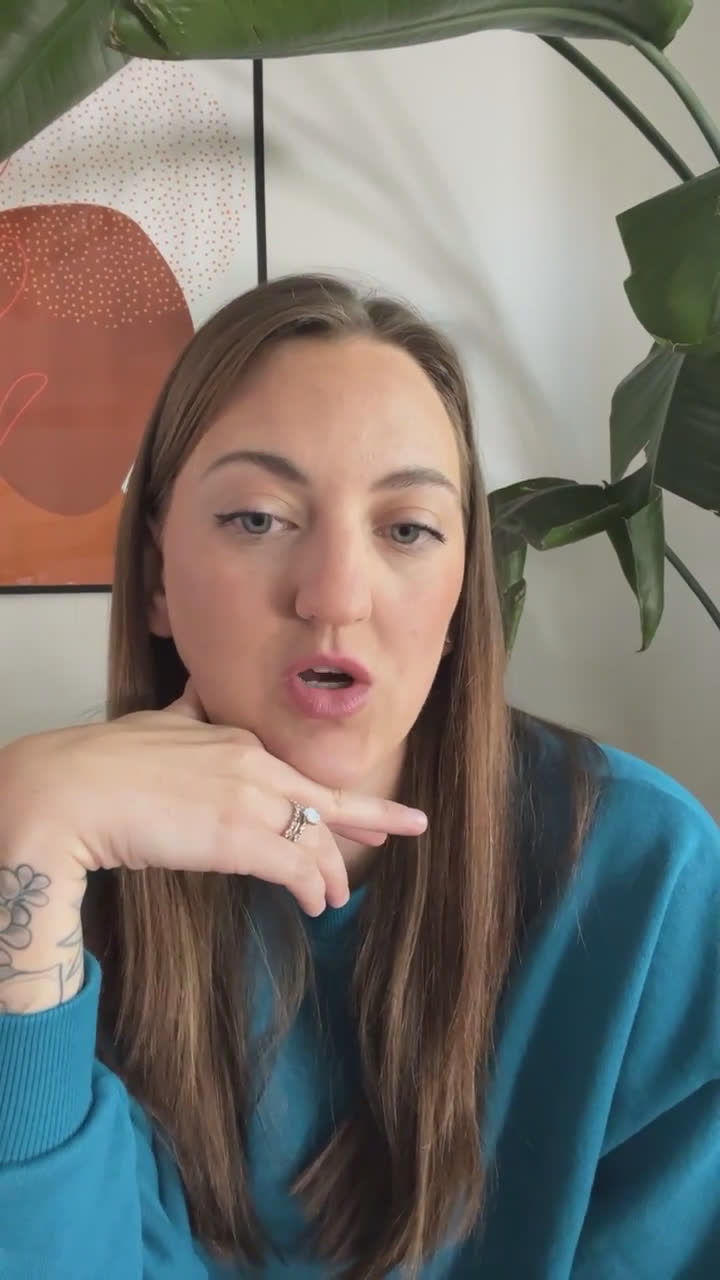
A casual nutrition Q&A that explores coffee's effects, hydration, movement, weight‑loss plateaus and when to consult a dietitian. The host also addresses tart cherry juice, smoothie ingredients and mushrooms as a food source of vitamin D.
Good morning. Happy Saturday. We are getting ready to go to the farmer's market this morning. One of my favorite things to do, and I feel like they end really early out here. We're gonna try to make it before the season is over.
Today I wanted to do a little bit of a q and a with some of the questions that I've been asked. If you have questions, drop them in the chat. I will answer those as well. I hope everyone's doing well.
Is coffee good or bad? It depends. If you're a healthy individual, coffee is not going to negatively impact you. Tart cherry juice could be great in general to lower inflammation. What is your favorite smoothie ingredient?
All movement is good movement. Any way that you want to move your body is going to benefit your body. Where people get stuck is movement that supports a specific goal. Wellness does not have to be expensive.
The body is about 60% water, the brain is about 75% water. Dehydration can negatively affect your athletic performance. Our water intake helps to lubricate our joints. How does water help your bones?
If you're on a weight loss journey and you're struggling or you've hit a plateau, typically we have to look at in terms of overall food movement. Eating at maintenance, gaining muscle and also looking at are the things I'm doing for the pursuit of weight loss.
Working with a dietitian is probably more comprehensive than you might think. The idea of using food to support management of disease is not a western idea. It's more holistic than you probably think.
Jocelyn: Is there any benefits to mushroom? Yes. Depends on the type of mushroom. Mushrooms are one of the few sources, food sources of vitamin D. Most mushroom coffees are targeted towards people who have bad reactions to caffeine.
It's time for me to leave. I love doing Q and A's, so if you guys ever have more questions, ask them in the community chat. All right, I hope you all have a wonderful Saturday and enjoy whoever is.
Good morning. Good morning. We're gonna try third time's the charm. Happy Saturday. I hope you're all doing well. We are getting ready to go to the farmer's market this morning, which is one of my favorite things to do, and I feel like they end really early out here, so gonna try to make it before the season is over. Today I wanted to do a little bit of a q and a, and my laptop is over here with some of the questions that I've been asked. So if you. Ah, yes, Jules. Good morning, Luke. Good morning, Jocelyn.
Good morning. I was having some technical difficulties, um, and it made me really nervous after last week. I was here last week, I promise. But for some reason, I couldn't see anyone in here. It didn't show up afterwards, I guess. I don't know. Um, so good morning. I'm so happy to see people. Um, today is. I don't know if you saw. I wanted to do a little bit of a q and a with just some of the questions that I've been asked in this, and then also just from some other people who have been in the Cadre sphere.
So if you have questions, drop them in the chat. I will answer those as well. I'm happy to see you, Luke. Man, I was really stressed. I just even this morning, like, duplicated the live so that I could make sure I was on here. So if you have nutrition questions, put them in the chat, because I want to make sure I answer those. And I'll start with some of the ones that I have gotten previously, and we can go from there. I hope everyone's doing well. It is hot and dry here in Colorado, and nothing is changing for the next couple, couple weeks.
So I'm trying to pretend that it's fall, even though it's not. Okay. Question number one that I've gotten was, is coffee good or bad? And like most things in the nutrition space, it's always kind of an. It depends. Generally, if you're a healthy individual, coffee is not going to negatively impact you. There are polyphenols in coffee, which are antioxidants, which can help protect the body from something called free radicals, which kind of can cause some damage to cells, prevent cells from doing their normal functioning.
So in that sense, love coffee. Coffee is a stimulant, right? Caffeine. So for some people, that might not be beneficial. A lot of times, if you are someone who struggles with anxiety, coffee caffeine can make that worse. It can increase blood pressure, that basal constriction. So if you are worrying about that at all. Maybe you just go for less caffeine. Good morning, JC. Ooh. JC, I love that question. I'll answer it. Coffee is. There's kind of this age old, oh, coffee dehydrates you. That is a myth that has been busted more recently where it's not dehydrating you, but it's not like miraculously hydrating you.
So it is water that you are drinking when you are drinking coffee and caffeine being a simulator makes us pee a little more, so sometimes we just get rid of that. So always good to be drinking fluids of all types. But in general, if you are an otherwise healthy individual, there's nothing wrong with coffee. Too much of anything can cause issues. So I'll say that. But if you like coffee, drink it. JC, I'm a regular smoothie maker. If you are going to tell me your favorite smoothie ingredient that you probably currently add, what would it be?
Ooh, I have one that's kind of out there, maybe so I'm thinking of more like a normal ingredient, I'd say. My one that's really out there is silken tofu. If you've never used silken tofu, it is the highest water content of the spectrum of tofus. And if you are someone who doesn't like protein powder, but you're trying to boost protein and micronutrient content of a smoothie, that is something that I have recommended to people, especially because a lot of times, plant based protein powders don't taste as good.
Silken tofu doesn't really have a taste. I've also used silken tofu to make chocolate mousse. It's just a block of tofu, cocoa powder, whatever sort of sweetener you like, maple syrup, honey, sugar, whatever. And you just kind of blend it all together. It's actually very good. So that's my, like, dark horse smoothie ingredient. Aside from maybe what I think maca powder is another good one. It kind of gives it a little bit of like a caramel y taste. Caramel y taste being influenced by the Colorado out here.
Um, I don't know. I will say I'm pretty. I personally am pretty boring with my smoothies. That's a good question. I've never been asked that question. I'll keep thinking because I probably have done something else. Tart cherry juice. Looking for food to help with inflammation. So that would actually be a decent thing to add. Tart cherry juice. Cherries are really high in, actually similarly to coffee polyphenols, which is a type of antioxidant, which can help with lowering overall inflammation in the body.
It also helps our body to produce natural melatonin, which is why if you saw any of the online space, honestly, I think it was maybe like a year ago at this point, everyone was making drinks with tart cherry juice and magnesium. That is why. And there is actually research to back that. So tart cherry juice could be great in general, if you're looking for things to help lower inflammation, those are going to be your antioxidant rich foods. So other examples of that include blueberries, specifically wild blueberries, if they're within budget, have higher antioxidant capacity.
But berries are really great. Even a lot of spices, things like turmeric is a big one. Ginger, garlic, even things like dark chocolate. In general, your like, dark, rich colored foods, your dark leafy greens, those are gonna have a bunch of antioxidants in them as well. So, in terms of food, I would say looking for those foods that have really high antioxidant content, I can't remember. I think a couple weeks ago, we talked about antioxidants. I'm pretty sure I I'll go back and look. I posted a little chart with foods that are high in antioxidants in the community tab.
If I didn't, I will. And you can reference that. But in general, tart cherry juice, great. It can be a little bit expensive, but if it fits within budget, and it's something that you enjoy. Most of the research done on tart cherry juice has been done two to 4oz as a serving, and then the most benefit was when you did 2oz in the morning and 2oz at night when it comes to sleep, but less little fun fact. I love this. Great. Keep drawing questions. I'll go. I'll kind of bounce back and forth. If I see one in there, I'll answer it.
Otherwise, I'll answer some of these ones I have over here. Does walking count as exercise? Yes. All movement is good movement. Any way that you want to move your body is going to benefit your body. For some people, that's walking, for some people that's running marathons, for some people that's chasing your kids around in the backyard or grandkids around in the backyard, powerlifting, crossfit, bodybuilding, yoga, pilates, all movement is good movement dancing. If you're in the Minneapolis area, big dance energy, great.
I wish I could go next time I'm in Minneapolis, and I think that where that gets lost, like movement is benefiting your overall body. It helps our digestion, it helps our cardiovascular system. It can help with our mental health. Where I think people get really stuck is movement that supports a specific goal. Obviously, if you are wanting to run a marathon, the movement that's going to be most beneficial to getting you to that goal is probably going to be more cardiovascular training. And that in that case, walking is great, and you're not really getting your heart rate up enough for the most part.
If you're just walking, that doesn't mean it's bad. That just means if you have a very specific goal that you're wanting to achieve, we can tailor movement for that. But all movement is good movement, and movement doesn't have to cost money. That's something that makes me really frustrated, this idea. I think the wellness industry is worth so much money, and they collectively kind of push this narrative that wellness has to be expensive, and that is entirely untrue. Wellness can look a million different ways when it comes to movement, when it comes to food, when it comes to whatever goals you have.
You know, for a lot of people, wellness just, like, looks like I want to age well and not lose my strength and still be independent 40 years from now. In my case, that's a goal I have. So wellness does not have to be expensive. You do not have to pay money to go to a fancy gym. They are fun, and you don't have to do those things in order to be benefiting your overall health and wellness. JC, big dance energy is going to be the newest contributor very soon. I'm really excited for it. I hope we're doing live dances because I'm.
I'm in. I'm so in. Tell Nikki. Um, big dance energy. I. Because I don't have, um. I'm not in Minnesota, there is a YouTube channel called the Fitness marshal that's just, like, dances to popular songs. And that's something that I do for fun. Rhonda. That's my goal also. It's a good goal, right? Being able to stay independent and stay mobile and stay active and feel good in your body, whatever that means to you. Liquids and the effects of dehydration. So, as I mentioned with the coffee, liquids are liquid.
In order for something to be liquid, there's probably gonna be water in it in the food sphere. So coffee, while it is a liquid, it does contribute to your overall fluid intake. Right. If we're put. If I'm putting someone on a liquid diet in a hospital, that's all fluids. That's coffee, tea, broth, soup, jello, even those are. It's all liquid. It's all fluids. Is water great? Yes. Do a lot of people struggle with just getting water in? Yes. Adding flavoring to your water does not make it any less water.
If that's what you have to do to get your fluid intake in and stay hydrated, that is okay. In terms of effects of dehydration, the body is about 60% water. The brain is about 75% water. So there's actually a lot of research that shows negative impacts of dehydration, specifically on cognitive function like motor motors, executive functioning, motor skills, coordination. And there was, oh, no, I can't remember the numbers back in my sports. More sports nutrition, learning. There's a very frequently cited study that I think is 2% fluid loss significantly impacts athletic performance.
But I can't remember what the number was. Oh, that's gonna frustrate me if I think of it. It's fun. I want to say it was like 10%, but anyway. So dehydration is going to negatively affect your athletic performance. It can negative. Negatively affect cognition. It can negatively affect Sony Jawson. Ask about bones. Our water intake helps to lubricate our joints. Every cell in our body, nutrients move through fluid. So if we don't have enough fluid, all of that kind of starts to not work as well. Dehydration can cause increased blood pressure.
Dehydration can cause kidney stones. It's harder to flush things out. Right. Our kidneys are excreting all of the toxins in our body just from life. They need fluid to do that. If you don't do that, if you don't drink your fluid, your kidneys are going to keep trying to do that. We can get kidney stones. We can get kidney stones for a multitude of reasons. That's not. It's not just dehydration. So fluid is important. I know I'm quite bad about for being a dietitian. My, like one. My one biggest challenge is drinking water.
So I don't know if that answers your question. How does water. I don't. How does water help your bones? I think for that, I would say the biggest thing is just like, movement of nutrients, so getting phosphorus into those cells and then lubricating joints. Actually, there is probably more to it than that, and I just don't know. Good question, though. You may have stumped me there. I was asked on here, I think, a couple weeks ago, tips for a weight loss plateau. And I am not a weight loss dietitian.
I will preface with that. I am on the other side of things. I work in eating disorders and intuitive eating. And so this is not what I do every day. But generally, if you are struggling, if you're on a weight loss journey and you're struggling or you've hit a plateau, typically we have to look at in terms of overall food movement, to the point where you're eating enough, you're not stressing your body too much out to the point where your body then can't recover from your movement. But also, a lot of times, it just is taking a break.
Eating at maintenance, gaining muscle, because muscle is more metabolically active tissue. So gaining strength and also really looking at are the things I'm doing for the pursuit of weight loss, things that I'm doing for the pursuit of health, because those things are nothing, always synonymous. And something that I often do is with clients, is if they're wanting weight loss, oftentimes, it's not necessarily about eating less and moving more. I never recommend that. I mean, those things are like, moving more is great.
We love that. Movement is great. We talked about that. But a lot of times when I go through diet recalls and history, and I what food looks like and relationship with food, more often than not, there's some sort of maladaptive behavior. And what I mean by that is, oftentimes with people pursuing weight loss, there's usually calorie restriction. And so a lot of times in the morning or throughout the day, maybe someone's not eating as much, but they end up getting really hungry throughout the day and eating a lot at night, whether that's binging, whether that's just, like, not technically able to be classified as a binge, but just restricting and then eating a lot at night, that can impact a lot of things.
That can impact your sleep cycle and your digestion, which can influence those things, like weight, but also just like, how you feel overall. So I would say, taking a look at all of those things, food, movement, sleep, stress, hydration, and then really seeing also your body likes to be at a certain point, right? If you've heard a set point, when you push past that, your body has corrective mechanisms with hunger cues and signals to the brain to kind of correct that. So that's something to keep in mind.
And then there was something else I was going to say. Now I don't remember. I haven't finished my coffee yet. Maybe that would fix my memory, or maybe I'm dehydrated. That could be too. It's gonna bother me that I forgot about that. Oh, well. And that is one of the questions was, what is it actually like to work with an RD? It's pretty similar to what I just described. So if you were to come to me with whatever goal you have. Most dietitians, I will not speak for everyone, but many of the ones that I have worked with, and I personally am always going to be looking at the pursuit of health over the pursuit of a scale number changing.
And that doesn't mean that your goals are invalid. That doesn't mean that you don't have autonomy. But oftentimes we're looking at implementing behaviors that are going to benefit your overall health and well being. Sometimes those lead to weight loss if you're not already doing those things. And that is great. If that's what happens, that's what happens when someone comes to me, I'm looking at what are we eating? What's our fluid look like? I go through a full medical history. We talk about goals, we look at relationship with food, because that's a big one, especially when we're implementing different strategies to change eating habits.
Something I really like is the plate method. I've talked about that on here before too. So it's a way of aiming for nutrient dense eating without counting anything. Cause that can be really detrimental to people. I think a lot of times the assumption is that dietitians, because we are historically kind of western trained, that we don't look at the whole person. And I would say, I've never met a dietitian that doesn't. The idea of using food to support management of disease is not a western idea, I would say.
So it's more holistic than you probably think. At least in the kind of outpatient space. When you are working with a dietitian who's maybe like part of your diabetes management class or cardiac rehab, that might look a little different because that's a little more in like kind of crisis mode. Oftentimes the people that end up there because they've been in the hospital and discharged. But working with a dietitian is probably more comprehensive than you might think. Jocelyn, this new mushroom coffee craze, is there any benefits to mushroom?
Yes. So mushrooms. Depends on the type of mushroom. If you're talking about, like, mushrooms that we're eating, baby bows, things like that. Mushrooms are one of the few sources, food sources of vitamin D. There are also some antioxidants in mushrooms. In terms of the mushroom coffee, if I remember right, most of them are using adaptogenic mushrooms, which are mushrooms that have been studied to have some sort of effect on, like, mental state. Not the, like, psychedelic mushrooms, but. So, for example, Ashwagandha is one that is pretty well studied.
It's not like we don't have the strongest evidence, but Ashwagandha has been shown to kind of help mitigate anxiety. The other big ones are reishi, lion's mane. I think there's one more. I'm trying to think. The product that I keep seeing advertised is called everyday dose. And I have, like, two minutes left, so I'll make this really quick. I just want to see what's in here. Oh, and then. Okay, Chaga. That's the other one. So something like everyday dose brand has lion's mane that has been studied for potentially brain health.
Again, evidence isn't the strongest, but there's not nothing there. L theanine is in that one too, which is not a mushroom. It's an amino acid, but also touted to help with focus. So there is some evidence to it. I think typically the mushroom coffees are targeted towards people who maybe have bad reactions to caffeine or you're just trying to cut back on caffeine and coffee. I have had some in the past and I don't particularly love the taste of them. I don't think anything in those mushroom coffees is going to be life changing and, like, all of a sudden make you focus like no other.
It's not going to act like an adderall if you have ADHD. It's not that extreme, but I actually really like. One of the things I talk a lot about with some of my clients is Ashwagandha. So I do recommend that sometimes, but, okay, I'm getting booted off. It's time for me to leave. Thanks for joining me. I love doing Q and A's, so if you guys ever have more questions, ask them in the community chat. And if I missed anything, bother me about it because I want to answer your questions. All right, I hope you all have a wonderful Saturday and enjoy whoever is.
Reactions and comments are for members. Joining is free and takes a minute.