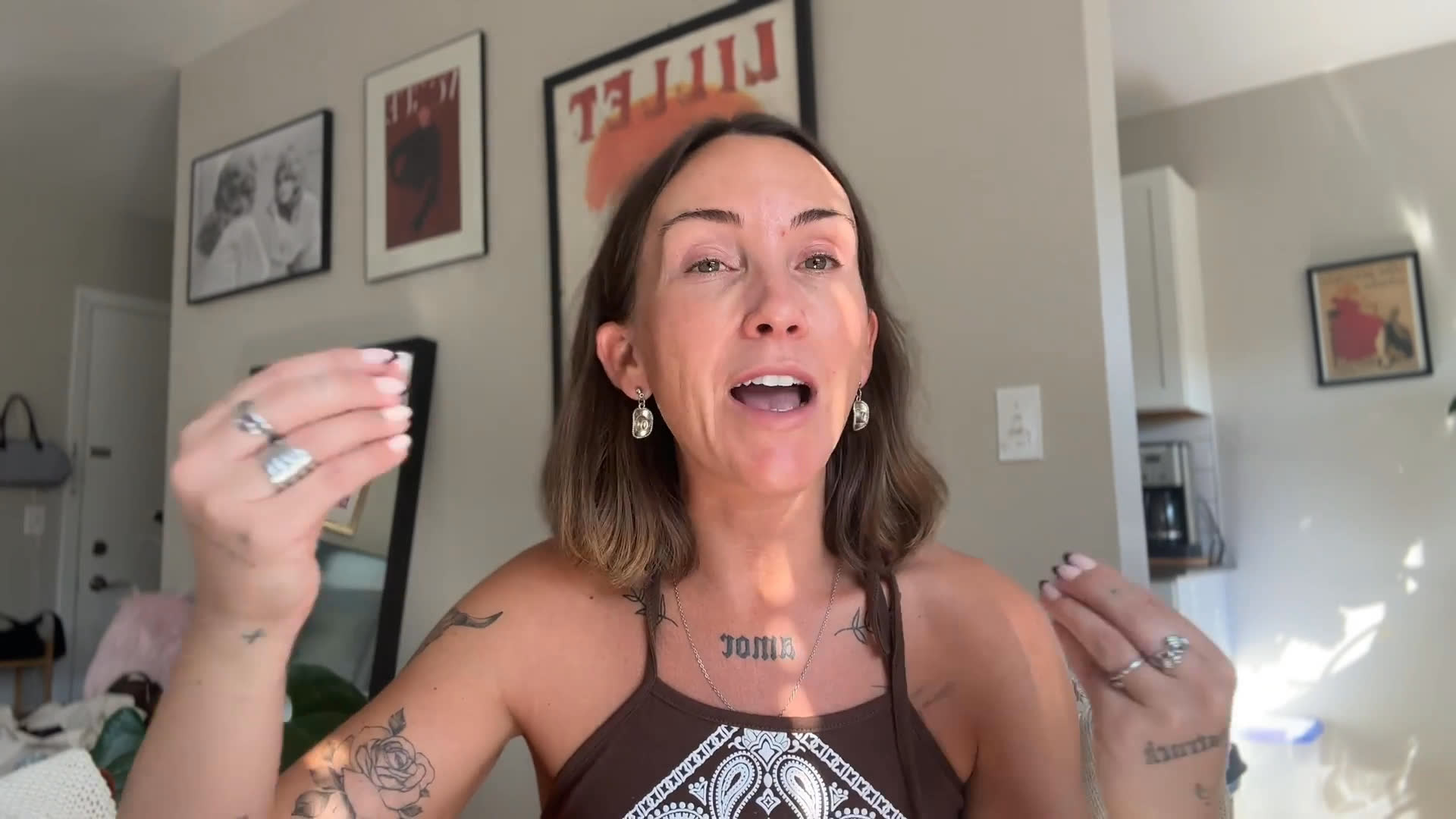
Nobody taught me how to mourn when I was growing up. Even now I haven’t come across many lessons on navigating grief, which in my experience has been the hardest feeling for me to get through without falling apart. In this 4 part series, I’ll share four coping skills for navigating grief that have helped me. This first skill is all about finding gratitude.
If you're grieving or going through a transition or change, this four part series is for you. My first tip for dealing with grief is to practice gratitude. Check out the other three videos for three more tips on navigating grief.
If you're grieving or going through a transition or change, this four part series is for you. Hi, my name is Rachel Habakkost. I am a writer and mental health advocate, and I've been sharing my experiences with mental illness and just being a human being in hopes of helping one person feel less alone. So in this series, I want to talk to you about grief, which I think is something that we all experience. Grief is something we experience when we go through life changes, like moving, changing jobs.
It's something we experience when we end relationships. It's something we experience when people or animals die. We grief parts of ourselves, parts of our past. Sort of like nostalgia. Grief is ever present, and I think it's something that we don't often have a lot of skills to cope with. So I wanna share with you four tools that have helped me navigate grief in life, and I will share the first one with you in this video. My first tip for dealing with grief is to practice gratitude. Gratitude is a really lovely practice for us to get present, for us to look at things that are going well and things that we have rather.
Things that haven't gone well or things that we don't have. And I know that gratitude can feel like really difficult practice when we're experiencing grief, because it feels like we have nothing to be grateful for. And simply doing this practice daily does a lot of different things for our brain. One, it keeps us in the present moment, which allows us to stay here and now, rather than in the past, thinking about all the things that maybe have gone or that we've lost or that we're still attached to.
The other thing gratitude does is keep us focused on what is going well and what we do have. So it's rather than having, like, a silver linings approach of, like, everything happened for a reason, we can instead honor our grief and say, yes, this is painful, and what I've, what I've lost hurts. And there are still things in my life that I can be grateful for. This allows us to live in a space where both can exist so we don't suppress our grief or push it away, and our grief doesn't become us. Hope this was helpful.
And check out my other three videos for three more tips on navigating grief. See you next time.
Reactions and comments are for members. Joining is free and takes a minute.