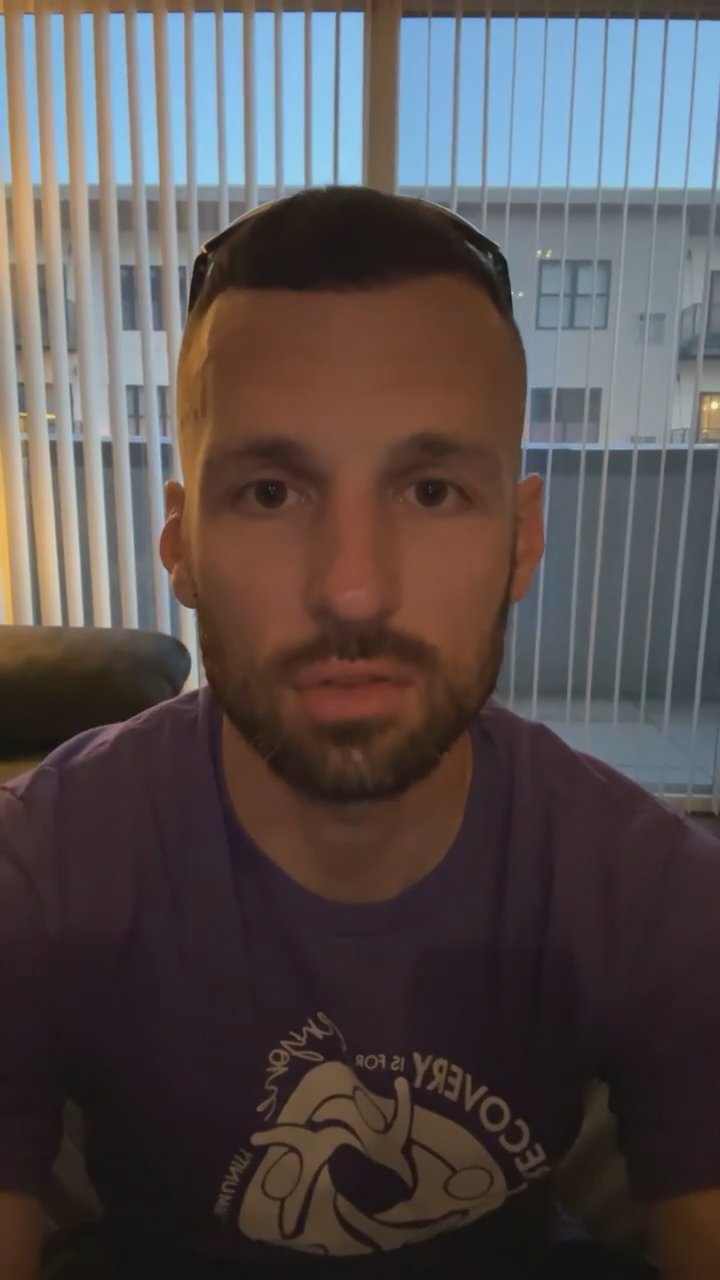
Jason Lennox discusses storytelling in recovery, outlining three ways stories influence people—solving problems, adding value, and creating emotional connection—while sharing social media examples and event prep.
Jason Lennox is your resident recovery champion. He's a lifelong champion of recovery from substances, alcohol, all kinds of other addictions. And he's here to share about all things recovery tie into mental health, to well being.
Each week in September, National Recovery Month, I'm putting something on social media. Tonight, I want to talk about three ways that we can influence and move people. Stories and moving people enough through emotion, through connection, through relation. Sometimes we just need to move people through stories.
Orlando Bloom: We move and inspire people with our stories. He says we need to create more compassion and an expanded worldview. Bloom: When we can share our stories, we can influence people. We can solve problems that will move people.
I'm gonna sign off now and go, you know, get to bed early here, wake up and start on a couple more stories for this presentation Thursday. So great to be with you all. Moving to Monday.
Hey, good evening to everybody here in the Cadre sphere. Jason Lennox, coming to you, usually coming to you on Sunday night. As I mentioned, I was waiting for my car last night. It got a little bit late. I tried to postpone. So here we are. Monday, usually Sunday serenity, but now it's a Monday serenity. Can't steal any of the other taglines. Luke's Monday motivation. So we're going with Monday serenity. Normally Sunday serenity, but I am, again, Jason Lennon, and I am your resident recovery champion.
And what that means is I'm a lifelong champion of recovery from substances, alcohol, all kinds of other addictions, and I have a lived experience in many of those. And I'm here to share about all things recovery tie into mental health, to well being. It's. Good evening, Jules. Great to see you, as always. So, yeah, I wanted to talk tonight about storytelling. I was thinking about stories last night, and, you know, I'm kind of following this theme that each week in September, National Recovery Month, I'm putting something on social media, kind of bringing it to you all after and breaking it down.
And one of the things I put out this last week was, quite frankly, my favorite social media posts that I put out there is kind of the side by sides, right? I'll grab three or four pics from mugshots, from hospital photos, things like that, and then drop in three of the more recent pics that represent what the last year was like. And it's just always such a fascinating experience. So I tell that story, I put that story out there, and I'm very comfortable doing that. I've been doing that for years, and I think there's such value in that.
And I want to tell you a little bit about why stories matter. I think we have. I'll call it three ways. I'm going to talk about three. There are more, of course, but three ways that I'm going to talk about that we can influence and move people and bring them to a place where they might take some action. And I think the first is, can we help people solve problems? You have a problem. I have a solution that is going to influence somebody. Somebody is going to be willing to act if you have something that can solve a problem for them.
The second thing is, can I add value to somebody? Can I convince somebody that even if they might not think they need it, that something I have will add value to you? And the third one that I've been thinking a lot about is, again, stories and moving people enough through emotion, through connection, through relation, and I think that lives in the storytelling world. And so I think it's, you know, I have an event coming up this Thursday. I'm speaking actually in the county that I grew up in, and it's going to be a big event, probably one of the bigger ones I've had.
They all feel like they progressively get bigger and bigger in terms of just the weight, the depth, the people that will be there, the content. And oftentimes in the speaking world, we get in this habit of, we've got to come away with all these strategies and all these data points and all these things that we want to give to people so that they can go execute in their lives. And I had this thought last week that, you know, this one's, it's. It's about mental health. It's about substance use. It's an all county event.
And the reality is, sometimes we just need to move people through stories. Sometimes it's okay to just have somebody walk away going, you know what? Today I learned a ton. I felt moved. I felt the passion. I felt the compassion, and I'm gonna make a difference with it. And so I've been thinking a lot about that. And, you know, I have a business coach. It was about a year and a half ago, I was doing a big event for my, the trade association here. It was a keynote speech, and, you know, I was just scrambling last minute, trying to put things together, talking to my coach about it.
And that morning, we're on the line, right before, I was about to go out, and she said, look, at the end of the day, if the middle is all right, and you figure out how to plug things, like, don't get caught up in the PowerPoints, the data, the strategies, all the things I'm talking about, if the middle of your presentation is okay and it's, you know, it's par or above, and you can nail a story at the beginning and at the end of that thing, that's what's going to matter. And sure enough, I went out there, so I focused, I kind of shifted, put a lot of attention.
Storytime at the beginning, storytime at the end. Sure enough, you know, probably 30, 40 people that come up to me, and I would say three out of every four made mention of either the story I told in the beginning or the story I ended with. So it's just such a critical thing, storytelling, and it really does make a difference. I mean, it's the kind of thing that we know when we tell stories, we do two things right. We can inspire people, and we can move them, but we also give other people permission to tell their story.
Let me give you an example. I was out of treatment. I was about three years into recovery, and I was going back, and I was talking to the executive director of a treatment program I was in who had gotten to know a little bit by then on the side of recovery. She had mentioned that she was seeing a therapist. And I thought, actually, it was a little bit surprising because she was an executive director, and I thought, she's seeing a therapist. I would have never guessed that. At the same time, I took it away.
And what happened was I ended up seeing that same therapist, believe it or not. And I don't know if I would have ever gone and attempted to see a therapist. But because this woman had shared her experience, her story, and ultimately the person that she used and went to see for therapy, it granted me that permission. And I didn't tell her that. But I felt when I walked away, if someone like that can do something like that, certainly I can. So, you know, there's a lot to be said in terms of when we share stories, what that does for other people.
And frankly, I love data, I love strategies, I love solutions, and I talk about all those things, you know? But at the end of the day, I've got a story inventory. That's what I call it. I've built that thing, and I've got 20 to 25 critical stories from my life, and not just in presentations, but those things come out all the time in my writing when I'm talking to you all on here. I have these things, these very critical moments in my life, what they mean, what the lessons are, and how they can be translated to other people.
And I got to tell you those stories. I wrote a memoir. I have a book, and it's sprinkled. It's one story after another. I wrote that thing with so much detail about my life the first time, and my editor came back and said, you're not going to like to hear this, but this is like a Wikipedia entry of your life. And people don't want to read that. They want to read stories. That's what's going to engage people. So you got to go deep into these things. You got to add some spice to them and really get deep into those stories.
That's what will engage people. And so I went back and I ended up rewriting the whole dang thing, pretty much. And sure enough, the feedback I got, people started picking it up. And each time it's like, you know, it's this. It's this drama that we're. That we're, you know, reading through. And it's like a. It's like a movie. And, oh, almost there. Almost made it to recovery. Not quite. Dang it. And the emotions and the roller coaster. Yeah, stories. It can be so powerful to share. Love that, Jules.
But again, and I think it's for two reasons. One, it really can inspire and drive people to take action. That's the. This Thursday's event. Three things that I'm asking them to walk away with. An open mind, the ability to create more compassion and an expanded worldview. Because we've got such a stigma that lives out there when it comes to mental health and substance use. It's getting so much better. We have so many people that still. Even if they understand or they feel like they're compassionate, they still don't quite get it.
And when I wrote the book that I wrote, I had people that came to me who were on my team, who supported me, who thought that they knew and believed and understood what addiction was. And they said, I had no idea. I had no idea until I was behind the scenes. Living in the life, like, following through as you, understanding what it was like to go through some of what we go through now. I get it. And so they can take those stories and they can share with others. So again, we move and inspire people with our stories.
It's what we have. It's what people relate to. It's what they connect to. It's how I stayed in recovery when I went to treatment. And I didn't believe for a second that I could get better. I went there because I was in so much pain. Sitting in that jail cell again after a hospital visit and not knowing when I was going to leave, I was really suffering. And so I decided, I'll go try this treatment thing because it has to feel better than this. I was hopeless. I didn't have any belief that life would be different.
But guess what? The people who told the stories in the recovery meetings in the treatment center, I listened and I heard them. And even if I couldn't believe it for myself, I heard them. I acknowledged them. I understood that they were telling the truth, at least for their own lives. And that kept me around long enough, just long enough to experience a little bit about what recovery is and get a little bit of that faith that, well, maybe there is a different kind of way out there. But again, it came from the stories and the people who were willing to step up and say, this is what my life was like.
This is what happened. And this is what life is like today. It's possible to do something different. So, again, it was hard for me to comprehend. I couldn't place that in my own life and think, yeah, this is something that I can do. But I believed them. And so it kept me around long enough. I listened and I listened and I listened, and all those stories eventually piled up. And now, you know, I've got a ton of stories that I love telling. So we've all got a story. Here's the thing. We've all got a story, every one of us.
We don't know what other people are going through. So we have to understand that they have stories, and we need to be compassionate. But when we can share our stories, I promise you this, there are experiences that I've had in my life that benefit somebody else who thought that no one else in the world would have experienced anything like it. That was my experience over and over and over in recovery. So not only is it my pleasure, my honor, my privilege, but it is my responsibility to use the experiences in my own life, the stories that make up the years and years and decades of my life, to be there, to be there for others and to share with others and to give that kind of hope.
And again, that's the third part, I think. We can solve problems that will move people. We can add solutions. We can influence people through adding solutions they might not have thought they needed. Orlando. That we can move people through storytelling, through connection, through relationship, and being authentic and genuine and trustworthy in all those things that we do. That's the thing. We have to make that connection authentically. We have to be trustworthy. We have to be genuine, sincere.
And if we can do those things, all those stories are believable. And again, if we tell them just like they are, I'm blown away. Sometimes, especially early in recovery, I took some chances, and I thought, if I start telling some of these stories and people are going to think a certain kind of way, but guess what? They don't. People look at our stories. They look at the downfalls. They look at the pitfalls, the shortcomings, all the things that we go through, and they go, wow, you're a tougher, better, more resilient person because of it.
And I want you and my team for that reason. I love storytelling. I love stories. Again, I have a story inventory. If you're going to take anything away this week, go build yourself a little story inventory. Even if it's three or four, think of some of those critical, life changing moments and turn them into stories because you just never know who's going to need to hear one. And you never know how many lives it might save. The people who told stories when I was in treatment, guess what? I can credit them and those stories for saving my life.
Which in turn, you know, the ripple effect there. I don't think we'll ever know. So go build the story inventory and we'll come back and talk about something fun next week. We've got a couple more weeks in this recovery month. I'm looking forward to it. This is my favorite month. I'm gonna sign off now and go, you know, get to bed early here, wake up and start on a couple more stories for this presentation Thursday. So great to be with you all. Thanks for the flexibility. Moving to Monday. Jules, I hope you have a wonderful night.
Everyone else, we'll see you all next week.
Reactions and comments are for members. Joining is free and takes a minute.