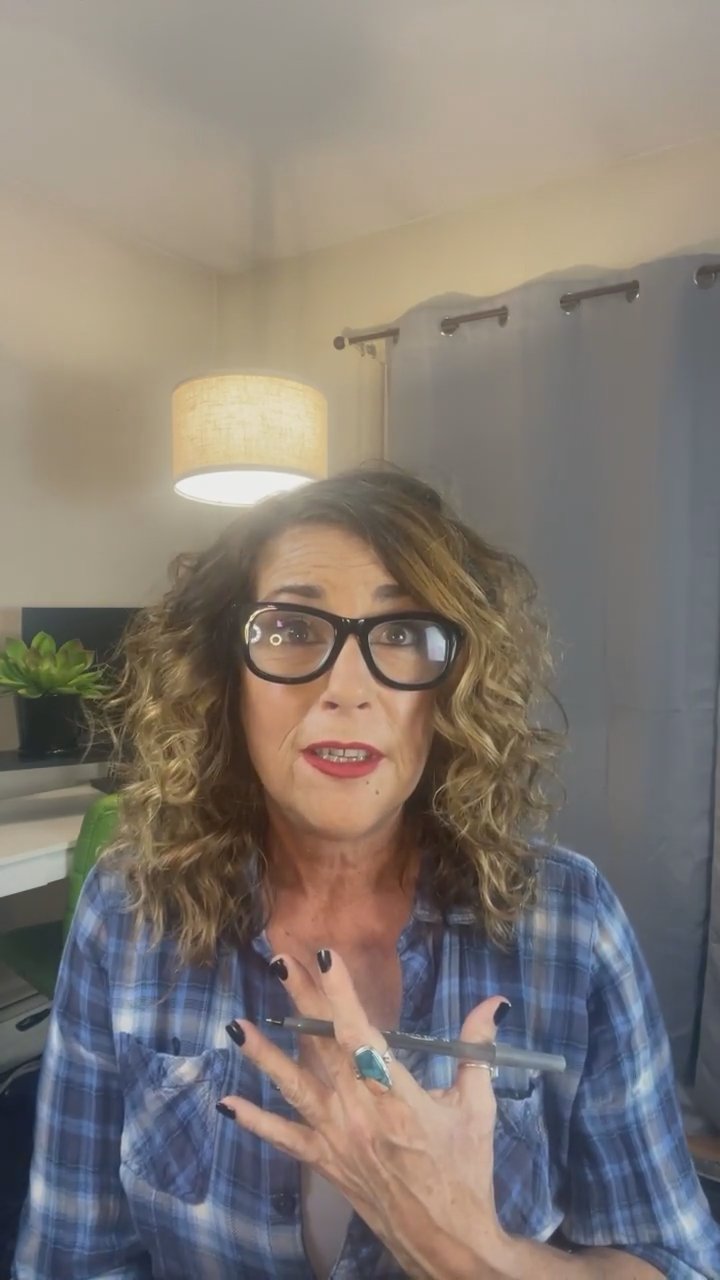
Host explores shame versus guilt, drawing on personal experiences with addiction recovery, attention differences and PTSD, and discusses childhood roots, biological perspectives, coping and finding support.
Everybody's joining on the Cadre live stream. It is 6pm Central on Sunday, so guess what? Must be comedy centered, right? Hey, thanks for stopping by and making some time to talk about shame.
That's our subject today, Shame. I am a Vikings fan. I have no shame about the way we played today. There might be low turnout. But if you saw my post on Cadre or you're just tuning in because you're a fan, love it.
Tiffany: Why do we have this common feeling of shamefulness in the human experience? She says shame and guilt are two different things. There are scientific and biological reasons why there's advantage to shame. It's a coping mechanism.
A list of things that can create deep seated shame that will run the course. Childhood experiences where you were basically unheard or unprotected. Being shamed in childhood by others for their behavior. Failure to meet one's own standards for themselves. You have to sit there and kind of digest your shame for you to get through it.
There's a lot of dovetailing between PTSD and attention deficit disorder. Unreated depression and anxiety can lead to actual post traumatic stress disorder. I encourage you in safe place and with the support system early on.
We didn't have exposure to these kind of things, you know, so. catch this in the replay. Oh, T dot. I love it. That's fun.
If you're struggling to find your people, you know, your group, your tribe, don't give up. Get out of your comfort zone and expand your circle. Everybody needs a sounding board. If you do anything cool this week, let me know next week.
Greetings, everyone. It is 6pm Central on Sunday, so guess what? Must be comedy centered, right? Hello, hello, hello. Everybody's joining on the Cadre live stream. Everybody who's going to see this later on in the replay. Hey, thanks for stopping by and making some time to talk about shame. That's our subject today, Shame. It's a fun one. You know, I might have light numbers. There might be low turnout. No one really wants to talk about shame. I am a Vikings fan. I have no shame about the way we played today.
Hey, welcome in. Ms. Jules, good to see you. Keely, welcome. Thanks for joining. So I'm just getting started, kind of, you know, welcoming some people in. But if you saw my post on Cadre or you're just tuning in because you're a fan of it, love it, Love it. The subject I decided to talk about this for this episode is shame. That's a fun one, right? Shame. Shame. And if you saw my, my share on Cadre, I shared, I shared the meme from Game of Thrones. There's a famous scene in that, in that show. I'm a big Game of Thrones person.
If you don't know that. So anyway, so what does this have to do with comedy centered? Like, what is this? Why, why shame? Tiff? Why, why are we talking about this? So it's funny. I was this week, you know, thinking about. So I have overlapping diagnoses. I should probably start with that. I have attention deficit disorder. I also have post traumatic stress disorder. Okay. And comedy centered, really. This whole thing started about two years ago when I was trying, really struggling to get sober. And the reason why I was really trying to get sober, if I, if I analyze it, was I was ashamed.
I was ashamed of who I was. I was ashamed of my behavior. I was ashamed of the choices that I was making, knowing better and doing it anyway. And a lot of therapy, a lot of processing. Okay. But I still am really haunted by a lot of shameful things that I've done in my drinking past, but also in my, you know, just being alive, being my waking decisions as well. And I'm very interested in the connection between biology, this, you know, what we are as, as, as animals, humans, people, monkeys, that kind of a thing.
And our behavior plays out based on some of those traits. So I just happen to be reading something about shame and shame being different than guilt. And I'm like, well, yeah, that makes sense. I guess I never thought about it, that shame and guilt are two different things, but they're actually a little bit more different than I had initially realized. So shame is when you're feeling that you are personally a bad person, you feel shame about who you are. Okay, and we're going to get into why in a minute.
What are some of these things that cause those, those feelings? Guilt is a little bit different. It's not saying that you're a bad person. It's saying that you did a bad thing. Okay, so why does it matter? What does it matter what you did wrong, whether you label it as shame or guilt? Well, it matters for a couple of reasons. And one of the things that this clinician was pointing out was that if you feel guilt about something that you've done, if you've behaved in a way that you really, you know, you're acting outside of your normal self, your normal moral compass, all of those kinds of things, you are more likely to confess something that you feel guilty about to someone else.
You're more willing to admit it. Shame. Because shame comes more from a sense of, not that I made a poor choice or I made a bad decision, a decision I regret it comes from. I'm a bad person. I'm deeply flawed. I'm, I have no self worth. Right. That's where those feelings of shame are different than guilt. Guilt is more associated to a particular action. Shame can be pervasive and it can run through, like a vein, through everything that you decide throughout your day. So, but essentially, shame, what is, why do we have it?
What is it? What's its purpose? Like, why, why do we have this common feeling of shamefulness, you know, in the human experience? Right. Well, they've done some research, and there are some scientific and biological reasons why there's advantage to shame. Shame and shame, they're realizing now, might be more of an internal regulatory system. And the reason why the internal regulatory system kicks in, it's to discourage, you know, violations of moral and social norms. Norms in the group, group dynamics.
Right. Because we are very related to primates, and there's a lot of social hierarchy and groups and all that. And so there, to me, there's a lot of tie in there. But shame at its core is really a coping mechanism. It's a maladaptive one. It's not great, but it is a coping mechanism. Let me do this. Let's go to the shame. I, I, I've made myself a little list. I take notes, I handwrite my notes. I have a list of what I like to call shame starters. Let's start there. Okay. What are the shame starters in, in, in our lives?
What are some of the things that can create deep seated shame that will run the course. Okay, well, and hopefully this doesn't trigger anybody. But you know, I'm going to be mentioning some things. Childhood experiences where you were basically unheard or unprotected. Maybe you had parents, authority figures, bullies, maybe there was neglect, things of that. Those are childhood experiences that can, that can create some of the, these, these traumatic experiences, even though they may not have had anything to do with you.
Not your fault at all, especially for your child. You really, it really can't be your fault. Fault. Right. But the child's mind doesn't know that. The child's mind only thinks in terms and context of the child. I did a thing, a bad thing happened externally as a result from my behavior. I don't feel guilty. I don't feel like I just made a bad decision. I feel shamed by my decision. Okay. Other things that can cause shame, long term unfortunate circumstances. If you're born into poverty, if you're born with a debilitating illness or a physical handicap, mental handicap, maybe long term illness that requires hospitalization or isolation, these can contribute obviously childhood trauma, anything abusive, chronic, being shamed in childhood by others for their behavior, obviously that's a huge one.
But essentially they all kind of center in and around a devaluation. And sometimes the shaming comes externally you feel that you're being shamed, let's say by your mother in law, you know, that she's, she's making you feel inadequate in some way. She's saying things that you feel are trying to provoke you into feelings of inadequacy. It's never good enough. You're never doing a good enough job. And if that's something that you're deeply insecure about, that may trigger shame, you know. So essentially it's a failure to meet one's own standards for themselves as well.
And I know that's where a lot of my personal shame comes in because I made, especially when I in right before I was getting ready to quit, as most people that are in recovery will tell you. Those were the worst days. Those were awful, awful days. I had lied to myself enough for many, many years as I was progressively. Or progressing in my alcohol abuse. I, I was saying it was fine, you know, nah, we got this, it's cool. And it wasn't. And I had been able to what I thought moderate, like I only drank in certain times.
I didn't drink all the time at home and I didn't do all this stuff. I had all These rules that I thought made it so that I wasn't an alcoholic, right? Turns out none of those worked. And so, on the one level, I felt guilt, incredible guilt, because I decided to drink again. I'd wake up in the morning, promise my. Myself, I would never do that again. And I would break that promise to myself over and over and over again, and I would feel guilt, and I would feel guilty, and I would tell people I felt guilty, but in reality, that's not what it was.
I felt shame. I was ashamed of myself, and I had no freaking idea how to change that. And because guilt is, yes, I felt guilty that I drank, but the shame comes from I. I was not living up to my own moral standards, my own character. I wasn't being me, the person I really wanted to be. But. And I've talked about this several times, but it always bears repeating if you find yourself in a situation when you're. Oh. When you're using avoidance mechanisms. And we could talk a little bit about avoidance anyway, in a minute.
But if you're escaping all the time, right, like, you're constantly on the phone, you're constantly. You're drinking, you're gambling online, these don't necessarily have to be bad things, but you're an extreme adventurer, and you're constantly working out or running marathons or doing whatever. If you're doing this from a place of avoidance and escape, it's because, you know, you may be feeling really, really deep levels of shame. And shame is something that you really can't get over until you get through.
And there's no one who can go through your shame for you. You have to sit there and kind of try to digest where this all began and then really pick it apart, though, that's the thing I've been trying to give myself a lot of grace about, is that I think about the bad decisions that I made or the things I feel shameful about or the things I feel guilty about. And I think about, why did I use alcohol, why did I use drugs? Why did I use these things to try to escape those feelings? Well, you know, most of my childhood, I was trying to escape that.
I was trying to escape terrible feelings, right? It was a coping mechanism. All drug and alcohol overuse, misuse, those are attempts at solving a problem. Because what happens when there's too much stress in your house, when there's too much shame, when there's too much guilt, there's too much tension. You need something to break that tension. You need something to get you out of there mentally Emotionally, even if it's temporary, even if there's bad hang ups for it. So most people start using alcohol or drugs, prescription or non prescription, as in a means to solve a problem, as strange as that sounds.
And it works temporarily, just like avoiding your emotions works temporarily. But it will not work as a long term plan. I wish it had if me ignoring my shame would have worked, but it would have worked by now. You know, it took me 50 years to figure that out. So here's a couple more hot takes I've got on shame versus guilt. Okay, so we talked about sobriety. A big motivator for my personal one was shame. Of course, one of the other things that is interesting in my research, and it's funny how every week something kind of circles back to my diagnosis of ptsd, adhd, and me trying to figure out why, why I, you know, was abusing alcohol.
PTSD and attention deficit disorder have a ton of crossover, a ton of the. There's a term comorbidity, when you have two, you know, disorders at the same time. There's a lot of dovetailing between PTSD and attention deficit. One of the main things when they're diagnosing you with PTSD or attention deficit, particularly ptsd, one of the main things they're going to ask you about is that do you feel that you are trying to avoid? Are you in a state of avoidance? Are you isolating? Are you not engaging in activities that you used to enjoy?
Are social situations bringing up so much depression, anxiety, fear that you're now just avoiding it and opting to stay alone and staying in your own company? Right. Well, and we've talked about this many times, but untreated anxiety and untreated depression can lead. If you keep ignoring it, it'll knock down your door and it can develop into PTSD without it having to be some kind of big traumatic accident. We have two types of PTSD and two types of Gabor. Mate talks about two types of trauma, Big T and little T.
A big T trauma would be, for example, if you're in some kind. If you were just in Hurricane Milton and this horrible catastrophic weather phenomenon just destroyed everything in your neighborhood that, that you. And not everybody who experiences something traumatic will develop PTSD, but 1/3 generally do. And some of these PTSD, especially when the event is very random, like a weather event or a car accident, some kind of a freak accident. People who experience those have horrible, horrible reactions for long periods of time.
But they say basically the brain kind of resets and if nothing else, Bad or triggery happens for about six years. A lot of people can kind of even out on their own. But untreated depression and anxiety can lead to actual post traumatic stress disorder. So what are the other pillars of Post traumatic stress disorder? There's avoidance, negative thoughts about yourself and others. Okay, so shame, guilt, avoidance, memory problems. That's kind of a cornerstone of ptsd. That one also has a lot of overlap with attention deficit disorder.
Some, some of it might be repression of memories that are too uncomfortable to deal with. Under attention deficit. It may just be a non. A non. It didn't seem interesting to the attention deficit brain, so it didn't keep. It didn't register the information. But especially feeling detached from family and friends. Also if you're noticing changes in your physical stuff, like if you're, if you notice that you're startling really easily, your heart rate is going up just thinking about having to return a phone call.
You get an email that pops up from work and it doesn't look friendly and you just, you jump, you jump a little bit. I, you, you react not with understanding to questions that are probably just fine. But you, you react with aggression or, or you, you can be very blunt like what, what, what, what are you trying to tell me? What is it? You know, and it's because your fight or flight, and that's the big thing with ptsd, is, is activated. And so until you really kind of start giving yourself some space to unpack these really, really aw.
You're probably going to end up stuck kind of in an avoidance cycle where you're just constantly avoiding sitting with yourself and these really, really negative emotions. Because the problem with shame is that it's self reflective. I can't look at you and see shame. You know, I can't read your shame. I can see if you're sad, I can see if you're happy, but I can't see if you have shame. That's not a facial thing that we have. Shame can only really be touched by you and it requires deep introspection to get to that and to get to that core.
But I encourage you in a safe place and with the support of therapy because especially early on, some kind of a support system. Cadre is great, Cadre is a great jumping off point because you can get a lot of information in a passive way and you can start putting your, yourself in the path of some different ideas and maybe some, you can pick up some strategies and, and things like that and you don't actually have to share yet. But I encourage you as difficult and as impossible as it may seem, especially to anybody at the beginning of the recovery system, if you can get over avoidance, you know, you can get over lot of your past trauma, but you will not get over it without community.
And what I noticed and have noticed even in. And I've spoken about it before, but even in my quest to figure out all of how this diagnosis works. And I didn't know any of these diagnoses about myself until I started trying to get sober. And they're like, well, let's actually do a little mental screening and see what's going on with you. And they're like, have you ever been told you might have, you know, mental health problems? I'm like, yeah, tons of times. All they did was give me antidepressants, and then the antidepressants didn't work, because antidepressants are not good for someone with attention deficit disorder anyway.
So when I finally got down to brass tacks, I was realizing something pretty powerful, that it was these. It was my. It was my neurology, it was my neurodivergence that kind of kicked this whole thing off. Because of my neurodivergence and attention deficit disorder, I've always had a hard time communicating with others, making friends, understanding social norms, getting groups, understanding what the heck's going on half the time, but really, really always wanting to be included. And I would always be, like, trying too hard or doing too much, right?
So the way that I adapted socially, the way I would fit into parties, the way that I would be able to calm my freaking brain down enough to just listen to other people, was alcohol. Alcohol was my. My adaptive behavior so I could get in and fit socially. But then when my alcohol use and misuse would go too far, I'd be ostracized from the group. People would be very upset with me at my behavior. What I had said, like, I'd be your best friend. Best friend. Best friend. You get too much whiskey under my belt, and I'm coming at you, not in a physical way, but I'm like, you know what I've never liked about you?
And that's me projecting my shame. That was me. And. And for me, alcohol is PTSD juice. It just triggers shame, it triggers fear, it triggers fight or flight for me. So that's why I just have to keep it out of my life. But now that after some time and therapy and that and I'll wrap on this, I. I feel that I've actually gotten enough to some of the core issues, especially in and around my childhood where real talk. I did the best I could. I was a kid. I knew something was wrong with me. No one. No one.
You know, like, it was, you know, I'm Gen X, man. I was born in the 70s. Like, we didn't have these conversations, you know, this is a new day. This is a new time. And especially if you're someone from my generation, you know, we're raising kids a lot of times and we're passing this stuff on and our kids are on the Internet going, you know, you should really think about your narcissistic personality disorder and have you ever thought about how dismissive you are? And they're learning all this stuff we never learned.
We didn't have exposure to these kind of things, you know, so. Hey, Todd, welcome in. Or is it. Oh, T dot. I love it. T dots. That's fun. I'm just wrapping up, actually, but catch this in the replay. I would love to hear any feedback that you guys have. Always looking for suggestions, too, if there's topics and things that you want to talk about. But I really want to just. I want to encourage all of you. If you were in a place where you're making big changes, big changes in your life and you're struggling to find your people, you know, your group, your tribe, don't give up.
Keep trying. Keep showing up. If you can force yourself at least one time this week completely outside your comfort zone, you will have a lot of anxiety about it. You might freak out right before. You might want to cancel, you might want to avoid. You might want to run away. Your pts, you know, your fight or flight might kick in, but I encourage you to do it. Go for it. Because I guarantee you, if you take that little tiny toe and you put it in the water, you will be greeted. The universe wants you to feel the love and who you really, really, truly are.
The world benefits nothing by you hating yourself. The world benefits nothing. No one. No one ever. You know, the misnomer that you have to be a miserable person to be a creative person? That's crap. You do not have to be miserable to be creative. You don't. You don't. So put your toe out there, Reach out to someone, journal, go through Cadre, engage in some forums, you know, stray, strike up a conversation, but push yourself outside of your comfort zone, you know, because we need community. If we isolate.
I mean, with the Internet and everything. I mean, I'm talking you on it right now, but I mean, you know, I'm having conversation with you guys digitally where Normally, this would never be possible. So isolation's a killer in recovery from anything, Anything you're working on, you know, doing it alone, it's really hard to stay positive. And it's really. It's really hard not to let your own thoughts play terrible tricks on you, too. You need to sometimes. You need to. Everybody needs a sounding board.
And if you're someone who doesn't have a lot of friends or maybe you just moved or you're struggling, things like that, I encourage you. Try to find a. Like a. Like a class at a nature center. I did that this summer. I went. Took a mushroom hunting class, and I loved it and did a bunch of other stuff related to nature this summer. Get out of nature, you know, but push yourself to expand your. Expand your circle. You'll be surprised. You'll be surprised at how much the universe will greet you with that and meet you with that.
Yeah. Okay. If you do anything cool this week, let me know next week. But I'll be back next week. Again, you guys, I love this community so much. Can't say enough great things. Stay centered. Have a great week. Stay. Get out of your comfort zone and, yeah, take care of yourself. There's only one.
Reactions and comments are for members. Joining is free and takes a minute.