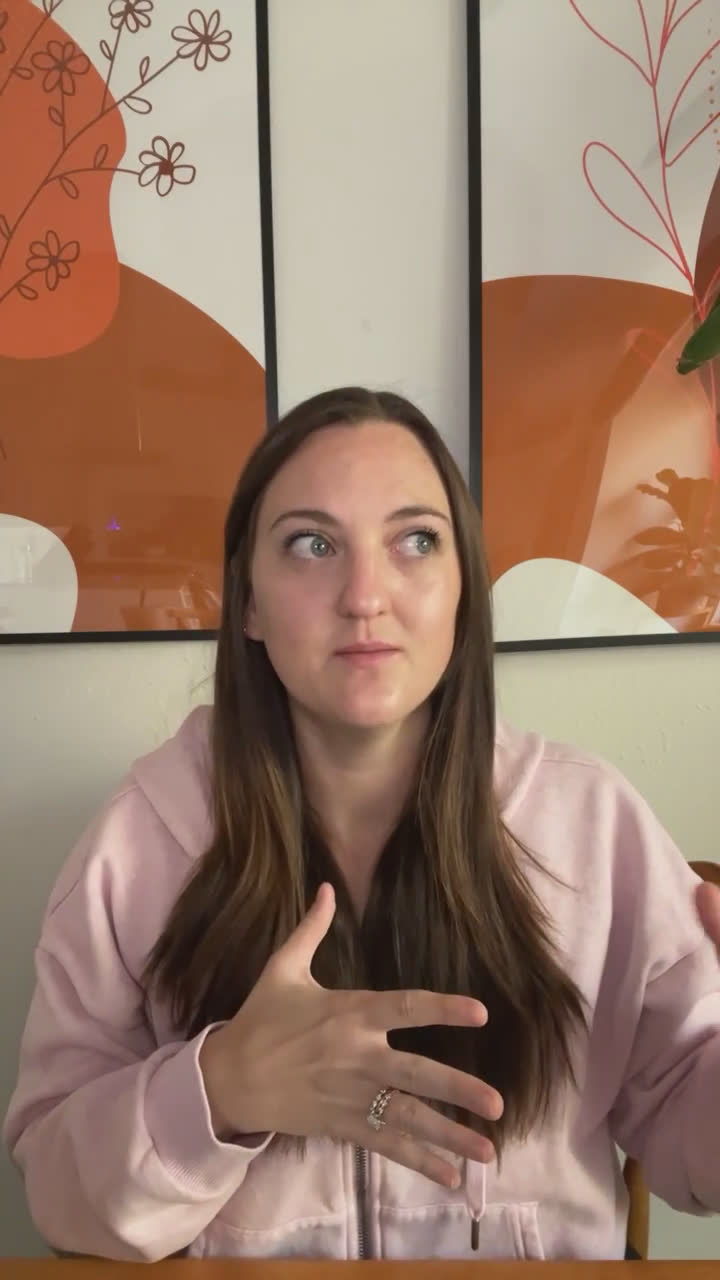
Kristen, a Denver-based registered dietitian, explains why food dyes influence what people discard and shares practical tips—like fridge organization, inventory lists and composting—to help reduce household produce waste.
Kristen is a registered dietitian in the Denver area. She primarily works with eating disorders, disorder eating and intuitive eating. Give a few minutes for people to pop on if they want.
The purpose of food dye is to essentially make our food look pretty. We tend to throw out food when it starts looking wrong. Just because something doesn't look its best doesn't mean we throw it out. Here are some tips and tricks on how to reduce your food waste.
In the United States, food waste is about 30 to 40% of our food supply. The average family of four is throwing out $1,600 a year in just produce. Udai shares three tips to reduce food waste.
Keep a list of everything you have in your fridge for some people. Store food in the right parts of your fridge. Composting the food that ends up in our landfill is a great way to reduce waste. Next week we'll be back to intuitive eating.
Good morning, Cadre family. Happy Saturday. Hope everyone's doing okay. Give a few minutes for people to pop on if they want. If you don't know who I am, you've never been here before. My name is Kristen. I'm a registered dietitian in the Denver area, and I primarily work with eating disorders, disorder eating and intuitive eating, but also have a lot of interest in just like general nutrition education and education around nutrition marketing and communications. So. Good morning. Speak Wonder. Good morning, mom.
There was someone else in here and your name went away, but good morning. Know that I'm happy to have you Today. I wanted to talk a little bit about food waste. Curious if that's something that you encounter in your own home, because I know that I definitely do and I'm trying to get a lot better about it. So that's part of what inspired this conversation starter. I'll call it if you follow me anywhere else in the world. Earlier this week on Instagram, I posted a video about just some facts about food waste.
But I really wanted today to provide some tips and tricks on how to reduce your food waste so that hopefully we can start to address the bigger picture. Unfortunately, yes. Yeah, I'm with you. Speak Wonder. I see your coffee emoji. I have mine right next to me. So my. What kind of prompted this for me was there's a larger conversation going on right now in the world about. Not in the world in the United States, about food dyes in food. And there's kind of this big push by a group of people. They were marching to Kellogg's to try to get them to remove the food dye from their cereal.
And the purpose of food dye is to essentially make our food look pretty. It makes it look how we would expect certain flavors to taste. So it's. It makes it easier for the consumer to then look at that product and say, oh, this is probably like strawberry flavored or raspberry flavored, or if it's yellow, it's probably lemon or lemon lime. And that's really the. That's the purpose of food dye. And when I was a kid, my mom said we had to eat everything on our plate because they were starving kids in China.
Yeah, that's a very common. A common thing. I still hear. Clean plate club. Right. And while there is validity to that, there's still, I think that's a twisted way to make children eat food. Like, yes, there are people who are food insecure everywhere. So food waste actually has a pretty big impact on our environment and how this applies to the food dyes. We tend to throw out food when it starts looking wrong. And I want to help kind of reframe that a little bit, because just because something doesn't look its best doesn't mean we throw it out.
Doesn't mean we have to throw it out. So in this conversation of Udai, some fun facts for you. I have them down here, so I don't forget. In the United States, food waste is about 30 to 40% of our food supply. I think the most recent number I saw was 38%, which means 38% of the food that we are growing and producing gets thrown away, which is 120 billion pounds a year, or about 325 pounds per person in the United States. Just United states, that's about $218 billion. And the average family of four is throwing out $1,600 a year in just produce.
So you want to do the math. $400 a person, which is a lot of money. When I think about just throwing $400 in the trash, I don't love that. And there is this conversation. In addition to, you know, removing food dyes, how does that help promote nutrition? I think that's a little myopic. And removing food dyes doesn't actually help people get access to food. All of our food waste, right. That £325 a person could be going to the 47 million people who are food insecure. And that stat is from 2023. I agree, those numbers are wild.
But more than that, food waste also impacts just our resources. So all of that food that we end up throwing away required land, it required water, it required labor. That's just like on the farm. You think about how did it get from there to the consumer. So it's a lot of our resources that we're dumping into and never getting back. So not to make that depressing statistics, but I think it's something that not a lot of people are having the conversation around. And so my tips for you to reduce food waste, number one, and a lot of these kind of fall under this is shift your idea around food always needing to look like the most beautiful, crisp thing in the world.
I love it. I'm guilty of phone eats first when we go out to eat. I love plating my food. And these things can happen at the same time. But part of this is reusing. You know, maybe it's choosing imperfect produce to begin with. So buying the weirdly shaped potato, buying because you're probably not gonna cook it as a whole potato. Most of us are tend to be chopping it and putting it in something else or baking it or mashing it. Your potatoes don't need to look pretty. Carrots, same thing. Like sometimes you get weird little arms off the carrots.
If you're buying something like green onions. If you have one green onion in the bunch that maybe doesn't look as great, but the rest look really fresh, you can throw that one out. That's better than the whole bunch getting tossed out by the grocery store in two days. So really choosing things that might not be perfect, but there's not actually anything wrong with them. One of the big things I don't know if you guys have seen this in for sure at Trader Joe's and I've seen it in Target as well, is they started actually marketing the small avocados and putting them in bags.
I think Target calls them small vacados. And you get more per bag because they're smaller. But people would leave the small ones and then they wouldn't get sold. So they kind of repackaged those so that you can, I guess, want them. And that is the power of marketing. There's also a company called Imperfect Produce, and I'm sure there's more than one out there. This is just the one I'm familiar with. They will rescue food from farms that wouldn't likely get sold in the stores. So they partner with.
It's like regional or state specific where they're actually getting that stuff from. But that was helpful for me in learning about even just more seasonality of foods, but getting the food that's not perfect. So that's number one, choose things that aren't perfect. Number two, being mindful of sell by versus use by dates. And California actually just passed a law to get rid of sell by dates because they're confusing. So a sell by date or a best if used by date are both indicative of quality. So spinach that's crisp and not starting to wilt versus the use by date, which is actually a measure of food safety.
And those aren't on all foods, they're on specific foods. Most popular one is dairy. So Chattis, California, because it is confusing. And a lot of times people will see the date and then be like, oh, I can't eat this and throw away like an unopened package of spinach where if we actually look at it, it's unopened, there's no mold, there's no indications that it's actually unsafe to eat. And if that is the case, you know, going into Tip number three, you can freeze pretty much anything. So really trying to evaluate, oh, this is on its way out.
Can I save it? Put it in the. Chop it up, put it in a freezer bag, put it in my freezer, make a sauce, put the sauce in ice cube trays and put that in my freezer. One of the ones that I do this really often with is peppers. If my peppers start to get a little wrinkly, I sometimes I still use them fresh, but if I know I haven't gotten to them all week and I'm still not gonna get to them, chop them up, you have a really easy, like stir fry starter, fajita starter, later in the week. So freezing, wonderful option.
Planning meals intentionally and trying not to over buy. So this could look like basing your grocery shopping off of specific recipes that you're planning to get and getting the quantities for that specific recipe. If you're like me and you like to prep ingredients over meals, could be starting slow and just getting one or two vegetables for the week and seeing what you go through and then maybe gauging, oh, I've got. I went through both of these and I still had two days until I was gonna go to the grocery store.
So maybe the next time you get three and just learning how much you're actually going through and buying ingredients that are versatile and kind of wrapped up in that. So peppers, onions, especially those can go in so many different things. Even broccoli, you can throw it on a sheet pan and bake it. You could put it in pasta, you could put it in soups. Like, buying things that you can use in more than one recipe throughout the week also helps to reduce some of that waste. Because a recipe calls for half a bag of broccoli or half a head of broccoli, and then you don't do anything with the other half and that goes in the trash.
We have our food based. Yay. I'm glad you guys are liking these ideas. These are all things that I'm trying to get better at. So I'm hoping by putting it out in the world, it helps me get better as well. I'll go through these last few quick so you guys can get on with your Saturday. But keeping a list of everything you have in your fridge for some people I found with people who I work with who have adhd, this has been really effective. But I also seen it just for anyone to be somewhat helpful. It's essentially like a reverse grocery list.
So some people will have a whiteboard on their fridge that Says that you add to it when you run out of something. I like to do the opposite. And so have a list of actually everything that's in your fridge and when you use it up, cross it out for a lot of people. Out of sight, out of mind. So if you have drawers in your fridge and you are shoving produce in there, you might not notice it or it gets put under something and then two weeks later you have something rotting and growing something you don't want.
So you can have kind of a reverse grocery list or some people I've worked with like to do like a midweek fridge rotation and just move things around that were in a drawer, put them out of the drawer just so that you can see what you have on hand. One more with the fridge. Store a fridge in the right. Store food in the right parts of your fridge. So the door is the warmest part of your fridge. That's also where most people store milk, which is one of those things that can go bad rather quickly. So potentially moving your milk to a different area of the fridge.
Storing squash, root, veggies, onions, garlic in a cool, dark, dry place place and then storing ethylene producers. So ethylene is a gas that is produced by fruit in the ripening process. It's also what is used. Some grocery stores will have like ethylene, not chamber. That's not a great way to put that. But they'll spray ethylene on produce to help ripen it so that it can be put out. Because oftentimes food gets picked before it's actually ripe because it has to be on a truck and get to where you are.
So being mindful of ethylene producers. And those are apples, bananas, melons, tomatoes and avocados. If you are storing other foods with those, your other food is going to get ripe faster. So. And that's why I don't know about anyone else. I learned this trick from my mom. You can put unripe fruit in a paper bag, roll it up, it traps that ethylene gas and it helps things to ripen a little bit quicker. So putting those away from things that you don't want to keep ripening, waiting to wash berries, grapes, mushrooms, some of those more delicate produce items until right before using them.
This can help to prevent mold. Berries are a big one that mold really quickly and then last one is probably the most talked about one. And that is composting the food that ends up in our landfill. So our straight food waste that goes in the trash contributes 11% of our greenhouse gas emissions just sitting in a landfill. And that is because sitting in a landfill is a process that is done without oxygen. And composting is an aerobic process. It requires oxygen and that prevents methane production.
So composting can be great. You can either do it in your own backyard or we keep a little kitchen countertop, small bin. And once a week we have someone who comes and picks up the compost. Sometimes the cities will have it as a part of your garbage service. But composting, I think, is probably one of the easiest ways to start and make a difference in reducing our food waste and the impacts that food waste has on the environment and ourselves, society. So that's all I have for you today. Hopefully those help.
You know, I think it's all about doing what we can, when we can, and even just one of those things can end up making a difference. So I thank you all for tuning in. Like I mentioned last week, my schedule is going to essentially be rotating between intuitive eating and then these more like, I don't know, random pop culture nutrition topics. So next week we'll be back to intuitive eating. We're gonna go through principle one in a little more depth and rotate every other. So if that's something that interests you, I will start putting it back in my title so that you know what you're expecting that day.
But thank you all for coming. I hope you have a wonderful Saturday. Happy. I guess this is technically Halloween weekend. I think that's technically the weekend before. So if you're doing anything Halloween related, enjoy it. And I'll see you back here next week, Saturday, same time. Have a good
Reactions and comments are for members. Joining is free and takes a minute.