I’m today’s life I’m gonna tell a story that stands out to me as a therapist. I will share about the journey of a client who never realized their trauma had any effect on them even though effected almost decision they made. All identifying client info is dramatically changed for confidentiality.
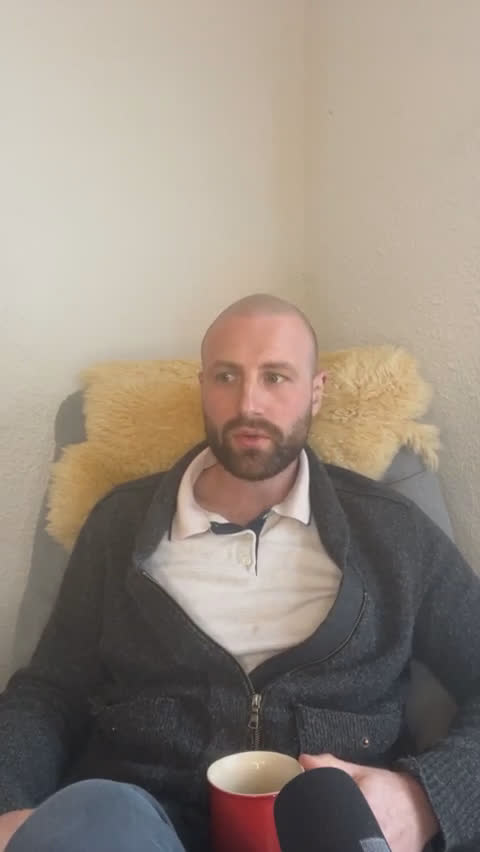
Evan: Today we're going to be doing something a little different. I brought some popcorn, so I hope you have your popcorn. Also, I'm sitting in my chair. And also a hot beverage chair, and then this sweater. So this is all going to go together for today's story time.
A therapist tells a story about the power of therapy. The story has some powerful lessons for people thinking about therapy. We got my dog Bella, here. Gather it around for story time.
A client came into therapy saying they had been having some struggles. The client is in their fifties, married, identifies as a lesbian. The deeper the session goes, the more the therapist digs into mental health issues.
When people have been through trauma, usually one of two things happen. One is that that filter gets worn down, and things just fly right through. And then sometimes it's the opposite, where that hardens. Part of the goal of therapy is to open those locked doors and their emotions.
trauma therapy is a pure connection to the emotions. It's connecting directly with those experiences, the emotions, and processing them. One client had a panic attack, and I had to stop and move towards calming. I never know how it's going to go.
There's so much improvement and there's still a way to go. Still a lot of challenging of those preconceived notions. That's just one story I view as a success. There's so many lessons to take from that.
Alright, folks, welcome to the live. Today we're going to be doing something a little different. We're going to call this story time with Evan. So I hope you're ready for a story. I brought some popcorn, so I hope you have your popcorn. Also, I'm sitting in my chair. I feel like if I'm telling a story, I should be sitting in a chair like this. And also a hot beverage. All right, so you got to have your popcorn, hot beverage chair, and then this sweater. So this is all going to go together for today's story time.
Now, I thought I was wanted to do this where I wanted to tell a story. Now, the thing is, as a therapist, it's unfortunate because you have to be careful with confidentiality and that kind of thing. But, you know, there are so many just amazing stories that I hear as a therapist every day, and I've just seen hundreds and hundreds of clients, and every story is different. And every story is unique. Well, it's kind of the same thing. Different, unique. A lot of them are inspiring, especially the clients who I see for a long time.
And you could watch their progression through the therapy process. But I don't get to tell too many stories. But I thought, you know what? Today I'm going to tell one. And we're going to switch up, you know, a lot of the identifying details, and, you know, we're gonna make it. So I think it'll be all right to do this, and I think this will be a good lesson. So this is, you know, when I think of success stories, you know, when I think about the power of therapy, you know, some of my long time clients, this is one of those stories that always comes to mind for me.
So I thought, I don't get to share it that often. So I thought I'd share with you because I think there's some powerful lessons in it, especially for you folks that are in therapy who are thinking about therapy, what are the benefits of it? A lot of people who haven't been are afraid for some understandable reasons. What am I going to have to talk about? Do I really want to dig into some of this stuff? It's uncomfortable opening up to another human being, let alone a therapist, about things that I would never want to talk about, things that I don't want other people to know, things that I've kind of pushed away, that I think maybe I've moved past.
Why would I want to reopen some of those wounds? So I understand that, but I think hearing this story may be inspiring in a way. To maybe help convince you to do it. We got my dog Bella, here. Bella, are you. Gather it around for story time. All right, Bella, sit, sit. We're gonna give Bella some popcorn while she gathers around for the story. Take one more piece before we start. Now, she's gonna be here the whole time, so we got her hooked for a different reason. Okay. So I'm in my office one day, and I got a therapy referral.
A lot of people message me online, and this person says, I'm 52 years old and never been in therapy before, but I've been having some struggles, and I just want someone to talk to about it. I said, okay, sure. Why don't you come on in? So we made everything happen. So they came to the office, and so just a little background on this person. So they're somewhere in their fifties. She. She. Her. Said she's a lesbian, so she identifies as a lesbian, has a wife that she lives with locally. And so, as I got to know this person, usually some of the first things I do in a session is, I call it getting a cross section of someone's life and where they're at right now.
And so I have a form that I created, and basically the first questions I ask are, who are you? How do you identify what is important to you? What culture do you identify with? What are your current circumstances? What do you do for work? Who are some important people in your life? Who are people you lean on for support? What do you enjoy doing? What are some of your hobbies? That kind of thing? I start making there before digging into some of the deeper and more mental health related stuff. So, yeah, so this client, you know, they're, like I said, in their fifties, lesbian.
They're married. They. One of the things I stood out, too, is they're very successful. This is something they're proud about. You know, they had a pretty high paying, high intensity role, you know, in their company, in the technology sphere. And, yes, they've worked really hard to get where they're at. They actually were married. They didn't come out until much later in life, probably until she was somewhere in her early forties, but had already had a family established and ended up leaving her husband came out and found someone else who she was currently with and been with this partner for a long time.
They're pretty satisfied in the relationship. They're pretty satisfied with work. And those are, like, two of the big things that are stressful for someone. It could be stress at work. A lot of people don't like their jobs, believe it or not, or in their romantic relationships, in a partnership, stress there, some of the other ones, health related loss, some of the big ones that may prompt people to come into therapy, because usually when people come into therapy, there's, like, something that happened.
There's an event, there's a circumstance as to why. However, when you dig a little bit deeper, you realize, okay, well, it's not just about this one event. Usually there was a series of events in their lives that brought them to the point of where they're at. So it's kind of interesting, because as I was interviewing this client, they didn't really have anything, like, on the surface, right? They were happy in their relationships. They felt like they were okay with where they're at and their sexuality.
They were happy with their family, proud of her kids. And I kind of like, okay, there's nothing there at the beginning. And so we continue the interview, and actually, the first question I ask is, what brings you in? Kind of what they told me is a little obscure, but they're like, you know, I've just haven't been as happy lately. Usually I'm in a pretty good spot, but I don't know. I've just been having these strange things. I think they call them emotions. I'll be driving in my car, and I'll play some country music that I like, and I just started crying, and I don't know why.
Okay, that's interesting. And you could tell, too, that this person, they were very kind of a little bit guarded, but kind of locked out. Like, they were very professional. They were, like I said, professional, successful. They're very logical. And so you get a lot of these logical folks, and they're some of my favorite to work with, because when you start digging into emotions, they're like, oh, geez, I think it's kind of funny. And later, we're joking with this client about the reason they came in was because they started feeling emotions.
Okay, interesting. So now what got even more interesting is when we started to dig into the deeper stuff, when I start going into mental health symptoms and mood and anxiety. So, like, they were saying they weren't having that many mental health symptoms, aside from just this being in this weird point in their life where they're more emotional and maybe a little more sensitive. And it was quite alarming to this person, who probably a big word here would be control. They always felt like they were in control, and for the first time in a long time in their adulthood at least, they felt like they were out of control.
So we start to dig a little bit deeper, and then you start to ask about childhood. And here's where it gets interesting a lot of the times. And so they started to share with me, and this is why it's important to ask questions, right. It's important to ask the right questions. And over time, I've developed that interview form to try to, again, get the best cross section I can. And when we get to that section about abuse and trauma, I wait a little towards the end. Right. I like to throw some layups and get a little bit deeper and deeper as they start to get comfortable and, you know, tell folks with, you know, the trauma section, I'll say, look, I mean, we're gonna ask about some hard things about abuse, trauma, and that kind of thing.
And, look, you don't have to talk about it if you don't want to. This is the first session, you know, but generally, if you could just give an overview, we don't have to go too deep into it, and usually people are. Most folks are comfortable. Lisa was sharing the overview, and I was pretty shocked because she was going into this story and talking about growing up, how she was bullied. And I don't remember a while ago, I don't remember how deep they actually went into it, but I do remember at the end of the session being, like, pretty taken back, because I didn't really see it coming.
So I think they went fairly deep into it, and they told me about just being mercilessly bullied. Right. Because I think from a young age, it was fairly obvious to many around that she was not your typical girl with barbies and liked to dress in boys clothes, you know, came from a fairly conservative upbringing. Although her parents were always supportive, she had a good relationship with her parents, she said at the time, you know, good enough with her siblings, but in school, she was mercilessly bullied to the point where she was, like, actually physically hurt.
But I mean, like, totally ostracized, you know, for years and years, being pushed into her locker, at times even being afraid for her life. But really that deep emotional wound of, like, kids writing notes to her and saying she should kill her. I mean, just, like, horrible stuff. I've heard a lot of stuff, but every once in a while, I'm like, whoa, okay, that's beyond the pal. So she's just casually talking about this, and. And it didn't seem to have that much effect, and I started to dig a little bit deeper, and I'm like, okay.
And one of the things I asked about, like, trauma as far as, like, assessing for trauma reactions, for example, PTSD, I ask the number one question is, how do you think those experiences impact you? Now, if those things hadn't happened, what would be different in your estimation? And it's hard to know that, but, you know, a lot of people can put two and two. She sat there, thought about it. Well, she's like, well, you know, I really, you know, try to block those things out. You know, I feel like they, you know, don't affect me and, you know, but, you know, but there are some things I don't like being around straight people.
You know, it's even a stretch for me to be here with you. Okay. I respect that. I don't like really being around straight people. I don't like anything girl. Anything that is feminine, I avoid. You know, it reminds me of some of the girls in school who were, you know, bullying. So it's just like, I avoid a certain amount of people. There's certain activities that I avoid. Um, you know, and the more we. She went into it, it was like, wow, you make. You've made a lot of decisions in your life, and you go to very great lengths to avoid certain things that remind you of your childhood.
And more than anyone I've ever met, she was not aware that she did it. She just kind of figured, oh, this is who I am. Well, I don't like girly things. I just, you know, and she didn't have a huge interest in it before, but I mean, to the point where it was like a visceral reaction, she's like, well, I just don't like doing these. I don't like going to these places. I don't like going to hair salons or, you know, even with my wife, who likes going. I refuse to even step inside a hair salon. You know, things, anything like that.
And kind of, by the end of session, I think I said, like, look, like, you know, I can't say for sure why you have the trauma or why you have the reactions that you have been having emotionally, like crying to the music, but, you know, you have a lot of trauma, and it seems like you have gone to. To a great lengths to avoid the people, places, things and emotions that come from it. I'm like, to an extremely high degree to the point where, as we go through, it's possible I would potentially diagnose you with PTSD, given all the symptoms that you have.
And essentially, they just kind of stopped again in their logical way. They're like, hmm, yeah, I never thought about that. That makes sense. And really, from that point on, it opened this door for them that had been locked. And the barrier between, we all have a barrier between our thoughts, who we are on the surface, and our emotional self that's often represented in our past. This deeper emotional part of who we are, we have this barrier of. However, emotions get through that barrier, and there's an exchange.
But sometimes when people have been through trauma, usually one of two things happen. And one, which is probably more common in some ways, is that that filter gets worn down. It's like your armor's been beating up, and things just fly right through, right? So you have these intense emotional reactions that are really hard to control. And then sometimes it's the opposite, where that hardens. Right. Often with the more logical type folks, that barrier completely hardens and those emotions can't go through.
Now, that may sound good, but at the same time, if the negative emotions can't go through, then the positive ones can't either. And so when you get into that situation, you start to go through therapy with someone like this. Part of the goal is to open those locked doors between their thoughts and their present and the past and their emotions. And so, as we went through, I talked about the fact, okay, I am a trauma therapist, and there's some different modalities that I use. Maybe you've heard of EMDR, brain spotting.
I said, there are these modalities I use that really help people connect with, process their trauma, understand it, and move past it. And they're like, okay, I'm open to this. I'm like, awesome. So I don't know how long it was. Maybe a month. Met a few times, two months, three. I don't remember how long exactly it was. I usually don't do it, like, right off the bat. But pretty soon on, we talked about doing trauma therapy, because I think at that point, they realized that a lot of these emotions they were having is that for years, for decades, they pushed these feelings away, these horrible experiences.
And the other thing is, at that time, they didn't have much support, and it wasn't. Their parents weren't supportive. It was just that they didn't know, you know, and this was like, you know, decades ago, back before all this, like, bullying awareness at school, nobody really gave a crap, or they just thought this is just kids being kids kind of thing. And so often a reaction that people have to trauma is not just about the trauma. It's about the support or lack thereof they get. It's the reaction of those around them, you know, whether it's nothing.
Whether it's no support or the opposite of someone, you know, like, let's say someone survives an assault or something and everyone says, oh, you're crazy, or it was your fault. I mean, those are the reasons that trauma, that often people have more of a trauma reaction is the reaction of other people in their support network. Popcorn break so moving forward, we're about to do trauma therapy. So usually I explain the process of, here's how we're going to do it, instead of getting, not to get like too deep into it, but basically the point of trauma therapy and what makes it different is that it's just like a pure connection to the emotions, right?
It's. It's the opposite of what you've been doing, which is avoiding. So it's connecting directly with those experiences, the emotions, and processing them, meaning making sense of them and allowing yourself to feel them. And that can be intense. And some of these modalities are purposely triggering you. It's a form of exposure. We're making you think about it, feel the feelings, feel the emotions. And a big part is the physical feelings connected with it, the stress, the emotions, and where you hold on to that in your body and really going inwards and starting from that place and just seeing what happens.
Because all of a sudden it's about your mind healing itself and these thoughts, emotions come up and it's about you being a passive observer and disconnecting a little bit from the emotions, but still experiencing them, but noticing them in a way of mindfulness. Now, the interesting thing with this trauma therapy is I never know how it's going to go. Now. Most of the time it's intense for people, but they're able to, you know, they're able to tolerate it. And usually we'll do, I'll use those modalities for calming and resourcing so that if they do feel like it's a little too intense, that we can shift gears and do it for more of a calming and that they are able to do it on their own.
Because sometimes when you do trauma therapy, you know, it's not just over in the office, you know, you're kind of opening up a can of worms, right? We're breaking some of those barriers and stuff can come out, even though we do our best to try to contain that within session as much as possible. But you, it's unpredictable because everyone's so different now with this client. I didn't expect for them to have the reaction that they did, you know, because of how buttoned up this client was because of how, you know, logical they were, because of how calm they are and their, you know, kind of numbness towards emotions.
I thought that there's a really good chance that this person, anyone, is going to be able to tolerate this just fine. And I believe it was the first or was the second time we did it, because sometimes we'll start with something a little lighter, like a lighter bad past memory or something, but I can't remember exactly, but I know it was either the first or was the second session that we did it, and they completely lost control. I mean, they. They were having a panic attack, like, and I had. I mean, we had to stop and move towards calming, and I was kind of surprised.
I don't think I'd ever had that where I had to stop in that manner. I've had some people, I had one person grab this little kind of wand thing, but for eye positioning with one of the things anyway. But someone snatched that out of my hand once and, you know, they were fine. You know, I've had people break down crying, and sometimes that's part of the process. But I never had someone to this level experience this type of reaction where I had to stop and, like, the rest of the time have to work on containing.
And I think that even surprised them. Like, they didn't know that they had that, that they were still holding on to that. And it makes sense, but even though it was still a big surprise. So I'm like, all right, there's a lot of different ways of doing this. You know, maybe we did it in the most direct, intense way. Well, let's try. There's ways we could turn the volume down a little bit, right? So I'm like, all right, let's do this again. But this time we're going to do a lot of calming before or after, but we're going to turn the volume down.
We're not going to do the biggest, baddest, worst memory. We're not going to go to that worst place, but we're going to try here with the volume down. So we do it again. Same thing, panic attack. And I think they even maybe started to have them outside of session, right? And I think we, like, we tried it a few times and in a few different ways, and they just could not tolerate it. They had a really active imagination, too, and they were having, like, all this imagery and almost like their trauma became like an entity.
It was like this dark entity that they would see, almost like a demon. Right. We didn't think it was actually, that. But, like, literally, in their mind, sometimes when you do this trauma therapy, like, it takes you on a journey, like on a trip, honestly, when you go that deep into your psyche. And, I mean, you know, we just could not do it now, eventually. I mean, we. You know, we both realize how important it was. So I'm like, all right, we're going to do this the good old fashioned way before all these fancy trauma therapies.
And know what that is. We're going to talk about it, but we're going to do it a little bit at a time. And that's what we did. And he was more able to talk about it and talk about some of the memories, but when we did that, really intense inward processing, it was just too much. But the other thing with the trauma therapy, as you do it, is that you were recognizing some of those things that made her anxious, that made her want to avoid. And so another part of it is taking this out of session and doing gradual exposure to the things that she would avoid.
Like going to a salon with her wife, right? So now she would challenge herself just in little, tiny ways, right? She would go for a little bit. She would go to these places she normally wouldn't. She would talk about things she normally wouldn't. That was another big piece, too, that I forgot to mention, is that she told nobody. Nobody knew about her trauma, her bullying, all that, except her. I mean, that's how tightly wound up her partner, her wife that she'd been with 1520, I don't know how many years, had no idea.
Maybe she glanced over it. Her kids. Nobody knew. And so that was part of the process, too, was gradually talking about it, telling her partner about her past. And that was like a first step. Maybe the safest person first was me, a stranger who knew that I'd have to be confidential about it. That's my job. But starting with a stranger, then the scary thing, bringing it to your personal life with your partner. And then eventually, she even talked about it with her kid, who was in college, because the kid would always wonder, mom, like, why won't you go here?
Why won't you talk about. You know? Cause even the kid noticed. Like, it's like, it's kind of strange that you're so averse to doing all these different things. And to her, like, she explained it, like, she's like, again, I just thought this was just things that I didn't like. You know, I didn't even realize I was avoiding these things. You know? It's like her brain was literally protecting her. And so gradually, we would do the work in session, which is processing it, talking about it. And eventually we were able to do some of the inward therapy.
As they became more and more desensitized, we never went, like, full on, but sometimes I would have them process using that form of therapy, and they were able to tolerate it better. And over time, like, their world got bigger because with trauma and avoidance, your world got smaller. Like, literally, there are certain things I cannot do, places I cannot go, experiences I cannot have, things I cannot think about. And eventually, you know, the more and more they talked about it, processed it, and the more, the more they challenge themselves, challenge themselves outside of therapy and in their day to day lives to ride the edge of their comfort zone.
Before, their comfort zone was this. But then slowly that comfort zone opened and opened. And the more you ride the edge without taking them and pushing them over, which is what happened at the very beginning, is we took them outside their comfort zone to a point where they couldn't tolerate it. And that's not helpful. You know, just like throwing a kid in the pool when they don't know how to swim so they're not scared of it. Well, it's going to freak them out and make it worse. Right. But slowly.
Right. Learning, that's another good metaphor. Learning to swim and years later, working with them for years and years and years. I mean, there's so much improvement and there's still a way to go and there's still, you know, things that they avoid, but not nearly to the degree they did before. Right. Still a lot of challenging of those preconceived notions in the way they used to have a relationship with that, those experiences and trauma. So I don't know. That's just one story I view as a success.
And there's so many lessons to take from that. But that was, that is one story that stood out to me. So I hope you enjoyed that. I hope you got something out of that. And that is the end of story time. Until next time on, like, what's this show, this therapy story? Another episode. Come on back and join us again. All right, see you, folks. Oh, I forgot. We got the countdown in five, four, three. I'll get a little more popcorn, too.
Reactions and comments are for members. Joining is free and takes a minute.