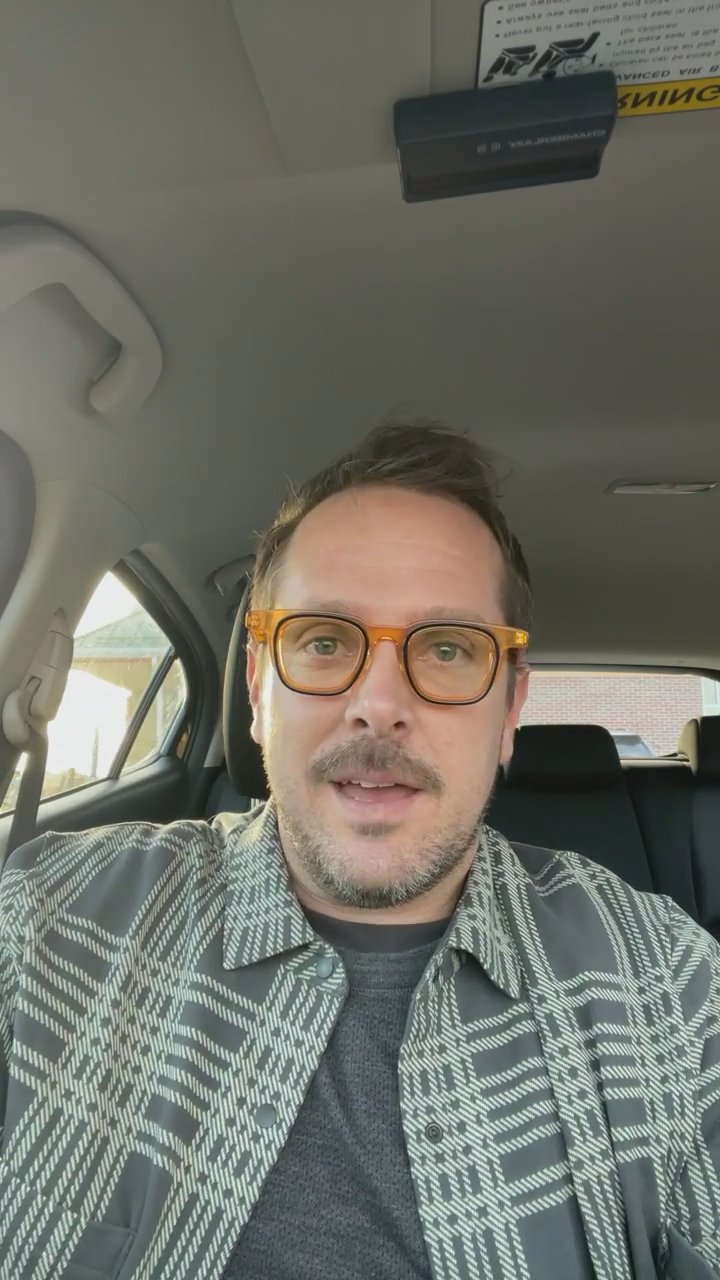
A Sunday movement class explores the body's loud and quiet muscles, guiding participants to notice the obvious sensations and to hang around to listen for subtler cues. The host invites gentle self-care and curiosity.
Every single Sunday, I hold space for a movement class. We have loud muscles, and we have quiet muscles. My invitation is to hang around long enough today to see what those other voices are saying to you. That's my invitation for you today.
Well, hey there, Cadre. Happy, happy Sunday. Happy Sunday from the Mazda. How are you? You good? I hope you're good. What's going on? I'll give it a second here. As people walk into one of those beautiful doors, wherever they are, whatever's going on into the Cadre sphere. Jules, nice to see you, my friend. A nice crisp Morning ball out 1. Nice to see you. Like the cowboy hat. Wherever you are, whatever's going on, because you are here. You are exactly how you're supposed to be walking into this conversation.
You know, on Sundays, we talk about caring about yourself, something that is incredibly normal and natural. But this species that we are, this human being, we're not very, very good at reminding each other to care about ourselves. So what do we do right here on Sundays? We put that little reminder out into the world saying, hey, take care of yourself. If we don't take care of ourselves, we don't get very good at reminding each other to take care of each other. So I have a little story. Every single Sunday, I hold space for a movement class.
I have a background in teaching movement, whether it be sport or fitness or dance or theater or whatever it is. And every Sunday evening, I hold class. And it's interesting because it's kind of a. You know, Sunday evening is a really good time for people to feel out what they're carrying with them as they get ready for a new week. And as this class goes on, it's always fun to watch people, because most often, you can see everybody feels what they think they're going to feel. And then time goes on, and then they start to feel things that they didn't think they were going to feel.
I'll say that again. At the beginning of class, you can kind of sense that everybody's feeling what they thought they were going to feel. You know, they walk in and they go, and they just kind of get into the place that they thought they were going to get into. And then you can see them kind of go. They kind of wiggle into a place of surprise or a place of discovery, a place of, huh, what is that? And here's how I always talk about it. We have loud muscles, and we have quiet muscles. And it's kind of a parent or a caregiver having two children, one saying, me, me, me, me, me, me, me.
And the other kind of standing in the corner going, and, of course, which one do we see first or hear first or acknowledge first? Normally, it's the one going, me, me, me, me, me, me, me. Well, our bodies and our relationships to our bodies is often the same way we respond to the one that's shouting at us first, the one that always gets our attention first. And then maybe if we hang around long enough or if we listen long enough, that's when we start to pay attention to the other, to the quieter voice, to the nuance.
My invitation is to hang around long enough today to see what those other voices are saying to you and then to see where they lead you to. They're teaching you something. They're unlocking a pathway. They're clearing off your lens to say, hey you, are you paying attention to this voice, to this breadcrumb on the path? Because I bet you there's something to learn there. Everybody. There's always going to be many, many pathways to listen to what happens if you listen to the quieter voice guiding you down a new path.
That's my invitation for you today. I will see you tomorrow morning as always. But for right now, I hope you do a little bit of self care today, if you got time. And if you don't, that's okay too.
Reactions and comments are for members. Joining is free and takes a minute.