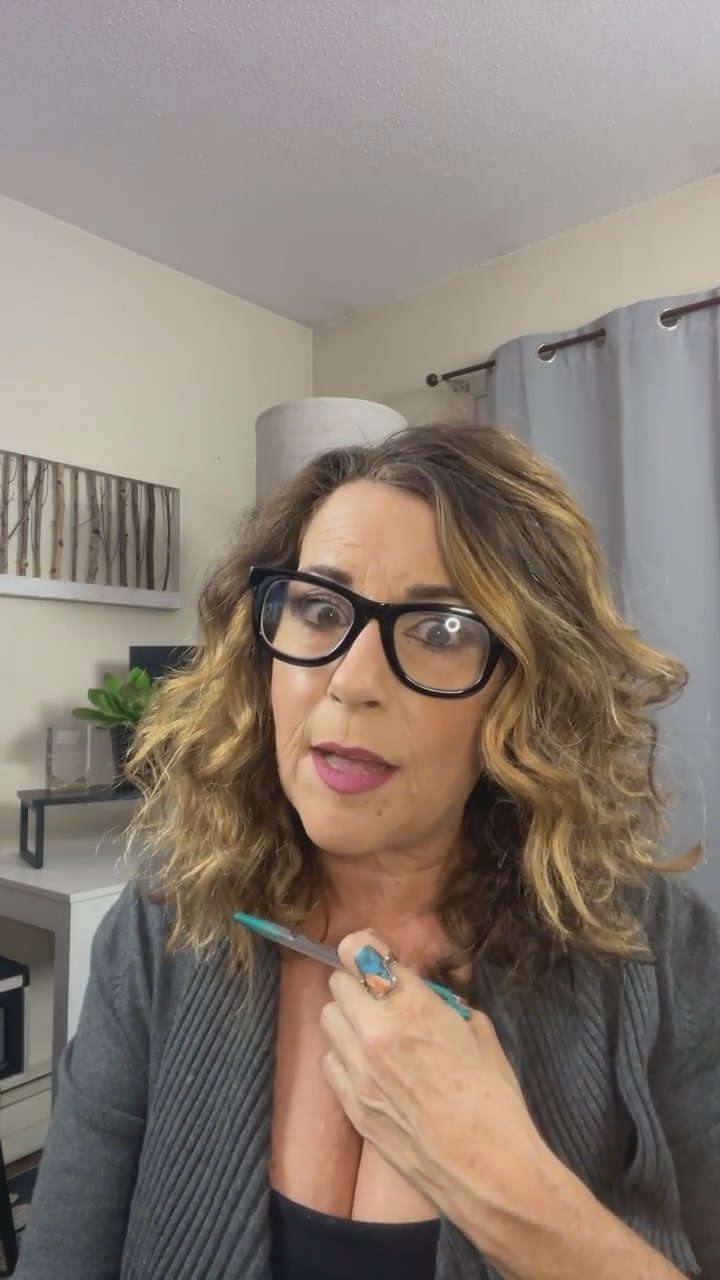
Tiffany Norton reflects on trusting intuition using insights from Gavin de Becker’s The Gift of Fear, shares personal recovery and anxiety observations, and discusses why honoring instinct matters through stories and examples.
Comedy centered on Tiffany Norton airs Sundays at 6pm Central. This week's topic: When we ignore our instincts. Use a quote from a book about women called the Gift of Fear.
The reason why you should trust your intuition, even if it's been wrong for you in the past, is because it's always in response to something. Your intuition always has your best interest at heart, no one else's. And it's what really makes us human.
Mel Robbins: The point of De Becker's book is that we have to honor more often and more intentionally our personal intuition. Robbins: Your intuition is always working in your best interests, not in anybody else's.
Niceness is a learned trait. It is a behavior that anyone can master. But it doesn't necessarily mean that there's good intentions behind it. The other thing we have to remember is when fear pops up. How we react to situations varies greatly.
The Gift of Fear by Gavin de Becker is an older book. It has a lot of good nuggets for trusting yourself. Let's remember that intuition is there to serve us. Stay centered and we will see you next Sunday.
Greetings everyone. It is 6 o'clock on Sundays and Sunday, Sundays, 6pm Central. It is comedy centered on Tiffany Norton, your host, your favorite comedian. Probably not, but you're the comm. I'm the comedian that you're seeing. How about that? I'm your favorite comedian for this moment if you're watching it. Hello, my name is Tiffany Norton. Hey, welcome in you guys. Hey Walt, thanks for coming in. Love it, Love it. Sorry to pull anybody away from football if that's what's going on right now. I was glued to the Lions, packers game anyway.
But if you're joining me today, thank you. Welcome. Comedy centered is a little thing that I started. Basically I am a person, I'm a stand with comedian, but I'm also on a recovery journey trying to abstain from my love of alcoholic cocktails and beverages and things of that sort. And so through this process, every week we get together and I just share some whatever's kind of on my mind, different stuff. Sometimes I get suggestions from my friends in real life, a lot of personal stories, things like that.
But tonight, you know, one of the things that's been dominating a lot of my conversations this week are everybody's anxiety is just really, really high right now. A lot of fear. I'm feeling it myself. Personally, I'm a pretty empathetic person, but I'm hearing it a lot in people's language and in a conversation I found myself using a quote from a book I hadn't thought about in so long. And so I posted about it on Cadre and always check out the posts and interact with on Cadre as well because I do read all of them, your comments and all that stuff.
And there's everything you want me to talk about. Hey, definitely put a suggestion in the old box there, I'll take it. But there's a book and it came out in, I believe, the 90s. And it first came to my attention, my background when I was in college, I thought I was going to study law. I ended up getting my college degree in law enforcement. I was trained as a police officer, although I never became one. But I've always been really, really fascinated in and around the law, security, military stuff, history, all that.
So this book, the Gift of Fear, was written by a gentleman named Gavin de Becker. And I first became aware of it, I believe it was like Oprah's book Club or something or she was, he was on her show. Anyway, so Gavin de Becker was, is a very highly sought after security guy. He's a security man for you know, like, you know, work for the CIA, covered and protected a lot of, what do you want to say? The high dollar, targets, celebrities, things like that. So. But he wrote this book, the Gift of Fear, and really it was about women.
Now, he. For women, he grew up in a very tumultuous background, and in his background, insecurity. Now, if you go back and read the book now, some of the stuff doesn't age all that terribly well, but he still had a lot of really great points. And one of the stories I'll never forget in the book, and that's why I want to talk about it tonight, was when we ignore our instincts. We've all been in a situation where all of a sudden we fear, feel fear, right? All of a sudden you don't like the look of something or like something startles you, right?
And fear itself, that feeling is defined as basically a strong emotion caused by an anticipation or an awareness of potential danger. Right? So he gave an example of an elevator. Now, I'm assuming most of us at some point in our lives have been an elevator ride. Now, this may vary, men's reactions to women's reactions, but as a woman, I know I related very much with this story. So he gives this example. There's a man in an elevator. The elevator door opens, and the woman, for whatever reason, is hesitant to get into that elevator.
There's something that seems off, but she talks herself out of it. She's like, you're going to look not nice. You're gonna look weird. You know, like, why you, you push the button to go in the elevator, the doors open, you see that guy, and then you decide not to go in. That's gonna look weird. You're not gonna look like a nice person. You better just go in the elevator. You better just ignore your instincts. And that's kind of the gist of a lot of the material in his book, is how we are socialized to disregard information, right?
And to minimize the experience that we're having and the feelings we're having. And then we think our ways or think our way out of it. So continuing with the elevator analogy, he basically goes on and expounds on the fact that there's no other animal. If two animals in the wild met up with each other in a field and they. And either one of them got a whiff or a sniff that they didn't like of the other animal, they would never voluntarily go into a small, enclosed metal box with that other animal.
But we do it all the time. We discount how we're feeling for how we're thinking. And honestly, it's something that I talked about in other past episodes in Comedy Centered. But one of the things that I find very bothersome in a lot of communication, especially in and around corporate America these days, is that it is very. It's only the thinking. It's not really feeling. Do you. Okay, that's not necessarily the best example. Let me try again. Let me take another whack at it. I feel like we are overvaluing and have decided as a.
As a community, in a country specifically, you know, I'm an American. This is what I know the most most to value intellect and intellectualization of a situation over how we actually feel about it. Well, why is that? Why are we socialized to disregard how we feel about something versus how we think we should feel about it, right? Or what we think it should be like. Don't overreact. Don't get too upset. Don't do this. Think about everything. Think about it first, right? Well, when you have a bad feeling or when you have fear towards something, your body, we are basically large monkeys, you know, we're basically large chimpanzees, right?
And oftentimes. And even Malcolm Gladwell, the author, goes into it, you can see and perceive things and danger in your reptilian brain. That part, that frontal lobe part, before it logically registers why the fear is there. One of the examples De Becker gives in the same book is there was a man who goes into this convenience store. It goes in there all the time. It's his local convenience store, right? And he walks in and he sees something. And then all of a sudden he just walks outside again. And he's standing outside, he still hasn't gotten the beverage or the coffee or the newspaper, whatever it was he was going in for that morning.
And he finds himself standing back outside. And then he's arguing with himself, wrestling with himself, like, why did I just leave? Why did I go in there, look at stuff, feel fear and just leave. And so as he's trying to unwind why he has just done this, right? He feels like because we talked about the difference between free will, right? And what you. What your biology and your instincts will do, right? So as he's sitting outside thinking he's an idiot, all this happens in seconds. He hears two loud shotgun blasts and there's a robbery and the clerk is injured and the man robs the place and runs right past him.
And it was a violent guy and he could have been hurt. And he was really tore up about this because there was injuries and I believe even a person passed on because of this horrible act. And he's like, why did I know? Almost like, well, not like exactly survivor's remorse, like what did I see, what did I notice? And when he goes back, he's an analytical fellow and talking into Becker, basically they, they wind it back enough to realize what that gentleman walked in and saw in a snap second his gut told him was dangerous, but his brain hadn't figured out yet why the signals were being sent, what he had seen in that flash of an eye.
It was a hot, hot August day and we're talking, I think it was California, it was like LA or something, right? And he noticed a man, a very large man in a long black trench coat. And in that trench coat he was concealing shotgun. And basically he's, his body saw it, his eyes saw it, his animalistic self saw it, his self preservation saw it, recognize the danger in an instant and got him out of there. But he's still thinking, why did I do that? Like, how did I know that? Well, because our instincts operate at the base level.
I mean we, our instincts kick in well before the thought process. The thought process really kicks in after something that like, that happens. If you've ever been in a car accident, did you think about what you were going to do while the accident was happening? No. You're reacting, you're going completely on instinct. And it's not until later in a dangerous situation that you can begin to unpack why you reacted the way you did, why those instincts kicked it, why you went left instead of right. But you, you do not have time in an instant to do that.
So. But why is intuition so good? And why is it so important to us and probably one of the most important things to us as human beings? Because your, your intuition is generally right in danger. But the reason why you should trust your intuition, even if it's been wrong for you in the past. But the reason why you should trust your, your gut level intuition is because a, first of all, always analyze it because it's always in response to something. And that last analogy I gave you, the fear kicked in when he saw a man who was inappropriately dressed for the weather in a convenience store and he recognized the fact that this man was more than likely carrying a deadly weapon.
Right. The other reason why you want to trust your intuition is, and this is the most important one, is because your intuition always has your best interest at heart, no one else's. When your gut tells you something, it only has Your best interest. It's not operating on what your parents told you you should think, what society told you you should think. It's not relying on intellect, what you think about what you think or what you think about what you feel. Your intuition is always operating for you.
That's why it's really, really, really important for you to listen to it. And it's what really makes us human. But at the same time, this over intellectual. Intellectualization is where we really get into trouble because our instincts are trying to serve us. You know, our, our inner guide, you know, our inner voice, whatever you want to call it, right. Is trying to preserve us and help us. And then we'll sit there and intellectualize it away and go, nah, nah, nah, nah, it's fine. I can get in the elevator with that guy who looks weird.
No, no, go into the convenience store, walk past the guy with the long trench coat, you know, who looks like he's behaving in a suspicious way. What could have happened to those people if they hadn't listened to their guts, right? So we're living in a situation, in a time right now where we are so being indoctrinated constantly. No matter where we go, what we do was something to think about, okay? But we're not really slowing down to process how we feel about any of these decisions. And I think this is what is leading to people becoming less empathetic and less.
Into more apathy. They're, they're, they're thinking about what other people should do. They're not, but they're not feeling what those other people are actually going through. And this over intellectualization. I'm sorry, I have a hard time saying that intellectualization and, and the prioritization over thoughts as opposed to feelings, to me, is really gross. I mean, our feelings are what really make us human. What do we always say? It's a gut check. I mean, something might look right, but does it feel right?
And that's your instincts, you know, and your intuition, and your intuition is there to serve you. So in the face of so many contradictory messages, right. Obviously it's political season. I'm not going to go into where my vote's going to go. But it's not about that. It is about this assault of the, the taxing constantly of we have to. They're, they're trying to make us think, but also charge it with a certain feeling. And they're trying to cap. Encapsulate that to get to, to sway voters to get what they want to get to get votes.
Right? But no matter how you try to have a conversation with people about these kinds of feeling about these kinds of things, people we, we start with the facts of the situation, but really the facts don't even really matter. It's about how we feel about each one of these candidates. It's what our instincts say, what our own instincts say about an intuition says about which person is safe and which person is not. But it scares me. It scares me that this is the way that things are choosing to go.
That, that ah, this, this, this fear mongering at every turn. You know, again, going back to the definition of fear, these are strong emotions caused by an anticipation or an awareness of danger. We might not even be in danger in our own, let's say like for example there, you know, a lot of time and energy has been expended talking about how do we get the border reformed in the United States. Right. Well, I live in Wisconsin. The Wisconsin that we are not a, we are a board. We're not a border state with Canada and we're not a border state with the, you know, the southern border.
Right. But the way that some of the ads are playing here, it is designed to only elicit people's fear. Right. Hey Mel, thanks for joining in. Welcome to the discussion. And they want us to disconnect from our intellect. But when we, when you try to flip it around and, and logically discuss the facts of any kind of a situation, then everybody wants to go to the feeling, right? So in, in, in and around that trusting your instincts is really the only way that you can even fight your own information misinformation in your own mind.
But that was kind of the point of De Becker's book is that we as a society, we have to honor more often and more intentionally our personal intuition. Because again, your intuition is always working in your best interests, not in anybody else's. Okay, let's see. I had a couple of more notes in here that I wanted to touch on real quick. Excuse me. The other thing that we, he talks about at great length in his book is because he has a background in security and he security, worked security for a lot of celebrities.
And he's discussing this in the Gift of Fear. So a lot of the things that he had to interact with the people that were being stalked, right. Like a stalker. And that was often the situation. And so he, in the, in his book is applying a lot of the things he learned about working on stalker cases to real life. And one of the observations he makes is that niceness is a decision Niceness is a projection. Niceness is a decision. It's a strategy. It's a way of social interaction. But what we need to also understand and specifically teach our children and remember for ourselves is that niceness is not an equivalency to goodness.
Someone can be very nice and not necessarily be a good person. Niceness is a learned trait. It is a behavior that anyone can master. But it doesn't necessarily mean that there's good intentions behind it and that we should be wary to a certain extent of someone who is so passionately enthusiastic about you viewing them as nice, because it may be a sign of some other kind of a little bit of a manipulation technique. So. But to me, what I took from reading his book, and I still incorporate it every day in my own life, is when I initially feel fear, first of all, I try to analyze what was this dmilai right behind, right before that, that maybe prompted this?
Because the other thing we have to remember is when fear pops up. Now, I, personally, I didn't know this until I had my diagnosis officially two years ago, but I have complex post traumatic stress disorder, so my fight or flight pedal is a little stuck in the on position. So part of my problem is that I can see danger sometimes where it really isn't. And then I was kind of raised in a fairly narcissistic family, so anytime there was actual danger, I was also told that wasn't danger. So sometimes my danger, my thinking things are real and dangerous is a little more heightened than it, than it really, really should be.
Like I said, it's a little bit like a gas accelerator that's stuck on. So I have to remember that when I'm getting worked up and one of the main things, I have to always go back and go, okay, what was the immediate stimuli that happened before? Because these, these fear instincts, though, generally don't come out of nowhere either. You just thought something, something just happened. And the work for me is to not discount myself and discount my, my actual instincts and my intuition on a, on a biological level.
But I also have to do a little bit of thinking and a little bit of self intervention and unwind whether or not my reaction is coming out appropriately. Also, am I, am I, am I reacting too strongly? Is it, is it my, my readiness to think that there's danger because of my past history and my diagnosis of cptsd, or is there actual danger? Right, so how do we balance those two things? How do we listen to our instincts and then how do we intellectualize and process and engage in Critical thinking, you know, it's difficult.
But I think the point I wanted to make tonight is your intuition is for you and no is a complete sentence that we've all heard. No is a complete sentence. I believe maybe he lifted it from another offer, but author, but I believe he was the first one to kind of coin that phrase in his book. Right. But our instincts are more powerful than we understand. How we are going to react to situations varies greatly on what happened just before we got the alert or the instinct internally that there is danger.
And then how do we apply critical thinking and understand, okay, where is this fear coming from? Is this a valid concern? I want to trust myself, but I also want to make clear, competent, competent decisions. I don't want to be ruled by fear. I don't want to make decisions based completely off emotion, but I don't want to make them completely based off an intellectual, an intellectualization of any situation, because then that really takes the humanity out of it. If I can't feel for someone else and I can only just think about their problem, you know, there's a disconnect there.
So I know my nerves are shot. Coming up on Tuesday, the presidential election here in. In the United States. And we'll see. We will see. But no matter what happens, we're gonna have a lot of people who are very, very upset. No matter who wins and whoever the winning party is or the party group, I think we have to remember, you know, to be kind, to remember that we are all still a country and we are also a community. And I really hope that we can keep our humanity and our empathy through this really, really, really divisive time and come out the other side of it a little wiser, hopefully.
And also we need some kind of reform and all these political ads, because I do not recommend living in a swing state during a present. I was living in Minnesota most of my life, and this is my first election cycle in a swing state. And I am getting texts, emails, phone calls, ads, targeted ads, you to everybody, everywhere I go. And, you know, there's got to be a limit on the amount of fear that we're forced to digest. Is kind of my. My take on it because everybody's. Everybody's getting a little taste of the cptsd.
I think everybody feels like their. Their fight or flight accelerator might be just a little. A little stuck on. So that's it. That's it for this week. Thank you, Mel. Thank you for my previous donor. Oh, shoot. The name popped off the list. But thanks for everybody that came always feel free to interact, comment on my page if you had an afterthought or any follow up comments or. And again, the book we were discussing is the Gift of Fear. That was written by Gavin de Becker. Like I said, it's, it's older.
It's an older book. It's probably 20, 25 years old. But I still think it, it's a pretty easy read, and I still think it has a lot of good nuggets for trusting yourself. And let's remember that, you know, intuition is there to serve us. And, and, and our intuition is at least on our own side. Right. Sometimes our brain doesn't seem like it is. So anyway, stay centered this week. Stay centered and we will see you next Sunday. Thank you.
Reactions and comments are for members. Joining is free and takes a minute.