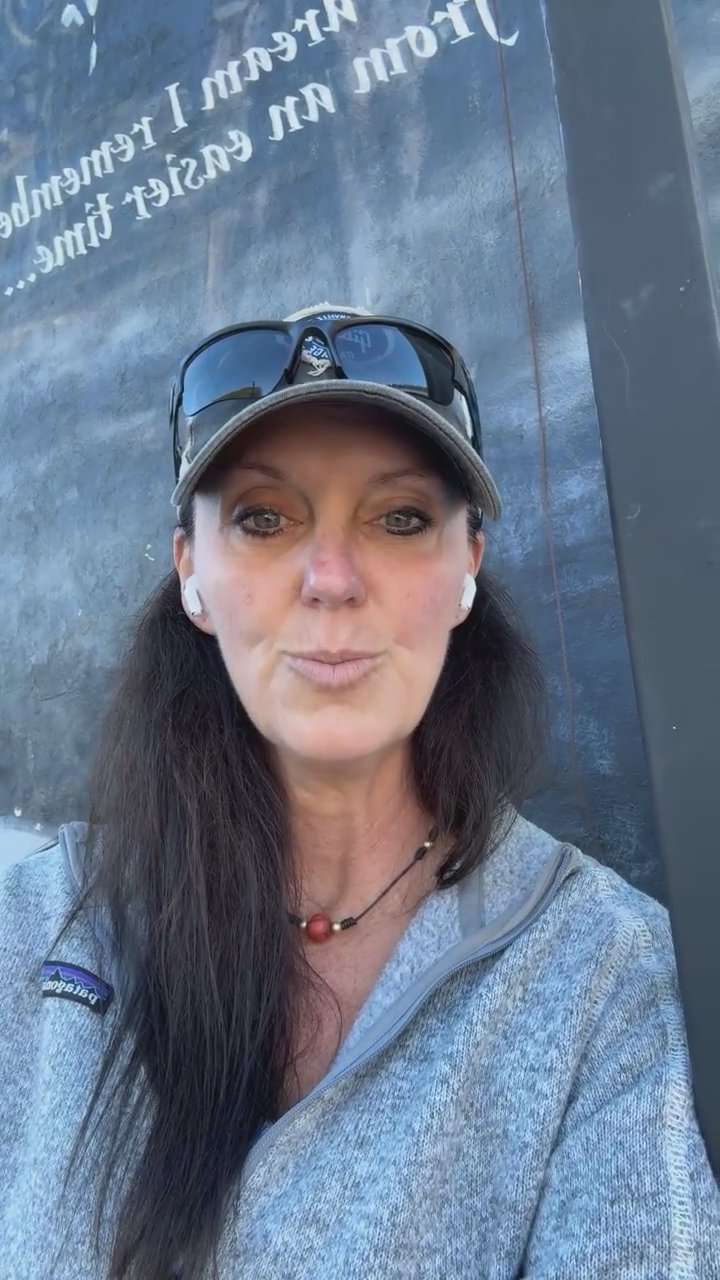
Jean Mitchell walks through how shifting perspective and assuming positive intent can change workplace interactions, using a team example about missed tasks to illustrate seeking to understand and clearer communication.
Jean Mitchell is in Venice Beach, California, currently. She finished two marathons in two weeks for charity. Next up, she has Tokyo at the beginning of April and London at the end of April.
Today on Monday, I wanted to talk about perspectives. When we are showing up every single day, we get to be in control of how we choose to see a situation. It's not about whether or not someone is right or wrong, it's about seeking to understand.
In a recent situation with my team, it always serves me best as a person to assume positive intent. The number one thing that is important to me is communication and respect. In the meantime, I called the people involved in the situation and got their perspectives. It requires us to sometimes look through the lens of something else to get a new perspective.
Sometimes we need to slow down and shift the lens of which we're looking through. When we try to seek to understand, we show up as better humans. If you have questions or you want to get more insights on how to shift perspectives, let me know.
Hello, everybody. Happy Monday. Jean Mitchell's here. Just walking to a nice place that I can stop and have our conversation for today. I am in Venice Beach, California, currently, and I am always excited to be on here with you guys. Well, hello, Laura. How you doing today? Happy Monday. Just trying to get to a place I can stop. Hello. Speak wonder. I found this cute little wall behind me that will be my background for today. Hi, Luke. How's it going? Happy Monday. So I'm really excited to be here.
I adjusted a little bit because sometimes when I travel, I forget about time changes. So thank you for adjusting with me. I appreciate it today on this beautiful Monday. As I mentioned, I'm in Venice Beach, California. This. Oh, thank you, Luke. I love it. Thank you so much. I really appreciate your kind words. As Luke mentioned in the chat, I finished not one, but two marathons in two weeks. One in Berlin and one in Chicago. And so I did both of them for charity. And it was really, really hard and fun all at the same time.
Next up, I have Tokyo at the beginning of April and London at the. Sorry. Tokyo at the beginning of March, London at the end of April. So here we go. So today on Monday, I wanted to pop in and talk about perspectives. I talked about it a little bit yesterday, on Sunday as well. But when we are showing up every single day, we get to be in control of how we choose to see a situation, how we get to choose to see the landscape that's around us. You know, it's funny because I'm in Venice beach and there are a lot of people, when I tell them I'm going to stop in Venice beach, they'll say to me, oh, you shouldn't go there.
It's not safe. And I'll say, why? And they'll be like, oh, well, there's a lot of homelessness. And I'm like, well, there's homelessness in Minneapolis, too. So in that instance, what I love about Venice is there's so much diversity, diversity of people, and there's so many kind people and there's the ocean and some. So it really is about perspectives. Now, they're not wrong, and I'm not wrong. Both can be right, correct. So it's. It's not about whether or not someone is right or wrong. It's about seeking to understand.
And why I think perspectives is important for today on Monday is because I find this happens a lot with my teams, happens a lot with my clients, where I'll get on calls with them or have a situation happen. And all of A sudden it's so and so didn't do insert anything. In this case, I could say Susie didn't finish cleaning before they left. Well, what we might see is the outcome of what happened from Suzy's actions before she left for the day. But what we might not see is when Susie left that day, there were, you know, 50 different people that were waiting for answers to questions, and she stayed an extra hour longer to be able to answer some of those questions.
And so it caused her to maybe be late to go have lunch with her mom. So we don't know always what the situation was, what Suzy was thinking in this instance. And Susie's a fake person, and that's a fake situation. But it does require sometimes that when we start to feel really off, when we start to feel really anxious about something, I like to try to take a pause and understand what is the perspective that I'm reacting to and what is the perspective of maybe the person that I'm dealing with in that moment so that I can show up just a little bit better.
Different. Another example could be you have a co worker who consistently maybe shows up late to work. Maybe you're an early riser, you get in early, you're super punctual, you are a high responsibility, which means that getting to work on time if you're going into the office is super, super important. And again, if we stay with Suzy as our example person for today, Suzy always shows up five to seven minutes late consistently. Now, there are two possibilities here. One is that she's not performing the way that we would expect her to, and maybe she doesn't love her job anymore.
Or an alternative perspective could be she lives farther away than maybe we do. Or an alternative perspective could be she's caretaking for her family and hasn't shared that at work yet, and so she's just doing her best to show up when she can get there. Sometimes, you know, taking care of our family or a family member can be really hard. And we may not know what the plot twist of the day is going to be. Has anybody dialed in or listening on replay ever experienced something similar where your perspective causes you to feel really a lot of tension with someone maybe you're working with or interacting with?
Raise your hand if you've ever had that happen. Or put a little thumbs up or a heart if that's something that's happened with you. And then I'm going to ask you a follow up question. How many of you have taken a chance to seek to understand what might be happening on the other side of the story. Now, I'm guilty of not seeking to understand and I am guilty of seeking to understand. I've done both. And what I found, especially in a recent situation with my team, is it always serves me best as a person to assume positive intent.
And what I mean by that is I have one perspective. I have a set of expectations for my team that I lead. I have a set of expectations for my clients, my clients team that they lead. And my expectations, if I've communicated them, great. If I haven't, then I gotta zip it, right? Because I haven't shared what's really important to me yet. But with my team, I have shared with them things that are important to me. And the number one thing that is important to me is communication and respect. That's two, I guess, one and two.
Now there are other things that are very important to me. But over this past weekend, our team had a communication breakdown and somebody on the team felt disrespected. So as I mentioned in the past, I co own an intercycling studio and typically if something gets to me, it means that it was really bad, somebody's really upset about whatever that is, and I could launch in and try to problem solve all I want. I was away on a retreat this weekend. So typically when I travel, the team doesn't call me because they can handle everything.
But in this instance, this particular person did. And I knew that their perspective, they were ticked, they were very unhappy with some situation. And in my head I tried to predict what possibly could have set them off so early on a Sunday morning. And then I calmed my brain and I called and I had a conversation with them and they were visibly upset and they had a list of things and I said, okay, here's what we can do, here's what we can't control. Move forward and call me, call me later this afternoon.
So that's what happened. And in the meantime, between talking to this individual again, I called the people that were involved in the situation and I got their perspectives because I wanted to understand what actually happened. Because I'm not in the state, I wasn't at the studio, I don't know what happened. And so I talked to two different people that are leaders on my team. So get their insights. So that when I had the conversation with the person who was really upset, that felt very disrespected, I at least had information so I can understand and I could have empathy because I knew the lenses that were coming into that whole situation.
Now we may or May not always have that time. Time to spend exploring all the perspectives. Sometimes we might see somebody doing the same thing over and over again. So again, showing up late, we go back to Suzy, Suzy showing up late over and over again. So in my brain, based on history, my brain automatically goes to, I need to performance manage this person. They're probably looking for another job, I gotta get them off the team or insert whatever. Because we've had history and our brain is wired to help us solve problems quickly to save time, Right?
Historically, we were hunters and gatherers way back in the day. And so our brains are wired to help us solve problems really fast. Those are the superhighways in our brain. So for us to be able to plot, twist, for us to be able to recreate new pathways in our brain, it requires us to take a pause, it requires us to seek to understand, and it requires us to sometimes look through the lens of something else to get a new perspective. Now, you might ask where I came up with this topic for today, and I'll be super honest with you.
In this retreat, I had to do yoga. I'm not good at yoga. I'm not bendy, I get in my head, it hurts, it's hard, I feel inflexible. I get in my head and compare myself to everybody else. But I was in the position of a downward facing dog. So if you've ever done yoga, you know what that is. If you haven't, Google it, you'll see a funny photo. And my view, there was a window behind me and I was looking outside the window. And I was in Joshua Tree over the weekend and I saw a cactus and some other things and everything was upside down.
And I got to see what this cactus looked like from a different perspective. And it just got me thinking that sometimes we need to take a pause, we need to slow down and we need to shift the lens of which we're looking through. And when we do that, when we try to seek to understand, we show up as better humans, we show up as more compassionate people. We might have empathy. It doesn't change the fact that I may or may not have to have a difficult conversation with Susie for showing up late all the time.
But it does give me an opportunity to be human and be relatable and be authentic and give them space to help me understand without always jumping in to judge. Now, there's a whole bunch of different situations that could be playing out there, and there could be a lot of history with Suzy and her ability to be on time. So I'M going with the assuming positive intent and this is our first interaction with her, just for simplicity and just for Naples sake. So if you've ever taken the time to shift your perspective to see if you could have an interaction that might be better than previous interactions, maybe give a little heart.
If you're in a situation that might feel daunting and you're willing to try shifting a perspective, asking more questions, seeking to understand, put a little heart out there. And if you have questions or you want to get more insights on how to shift perspectives or tools you can use that can help with that, let me know. I got you. So many of us have you comment and go out into the main page and put some comments out there, ask some questions. You have a whole team of people out here ready to support you with all kinds of perspectives that you may or may not agree with that might but they might just help expand your mind so that I'm going to tell you just have a great Monday.
Luke, thank you again for popping in here. Thank you again for your kind words and cheering me on. It really means a lot more than you possibly even know and I hope you all have a great rest of your day and I'll see you soon.
Reactions and comments are for members. Joining is free and takes a minute.