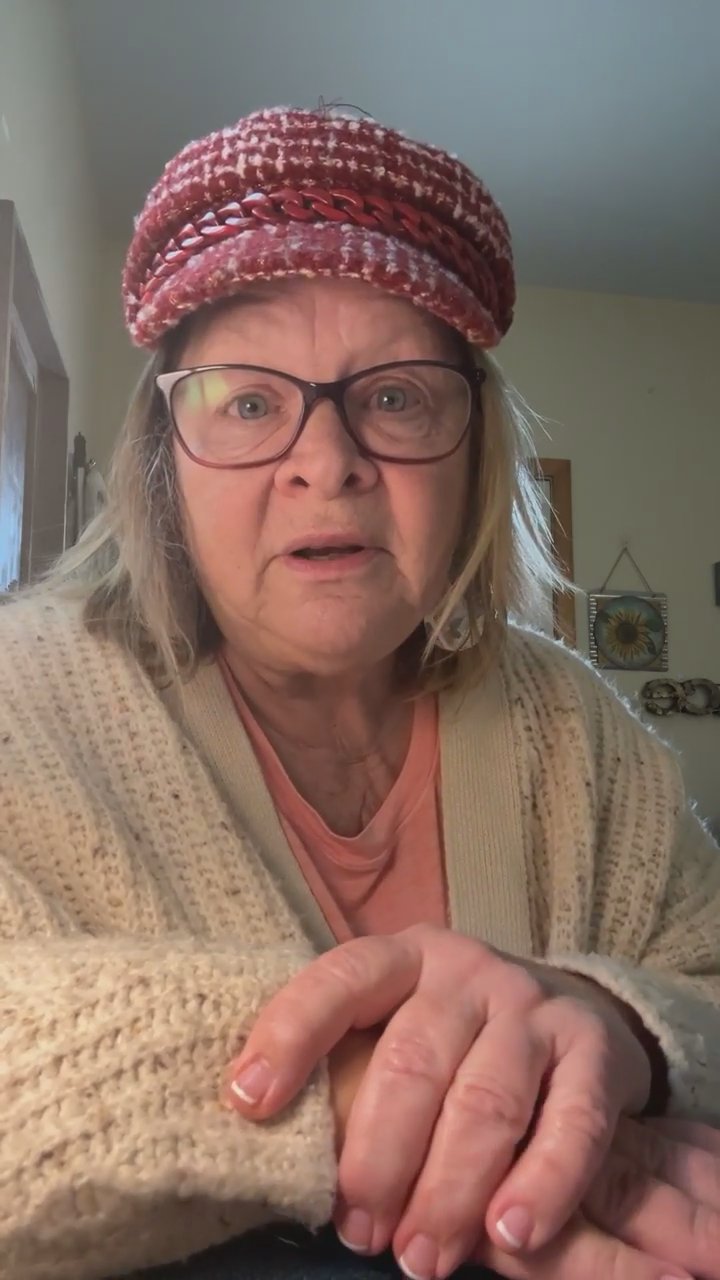
Kathy Joy frames Caregiver Thursday with nautical metaphors and a discussion of radical empathy, sharing personal stories and a favorite quote about autumn while inviting community connection on the Cadre.
Kathy Joy is your girl for harbor pilots. Send a heart if you've ever come onto the Cadre and felt seen and known and understood. All things harbors and boats and nautical symbolism.
Autumn is elbowing its way in. It just kind of comes in sideways with lots of wind and bluster and says, here I am, it's autumn. We've had great weather in Erie, Pennsylvania.
Radical empathy encourages us to actively consider another person's point of view. Translated to profound understanding, profoundly understanding. When we change course, slow down and practice radical empathy, the world changes one conversation at a time.
On caregiver day, I wanted to share just a couple stories with you. Tony Campolo demonstrated radical empathy. When we enter into somebody else's pain, we are connected. When somebody is listened to and cared for in that way, there's hope.
Hello Cadre. Kathy Joy here, AKA Speak Wonder. It is Caregiver Thursday on the Cadre and I'm your girl for harbor pilots. All things harbors and boats and nautical symbolism, if you will, about coming alongside each other and helping navigate waters that we may be familiar with but we're tired of, or waters where we've never been and we need a little help in navigating. You like my hat? It's new. I saw it and it called out to me, thank you for the hearts. I think that means you like my hat. Could you also send me a heart if you've ever come onto the Cadre and felt seen and known and understood?
Yeah, me too. Again, if you would just send a heart if on the Cadre. As a consumer, as a community builder, as a contributor, as someone who enters into the discussion, whether it's live or on the replay or on some of the prepared bits, do you feel known, understood and seen? Hi Steph, Thanks. Thanks for the good nod in the direction of my hat. So send a heart just so I can know that in the Cadre you feel understood. Today, before we get started, I want to give you one of my favorite quotes. It's mine if I can be self serving.
Autumn is elbowing its way in. I put that on Facebook years ago and it came up in my memories and it was alongside a picture of autumn leaves. And it does feel as though autumn is that guest that you grudgingly welcome. Because you know, the guests that will be behind autumn, which will be winter and elbow. It just kind of comes in sideways with lots of wind and bluster and says, here I am, it's autumn. I understand in parts of the country it's snowing already. Perhaps you've had snow where you hail from.
We've had great weather in Erie, Pennsylvania. Two days ago when I was spending the day with my 3 year old grandchild, she was on her scooter, short sleeves, sneakers, hair flying in the wind and sunny. It must have been almost 75 degrees in early November. Just unreal. So today I want to talk about radical empathy. And that's a term we've heard here on the Cadre. I decided to do a little research on it and came up with what I figured it was. But I wanted to read you the definition I found, the one that I like the best, radical empathy.
Mind you, I loved looking in a thesaurus for synonyms and I translated radical empathy to profound understanding, profoundly understanding. Literally stepping into someone else's shoes to understand their life experience. So what I found Online is this. Radical empathy is a concept that does exactly that. It encourages us to actively consider another person's point of view, even when we disagree, even when we strongly disagree, in order to connect more deeply with each other. Connecting deeply with each other.
That's what it is. Anila says it well when she says leading with love. If love is your leader, you're going to go down the right path. You will. The definition goes on to say this. Although we can never truly know what someone else is thinking and feeling, as we don't share their exact same memories and experiences and DNA, making a real effort to understand the actions and reactions of people can increase the levels of compassion that we feel towards them personally. This is my litmus test. I know that I'm exercising radical empathy, truly listening.
Whenever I'm in a conversation and I catch a thought and I want to express it, but I get so lost in what the other individual is saying that I forget what I was going to say. That's actually a good thing. I'm sure you've heard in staff meetings or trainings or wherever you've heard, listen to listen and not to speak. How many, and I'm guilty as charged. How many of us listen to answer. We listen to form an opinion. We listen to say, oh, I can tell you about that. Let me tell you what happened to me.
We listen to speak instead of simply listening to listen. JC talked about Pooh and Piglet and Eeyore earlier on Alive. You can go back and catch it on a replay. And he talked about how Pooh and Piglet have this understanding, this compassion, and the two of them felt nudged in the direction of Eeyore's hut because they hadn't seen their friend for a while, so they wanted to go and just be with him. No agenda, just friendship. Supreme profound understanding with no judgment and sometimes no verbal response.
We all have friends that we can sit in silence with and it is comfortable, it doesn't feel threatening. There's no need to fill the air with words when sitting in silence will do. That is profound empathy or radical empathy. I do like the word radical because radical to me is the one fish that's swimming this way when the whole school's going this way. The radical one or the renegade fish is going upstream and doing something differently. And it's radical. It's not necessarily practiced by the others because they're all swimming in the same direction, the others.
So when we change course, slow down and practice radical empathy, the world changes one conversation at a time. On caregiver day, I wanted to share just a couple stories with you. One of them is one that has stayed in my memory for some time. I heard a speaker decades ago. His name is Tony Campolo, and he at the time was a New York City resident and had, before social media, had his own platform, so to speak, his following, and many speaking engagements in New York City. He was on his way to one, and he was dressed in his, you know, best suit, polished shoes, walking through Manhattan, and somebody bumped him and said, could you share a coffee?
And he thought, it's a panhandler. I don't have time for this. And he kind of kept going so he could be at his meeting in time. Something grabbed his heart, and God bless him for it, because he kind of turned on his heel to see who it was who said, can you share a coffee? He went back and he found this person who was unsheltered. That's what we say now for homeless. An individual with no home who was holding a cup of coffee already. And to hear Tony describe it was just a slice of gritty humanity when he said it was a lady with many teeth missing, grubby clothes, all of her possessions in a grocery cart, and she wanted to share a coffee.
Now, can you imagine what must be going through this businessman's mind when he sees this styrofoam cup already been drank out of whatever? And she wasn't panhandling. She wasn't asking for money. She wasn't asking for him to buy her coffee. She wanted to share hers. They wound up sitting on a park bench taking sips from her coffee cup. That story has just stayed with me because Tony took a beat, took a pause, turned around, reconsidered, and Mr. Business Suit sat next to Mrs. Raggedy Close and or Ms.
And shared her cup of joe. He didn't care. He didn't care if there were germs or whatever. He drank from her cup. That is literally entering into another person's world. And she said to him, the coffee's awfully good today, isn't it? She simply wanted to share how wonderful that he took that time to do that. He's probably late for his meeting, but in that moment, Tony Campolo demonstrated radical empathy. So when we enter into somebody else's pain, we are connected. When we share things that are troubling us in a candid, safe place, we're connected.
And when somebody is listened to and cared for in that way, there's hope. And where there's hope, there's love. And there's A little edge of sunshine around tomorrow. Junk food junkie. In my many years of experience, I've learned to hear someone completely out before saying what comes to my mind. That way, I get the full picture of what they're talking about. Amen. And also, sometimes there may be important information they provide for you. Thank you for that. Thank you for that. Yes, I agree 125%.
Sometimes we step on their story. Steph, you like that story about Tony? Beautiful story. It's just lovely. I wonder how many times I've sort of interjected my comments midstream to somebody's sentence. Lots of times. And how much are we missing when we don't get the backstory or the full story? So, yeah, listening with compassion is radical empathy. When you listen to the one you're caregiving, officially, you're making such a difference in his or her world and in that moment. And who knows? And how can we measure the breadth and depth of those conversations?
Sometimes what we think might be an incidental moment could be a pivotal one for someone who's discouraged or needs to be heard and seen. And I believe it was JC this morning who said, really? We're all caregiving each other. I like to say we're all walking each other home. So in that model of empathy, we are taking care of one another. Even right now, as we interact on the Cadre, I encourage you to stop, pivot if you must turn around, be radical and do something that is becoming a lost art, and that is listen.
Listen to the narrative, even if you've heard it before. Let him talk, let her vent. Listen to him sing, let her cry, Be there in silence. And if words are necessary, use them. Radical empathy, profound understanding. Be well, God bless, and I'll see you next week right here on the Cadre.
Reactions and comments are for members. Joining is free and takes a minute.