As the therapist people often ask what is the key to living a happy and fulfilled life? Usually it’s more specific than that but the general thought has crossed my mind multiple times. So I sat down and thought about what truly makes people happy. These are lessons I’ve learned from my clients and in my personal life. I will share them with you and would love to hear your thoughts.
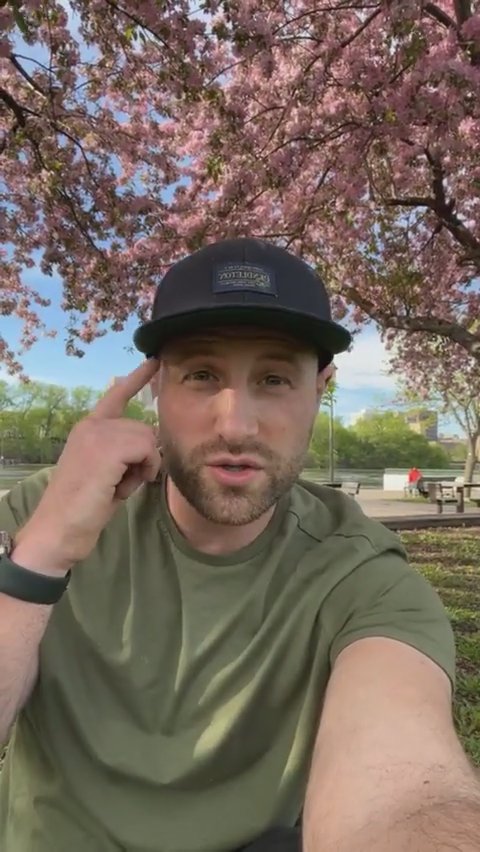
This is one of my happy places, and especially right now, because look at that, the cherry blossoms, the river turn a little bit. And I got my dog just hanging out, eating grass, doing her thing. Love it.
Terence Moore: Here are some of the variables that I find that make people happy. He says taking care of your physical health is consistently underrated. Moore: Having your basic needs met is important. There are other ways of approaching it and finding acceptance.
One of the greatest variables is the quality of your relationships. Number three is a sense of community. Some of the places where people live the longest are places that have a strong sense ofcommunity. That could apply to a lot of different things.
The next one we're going to talk about is the way in which you communicate, communicate with yourself. One of the greatest, most powerful things that you can do is change that relationship with yourself and learn how to talk to yourself.
Final variable is a sense of purpose for attaining happiness. What is it that is going to get me through the hard times? There is always going to be pain and suffering in life. It's up to you to define your own purpose in a good way.
Our base needs to feel, to be physically well. And then the next one. Being mindful in the way in which we speak to ourselves. Higher mind, higher purpose. The last one is that purpose is finding a greater purpose. That's the tip of Maslow's hierarchy in needs.
Therapist: I was happier when I had something to look forward to. Looking forward to a vacation, something big, a camping trip. A way to be present and make your present better by thinking about at least one thing that you have to looks forward to, but also focusing on being present.
What's up, Cadre family? We're live here from the Mississippi River. I wanted to come out here. This is one of my happy places, and especially right now, because look at that, you got the cherry blossoms, the river turn a little bit. I don't know if you can see it, but you got the skyline in the background. Love it. And I got my dog just hanging out, eating grass, doing her thing. I'm pretty sure she's a cow. Anyway, so I wanted to chat with you all. This is something I've been thinking out, thinking about for quite a bit.
And it comes up because it's like, as a therapist, am I. I feel like I'm supposed to know how to live a happy life like some kind of philosopher. And everyone knows therapists are human. We have our own struggles. So you think, if we have the key to happiness, shouldn't we all just be the happiest people? And. No, no, that's not the case. Because, you know, happiness, you may know how to achieve it somewhat, right? You may have some ideas, you may have some skills, but you have to work for it, right?
So here are some of the variables that I find that make people happy. And this is through my experience as a therapist personally, the research of, you know, what makes people happy. And I think knowing this is a benefit, I think for therapists, knowing this is a benefit, and I think that we do have some level of obligation to practice what we preach. But life happens, right? It happens to all of us, and we have to be willing to do the work, which is not always easy. So I came up with first four variables, then I added two more, but it'll be five main variables, and then one will be a little cherry on the top.
And I'm going to do these in a certain order. I'm not going to tell you why, so maybe you can figure out why I'm putting this in the order that it is. So the first one is physical health. This one is consistently underrated. It's underrated by those who don't have to deal with it in the current moment or haven't been through it in a significant way. And even as far as mental health professionals go, it's not something we talk about all that often. Right? It's like, we're not physicians, we're not doctors.
I mean, that's outside of our competency. But what isn't is how one's physical health affects someone emotionally, mentally, and just your overall well being. And this is. I think this is one of those that in many ways is a prerequisite. Right. If you are really struggling in your physical health, chronic pain, chronic illness, it makes working for and attaining that level of happiness difficult. That's not possible. A lot of people have to do it. They're forced to do it, and they're able to find happiness and contentment in their lives despite having some of these conditions.
But it's one of the reasons why it's important to take care of yourself. Now, that doesn't mean that if you don't take care of yourself, that's just. Or if you're having physical significant issues, that's because you didn't take care of yourself. Sometimes these things just happen. Often these things just happen. It could be an accident, genetic condition, which it often is. Right. So taking care of your physical health and if that's something that you're doing everything in your power to do, sometimes these things take time.
Often it takes effort. It takes. There's a lot of discouragement for folks who have chronic conditions. But I just say, don't give up. Keep trying and for the best. And now if you realize there's just. I've done everything that I can and this is just the way. Way it's going to be, then there are other ways of approaching it and finding acceptance. Right. I could do a whole, I was gonna say a whole video. I could do a whole series. I could. Unlimited about what that's like and some things that you can do if you are experiencing those physical health issues.
So that is number one. Number two, I don't know the best way to qualify this, but let's just say outside of physical health, right. It's having your basic needs met. What are you doing, dog? Just rolling in the grass. Now, the first way we'll look at this is financial, right. Because finances are important, right. And finances are important because they enable you to have your basic needs met. They provide freedom. It's one of those things where, you know, if you can get to a point where you don't have to worry about it, that's a huge luxury, and that's not the case for most people.
Right. So another one is a therapist. Okay, what am I supposed to. I'm not your financial advisor. However, I think it's important to note whether it's. You're choosing your career, you know, whether it's, you know, having a lot of money and thinking that that's going to buy you happiness. So I think it is a double edged sword. But at the base rate, like as a social worker, right, getting my up and comings as a social worker, right? That's all focused on basic needs, right? And whether that comes through the work you do or government assistance, access to healthcare.
Some of the countries that are the happiest, often the ones with strong social programs that take care of a lot these basic needs for folks, people report being happier. Now, on the other end, you know, a lot of those folks may not be ultra wealthy or rich. A lot of times in those countries, you're paying quite a bit of taxes. So they may not be as, like, uber wealthy. But you know, what the research shows is that there's, like, this optimal threshold, right? And after that point, it's like you get to a point of diminishing returns, meaning that this is about as peak level as money is going to buy you happiness, right?
So can money buy you happiness? To a certain point, but no further than that. And if you cross that threshold, right, if somebody's making a ton of money, sometimes that comes with a set of complications and issues that actually have the opposite effect on people and actually make them less happy. Again, we could do a whole series on this. But it's one of the reasons why celebrities have some of the highest rates of addiction. I mean, the most privileged and wealthy people with the most admiration have some of the highest rates of addiction.
It's like 40, 50. I mean, it's crazy. If the regular number is 15%, comes like 50%. So how could that be looking at lottery winners? You know, the curse of winning the lottery, right? But the point of this is that there's a certain importance of having your base needs met and trying to focus on that and removing the stress of not having that happen, because that's, like, another prerequisite. That's something that holds you back from being able to achieve this level of whether you want to call it happiness or overall well being.
Let's get the river back in there. Number three, what is it? Number three is a sense of community. And I bring this one up, and we'll break this down into two different categories. One is, let's just say, the quality of your religion, relationships. And time and time again, that is shown to be one of the greatest variables is the quality of your relationships, whether it's your romantic relationships, whether it's your friendships, having close, intimate connections. We're social beings. I mean, it's no surprise.
We are social animals, social beings. And we need connection. It needs to be quality connection. It needs to be be connections that are largely free of stress as much as possible. Now, some of you in a relationship are like, well, I wish. But, you know, yes, some relationships are inherently more tricky than others. But sometimes those ones that are the most tricky, when you could get those in a good place, are the most fulfilling and rewarding. So, you know, how often are you spending time with other people?
Quality time. Why are you acting the craziest when I have to go live? I don't get it. I'll give you a treat. I don't know if this is a good idea or not. It's not gonna be wanting more. Maybe. Maybe it'll be good. So, the other part of community, or, well, of relationships is community. And it's interesting because some of the places where people live the longest are places that have a strong sense of community, often religious community. Now, be the first to admit, not super religious. However, you can't argue with the data that a lot of people who are religious tend to have better health outcomes and sometimes mental health outcomes.
But that could apply to a lot of different things. And the reason people think that it is, is because of the community. And there's another reason, too. That will be part of the last variable that will incorporate that. So, having a strong sense of community, gathering purpose and relationships, quality relationships, that is a big one. The next one we're going to talk about is the way in which you communicate, communicate with yourself. Now, this is the one in the realm of therapy, right? So now we finally hit one that this is the therapist.
Bread and butter. Because in so many, so many ways, what I do in therapy distills down to teaching clients how to better. How to have a better relationship with themselves. And it all starts up here, positive self talk. A lot of times, what we do as therapists, when we process past issues, when we take a look deeper into our self esteem, the way that we view ourselves, the world, and others, all comes from the narratives that are in our mind. That's how we make sense of the world is through feelings and our language, and how our language is used to interpret our feelings.
So I call this the top down therapy in many ways, which is changing thought patterns, being mindful about how you talk to yourself, which changes the way you feel. Now, the other type of therapy I call bottom up, which is actually directly feeling, experiencing your emotions, getting rid of some of that pain toxicity, and then naturally, a lot of the ways that you think about things will change, right? So one of the greatest, most powerful things that you can do is change that relationship with yourself and learn how to talk to yourself.
And one simple way to boil it down is asking yourself, do I talk to myself like I would a loving friend or family member? God's sakes. So most of the time you're gonna answer, no. Very few people naturally do that, work naturally harder on ourselves. Why is that? I have a few thoughts and reasons why that is that maybe we're harder on ourselves than others are on us, and maybe some evolutionary biological reasons. Okay, you need to chill. There you go. You get a cookie for future chilling that I hope you do.
So that is variable number four. Now, variable number five, which is really the final variable, and perhaps one of the most important, is a sense of purpose for attaining happiness. And the reason a sense of purpose is extremely important is because you have to ask yourself, what is it that is going to get me through the hard times? There is always going to be pain and suffering in life, but the question is why? What is the meaning of my pain and suffering? Why should I go on? You know, why is it that I should still, whether I'm not talking about necessarily just exiting out of life, but exiting mentally and emotionally, and detaching yourself from the outside world, numbing yourself, avoiding disconnecting from it, because it's too painful.
So, people, humans are extremely resilient, and we could go through a lot of tough stuff if we have a sense of purpose guiding us, and that can mean a lot of things. So what does this mean, this sense of purpose, this philosophy? Right? You know, it could be just about anything. It could be just being the best father, mother to your kids, it could be in the work that you do, it could be in the art, the things that you create. It could be in the charity work, it could be in your connection spiritually with a higher power.
But if you don't feel like you have a sense of purpose, that's okay, but it's something to think about and asking yourself, why am I here? Not I wonder why the Lord or my higher power has put me here. You know, likely we're not going to know that, right? But it's up to you to define your own sense of purpose in a good way. A good book on this is a very famous one, the Viktor Frankl's book, a man's search for meaning. You know, he was a psychiatrist, psychologist, holocaust survivor, who went through the concentration camps.
And that's, that was really what you distill his book down to, was the importance of meaning. Man search for meaning, the importance of purpose, right? That could get you through anything, right? For him, it could have been one day to see his wife, again, I believe, is one of the reasons why. And actually a big part. Part of. Of his purpose, I think. Was it the book he was writing while in the concentration camp and going through this just horrendous experience. What got him through was the hope that he could take the book that he was writing.
A lot of times it was just writing it in his head because they wouldn't let him. But to take that book and to give it to the world and eat it, and it's helped a little. Lot of people, including me. So, bit, that's number five. Now, before we get into number six, you may be wondering, well, you teased at the beginning that there was some order to this, and maybe you figured it out. If not, that's okay. Maybe it's not always clear, but in some way, the order was under, like, the hierarchy of needs, right?
Our base needs to feel, to be physically well. Right. To be physically. Live in a well. And then the next one. Right. Having your basic needs met to maintain your physical, also a very base need, right? And so we get up, okay, what are our needs? Not just of our self and our physical self, but what are our needs in regards to other people, right. What are, you know, where do we place ourself? Where do we. Where do we have connections? And then the next one, which was. Right, a higher mind. Right.
Being mindful in the way in which we speak to ourselves. Right. Higher mind, higher purpose. And the last one is that purpose is finding a greater purpose. Some form of self actualization, the tip of Maslow's hierarchy in needs. But I said I would throw another one in, a little cherry on top. And this is one that I just came up with one day. And it's something that I noticed in my own life, probably from the time I was very young. I don't know why I just noticed this where I found that I was happier when I had something to look forward to.
Right? And so I tell folks, try to always have something to look forward to, because just like a sense of purpose, what's the point of my pain, my suffering, right. In some ways, it's like a light at the end of the tunnel. All right, if I could get through this next couple months or going to Bermuda. Right. A vacation is always an easy one. Looking forward to a vacation, something big, a camping trip. Planning something. Plan. I always try to plan something. I had to have something to look forward to so that when times are tough, I could think.
But it's okay. Soon I will be here. Soon I will be doing this. Right. Katie on here had a really great post about, you know, that obsession with what's next? What's next, right. And not being okay with right now. Right. Or it was also, you know, obsession about you, then you could also look at the same way about this obsession with the past. Right. However, in this way, there it is, a way to be present and make your present better by thinking about at least one thing that you have to look forward to, but also focusing on being present at the same time.
Right. So a lot of times when I do a group with my clients, that's the last thing I end with. It's like, all right, we're going to be meeting in a week. What is one thing you have to look forward to this week? And if they don't have anything, usually they have something, but if they don't have anything, I say, well, is there something you can make happen? And oftentimes they can. So that is my experience as a therapist, distilled down into 20 or so minutes. But anyways, folks, again, we're live from the Mississippi.
Cherry blossoms are blooming. It smells great. I just. Dog is finally chilling. That's Miss Bella. And I'm going to hang out a little more, go home, get dinner, and we'll see you next time. All right. See, now I'm going to start the countdown because otherwise I stand here awkwardly. See you later.
Reactions and comments are for members. Joining is free and takes a minute.