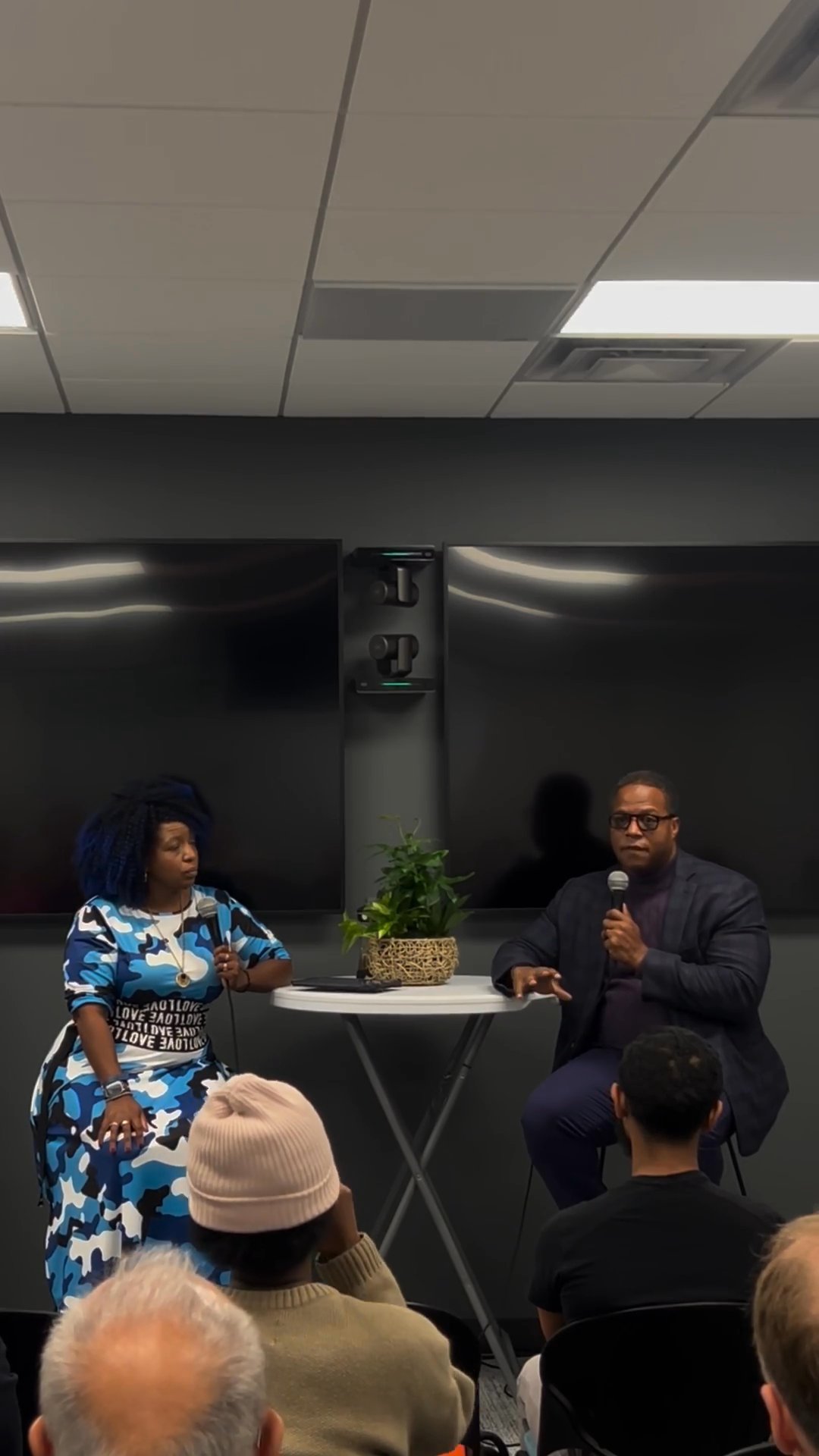
Join Miss Shannan Paul and Bukata Hayes, VP of Racial Health Equity of Blue Cross and Blue Shield of Minnesota for a conversation on creating employee safety at work and everywhere in between. From the Cadre Live Event 'Cracking the Code: Why Emotional Safety is the Crux of Employee Wellbeing' on 10/24/24, presented by TurnSignl and hosted by Holmes Murphy.
Thank you. So the first of its kind in this enterprise. And I remind folks that this is a three year young position going on four years. And so I think Nancy's point about performative or reactionary and does that work stick? Right.
Blue Cross uses race, racial and health equity in the title. When they made that declaration, community was listening and now they have expectations of us. How are we entering in community in a much more humble sense and a humble posture?
Blue Cross has stepped up more for Black Maternal Health Week this year. The company says it is simply a partner and a participant and not the leader. How can we start from this particular step and then continue to take the other steps?
Bukata: Eric Holder said we have to move from cowards to courageous. If we aren't looking at what demographics will determine for our organizations, your business model is broken and it's in jeopardy. If you have any questions, feel free to drop into our next panelists.
Thank you. So the first of its kind in this enterprise. And I remind folks that this is a three year young position going on four years. And if we think about what our state went through four years ago, that's why this position exists. This position does not exist because my enterprise was so forward thinking that it said, hey, let's create this position. Right. And so I just want to use that as context because I think Nancy's point about performative or reactionary and does that work stick? Right.
Becomes what I'm trying to ensure sticks. Right. And I had that question. As someone who's met you in different venues, my question was when you decided to take this job, because I know that there were a lot of things that were thrown at you. You have a wonderful pedigree in this space. So when you said, yes, I am willing to take this position because I don't feel as performed, what was, what was it about this job and this organization that you like? This is the corporate role I'm willing to step into.
Yeah, that's a great question. So it was because, and I shared this during sort of the interview and vetting process. I said like, one of the reasons that I'm even considering this is because you decided to use race, racial and health equity in the title. I said, so many folks when they said, hey, let's create this position, what they decided to do was say, let's just call it health equity, let's just call it this or this or this. And Blue Cross also at that time declared racism a public health crisis.
I told them those are the two reasons. Right. I said, because you were intentional, you were courageous enough to mention race. Because we know in this country that is something that we could have clear documented historical evidence about racist part and outcomes in existence and we will still try to figure out a way to have a, a racial solution to it. Right, right. So for me, that was really what drew me to the position, was that there was some boldness there to, to make that declaration to create a position in the team.
They provided some dollars to it as well. So it wasn't just talk, it was also actions. There's actually a team of about 28 folks that are on my team and they gave me money with a coalition. Absolutely, yes. So that was it. And I remind my enterprise a lot that when we made that declaration, folks were paying attention. And so we aren't just sort of doing this work to sort of, I should say, we are not solely doing this work for our enterprise, for our members. We're also doing this work because when we made that declaration, community was listening and now they have expectations of us.
Right? Right. And so I never let us walk away from that expectation that community has of us as an organization. So that's why I'm still here. Right. And I always think it's interesting when you go the buzzwords that you can do as someone in your space to go, we know that this is not going down the path of value to our community. So how do you help not only your enterprise, but other organizations go, here's the way to do it correctly if you want to affect change in this community and move towards the end goal that you're trying to get.
Yeah. So one I think is to be explicit in your language. Right. I think we all understand language matters, right. We have to follow that up with actions. But I would say be explicit. I think the other thing that I would say too, and one of the sort of values we have is community has the answers that we can't come into community as a savior. That's happened a ton and every single time it's failed. And so like for me it's how are we sharing power? How are we entering in community in a much more humble sense and a humble posture.
That's part of, for me, the way in which organizations can be successful. Because what at some point and at the foundation of it is most of most marginalized communities have had plenty of folks who have shown up in moments and never sort of longitudinally over existence. And I think that's what is part of what we have to be able to do is to show up more long term partner in more long term ways. And, but, but in the corporation, right. We have to get away from sort of this quarter by quarter existence.
Right. Well, how do you encourage that change when you are in a legacy organization such as yours? Because I'm going to bug our founders coming up later because I think it's a little different when you're building it from the ground up, similar to what Nancy said. So once you. When you're going in and we're going, okay, this is the culture we've fostered, now we want to make a modification. How do you start that? I think we have to. I try to be really honest about systems and institutions that have been in community and been sort of in the space.
So one of the ways that I would do that is we've been unsuccessful. Our business model has not been successful in ensuring everyone has optimum health. So in some ways I entered the space of not being corporate and saying, hey, like you're failing, like we are. And I would say that's not just a health plan, health care, education, economics, housing. Like when we talk about disparities, there is not one space in which I'm going to use black folks, but marginalized folks. There's not one space in which we have a system that is whole and I'm going to say competent for us.
Right. So I've entered space and I simply said one, we haven't been successful. We, we have been in terms of, if we want to say we made money, that's one thing, but have we actually done what we should have been doing for all of our, for my organization members say no. And then the other thing is my presence in the enterprise and this work also is an acknowledgment and an admission that we didn't have the answer to fix it. So the idea is if there is a corporation in any field that had the answer, they would have implemented it because in corporate world there's an incentive to be first to solve.
Right. And so like we had to admit we didn't have the answer. Right. And through that you're able to push folks to say, hey, so in your particular line of business in your department, if we haven't, if we don't have the answer and we haven't been as successful as we could, like what do we need to do now? And that's how you can help a large system begin to look at, in sort of small incremental ways to continue to move. And that incremental change leads to more long term change. And then how do you communicate the fact that you are changing and trying to build to the communities that you're trying to serve in a greater way, both internally and then also your members.
Yeah. So one, we admit we don't because I'll be honest, I've tapped out. Sometimes that company's been trashed and you just put them in the trash bucket and then you don't go back. So how do you get my attention again if I decided that you're trash? Yeah, yeah, yeah. One, I would say you're wearing Blue Cross colors. So whole lot more. I hope Blue Cross ain't in one of them trash buckets. Not specifically. So I think one thing we talk about community as the answer. We actually just show up and we admit that hey, we don't have the answer.
Here's what we're looking to do. And then we. Which I think is really key because part of the reason why folks will throw Organizations in the trash bin is because we haven't shown up with what is sort of corporations. Superpower. Yes. And that's resources. Yes. Finances, influence. So we show up that way too. So we show up with financial investments in community that says, hey, I know we haven't shown up like we could have. Here's a start. I don't have unlimited dollars. Right. But I do have dollars that could help move community forward.
And we show up with that. And then the other way, internally and externally is we simply, we say we listen, learn, partner and act. Meaning that we don't go out in front. We are not trying to be out in front. There are many efforts that I'm okay with our logo not appearing on. Okay. So that folks understand it is really about how solutions are formed in community. And like, I'm not doing this simply because Blue Cross's logo gets to be placed someplace. I'm doing it because it's the right thing to do.
Right. And in particular with the sector I'm in and I think many other sectors, people. And I was just talking with luca. People are harmed every day. Yeah. At some point we, we have to do both really immediate and long term work. But like, I'm not. Okay. Sort of, sort of not addressing the here and now because they are people. So I think about my mom and my sisters and others like they're harmed every day by a system that gets disproportionate, negative outcomes for black women every single day.
And so like, for me, it's like, how are we showing up in spaces where we, where we simply a partner and a participant and not the leader. Right. And I think that does begin to rebuild some trust in communities that it's like we're going to show up how you asked us to show up and that's it. We're not taking over. We're not saying it has to be done this way. But that's a really hard thing for large corporations who typically had immense power. Yes. To be able to do. Right. Well, Kakada, you sold me on it because I know open enrollment is coming up soon.
All right. I feel, I feel, I feel encouraged. Okay. So let me say this too. Right? So I think when we, when we engage in community, we understand that things like doulas, if we're talking about the maternal doulas, folks want that. We understand that folks want what we call culturally concordant care, meaning I want lived experience matched with technical expertise. So I want more black psychologists and psychiatrists and mental health practitioners, even though I don't plan on having another kid.
I did notice that Blue Klaus Rochille stepped up more for Black Maternal Health Week this year because that's something that pops up on my radar. So I'm like, oh look, welcome to the party. So I do think that that makes a huge difference. When you go, how can we start from this particular step and then continue to take the other steps to get the top of the staircase? So as we are getting ready to move on to our next speaker before we back into break again, if we're moving into an organization, if they're not ready to or maybe don't have the back to the dollars to go, hey, I'm going to start a whole new position.
How can they start that first step to reframe a position in there to start that conversation in their organization? Yeah. So one, I think we, we have to and former former Attorney General Eric Holder said this and I'm going apply it broadly to sort of this work around belonging. Nancy said it earlier, but ag Eric Holder said we have to move from he was talking about race, but he said we have to move from cowards to courageous. Okay. And I think that's one is we, we simply have to be courageous enough to begin to work.
I think we have to be courageous enough to admit we don't have have the answer. And, and the folks that we engage with are harmed. Yes. I mean to me those are some really important first steps. And then the last thing, if we simply want to talk about in terms of business model and strategies like our business model, if we aren't sort of looking at what demographics will determine for our organizations, your business model is broken and it's in jeopardy. So just from a simple sort of business model, economic model, if you aren't, if you don't have an organization that's a belonging organization, either patrons or folks who are employed in 20 years, you may not have an organization.
Your business model just is not going to be able to be sufficient. So in some ways you have to look at it both from long term is your business model secure? And then you say, hey, and we have to be courageous because those folks have been historically sort of underserved by your organization, your field, and they aren't just going to come to you. Right. Right. When they have sort of this buying power, bargaining power, when they are a majority, they can remember that you didn't open a door. Right.
Right. Like communities remember who was there and who wasn't there. So I think that's what I would encourage move from cowards to courageous. Sort of understand both from like a business model standpoint, but also from a demographic standpoint. You have to change. Right. Well, thank you, Bukata. If we have any questions, what we'll do is I'm going to bring up my next speaker and then Bukata, if you have any questions of our next panelists as well, feel free to drop into that. So thank you very much.
Reactions and comments are for members. Joining is free and takes a minute.