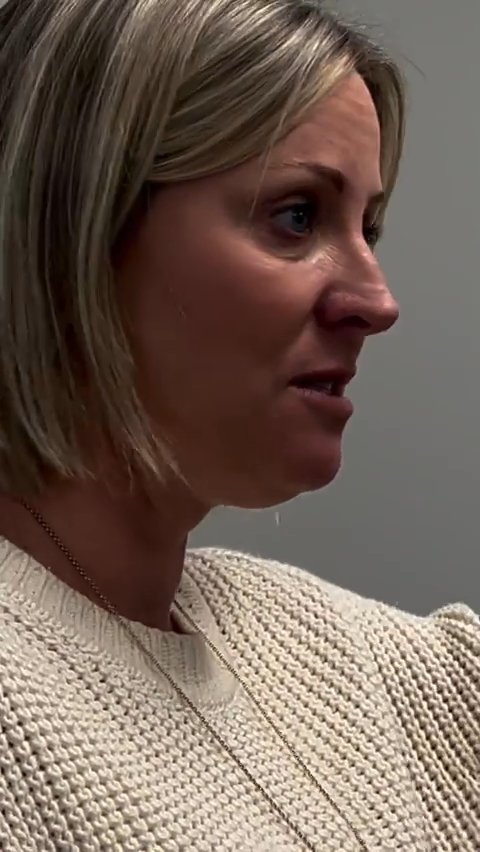
Join Miss Shannan Paul and Founder of Clockwork Nancy Lyons for a conversation on creating employee safety at work and everywhere in between. From the Cadre Live Event 'Cracking the Code: Why Emotional Safety is the Crux of Employee Wellbeing' on 10/24/24, presented by TurnSignl and hosted by Holmes Murphy.
Nancy Lyons founded a digital consultancy called Clockwork. Clockwork solves big, gnarly problems for the enterprise. Lyons: I'm queer and I didn't want to come out in the beginning of my career. She says the company tries to make people feel like they belong.
Shannon: I think leaders are very performative right now. People are pulling back on those initiative initiatives. She says culture has to be infused in everything we do. Shannon: Organizations are getting it wrong both internally and externally when they pull back.
The biggest obstacle to progress at work is judgment. We judge each other because of our own comfort. How do we start to pivot that as individuals? There are micro cultures everywhere. We can work to be allies for our colleagues at work.
There's still. an archetype of what even a professional version of. a queer woman, a gay man, a professional woman as a black individual. If you're outside that archetype, then you're still othered. Any of us has the opportunity to be a leader for someone in our community. If not, run.
The first step toward changing how things feel is changing how you respond. Self awareness is everything. We are all good and valuable because we were born. When we accept that, it changes how we show up in the world and what we expect of others.
As we're framing this conversation, and I know we need to be very precious with your time, but can we give a little more? I'm fine. You're fine. Okay, so can we give a little background about what you do? And then I want to talk to you about how you have transformed your particular company. And I know especially as your communication style has changed over the last couple of years. Sure. Well, I'm Nancy Lyons and I founded a digital consultancy called Clockwork. We. It's actually, I had a company before and we sold it and then in 2002, so it'll be 23 years in January that Clockwork has been around.
And we also have a digital studio called Tempo. And Clockwork solves big, gnarly problems for the enterprise, mostly in healthcare, manufacturing, insurance and financial services. And Tempo works with small and medium sized businesses building web and mobile applications to help them sort of get off the ground. And when you're talking about, one of the things I love about watching you frame things is that not only do you frame it and live it within Clockwork, but helping other organizations go, hey, we can do it in our ecosystem.
Here's how you can imprint that into yours, regardless of whether it's small, medium or large organizations about talking about it. And can you just give us a little background on your concept of what diversity, inclusion and those things and those conversations work within your organization and then how you help broadcast that out with your other partners and companies that end up working with you at Clockwork? You know, I've been doing this for a really long time, but I wish I could say it was some sort of selfless act on my part.
The truth of the matter is I'm queer and I didn't want to come out in the beginning of my career because we were often. The work that we do at the time was often conflated with advertising. And I don't know, is anybody in the ad marketing world? Okay, if you know it, you know why I didn't want to come out. How about that? And so I remember being afraid that my clients would find out, or being afraid. And I think very early on I realized that if I didn't feel comfortable being exactly who I am, I would never be able to deliver my best work.
I would never be a leader that people believed because my entire existence was a lie. But then I think one of the biggest things that happened for me was my wife and I adopted a son. And after a long journey of about nine years, and that is another story where we were turned away from adoption agencies. And we went through the whole process, all the things, just imagine, just imagine what they all were. And I remember us having a conversation about living unapologetically right and really learning.
And also, our son is black. And I never wanted him to feel like he had to apologize or be ashamed of his family. But also I had to go on a journey to recognize and embrace the unique experiences that would be his alone that I was not qualified to manage. I also had to go on a journey of anti racism and recognize how some of those things are just sort of baked in, right? And we don't even know it. And I couldn't do that in my life without bringing it to work. Right? So I remember probably 20, my son is 18.
But about 22 years ago, somebody said to me, what do you want your legacy to be? It was a article that somebody was writing for a magazine. And I said, well, it sure as h*** isn't any website, right? I want it to be how we make people feel. And that's what we try to do, is recognize that we have power to make people feel like they belong. And so it's really about belonging. And I appreciate your perspective on it. And a lot of the information, if you follow Nancy, and what you speak on and what you're able to share.
And I know that we, you know, we here at Cadre, and a lot of us, we all use humor to process things. So I don't want you to think that we're making light of things, but it is like even the joke that JC got to mention upstairs about being in a position where you are still one of the marginalized, but being able to mask as if you're not. And so your perspective for. On your behalf of going, no, here's why I choose, because you had the ability to go, I'm not going to. I'm not going to mention it. I'm not going to show up authentically.
And then to be able to go, how do I communicate on behalf of that? But then also communicate on, help my son learn to communicate when you are part of a marginalized group that you can't choose to not identify as. So how do you help people navigate those two worlds and balance that? You know, I don't know that I help anybody, but I do know that in the spaces where, in the spaces where I have power, I work really hard to ensure that everyone else does too. And in the spaces where I don't, I try to create opportunities for people to have those, aha.
Moments where they recognize how Their power can be used for good, to open up opportunity and doors and conversations for everyone. Right. And you know, we put out this agenda and we use these bold segments and we start talking about the concept of safety and those things. But as we're discussing that, when you're working with other CEOs and as the CEO of your organization, how do you frame that conversation about creating a space that is considered safe for a multitude of different employees? You know, it's interesting.
First of all, I've gotten away from using the word diversity because I think organizations like, it's a quota, you know, it's a number. And if they hit the number, they've done their jobs. And so I, and I, and I also struggle with just the whole conversation around DEI right now. I think it's just full of so much cowardice. Can I pause you? Can you? I heard too many, like vocal and head. I heard the head knocks. My head was this way and I heard the head go a little deeper on that. And then we'll get back to the remainder of that question.
Yeah, I mean, I have been relatively vocal. In fact, without even intending to be, I called Target out, I don't know, a newsletter post or something, and it got picked up by Twin Cities Business. I think leaders are very performative right now. They think they have to say and do things and they want to do it with a camera. But I think the truth of the matter is, you know, people are pulling back on those initiative initiatives. That's the other thing. It's not an initiative. It can't be on an island.
It has to be infused in everything we do. And it can't be about numbers. It has to be about belonging. And I think that's where, I think that's where we trip because we think there's a book we can read and now we'll be better. There's a program, there's some third party consultant that we can bring in. You know, every time I go into a business, I don't think I'm going to leave them and how they're cured. You know, it's not like they're going to suddenly understand how to create cultures of belonging.
It is a constant exercise in self awareness and in being able to recognize where you are actually successful and where you might be failing, but also in dialogue, you know, because we have to ask people what they need from us and we have to be open to the feedback, whether it's positive, positive or not. And I think organizations are trying to please everyone and that's What I was trying to do when I was hidden. And as a result, I never really. I wasn't able to realize my potential until I stopped hiding.
Right. And I think organizations are getting it wrong both internally and externally when they pull back from those efforts. Because internally you're sending a signal that actions speak louder than words. You're sending this signal that suggest that all the while it was just marketing speak, you were just telling a story to get people to buy your product. Right. In fact, I have a really good friend who was an executive at Target who was there for 22 years on the leadership team, has a non binary spouse and a trans child.
And because of the internal. Anybody from Target. Okay, good. Because of the internal dialogue, she left. Yes. And I don't know if you're aware, but those big corporate jobs are pretty slick. Right. Lots of money and she was willing to sort of leave on principle. Right. I don't know what else we can do. Right. I don't know what else we can do, but I think it's the response. Culture is all of our responsibility. It's not the CEO's responsibility. Culture is how you treat somebody when you see them in the morning.
Culture is how you open yourself up to questions that seem stupid. Culture is, I had to start my own company because I'm a fat woman who doesn't wear the right clothes. Yes. And when I went to apply for jobs, people responded more to how I appeared than who I was and what I had to offer. And I wanted to build a company that didn't do that. Right. And that, I mean, so really initially it was selfishly, but I do think we have become cowards around this conversation. We have made it political. Right.
And people are not politics. Right. And you can't vote for whether or not people belong. They do. They're here. They bought, you know, they. People earn. It's interesting to me because the other thing that. That kind of blows my mind is the seat at the table conversation. I don't care how you got your seat at the table. You're here, right? Let's do this. And I'm big about dismantling tables and bigger ones. So I'm like, why aren't there just build more seats? You know, kind of thing. If there's not space, build more seats.
But people don't like to do that because it takes work. So I do want to come back to that point that we put a pin in. But yes. Shannon. So I just have a question that's going to be a long and I Apologize. My questions are really rambly. Sometimes I like it. Okay, great. Can you please do us a favor? I feel like this room is a little more. Yes, it's a little more acoustically challenging than some of the rooms we've been into. Okay, so here's my question and the hard one. We go out in the world, the world is the right handed blue string in our exercise today.
And I hear everything you're saying. And not everyone has the luxury to walk away. And not everyone has all those, you know, like, not everyone is on the same playing field. So how do we, as leaders or you know, people in the world? And like you said, it's not just the C suite. We're all responsible. From your experience, how do we start to do that in action as humans every day, whether we're in a technical leadership position, not in a leadership position. Because I think this, for me, like, what I love about Cadre is like, we just, we do it right.
Like we're like, we're gonna have this conversation and we're grateful to have a leader who supports that. Like, that's, that's why we're here. And it's freaking amazing. We go out and we have these conversations and yet we're still in traditional meetings where the dollars are attached to behaving X way. So how do we start to pivot that as individuals? Any advice? And I appreciate that. So you pay attention to that question. Because. Pay attention to that because I'm going to follow up and ask you the same question.
Just warning you. So just put a pin in it. That might be how we start. Yes, I have people ask me that all the time, especially when I'm in doing like corporate. So I do a lot of. I didn't mention this, but I do a lot of public speaking about this stuff. Yes. And people will say, well, I'm only one person and there's a hundred thousand people here. And change is energy. Right. And energy can happen in any context. And while people might not feel like they can influence an entire culture, there are micro cultures everywhere.
Right? Our neighborhoods, our churches, our schools, in our office, our team, our division, our business unit, whatever. And we have the ability to influence that micro culture. And I think any changes, change. So you might not be able to change the mind of the CEO, but how does your team feel? How do your people feel? You know, like when you. I often use the example that we hear a lot about how if you have one friend at work, you know, it makes work worthwhile. Just one. I think we can do better than that.
Right. I actually think we can work to be allies for our colleagues at work. And I think, you know, we have to do more challenging of ourselves, honestly, because I think the biggest obstacle to progress at work is judgment. We judge each other because of our own comfort. We want to feel comfortable, so we want people to show up like us, which I think is sort of the problem. It's the crux of the issue. Right. We want our comfort. We want to be reinforced for who we are. And so other people that don't show up in a way that we're comfortable with, we reject, whether it be overtly or covertly.
And we have all the numbers that also say that even in our interviewing process, that's a lot. We do. So whoever's doing the interviewing, if they're not being mirrored by whoever the interviewee is, then they have a much less likely opportunity to get hired in that position as well. Oh, yeah. I just had this conversation with somebody yesterday. We were talking about an upcoming speaking gig, and somehow we were talking about this particular issue, and she was saying that they had just interviewed somebody, and the woman knocked the interview out of the park, but she didn't show up with makeup, and she didn't show up wearing a suit.
And the woman that I was talking to was like, man, she nailed that. And the dude that was co. The co interviewer was like, oh, but I just feel like she wasn't. And then she said to me, and he's gay. I said, well, there's the problem. If she wasn't wearing makeup, probably disturbed. But I just want to. Expectation, expectation. And what is your. You know, so you're. There's. There's still archetypes. And you talk about that a lot, Nancy, that there's an archetype of what even a professional version of.
A professional version of, you know, a queer woman, a professional woman as a gay man, a professional woman as a black individual. Like, there's still. This is what you show up as, as this person, profession. And if you're outside that archetype, then you're still othered, even though. So it's layers of otherness, which is the most complex thing ever. So we're just layering it all. So because I do want everybody, I need to be cognizant of the time. So if you have any other questions, feel free to go ahead and put your hands up.
Yes. Statement. Eight years ago, I started an organization, and we got to the point where we were able to place people in director roles, five director roles. Todd Robertson, Maya Lin, Karmani, Alazar. Right. And just by the names you realize how different they are and it's strategic and you do that for a reason, for a purpose so people can build. And I would argue that decision seven years ago or one year into the making made the business where it was seven years to this day. Right. That people can go and say, I can go talk to our mom, I can go talk to Alazar, I can go talk to Todd, I can talk to Maya, I can talk to Tao Ha fan.
Right. Like there's different people at leadership that individuals back to miring or etc. But it has to be embedded in your culture. Like this is who we are and this is what we're going to do. If not, I mean this the most loving way. Run, go somewhere else like if you can. And I get it. Like that's easier said than done. That's my encouragement. Well, I think a lot of people talk a really good game. Yeah. You know, so they say a lot of things and there's a lot in print, but then you get in there and your experience is something else.
And I also think that, you know, we were having this conversation earlier, Shannon, about leadership and how everyone needs to show up leaderly because any of us has the opportunity to be a leader for someone in our community, in our work community and change their entire experience. Experience simply by hearing and seeing them. Yep. And the challenge in yourself, like where I come home and really look at myself in the mirror going, holy, I can't believe I thought that in the past. Or this is really different.
Or I have to really listen to Todd and why he's saying like he's scared for his 12 and 14 year old kids today. Here's why. And you know, you gotta. It's so deep. It's amazing if you go there and it's never over, you're never finished and you're never fully baked. Yeah. And I feel bad because we have to wrap this up. That's the hardest part about when we do these mini sessions is that we always have to wrap. So I know you speak on the subject matter all the time. So I'll let you pick your closing on what you'd like to give as the homework assignment for our people in the room.
Homework assignments. Yeah. I love that. I'm not a big believer in homework. Really. I dig it. I'm like, here's what you do when you leave the room. But I do think there's an opportunity for all of us to recognize how open we are. To others to really build that self awareness. Because the first step toward changing how things feel is changing how you respond. And self awareness is everything. I think just being aware of. How do you judge other people? Lately I've been dropping this quote on almost every audience and it's Paul Farmer.
He was a physician and activist. He passed away a couple years ago. He said he the quote, I won't get it right. But basically he said all of the problems in our culture can be distilled down to a single thing. And that is the human desire to decide who matters and who doesn't. And I believe that that is true. And we walk through the world making ourselves feel better because we can justify or rationalize how we might matter or be more appropriate or be cooler or be smarter or be, you know, more successful or whatever than the people around us.
And then we meet those people, you know, the Joneses, the ones we're trying to keep up with that we think, ah, how come they have that house, by the way? How'd they get the. What did she do to get there? Why do. And comparison is the thief of joy, right? So I think it's important for us to recognize that we don't, you know, we are all good and valuable because we were born, not because of our title, our job, our house, who we got to marry. None of it. Just because we're here and everybody else has the absolute same value.
And I think when we accept that, it changes how we show up in the world and what we expect of others. Well, I want to remind everybody, if they want to get little taste tasty bits of your content, you are on TikTok. And on. She's on TikTok. Well, you can. Then they just put it on more reels. We talked about that. They post from one to the other. But is it Nancy Lions or nylons? What do you. On TikTok? It's Nan Spleen, Nan Splainer. Nylons was gone and every place else it's nylons. Nice. So everybody please.
Our friend Nancy L.
Reactions and comments are for members. Joining is free and takes a minute.