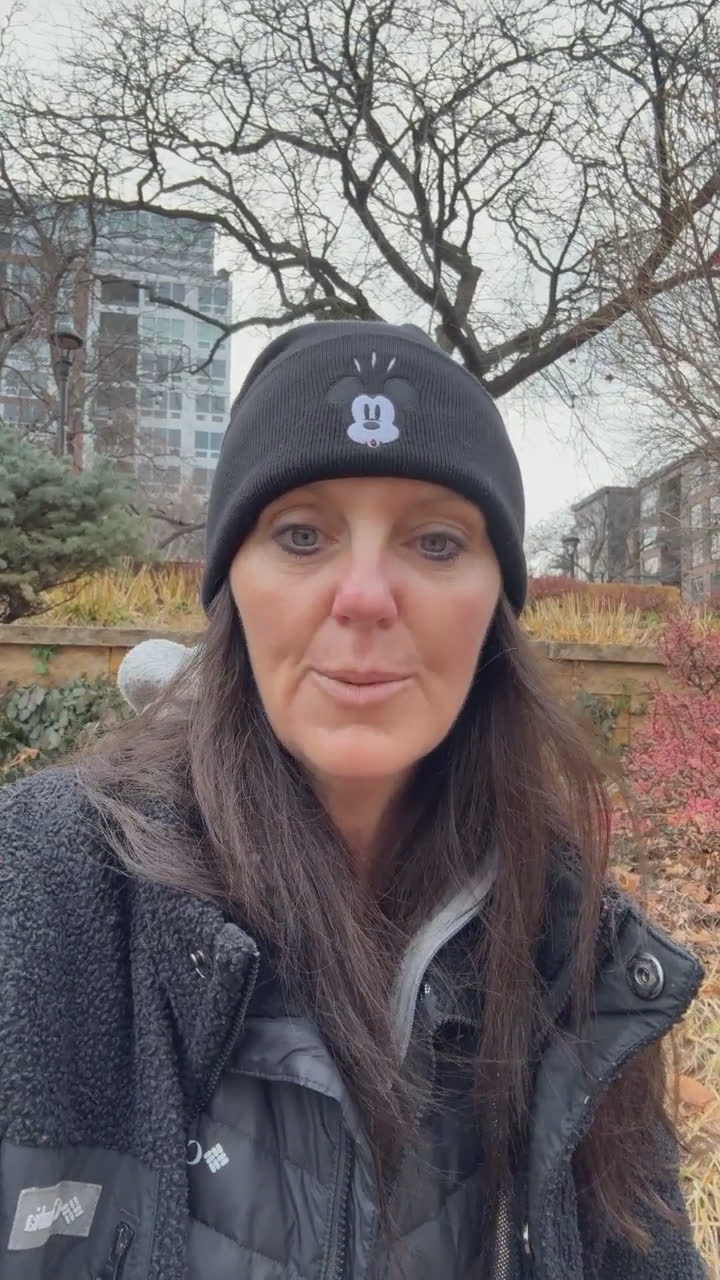
A walk-and-talk on leading with authenticity that explores using curiosity in leadership and problem solving, with reflections on emotions, empathy, and practical prompts to ask different questions and open the mind.
Hello, everybody. Happy Monday. How are you today? As you're dialing in, I'd love you to type in the chat. One word, one to three words of how you're feeling in this moment today.
On this beautiful Monday, we're talking about leading with authenticity. Let's go to five words about how you're feeling right now in this moment. Speak wonder, struggling with big emotions. Are you a Gemini by Enix? Any chance your major's coming in hot?
Today I want to talk to us about curiosity. I use that word from a leadership perspective and a professional development perspective with great intention. When I'm having the most challenges, if I can come from a place of curiosity, it is a natural way for me to move forward.
So speak Wonder. Use questions in a way that help support you and challenge you. I like to use curiosity when I'm trying to solve a problem. If you're in Minneapolis, let me know. You can use curiosity for a lot of things.
This week's episode is about how to open up our minds. Use curiosity in a whole bunch of different ways. Be curious, go for a walk, ask unanswered questions. What parts about curiosity do you think you can try this week?
Hello, everybody. Happy Monday. How are you today? I'm out here with my supervisor checking out the landscape, taking some time to just enjoy the morning after some meetings in between meetings. So here we are. Good morning. Good morning. How are you today? As you're dialing in, I'd love you to type in the chat, even if you're listening on replay. One word, one to three words. I'll give you up to three words of how you're feeling in this moment today on this beautiful Monday. Good morning. Speak wonder.
Happy Monday. As people dial in, I'll probably shift and ask the question again. Also want you to make sure to know that my trusted supervisor is here. Major, can you say good morning? He's like, mom, we're almost home. Come here, Rachel. You sit. Yeah. So on this beautiful Monday, we're talking about leading with authenticity. And what I've asked as an invitation is if you're listening and you're not dialing or you're not driving, I would ask or invite you to type 1, 2, up to 5. I said 3. But let's go to five words about how you're feeling right now in this moment.
Speak wonder, struggling with big emotions. Are you a Gemini by Enix? Any chance your major's coming in hot? He says hello. He's sending you guys some love. So I mentioned Yesterday on my me time call that yesterday afternoon, 4 something in the afternoon was the Gemini, full moon. So when you say speak, wonder that you're feeling big emotions. It is a full moon season, and in this particular full moon feeling everything is, especially for people that are high empaths. So if you think of Myers Briggs, E.
Right, enfp, that's me. If anybody has an E in their Myers Briggs, you likely are feeling big emotions right now. That's normal. You can sense the energy of the world around you, the people around you. He's sitting now. Look at him. Isn't he cute? I can't get enough of him. So today I'm taking this call outside on our walk with intention, because I want to talk to us today about curiosity. Now, I use that word from a leadership perspective and a professional development perspective with great intention.
Think about all those kids that surround you. Or maybe you were that child when you were younger that asks a bazillion questions, why this, why that, why not this? Why not that? How does this work? Or maybe you were the child that broke everything and broke everything because you wanted to see how everything worked inside. Or maybe you're around kids today. Maybe your kids. Maybe you're around friends, kids, it doesn't even matter. We see them everywhere we go, which is beautiful and lovely. We hear their laughs, we hear their cries, airplanes, grocery stores.
But what I love about it is it reminds me to be more curious. And this applies to everything. So when I think about being in a brainstorm or I think about I'm trying to solve a new challenge, how might I use more curiosity to take a pause and ask different questions? We can ask questions around perspectives. I wore my Mickey Mouse hat today intentionally because, you know, sometimes we can jump into character and we can ask questions based on a Persona. We could change how we are seated or positioned.
The number of times that I will get down on the floor and sit with Major and just look to see what he sees is probably more often than I should tell everybody. But I sometimes he'll just lay under the table by the chair that I'm working at. And if I'm really struggling and solving a challenge or I'm trying to find the right words for communication that I have to right, Sometimes I'll just sit on the floor with him and I'll look up to see what the world looks like from his perspective because he sits lower to the ground than I do.
So how he sees a table or the under of a table or a chair or anything is going to be very different than how I see it. One, because he's a dog, and two, because of proximity. So I find that when I'm having the most challenges, if I can come from a place of curiosity, it is a natural way for me to move forward. And really, at the end of the day, that's what we're trying to do, right? So speak Wonder. You posted in here that you're struggling with big emotions. So if we use curiosity with that, you know, some of the questions could be, what are the emotions that you're feeling?
What emotions are waiting to be felt? You know, what emotions? Where do the emotions come from? Are they yours? Are they somebody else's? Like, I don't want to pick on you, and I don't expect any responses. Those answers are yours and yours alone. But it's a way to just take our experiences and start to explore them in a different way. I have an instance that I'll share with some of my consulting work right now, and they're going through a huge transformation. A lot of people are changing jobs. Some of their really close friends no longer have jobs.
And that's part of it, right? It's been like that for a long time. There Will be transformations and changes like that always in the future. And for the people that I. That are always left behind, I call them, good morning, Jules. I find that they struggle sometimes the most. And it's not because they, you know, it's not because people who lose their job that they're not going to struggle. They will. But they have a definite answer, right? They know that they need to find a job, and then they get to choose what steps come next for how they move forward through it.
For the people that are still employed at these companies, I find a lot of times so much more ambiguity. I was working with one of my leaders, and she's really struggling. She has a new position. 90% of her team is brand new to her. She's in a new side of the business that she doesn't know as much about, and she's straddling between her old job and new job. Not uncommon in these situations. But what is also happening is people around her are forgetting that we are a human first, then we're an employee, then we're a manager.
So if we think about that in stages and we use curiosity, the questions become, how are you feeling as a person? What emotions are you feeling? So when I ask her that, she says that she feels sad. She feels sad for the people on her team that no longer have jobs, for losing work that she loved to do and was really good at. Nervous to go into something different, uncertain if she'll be successful. So we start with curiosity first with ourselves. Check in. Check in with how you're doing. Use questions in a way that help support you and challenge you.
And if you don't feel like asking the questions yourself, phone a friend and ask them to challenge you. Or not even challenge, I think that's the wrong word. But ask them to check in with you and float some different perspectives your way. Then there's the challenge of being an employee, right? So that's her as a human, as an employee, the questions that she's struggling with, what do I do to be successful? What's expected of me? So we went through a list of questions, and then lastly, we went through a set of questions to help her identify what needs to be answered for her as a manager.
And those questions were, again, very different. But she could use the questions that we used for her as a human and employee, and she could take those questions and ask those questions of her team. So curiosity coming into situations with a curious mindset doesn't solve the problem, but it does open our perspective to find a new path. So that we can work through them either individually or together. Now, I like to use curiosity in additional ways. I use it all the time. Let's be honest. I like to use curiosity when I'm trying to solve a problem.
So think about that big, hairy problem that you're trying to get through. How might you look at it from a different perspective? I like to interject different Personas. So if I was major the golden retriever, maybe what, what would I think? What would I need to solve that challenge? Now, that might not work in every situation, so I'm being a little silly about that. But let's say I'm solving a problem on how to start a new business or start a new project. You know, different Personas could be who are my stakeholders?
Who are the people impacted by the idea that I have? If I was Oprah or I was talking to Oprah, what would she need to get through this work or this project? So there's many ways that we can use curiosity to help us. One, understand ourselves as humans, Understand how to solve human problems. Speak wonder, can you, Morrow Major for a day? I think you'd love that. If you're in Minneapolis, let's meet up. We'll make it happen. You can use curiosity for a lot of different things. So working through each of those different situations, using different Personas, using it to solve a problem, using it to build a business strategy, to start a new idea, a new company to manage people.
If you're very high task oriented, questions that you might consider are really around, what is our goal? What's our objective? What do we need to cross the finish line? If you're high people oriented, you might ask questions around the people that are impacted, or you might just start making a list of all the different people that you're going to go ask a bunch of different questions to do. Perspectives. So this morning, it's really just about. About how to open up our minds. And I started the call by saying I did this intentionally by coming outside.
Because what I like to do when I go for walks in the middle of the morning, especially during the day, and when I'm with Major, one, I try to see ahead of Major so there's food out there. I can get it before I can find it and divert before he does. But two, I like to see what he's attracted to and then look around it, look around me, see, you know, why maybe this color of this plant is that color in the winter. And I don't have to answer the questions. I could ask the question of why is this still a cobblestone brick?
Why is there divots in the bricks that I see over here and over here? What happened to cause that? So allowing myself permission to be curious about my environment and being comfortable with not having the answer and curiosity requires us to be comfortable not having the answer, but being comfortable and brave to ask the question and then refine the question. Last thing, I went to the science museum last week with a friend of mine. We took a daytime girlfriend date. We took two hours and we went to the science museum.
And I walked around the science museum with a notebook, and I literally just started writing pages of questions. I love going to museums with notebooks and pens and pencils and colored pencils, an actual physical notebook. And the reason why is there's something that happens chemically in our brain when we do the action of writing. And so I'll walk around sometimes, not every time, with a notebook and a pen and pencil, and I'll just start writing questions about a painting that I see. I am not as well educated around the meaning behind all paintings, but I love them.
So I'll write questions about them, or I'll write questions about the person who maybe created a statue that I was very curious about or even one that I didn't like. Like, what were they thinking? Doesn't have to be always things that you like. But then what happens next is they'll always have these cute little benches and I sit down and then I start to just bring. Brainstorm a whole bunch of ideas. And whatever the idea is, I just start to write it down because all of those questions somehow will inevitably create an opportunity for my brain to flip not always into a solution, but into ideas.
And I'll just start to capture them. And I am not a great drawer, but I'll draw things because even if you draw little symbols with words, your mind will remember that. So I use curiosity in a whole bunch of different ways today. If you're listening on replay, what parts about curiosity do you think you can try this week and commit to it a little bit this week? Is it with an employee? Is it with yourself? An emotion? Is it going for a walk? How might you use curiosity this week differently than maybe you have in the past?
And if you have questions about it, you want tools, type it in the comments, tag me or put it in replay Here. Down in the chat, I'll answer always so major and I. He's waving. Would like to wish you a happy Monday. Be curious, go for a walk, ask unanswered questions, and we'll see you soon. Have a good one.
Reactions and comments are for members. Joining is free and takes a minute.