Jules reflects on a multi-generational Thanksgiving in Arkansas, sharing family stories and observations about identity and appearance. Participants discuss working through family issues, boundary-setting and stepping away from fixer roles.
Jules Cadre was in Arkansas last week for Thanksgiving. Her father is from a tiny little town in Arkansas, Northeast Arkansas. She says she really love her family. Cadre talks about wearing pink after leaving office.
Jules Knox: I've worked through a lot of family issues over the last 35 years. He says sometimes the change we need to make is just not to be around them. Knox: There are invitations to growth embedded in my vulnerabilities. Sometimes you just have to stop going back.
Luke: My thing is I try and fix things by just not being a problem to anybody else. Jules: Is there anything you found useful for being a fixer, like setting the boundary earlier or understanding? Luke: There is a point at which I learn I'm done.
Gary Graves: I felt very comfortable and at home with my family. He says the family system installed a lot of the challenges he has. He hopes everybody had a great Thanksgiving.
Well, good morning, Cadre. It feels like it's been a million years, but it's only been two weeks. I was in Arkansas last week for Thanksgiving. Why Arkansas, you might ask. C. and was the mayor of Minneapolis, but. And grew up in Minnesota. My father is from a tiny little town in Arkansas, Northeast Arkansas, in Jackson county on the White river called Newport, Arkansas. And who is from Newport, you might want to know. Mary Steenburgen. Her family was from Newport. She grew up near there. But my grandmother was the first person to interview her and take her seriously as an actor when she was on her way to New York.
And she has said so publicly. I'm not making that up. So that's what I know. And I had not been there in many years. My father is the oldest of six. He has five brothers and sisters, four of whom are still living, and all their spouses are still alive. That's a very grim way to put that, but you know what I mean. Like, everybody. And they all gather at my Aunt Cindy's house on Thanksgiving Day, along with my cousins. There were, like, 40 people there. And Gary went with me. My husband went with me.
He'd never been. And he met my family. It was great. And I had to sort of nudge him as we were driving up to Aunt Cindy's house and say, I think you'll find that we all kind of look a little bit alike. And he laughed later and said, yes, indeed. We all have a certain look about now. I look a lot like my mother, but I have my. The eyes from my hodges side of the family. Good morning, Jules. I'm very happy to see you here. I'm talking about seeing my family on Thanksgiving. And I really love my family.
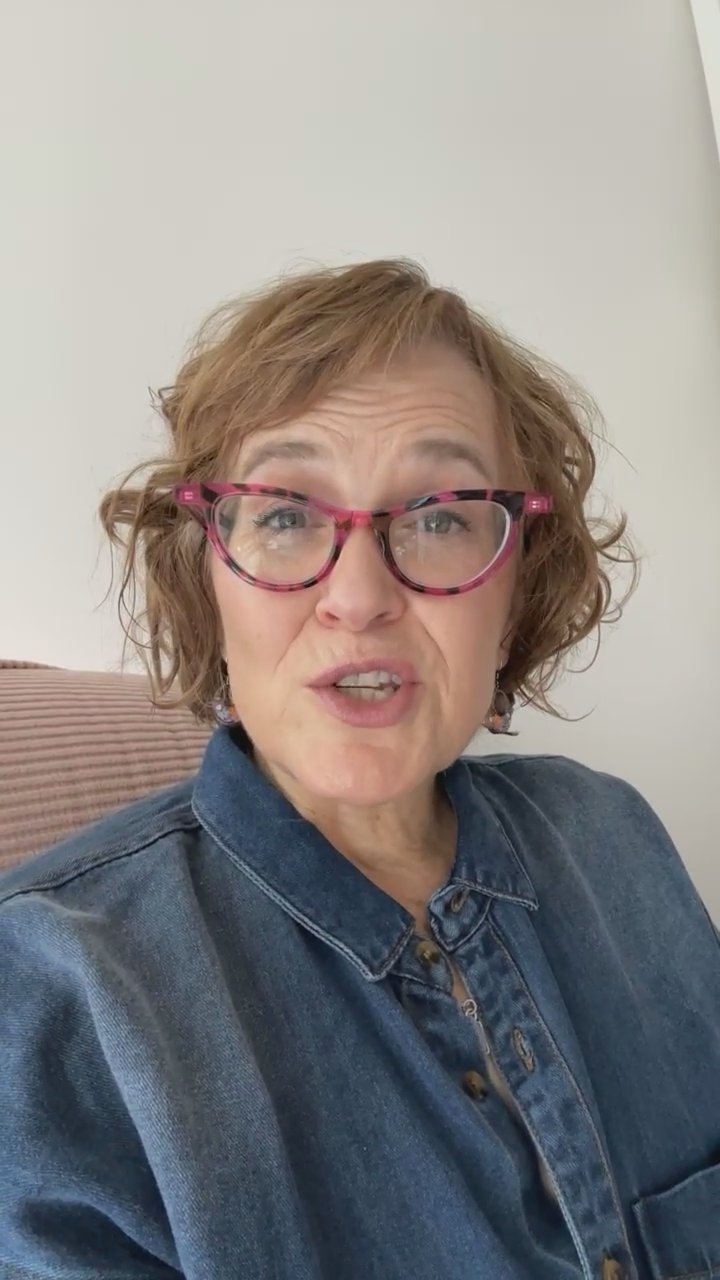
I used to go to Arkansas every year. My cousin Lynn was my best friend. Coming up. Thank you. I like these glasses, too. They're pink. I wear a lot of pink once I left office. Women who are running office are not supposed to wear a lot of pink. And because studies show that, like, it actually does have an impact on how people view us. And now that I'm no longer in office, and I love pink so much. I mean, you can see it's around me everywhere, all the time. I have a lot of pink now. So I was there with my family.
My father was not there. You know, he was in Minnesota with my brother and his wife. But, you know, we got on the phone, of course, and he said hi to everybody. These are people I grew up with. And I love them very much. And I'm an adult. You know, I'm 55 years old. The youngest aunt is only 15 years older than I am. And we could have some conversations about life that we couldn't have when I was a kid going there, you know. Hello. Speak, wonder. Welcome. I'm so glad you're here. So I'm thinking about family, and I'm thinking that a lot of people were just with their families for the holidays.
And, you know, I've worked through a lot of family issues over the last 35 years. You know, hello from sunny Colorado. C. here. I'm so glad you're in Colorado. Where are you, Jules? C. C. our families are the place where we earned our challenges a lot. And our families are the place where we earned our boundaries, whether we, you know, for good or for ill. And so I just remember having done so much healing work, I could return to my family, you know, either my nuclear family or my extended family, but mostly my nuclear family on holidays.
It's like anything I learned or any of my progress went right out the window. Because, of course, the people who installed the vulnerabilities were the people poking the vulnerabilities. It's like a perfect match between your vulnerabilities and your family most of the time. And. But I kept going back, you know, I moved back, for crying out loud, to Minnesota. I was away for graduates, for college and graduate school, and I moved back to Minnesota, like, on purpose, which I never thought I would do, and just kept getting back in there and practicing what I was learning and practicing boundaries.
And everybody else was growing up, too. My brothers were growing up. My parents were changing and growing. And some people's aren't. I will just say that right away. Sometimes the lesson you learn from returning to your family and going in and figuring out that you're just so vulnerable to whatever they're slinging because they're the ones who created the vulnerabilities. Sometimes you just can't. You just have to stop going back. Like, discretion is the better part of valor. Some people can't grow, or they can, but they're not.
You know what I mean? Like, the conditions under which they would be able to grow are certainly not going to be met. Created by us. Right? One of my rules of engagement. If the solution to my problem is someone else changing, then I have incorrectly identified the problem. Because at a certain point, like, we don't need. Well, at the beginning point, but we don't understand it. It takes a while sometimes to learn that we don't need our family to change. We need to change. And sometimes the change we need to make is just not to be around them, is to make the decision that the cost of engagement is too high.
And that is true for some people. And you. You know, it takes work to figure out where that line is. Because of course, part of the vulnerability that a lot of our families, that our lives have installed is this belief that we should just keep trying and that if we just did it right this time, it would be okay, you know, or maybe if I twisted myself this way or twisted myself that way, it would all be okay. And what I found was that there were invitations to growth embedded in my vulnerabilities and in my family system, there were invitations to growth, like me having more compassion, more kindness and learning boundaries, which are a form of compassion.
You know, boundaries are kind. Clearness is kind. John Acuff says that a lot being clear is being kind with people. And of course, as we talked about before, a boundary is not, you have to do this or I won't be okay. A boundary is, you can do what you want, but if you do this, here's how I'm going to respond. If you do that, here's how I'm going to respond. And then holding to that boundary, that decision of how I'm going to respond to things, lots of invitations to growth, but also lots of invitations to double down on my own behaviors and challenges.
Like, I'm trying to think of a good example in my own life. You know, my brother John, when he was younger, he's less so now. Right. Because we've all. We've all, it turns out in my brothers have really are remarkable men, and they've really grown a lot in their lives. When he was younger, my brother really liked to argue, which is actually not an inherently bad thing. But given my relationship to argument, I just. I could argue with him. Right. It's a Hodges family trait to just argue real well, like nuclear family Hodges.
I don't think the Arkansas Hodges argue as much, but. But I realized in my 20s, I could either argue with him or I could be close to him. I just couldn't do both. I just could not do both. He was very conservative. Still is, like, not as conservative as he was then. And I don't think he'd mind me saying that we both agree that perhaps the current president is not ideal. I'm not trying to start arguments here, but I'm just saying he And I agree on that. But he's very conservative coming up. And so I stopped arguing with him in my 20s because I wanted to be close to him more than I wanted to argue with him.
And, yeah, you're a fixer, so you keep going back. Right? But of course, we keep going back to the people who made us fixers in the first place. Right. You know, that's the funny part. So, you know, my family made us all have this relationship to arguing, and this idea of perseverating in an argument is a very big thing for my childhood. So I stopped arguing, and he got mad. He got mad that I wouldn't argue with him because he just really wanted, you know, and he's not like that anymore. But he was when he.
When I was in my 20s and he was in his early 30s or whatever. But we stayed close, and we have remained close through thick and thin for the last 35 years now, since I made that decision, which I'm really, really grateful for, it meant that when he was going through some struggles, I could be someone he turned to, which I would not have been if I had let the arguing fester. It wouldn't have sat with him, but it would sit with me. So, Jules, is there anything you found useful for being a fixer, like setting the boundary earlier or understanding, like.
I feel that that whole idea of being a fixer. My thing is I try and fix things by just not being a problem to anybody else. So I don't advocate for myself or speak up for myself or share what's going on with me. That was my brand, sort of my flavor of fixing. It's just, I don't want to be a problem for anybody. I mean, that got me in a lot of trouble as a kid. You know, by the time ill intended adults got hold of me, I didn't want to create any more problems for my parents than they had already.
So by the time I knew I should talk about what was going on because it was clearly that bad, I also knew I could not talk about what's going on because it was that bad. So, yeah, that got me in trouble. But what I find from my end of being a fixer is taking. I practice taking risks, sharing information that was less consequential, and even that made me feel a little panicked. But feeling those feelings and noticing that things were okay and sticking with it and having therapists and things and folks at Cadre would be great for this to say, I tried this, and here's what happened.
So. But there are especially in romantic relationships, I would just stay too long. I would invest too much too soon in unworthy people. And then just once, I had the sunk cost, I'd try and stay. And one of the things I learned in. Good morning, Luke. Welcome. We're talking about family. And like that, family is the place where we learned our vulnerabilities. So hanging out with them last week might have poked some of those vulnerabilities pretty hard. Jules. I tend to hit a threshold, so to speak, and realize what's happening and then turn internal and create a plan.
Exactly. Healing doesn't mean I don't get hooked. Healing means I. I realize earlier in the process that I'm hooked and I take care of it sooner. Like, I can disengage and then course correct or create a new course, even if I'm hooked. And then I try the new thing, and the other person gets mad because, of course, when we change, other people are invested in the status quo. And so sometimes when we set new boundaries with people, they get mad. And then I would get hooked by the fact that they were mad.
Like, that works. They do it because it works. Right? And I do it, too. I've done it myself. I'm not trying to exempt myself here. And then they get mad, but then I try again. You know what I mean? It's an iterative process. Growth is not, oh, I learned something, and then I perfectly executed what I learned, and it was never a problem again. It's, oh, I have a dawning realization. I try something, it works, but not quite right. So then I try it again the next time, or I just extricate myself. There is a point at which I learn I'm done.
I'm just done. This isn't, you know, this can't change. I have done my part to grow and change myself. And that growth has led me to understand that until other people are in a spot to grow and change themselves, we've sort of reached the limit of useful interpersonal interaction. Is that a very diplomatic way of saying that? I think so, yeah. I guess I just wanted to talk about family because I was with my Arkansas family. And it was great. I have to say, it was great. I felt very comfortable and at home with my family, which is intentional.
My Aunt Cindy is very much responsible for a big chunk of that because she sends out a list every year of all of our emails and addresses. She sends birthday cards, and she creates this gathering spot in her home, and everybody knows that we're welcome. If I haven't been there in five years, and I was. And they were all delighted to meet Gary. I am blessed in that way. That is a blessing. That is a blessing. And not everybody's so blessed. Right. There have been points in my family where I just couldn't.
I didn't have enough growth to meet my family where they were at, so I had to do my work. But then eventually I could reenter, and it was actually fine. It was just fine. That's ongoing. Because, again, as I said at the beginning, that family system installed a lot of the challenges I have. So going back into it, I'm going to be very vulnerable. That's, like, perfectly set up to hook me. So I hope everybody had great Thanksgiving, that if it was hard in spots, that you learned a lot from the ways it was hard, and if it was great, I hope you reveled in the greatness of it.
And if it was mixed like it is for most of us, I hope you got the best out of the best and you got the most growth out of the worst of it. So I'm so glad to be back. I had a whole month of travel in November. All of it was fruitful and good, but I am exhausted and delighted to be back here with you, and I will see you next week. Cadre.
Reactions and comments are for members. Joining is free and takes a minute.