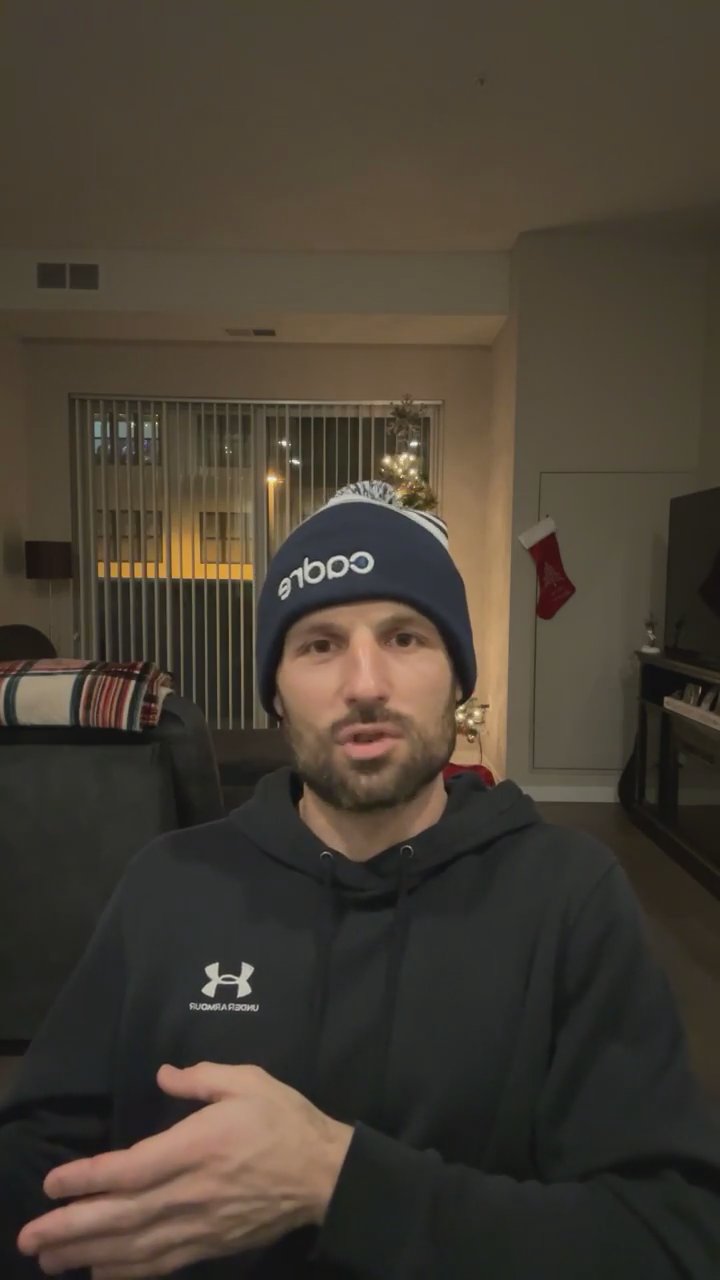
Jason Lennox reflects on staying grounded in recovery, exploring how people can forget where they came from, how ego and pride can creep in, and why storytelling, gratitude and service help keep perspective.
Jason Lennox is your resident recovery champion. Here to share with you all things about recovery, mental health, well being. Great to see you here. Sherry as well.
How do we stop ourselves from getting stuck and forgetting where we came from? I believe that people in recovery to an extreme, we have. one of the best forgetters in the world. There's something psychological there that really makes it a little bit different.
Same thing can happen in recovery, though. How do we not let the ego, the greed, the pride, all those things get to us when we start to achieve some level of success?
Sherry: I don't want to get to this place where I somehow think I need bigger, better, faster. Instead, I tell my story, and I get to relive my own story. Sherry: The storytelling is key. We continue to share our journeys because it keeps me grounded.
When I can be grateful for the things I have, I'm in alignment with who I am, with where I am. Service work always helps me on multiple fronts, but for sure, I get to see. The fulfillment and gratitude and gratification that comes with actually contributing to the world.
This week is a recovery anniversary and I think we should all celebrate them. 14 years ago is when I had my final overdose and landed in the hospital. But again, it's because of the people in my life and all these principles and practices that I get to do that. Hope you all have wonderful weeks.
Good evening and happy Sunday to the Cadre sphere out there. Happy to be with you. My name is Jason Lennox, and I am your resident recovery champion. Coming to you from Hopkins, Minnesota, where it's a little bit, actually a decent weekend out. It got up into the mid-40s, maybe even hit 50 yesterday. But here to share with you all things about recovery, mental health, well being, and really just excited to share with you tonight because one of the things I was having a conversation last week, a couple different times actually came up, so thought for sure it was.
It was worth sharing. Good evening, Jules. Great to see you here. Good evening. Sherry as well. Love having the crew here, but a couple conversations that I had where a theme kind of came up, and that theme was how do we keep ourselves in check? And what do I mean by that? How do we. How do we stop ourselves from getting stuck and forgetting where we came from? So problem that I want to talk about is I believe that people in recovery, really all humans in general, but people in recovery to an extreme, we have.
And I'll just say for me, I have one of the best forgetters in the world. What do I mean by forgetter? I mean both in my addiction and when things were really bad, I forgot where I came from. I forgot what it was like, you know, in treatment, they told us, well, just play the tape through. Just play the tape through. Remember what happened last time. Remember what's gonna happen if you pick up the drink, if you pick up the drug and, you know, just go there mentally so that it prevents you. And actually there's.
There's language in the anonymous programs in the literature there that says we really don't have that ability. And there's evidence to prove that. And the fact that I went to jail more than one time, I had more than one dui. I lost more than one job to drinking. I lost more than one relationship. And, you know, if playing the tape through is enough, my point is we would only do things. We would only do things one time. When I get behind a wheel drunk, I would remember what it's like to have to pay $1,500 to lose my license for six months to go to jail.
I don't want to deal with any of that. So we, we like, for some reason, that capacity to think about that. Like most problems that we would encounter. If we're going to run a red light, we get in an accident. Next time, we're probably not running the red light. We should be running red lights anyway. But you get my point now. Addiction there's something psychological there that really makes it a little bit different. So that's what I mean by the forgetter there and again, my life over and over and over when the, the time mattered and when it came to do I pick this up, do I not?
The mental capacity was gone and of course I fell to the disease over and over and over again. Same thing can happen in recovery, though. So this conversation I was having, the last one Friday, was really about like, how do we keep ourselves in check and how do we not let the ego, the greed, the pride, all those things get to us when we start to achieve some level of success? Because hopefully we do. And even if we're, you know, I get to do business and I have all these different things that I've been able to do, but anyone who gets into recovery and gains some long term recovery, there is that risk.
Because people love the underdog story. And so we're gonna be, we're gonna have the cheerleaders, we're gonna have the people going, yes, good job. Go you. Way to go. You did this. All these things. And it's easy for us to kind of get caught up in that and take that in and let that get to my head. So. And you know, I'll give an example. I was, I was driving to a hospital one time, this was probably 10 years ago, I did these events at children's hospitals. And on my way over there, I was probably six years into recovery and I was just thinking about my problems at work.
It was frustrating. My car, I had to do something with that. I just had a number of things that were coming up and I was starting to slip into a bad mental space. And I get to the children's hospital, I see the kids running around with cancer is potentially terminal. And these kids are just happy as could be, free as could be. So it's an important lesson. My point in that is it's easy for us in recovery to get caught up in the day to day of life and start to think that, like, we need a little bit more, we need a little bit better, and not remember that the very problems that I just described to you when I was on that drive over were things that I only could have dreamed of having when I got into recovery.
I wouldn't have even believed you if you told me I had those things. So we have that ability to forget where we came from and let that stuff start to get to our head. Like, somehow this is me. And, you know, we all put in the work for sure, but it's it's, it's a slippery slope to go down this path and start taking all that into my head. So that's the problem, I think. And I want to talk about a few things that I do, at least practically to combat that. Because again, I don't want to get to this place where I somehow think I need bigger, better, faster.
It's easy to do when we achieve some level of success again. So a few things I do. One, I have a close circle of mentors. I actually got a life coach. I've got a business coach, therapist. I've got people in my life that can help keep me in check and realize and really attached and driven by my values and none of the rest of that stuff. So that's, that's one thing, it's very important. And again, I've said this too many times to too many people. I recommend that every person on this planet has some kind of mentor coach, somebody that can really keep us on the right path and keep us connected to who we are at the core, driven by our values, our morals and our ethics.
So that's one way. Second way is I'm very fortunate that I get out and I tell my story a lot. And because I do that, I get to go through again. And I would love, as you guys are listening here, to drop in the chat things that you do to keep that pride, that ego, that greed kind of at bay. I would love to see some comments here and I'll incorporate them. But I get out and I tell my story and when I do that, I get to relive those experiences over and over and over and I get to remember where I came from.
I used to go to meetings early in recovery and people used to say, I really love when the new person comes in and they're struggling because I get to look at that and go, that's what it's like to go back out there. And it used to drive me crazy and it still drives me crazy because I should never have my recovery and a level of like, satisfaction with where I'm at based on somebody else's pain, period. Like, I will say that until the day I die. I disagree with that wholeheartedly and fundamentally.
I should not be looking at other people and going, oh, I'm glad I get to see these people suffering because it reminds me of where I came from. That does happen. We do get reminded. I mean, that's helpful, but I like, that should not be the reason. And what I base my own recovery and my well being on Instead, I tell my story, and I get to relive my own story. When I do that, I get to walk through the kind of the valleys and the peaks and the ebb and the flow of everything that happened for me. And it reminds me that, again, I was just a little kid wishing I could have X, Y, and Z.
I got X, Y, and Z. That wasn't enough. And I wanted X, Y, and Z again at a different level, more and bigger and better. And that just fed my addiction. Agreed. The ego, pride, all the things. Again, I can do that in recovery as well. So I have to be very careful. And again, so telling, number two, telling my story, we can do that. We don't have to be out speaking to a bunch of different places. It's sharing in meetings, it's sharing with the people in our lives. It's writing, it's journaling, it's putting out on social media.
Whatever the case might be. We continue to share our journeys because it keeps me grounded, and that's what it was like for me, and I don't want to go back to that. So that's number two. Number one. Number two. Sorry. Number two, I have the story. The storytelling is key. Number one, I have the people in my life. Sherry says she attends meetings and sharing each other's perspectives and struggles helps understand and appreciate where I am. Yes, again, that's the sharing and the stories. Being around other people and kind of getting in the middle of that.
Jules is saying you talked about what she saw when you were in a downward spiral. Yeah, it was. And it's not always easy to talk about those things. But again, for me, it reminds me that's where I was. That's where I came from. So critical number three, maybe the most important. Talk about this a lot. Again, this is something I will always preach about gratitude. If I can keep myself in a place of gratitude, there's a very small chance of me kind of spiraling backward into that life. And why? Because it's when I can be grateful for the things I have.
I don't want the next best, biggest, fastest thing. And when that is the case, I'm in alignment with who I am, with where I am, and there's not that discord. So that discord, that disconnect, is really what drives a lot of pain and anxiety and just a lack of alignment for me. And we always try to close that gap with something, whether it's chasing the big, best, fast, fastest, or we end up turning to things that soothe that pain. And in service, work yes. The 3,000 acts of kindness is a huge event and helping other people.
So gratitude services, and I actually believe that service sometimes like this, Sherry, is a representation of gratitude. This is gratitude playing out in an action when I get out. And I'm willing to help other people because I'm grateful for the ability to do that, but also where I'm at in life. So gratitude, gratitude, gratitude. And again, you may have heard this, you may have not. I share three things every single morning. It's one of the first things I do that I'm grateful for and why I'm grateful for them.
And that helps me. And I try to live just. Just everything in my life, sharing my gratitude for people with people, to people. And then again, we can turn that into kind of next level. This wasn't meant to be a fourth point, but Sherry hit the nail on the head there with service work. Service work always helps me on multiple fronts, but for sure, I get to see. I get to get out there. That's where I've learned, you know, I told you about the children's cancer, like, that's easy for me to go to an event like that and go, boy, if this person who's dying and they know they're dying, this child is running around happy and free, there is no reason that I can't be doing the same in my life.
I've got everything I need. I'm free of those kinds of illnesses. So there's. There's so much there that's one effective service work. But then just the fulfillment and gratitude and gratification that comes with actually contributing to the world is such a key component to just, again, coming back to a place where I feel like what I have in life is good enough. And if I can feel that way, if I can feel like where I'm at right now is good enough, there's a very small chance that I'm going to go back there.
Because again, all I was chasing for so long was to ease and soothe the pain. And the pain for me was coming from this is who I know I could and should be, and this is who I'm actually being right now. And that disconnect, that, that gap, it's so full of pain. All I could ever do to kind of ease that was, was find substances, drugs, alcohol. And of course, as I did more of them, it dropped me further from who I could and would and should be. So again, just to recap that one, like, I've got the people, I've got the close circle who can really keep me very aligned with my values.
I've got a life coach and that's what he does so well. He keeps me right there, front and center. Values every single week. That's what we're talking about. Second, I tell my story. I get that just storytelling is such a huge component because it takes me back through my journey. I get to live that. And after I do that enough, it's not so painful, but it is still a great reminder. And then gratitude was a third one and just again, finding ways to express that gratitude and actually share it. Because there's a difference between writing on paper and actually telling people what I'm grateful for.
And I love that second component of that. And then as Sherry added on here, which I'm grateful for, is the service work. Because that's just another way to keep me aligned with my values and keep me seeing how big the world really is. Because it is a big world out there and there's so much to see and there's so many people that need help and there's so much that we can and we need to do. So service work helps me see that and helps me again, stay connected to the values driven life that I want to live.
So those are the things I think that we can use to kind of fight that problem of we forget where we came from, the greed, the pride, the ego, all the things that naturally as humans carry. And we're constantly battling to make sure that they don't overtake us and put us in a place where we start to feel like we're bigger and better than others and we don't need to do this and we don't have to do this. I don't need gratitude and I don't have to do service work for others. And I start to take all this credit and turn into this big thing that I'm not.
So that's a problem, I think that many of us have and I've just learned again, some of those simple tools that, that help me keep it in check. And hopefully you can take one or more of those and continue to practice it. Really appreciate you guys chiming in and look forward to doing this again next Sunday. Hope you all have wonderful weeks and hopefully you're doing something fun. I should say in. In light of what I just said about the, the pride, the ego, the greed. This week I'm actually going to celebrate a big day.
It's a recovery anniversary and I think we should all celebrate them. And again, being mindful that like I'm celebrating this and you people, the people in my network, are the reason that I get to live the life I live. And so I don't get to take a lot of credit for that. But I can tell you, this day, 14 years ago is when I had my final overdose and landed in the hospital. Woke up the next day, and that was the beginning of an incredible journey. And here we are 14 years later, almost. So I'm gonna do that.
If you've got a day coming up, if you've got that, make that a big deal. I talked to someone last month, and she wasn't even sure she knew she had been sober for 20 years. I'm like, this is a huge deal. Come on, we gotta make this a big deal. It really is worth celebrating. But again, it's because of the people in my life and all these principles and practices that I get to do that. So grateful for you all. Hope you all have wonderful weeks. We'll see you back here to do it again in seven days.
Reactions and comments are for members. Joining is free and takes a minute.