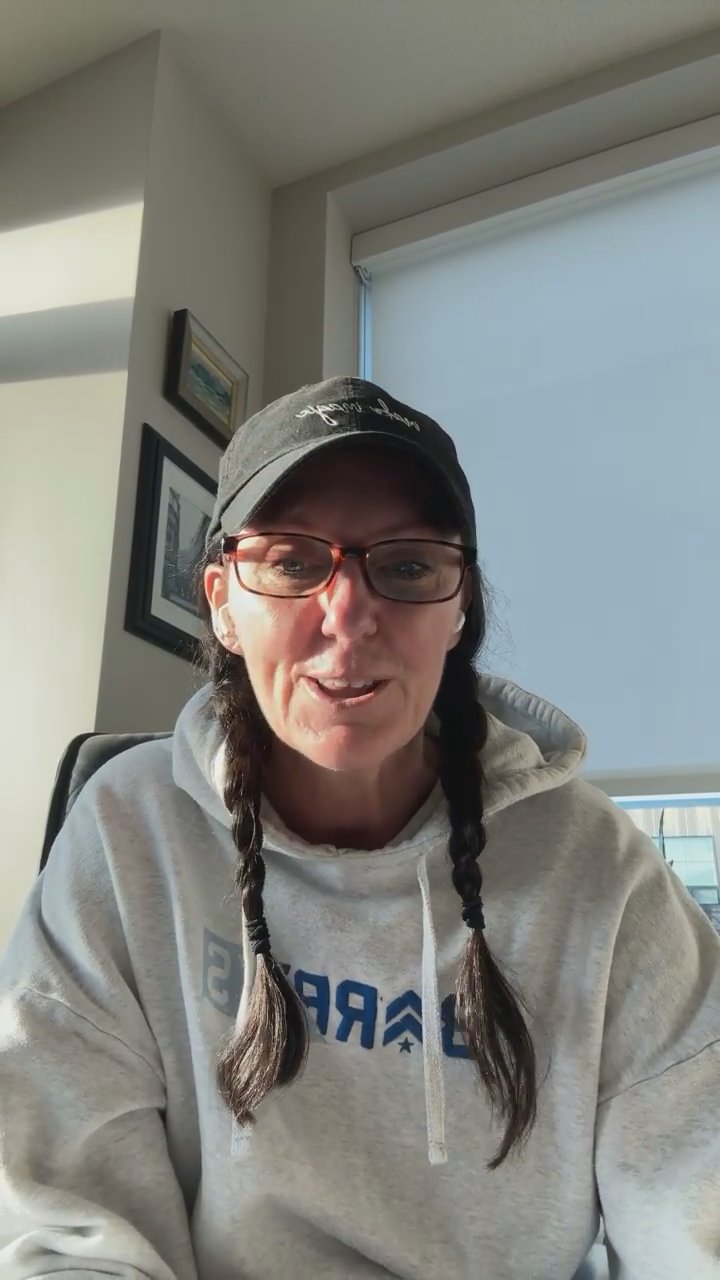
A Monday session about leading with authenticity that explores looking ahead while staying present, identifying what energizes or drains so one can lean into strengths and plan the week.
Jan Stewart is coming in again from Minneapolis. It's a beautiful sunny day in Minneapolis, but still sufficiently cold. Usually I am at 9am on Mondays, but I had to do marathon training today. Had to take a conference call and walk for a little while.
Today, Monday, leading with authenticity, I wanted to bring in a kind discussion around how we show up on a day to day basis, but specifically on Mondays. Tools or things that we can do help. Update to Kickstart our week.
Major: I like to look ahead in my week and see what am I looking forward to. This week I'm in the process of finalizing some details for a foundation that I'm working with. We're naturally drawn to do the things that energize us most.
An activity that can drain me sometimes is building out a plan. We want to know what's going to excite us and what we're looking forward to so that we can invest more time. What your manager, bosses and peers will see is the most engaged, energized version of you.
So it's really important for us if we're leading with authenticity in our own lives. Sometimes we wear a manager hat, sometimes we're an employee. We can wear all these different hats. But if we understand what motivates us and what drains us, then we can present our best selves.
If you have thoughts or comments, pop them in the chat. What brought you joy this week? What are you looking forward to? Let's talk it out. Have the best Monday.
Hello everyone. Happy Monday. It's a beautiful sunny day in Minneapolis. It is still sufficiently cold. However, you didn't sign in here for a weather report. So today I'm coming in again from Minneapolis. So as you join on in. Hello, Jan Stewart, how are you today? Hello. Speak. Wonder what's up. Always a joy to have you here with your words, your magic, your presence, your energy. How lucky am I? Thank you for adjusting today. Usually I am at 9am on Mondays, but I had to do this little thing called marathon training today.
And so I ran a really long way in cold weather. But I didn't leave soon enough and I had to take a conference call and walk for a little while. But that's okay. So today, Monday, leading with authenticity, I wanted to bring in a kind discussion around how we show up on a day to day basis, but specifically on Mondays. Tools or things that we can do help. Hello, Update to Kickstart our week. Now it's the afternoon. Depending on where you're located in the country or in the world, it's likely a different time of day than what I have here in Minneapolis, which is 4:00 or 4:00pm and so what I wanted to do is go on a little journey today of looking forward and being present.
Now that sounds like a dichotomy, right? Hello, ej, how are you doing today? But the reason why I wanted to put that out there today. And also Major says hello. He's always my supervisor so he's here with us as well. So looking ahead and being present. So when I think about looking ahead, one of the things that I like to do on Mondays in particular is I like to look ahead in my week and see what am I looking forward to. Like what's on my calendar, what are the things I'm looking forward to. And I really lean into my strengths and I try to understand why am I looking forward to that activity.
What is it about that particular activity that that really gets me excited. So if I think about something personal to me, I get to. This week I'm in the process of finalizing some details for a foundation that I'm working with. It's a non profit and they're hosting a gala this weekend in San Francisco. And I'm really looking forward to the gala being complete, but I'm also really looking forward to meeting some of the scholars. So this non profit focuses on scholarships for students, college scholarships for students who are coming out of the foster care system.
And I don't know of another nonprofit that is doing this work It's a family foundation. Speakwinder says hello to Major. He's always the highlight of the calls, but this foundation focuses on these scholars. And earlier in May of this year, I had just joined the organization and I got to fly to Boston and be at a graduation for one of these scholars. And this weekend, the two scholars that graduated their four year degrees are going to be presenting and sharing their stories and how the foundation made a difference to them.
So I'm really looking forward to getting to the gala and meeting all of the donors that have come in and meeting who they are, thanking them for what they do, and creating an experience with my team that can really generate and foster more donations so we can do more scholarships for more students. I also happen to be the mentor of one of the students that graduated, so I love connecting with these students. So I'm really looking forward to that. Now, that activity, if I break it down, I just told you a lot of information.
I'm excited about meeting with people. I'm excited about generating an experience that inspires people to want to give more so that we can create positive change from our students. And I love mentoring. So those are strengths of mine. I love coaching people. I love mentoring people. So the activities that we are looking forward to in our week, when we look ahead at our calendar, they tell us a lot of really rich information. It can also be where we invest the most amount of time, not because other things aren't important, but because we're naturally drawn to do the things that energize us most.
So it's really important that we can take that time to really invest in that. And how does that apply to us leading? It impacts everything that we do. When we are super excited about an activity that inspires us, motivates us, engages us, then we show up super excited. We show up collaborative. We show up in ways that let people feel the energy. If you're listening on the call, you might hear a lot of energy that I have about this particular event. Even though all of the action items we have to do this week and writing program details until 11pm do not excite me, the end result excites me of where we get to.
So the second thing that I like to do is I like to look at what are the activities on my week that are coming up that might drain me. So an activity that drains me. This sounds really silly and it's a super simple example, but it actually really drains me to have to invoice my clients. So I'm a consultant. It's what I do. But tracking time, creating invoices, all of those things should be exciting because it means I'm getting paid and all of the cool things that come with that. But literally, it is the most draining activity on the planet to me.
If you've ever taken the strengthsfinder inventory, it's one of the coaching tools that I use. Achiever is like number 33 or 34 on my list. It doesn't mean I don't get things done or I can't accomplish anything, but it literally means that the act of like creating to do lists or staying on track with a plan just. It's not my game. I'm not good at it. I can do it functionally, I can do it. I know I can. But it takes a lot of mental energy for me to have to make a list. So when I go to invoice, it's like I have to go backwards and make these lists of all the things that I accomplished.
And that's just a draining exercise for me. But here's why it's important that we know both. We want to know what's going to excite us and what we're looking forward to so that we can invest more time. There's. But also when we have the opportunity to choose on the landscape of activities that we do in a week and we know all of the things that really get us excited, then we can try to pack more of those into our weeks. So if you work for a boss or a manager or in a company, then you can volunteer your time, raise your hand to to do more of those activities, to get more exposure in those areas.
Because what your manager, bosses and peers are going to see is the most engaged, energized version of you and your outcome. Your product of your work is going to be at a heightened level. You're going to deliver your best product because you're really excited about that work. Now, it's important that we understand what's going to drain us so that we can identify a strategy around it. If we make on our list like a list of activities like invoicing, and I know that that is an activity that is de energizing to me, then what I can do is I can create a strategy.
First question is, why is it draining to me? Sometimes those activities that are draining to us are draining not because of the activity itself, but. But maybe we don't have a need to help us get through it. I'll give you an example. An activity that can drain me sometimes is building out a plan. Now, I mentioned that I don't like my own to do list, but I'm really great at building plans to help our team create a strategy or achieve a strategy. I'm really good there. I like that. But if I don't have all the information, I can't even get started.
And so I ask a lot of questions. I'm a high learner. I'm really strategic in my thinking and my thought process. I have high ideation if you've ever met me. I have a lot of ideas all the time. So for me to be motivated to create a plan, I need a lot of information. And it could sound like I'm asking a ton of questions. Really, what I'm trying to do is make sure that the plan fits the whole picture and not just one tiny piece of the equation. So it's understanding, why does an activity train you?
And then what's my strategy to get around it? So if I'm working on that activity, I'm working on invoicing or billing people, and somebody on my team at our spin studio calls me and they have a question. I might be really crabby when I answer that call, but it's not because they're calling me to ask me something. It's because I'm actually working on an activity that just requires me to invest a lot of energy. Because I just don't. I don't like it. I dread it a little bit. And so when I answer the phone, I'm like, hey, let me call you back in 10 minutes.
I'm finishing something that I'm not excited to do right now. And they're like, okay, cool. And then I call them back and they know I've set that boundary, that if they have to ask me the question in that moment, they know that I'm not being short with them. They know that I'm just working on something that is difficult for me to work on. So it's knowing that if I know the activities that genuinely drain me. And not every activity that I do is always going to excite me. I'm a rosy glasses person, but that's even too much for me.
So if I do that, what I can do is I can start to identify when do I have the most energy. Now, if I ask you that question, some of you might tell me first thing in the morning. Some of you might tell me after you do workout or go for a walk. Some of you might tell me after your morning coffee, and that's okay too. But if you can identify when you have the highest amount of energy in your day, and you can layer in some of those activities that drain you, you get to use that natural energy to help get you through the activity.
Or let's say you're someone with a strengths theme. You're, like, highly competitive, or maybe you are a high achiever. You like to make lists. Your motivation comes from crossing something off the list or checking that box. So if you get it on that list and you check it off, you're motivated to complete it. So it's really about understanding what motivates us, what drains us, and how do we create a strategy to do the things that we might not always like? Because, let's be real, we're not going to love everything that we do in our job, but if we can identify the things that we love the most and try to fill our time with more of that work, and then we identify the things that we dread the most, and maybe, just maybe, we can partner with somebody or wrapper it around a piece of time that we have a lot of energy so it doesn't feel so bad.
We come up with strategies. Now, what's great about that is I often will ask people to do a backwards look. And I drew this little picture here. It's really quick, and I hope the sun allows you to see it. But if you draw on a piece of paper, this tiny little circle that says percent of time. So 100%, 25, 50, 75% of time. And if you create a circle like that and you draw in the percentages of time and you draw an arrow somewhere on the circle, that tells me last week, how much time did you spend energized by the work that you did?
So for me, I'm going to draw a big old arrow right in the center here, and I'm going to be somewhere between 75 and 100%. So this is my new arrow that I just drew in here. So what that tells me is if I go back to last week and I look at all the activities that I did, and I can assess what brought me a lot of joy last week, because I was getting a lot done and I was really excited about all of the things, then what I can do is start to understand, week by week, what's changing, what's different? Because if that percentage starts to drop down into that lower quadrant somewhere between 25 and 50%, then I might need to make a change, either in my perspective in asking more questions, or just recognizing that maybe one week out of the month, it's just going to Be a hard week.
I used to work in corporate finance, so I'll give you a good, a good example. So in corporate finance, I would have to do month end work once a month and we would have to do reports and close out all of these, do all these analysises to reconcile our month, all of these things. I'm not gonna lie, there are people that are really great at that and I love you for that, but I can be good at it. But it was literally the worst week of the month for me. But when I was working in corporate finance, I had a really cool boss and so I would negotiate with her.
And what I did is I redesigned the entire process so I could systematize it. And by doing that, it allowed those number of days to be smaller. But then what happened is other people in other departments caught wind of what I did. So I negotiated with my manager that if I would get things done in a certain period of time and I would redesign the process, could I be a resource to go to teach other people how to do the same thing or build models for other departments to do the same thing? She said yes.
So I got to spend the other three weeks in the month learning about the rest of the organization because I got to build and design a whole bunch of new business models. And I was really happy at work. I loved my job. So it's really important for us if we're leading with authenticity in our own lives, in our own days. Sometimes we wear a manager hat. Sometimes we're an employee. Sometimes we're a brother, a sister, a partner, a friend, a leader, a follower. We can wear all these different hats. But if we understand what motivates us, we understand what drains us, then we can understand how we're showing up in our days and in our weeks so that we can present our best selves.
Because at the end of the day, isn't that what we want to do? Show up as our best, collaborate, do great work, be proud of the work that we do. I don't know. Food for thought on this beautiful Monday. You'd think that I had caffeine today. Instead, I only ran 20 miles. So I am definitely on the runner's high right before I go get a whole bunch of food. I hope you have the best Monday. If you have thoughts or comments, pop them in the chat. Let's have a conversation. What brought you joy this week?
What are you looking forward to? Let's talk it out. I'll also post some comments about our little grid that we just talked through. And if you don't want to pop it into the chat, you can pop it into the comments on the main page under leadership. Have the best Monday. We'll talk to you soon.
Reactions and comments are for members. Joining is free and takes a minute.