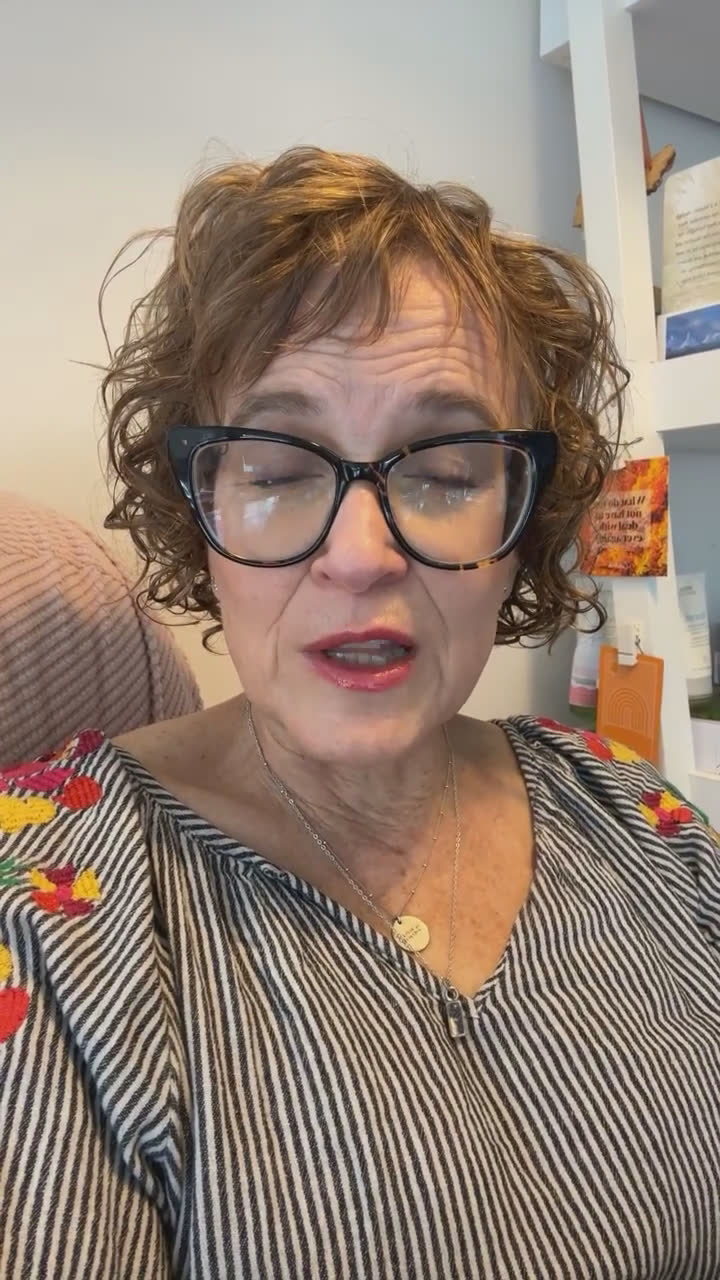
A livestream host reflects from Washington D.C. on the power of asking questions, explores why and how to use curious questions in relationships and recovery, and shares personal goals and regret-driven choices for everyday growth.
I live in Washington D.C. so you may hear helicopters going on above me. They are ubiquitous here. Given that we had a big event happen in the city here yesterday, down the street from my house, no less, then we're going to hear a lot.
Lukewarm Tuesday. The right question is sometimes more important than getting the right answer. Questions are also really important when you're pursuing an actual relationship with someone. So questions are important.
The question why is a little bit of a profound truth kind of question. When applied correctly to your life, to my circumstances, to what I'm facing. A genuine curious why is this happening? Is a very, very powerful question. I suggest asking why appropriately applied and how.
Most of my time is spent in upward trend activities of my choosing because my anxiety will stop me in my tracks when I get overanxious. My goal is to feel pretty good most of the time. That is the opposite of being anxious.
For me, success this year looks like just showing up to orangetheory Fitness a certain number of times. I would like to be able to lift regularly, do shoulder presses with 25 pound weights.
The question: What will I regret more in 20 years? The answer to that question has propelled him to run for office many times and run for reelection many times. He's started keeping a success notebook. Most of the time, it means taking the stairs instead of the elevator.
Betsy Walsh: What will you regret More in 20 years? Walsh: One of my traits is discernment, which I characterize as being able to see through time. Walsh: Even though I lost, I know in my bones I gave it everything I could and I have no regrets.
All right, y'all, happy 2025. We are in a new world here in D.C. and the world and the country as of yesterday. I'm interested and curious to see how this plays out. Thank you all for joining me and interacting.
Good morning, Cadre. I hope that you are doing well. It is Tuesday, January 21, 2025. C. so you may hear helicopters going on above me. They are ubiquitous here. C. going from the White House, going from the Naval Observatory, going from the Pentagon, going, which is in Arlington. But sometimes they fly over here, going to Walter Reed, all kinds of helicopters here all the time. But given that we had a big event happen in the city here yesterday, down the street from my house, no less, then we are going to hear.
We're going to hear a lot. Good morning, Anila, Welcome. It is a pleasure to have you here. So you may hear helicopters in the background is what I'm saying. You may hear helicopters in the background whether I like it or not. Today I want to talk about questions because asking the right question is often. Good morning, Luke. Welcome. So glad that you are here asking questions. The right question is sometimes more important than getting the right answer. Happy warm Tuesday. It is warm where you are, Luke.
C. it is below 20, which for us is very cold. Hello, Becky. C. so Mount Vernon Square neighborhood for folks for whom that means something, sort of near Dunbar High School for anybody who knows that particular. Good morning, Jules. I'm so excited that you're here. We're talking about questions here in a minute because I will say I am pretty good at questions. I am pretty good at questions and asking myself key questions in the right moment. And I think there's a few reasons for that. One, I've been sober in recovery for many years and I have had many, many a mentor and many, many a sponsor ask me key questions.
And as a sponsor, I have asked many, many spons or just people in recovery that I'm having conversations with. Questions are also really important when you're pursuing an actual relationship with someone. So that it's not, you know, back and forth monologuing, but instead an actual conversation is asking people questions and follow up questions. So questions are important. Questions are important. Now, I think I've already talked on here about the question why. I recently decided that why is a profound truth kind of question.
Niels Bohr, the scientist, said there are profound truths which are truths whose opposite is also true. And that's in the context of science. Light is a wave, light is a particle. You can't fully understand light until you study it from both things, even though they are opposite and mutually exclusive. I think the question why is a little bit of a profound truth kind of question, because why is an incredibly potent question when applied correctly to your life, to my circumstances, to what I'm facing.
A genuine curious why is this happening? What is going on here? Is a very, very powerful. It's one of the key indicators of true curiosity. And nothing beats true curiosity for growth. And why is the most pointless question you can ask about your life or about your circumstances when applied to why is this happening? Why me? What's going on? Why, why, why? When it's used to avoid accepting reality, we often ask, shake our fists and ask why, which is an important part of the process, I found. But living there is not a good look.
But we often ask the question why? Like that. When we want to avoid accepting reality as it is, or we're struggling to accept reality as it is. So why is a profound truth. It's the most important question and the least important question. What I've learned as part of my spiritual practice is to ask how. How do I accept this? How do I move forward? How do I learn this new skill? It's not clear to me I need to learn, you know, if I feel moved to something, how do I do it? I like how questions, and they have become a more important part of my spiritual practice in recent years, in recent months, even to that end.
So I suggest asking why appropriately applied and how. When you're tempted to ask why inappropriately applied. That's the first thing I wanted to talk about. About questions. Second thing, I have two questions that I want to talk about. The first I read in a book today. Just today. It came up the. It's. It's a novel. I don't know how to pronounce her name. It is a Gaelic name, and I think it's pronounced Vari, and it's spelled M H A I R I I look it up, but it's on my phone. Her last name begins with an F and you know, it's a romance novel, lovely romance novel, to be frank.
And the two main characters at the beginning are cooking up, hatching a scheme, as one does in a romance novel. And the one main character says to the other, what does success look like here? And that is not a new question, but I was reminded. Hello, Warren, Pennsylvania. You are not far from me. I'm not sure how long it would take to drive to your house or you to mine, but I don't think it's long. What does success look like? And that I have applied at work a lot. It's really useful when starting a project.
What does success look like? How do we measure it? Right. Everybody's worried about key performance indicators, etc. Etc. But I'm thinking about my life. What does success look like in the project I have around my anxiety? Took me a long time to figure that out. But it means that my definition of what I want my life to look like. I've learned that my life won't not have anxiety in it. But where do I want to head myself? What does success look like? Is that. And I've got it written on my whiteboard over there, which is why I'm looking over there.
My goal is to feel pretty good most of the time. That is the opposite of being anxious, right? And what that means to me is that the mean voices in my head are less loud, they are less frequent, and they are less lengthy. Meaning the recordings in my head that I get hijacked by either reliving old embarrassments or insulting myself or worry about the future, things are going to go badly in the future. That that happens less often. That when it does happen, those voices don't have the same potency and when they do show up, they don't last as long.
So that's step one, part two of feeling pretty indicators that I feel pretty good most of the time is that most of my time is spent in upward trend activities of my choosing because my anxiety will stop me in my tracks when I get overanxious. I get into freeze mode still, which, and we, you know, I've mentioned it here before, that when I get super anxious, I just slow down, right? And then, then the choice is not between I have to recognize this. I had to do this yesterday. The choice is not between doing the number one thing on my to do list and the number two thing on my to do list or the number one thing I think I should do and the number two thing I think I should do.
The the choice is between doing something and doing nothing. Between doing anything at all and doing nothing. That when I recognize I'm in a freeze state, which I do earlier and earlier and earlier in the process, that is my only choice. And then I pick the smallest thing I can figure out to do that is upward trend. And I think instinctively you probably know what I mean by upward trend activities of my choosing. It doesn't have to mean something super fun or whatever. It can be doing the dishes.
Anything that is by choice that is going to move my life in a good direction. Sometimes it's resting, sometimes it's reading my book. Sometimes it's whatever, but I have to choose to do it. That's what I mean by it. So I see that Becky has said that when a student or an employee or a child asks why, I do think we owe an explanation. Not because, not because I said so. That is a cop out. Agreed. Now, I used to be a nanny and there does come a point where a child asks. When a child's asking why? About something that's going on in the world or in our lives, that I agree with you the thousandth time.
A child asks, like why does the snail have a shell? And then you give an answer and then, but why is it like that? And then eventually I can say, I don't know. I try and be as honest as I can. There do come times when maybe my response was, I know you have a lot of questions and right now I just ran out of answers. And why don't we take a little break and in a half an hour you can ask more questions. Something like that. That gives me a break, but also respects their agency. So. But yes, why? Answering other people's why to the best of your honest ability.
Like if you break up with somebody, for example, Dan Savage talks about you don't want to shred people's ego on the way out the door. It's not you, it's not me as a wallpaper over something that you're not willing or able to say at the moment. Your mileage may vary. So that's a key question. What does success look like? Right. What does success look like in my desire to build my business? That is a work question for me. But what does success look like for my health goals, for my workout goals? Honestly, for me, success this year looks like just showing up to orangetheory Fitness a certain number of times.
It. And honestly, there's also I would like to be able to lift regularly, do shoulder presses with 25 pound weights. That would be great for me. I'm about. I'm at 20 if the rep counts low, 15 if the rep counts high. But 25, I'm heading to that. I do a lot of drop sets for people who are weightlifting at all or doing any sort of strength training. So the last question I want to bring up has been there's actually a third question that I would probably save for another live stream. But this question that I'm thinking of has been one of the most important questions in my whole life, and that is this simple litmus test.
It's a gut check for me. Usually when I ask It. And the question is this. What will I regret more in 20 years doing this thing or not doing this thing? The answer to that question has propelled me to run for office many times and run for reelection many times. It has spurred various decisions in sobriety, for sure. Getting sober at all, I think, is where I started asking myself that question, where do I want to be in 10 years? And I could only envision myself being drunk and smoking and miserable unless I did something different.
And that at least gave me the hope or the chance. So speak Wonder says success for me means taking the stairs instead of the elevators. Great. Always. Sometimes. Most of the time. That's great. It is great to know like at the end of the day, if you say, did I. What was my success today? It was like I took the stairs even just one time. That is great. I've started keeping a success notebook. At the end of the day, I write down at least one success from my day because when I do my review of the year, when I did my review of the year in November, I hadn't kept good enough track of my successes and it was really hard.
So this year I'm like, I'm just going to make it easy for my future self every day I'm going to write down. So most of the time, perfect. Most of the time taking the stairs instead of the elevator. You're a more ambitious person than I. I really struggle with stairs. Even though we live with a lot of stairs in our house, I can do two flights. The third flight is always the killer one for me. So this final question is so important. What will you regret More in 20 years? A key time I asked myself that question was at the end of December 2016.
I had already announced I was running for re election for mayor. I knew I was going to have significant opposition and I just One of my traits is discernment. If you look at the the six working geniuses of Pat Lencioni, my top strength for sure is discernment, which I characterize as being able to see through time. And I could just see how the year was going to go. I knew I was going to be attacked both for my political positions, but also for my personality and for my trauma responses, which I hadn't been open about.
People didn't know I was a survivor of sexual abuse, and so they didn't know that if they were attacking me for being calm under pressure, they were actually attacking me for having a trauma response. And also the sexism of criticizing me for being calm under pressure. Where with men that's considered a leadership characteristic was a whole other thing. The end of that month, I was dreading it. I was dreading it and I was just like, this is going to be so awful and so hard and no fun. And I did a few things.
I reached out to some of my mentors. A friend of mine, my beautiful friend, Rabbi Michael Latt said, well, Betsy, I was like, I don't know if I can do this. He said, I just want the world to see the person you are with my kids. I don't want you to have to play in the old boys game network game. I want, I want the world to see the person you are with my kids. And I'll get back to that in a minute because that was also key. But in that moment I also asked myself, what am I going to regret More in 20 years?
Leaving right now, I had somebody in mind that I wanted to run for mayor in my stead if I left. I mean, that's how much I wanted to not do it or doing my best running because I really thought I would win if I ran. I was wrong about that, but I thought I was going to win even though the year was going to be hard and I thought it would be worth it. So I knew in 20 years I'd regret it more if I didn't do it. And I was right. Because even though I lost, I know in my bones I gave it everything I could and I have no regrets.
So what are you going to regret More in 20 years? That's often a gut check kind of question for me. And just as a final note, when my friend Michael asked me, said that to me, I want the world to see the person that you are with my kids. My immediate thought was then I'm gonna have to tell my story publicly. That was the end of December 2016 and I then went on a four month journey to figure out how best to tell the world my truth so that I could speak more freely as myself in the world. Which is another story for another day.
But I also do not regret that because I took a lot of criticism for it at the time, but it unlocked my voice in a way that allows me to be here with you, let alone that allowed me to be my authent more fully on the campaign trail in 2017. So today was a day about questions. Why versus how, why versus why? And then why and how? What does success look like? And what will you regret More in 20 years doing or not doing the thing that you are working with and speak wonder if you're carrying a bunch of stuff, you opt for the elevator.
Fantastic. And then you surely do have discernment as a character quality. Yes. When I first heard Pat Lencioni talking on a podcast about the six working geniuses, I was like. And he described discernment. I said, that's me. I finally had a name for what I consider one of my best superpowers. I had. I had until that time been calling it Seeing Through Time, which I still kind of call it, because that's a cooler superpower name than discernment. But yes, thank you, Speak Wonder for noticing. All right, y'all, happy 2025.
C. and the world and the country as of yesterday and I'm interested and curious to see how this plays out. Thanks you all. Thank you all for joining me and interacting. It means the world to me to have you be here and I look forward to more. And pet your animals for me and say hi and give them.
Reactions and comments are for members. Joining is free and takes a minute.