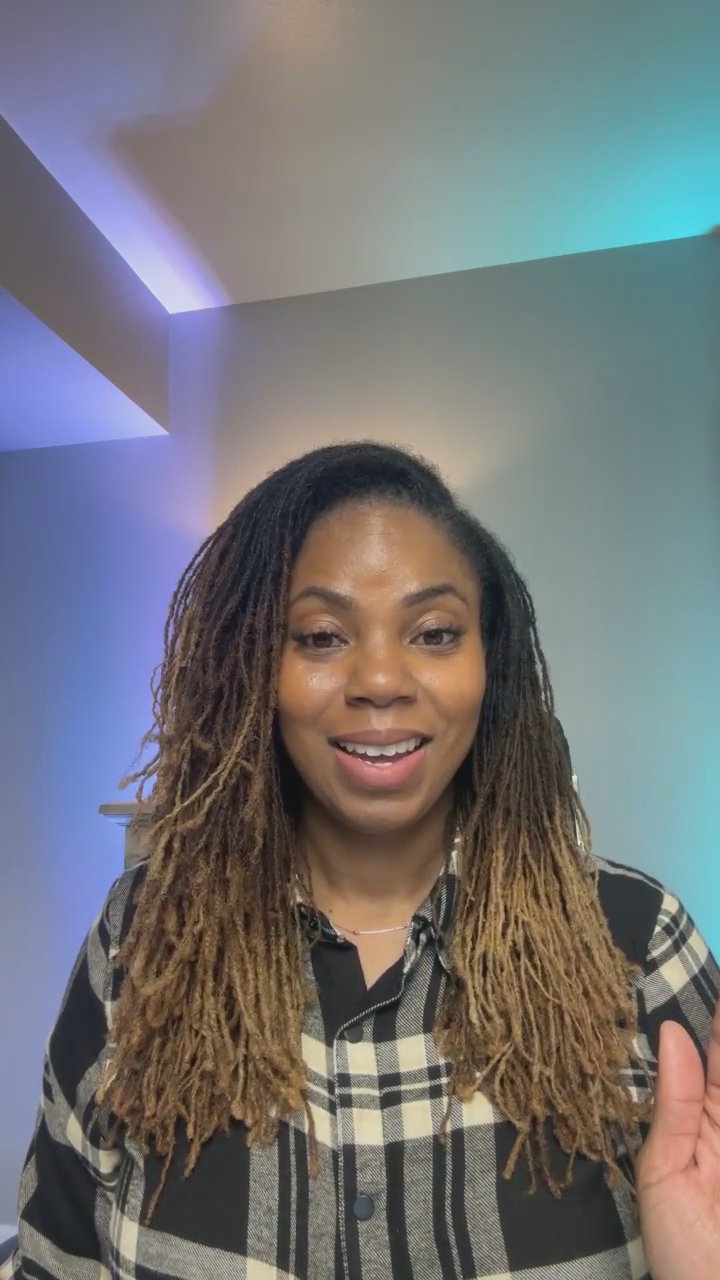
Rachel Logan explores the power of journaling and narrative writing, sharing a personal memory of rejection and guiding listeners to write raw stories, notice emotions, explore meaning, and reframe their personal narratives.
Rachel Logan is the get to the root counselor and coach. We are talking about the power of journaling. While we are waiting for our Cadre Spear family to join us, I'm gonna play one of my favorite songs which is India Irene called video. Let me know how you feeling today.
Hamaza: Have you guys been increasing your journal time in the month of January? By taking time and processing your thoughts, you are taking control. Have you noticed a difference with your mental health?
JC asked really great questions and he's just a really cool person to talk to. The conversation was about inner healing. And so inner healing ties into what we're talking about today.
In the video, I talk about an emotional injury that. One of my very first memories of rejection. It caused me to have a wall. That's why inner healing is so important to me. We have to pause and look at where. What's the source of this cycle?
Narrative writing is taking truth without judgment and not comparing it to what somebody else think about the situation. Don't censor your emotions. Explore the meaning. When you are writing your truth, emotions will come up. Give space for them.
So what emotions came up for you? How has this experience shaped who you are today? Don't let one experience negatively shape you forever. So write your narrative.
So write the raw story, explore the meaning, and reframe. Reframe the narrative where it's true and it aligns with your beliefs of who you are today. Drop your ideas in the chat. See you in February next week for another amazing theme and topic.
Hello, Cadre. Welcome, welcome, welcome. I give you a moment to come on in. Excuse me. While we are waiting for our Cadre Spear family to join us, I'm gonna play one of my favorite songs which is India Irene called video. It's an oldie like 15 years ago when she made this song. So come on in, join me as we are talking about journaling. The power of journaling. Hello, Shannon. Thanks for joining. How are you today? Hello. Be happy 2025 than. Thank you for joining. Come on in. We're listening to some music as I'm giving a few more minutes for those who would like to join at this 11:00 hour of getting to the roots.
So let me know how you feeling today. I just wanted to play an oldie, you know, like he got that song that you used to listen to when he was a teenager are just younger that just like helped you through. This is my song. This is my song. So while we're waiting, I'll give like a few more minutes. Drop in the chat. What was one of your favorite childhood songs that got you through? You know what I mean? Like on the bad day, on a rough day, on a good day, you can play it and just jam to it and just feel so good.
So my favorite artist as a team and still is is Andy Iri. Yes. So whenever you tune in or chime in, I was trying to say two words at the same time. Drop in the chat. What is your favorite childhood song? That was just your jam that you had on repeats. Okay. This was my video by India Irene. So what is your favorite jam as a child? When you as a child? So I'm so excited. This is the last week of January. Can you absolutely believe it? I'm like, what? This is the last week of January? It is. The earth is turning, y'all.
That's all I can say. The earth is turning and life is going and moving. And I hope you are feeling well. Hello. Enlo. Welcome, welcome. Well, I am Rachel Logan. I am the get to the root counselor and coach. I live here in Illinois. And I'm so excited that you have decided to join in today as we are talking about the power of journaling. Okay, so the analogy about journaling is it's like that messy closet or that junk drawer that everyone has. I have two. I don't know how many y'all have, but I have two.
And it just a combination. Pins, crayons, batteries, plugs, outlet. It's just a junk drawer. It's just like a random drawer that has Everything in it. It's like that one place where if it doesn't have a home, it goes in there. Random cards, you know, high speak wonder. And so we're seeing that journaling is taking time to open that drawer and take everything out and to begin to separate and to keep what's necessary and release what needs to let be let go of right. And speak wonder. One day I want to meet you.
I do. I really, really do. But we're talking about the power of journaling. And I'm curious to know, have you guys been increasing your journal time in the month of January? Because I have. I've been journaling almost every day. Rather, this is my journal. I'm almost to the end. I'm almost to the end. This is not from, like, January. Y. This haul is not from January. But I'm almost at the end of my journal and it's almost time for a new journal. So that's always exciting. But I'm curious to know, have your journaling been increasing and how have you noticed a difference with your mental health?
Because by taking time and processing your thoughts, you are taking control. Sometimes when we are dealing with anxiety or feeling depressed, sometimes we feel like life is out of our control. But the power of journaling is taking your thoughts in control by processing them and journaling them. Hello, Hamaza. Welcome, welcome, welcome. I hope I said your name correctly. So. But before I dive in and get started with today's topic about the power of journaling, I wanted to acknowledge the interview this morning.
So this morning I was so blessed to be interviewed by JC his soul is so beautiful. It is. He. He is genuinely authentic and he is passionate about Cadre. And so what's up? What's up? And so if you have a chance, go back and watch the video. It was really great. He asked really great questions and he's just a really cool person to talk to. He's so laid back and. But the conversation was about inner healing. And so inner healing ties into what we're talking about today. Okay, so inner healing is taking time to pause and surprises any injuries we've had emotional injuries.
I mean. Okay, emotional. And so in the video, I talk about an emotional injury that. Awesome. Awesome. Thanks. Speak wonder. In the video, I was talking about the very. One of my very first memories of rejection and how I didn't realize that moment shaped how I interacted with people. It put up. It caused me to have a wall. Yes, he is. JC is the real deal. And that rejection cost me to put up a Wall. And I didn't know that until I'm older. And I'm longing for relationships, and I'm longing for community.
But because I have that injury of being re. As a teenager, early adult man, I'm not trying to get close to people. But so to me, I'm not gonna, you know, tell you everything, but tune in, okay? But my point is, that's why inner healing is so important to me. Because we have to pause and look at where. What's the source of this. This cycle? Where's the source of this injury? And so today, I want us to close as we talk about journaling. The power own narrative, the power of your narrative. So we've been talking about dreaming, your purpose, your goals.
We talked about trauma. We talked about how to journal to reduce anxiety. But your story is so important. Your version, your side of things is so important. And that's why, you know, here in the counseling space, narrative writing is so important because it's not looking at what somebody else did, how they responded. It is. It is only focused on your side of the story, okay? And so narrative writing is space where you are able to process the facts about what happened or what is happening. It's narrative writing.
So I have some. Some thoughts here, some components of narrative writing that I want to encourage you and to challenge you, okay? Yes. Narrative writing. So it is taking truth without judgment and not comparing it to what somebody else think about the situation. It's your truth, and it's not about what. How somebody else saw it or what they thought. Like, none of that, right? Yes. Speak, Warner. This is the time. So it is writing the raw story, okay? It's about identifying the significance of the event or challenges in your life, okay?
And you don't censor your emotions. You don't. I mean, you write it all. Listen, if it's some words that you might not want to speak out loud, give yourself permission to say it. Because I. I'll be honest. God is my Lord and savior. But I have wrote some words, right? Because I was frustrated or this made me mad, okay? So don't censor your emotions. Don't censor your words. Just allow it to flow. Describe what happened, how you felt, and how it affected you. Okay? So let's take this back. I'm pausing because I'm trying to think of a topic.
Just talk about today, present day, okay? I have nieces. I have nephews that are in college. This is threat that federal grants and certain types of grants and loans. All that stuff is being jeopardized right now, my thoughts is this. I had to journal. I feel afraid. What is going to happen to my nieces and nephews who are in college, who rely on federal grant and fafsa? I had to just pause. My narrative is, oh, my goodness, what's going to happen? That's mine. That's my truth. Okay. How is it affecting me?
It's making me nervous about my future. It's making me nervous about what's gonna happen to my nieces and nephews. Right. That alone frees me because I'm no longer wrestling. This is my truth, my narrative. Okay, let me give you another example. What's up, Luke? If I take the example from my interview today about the rejection, what happened was I was at an awards banquet. I was trying to fit in, and I said the wrong thing. And when I said the wrong thing, it caused them to flee. And I felt so alone.
And when I felt so alone, I felt embarrassed. I wanted to run and hide, and I did not want to talk to anybody. And I did not want to feel that feeling again of, like, being dismissed. That's my story. The emotions, when you write your narrative, will rise. Let's just be honest. When you are writing your truth, emotions will come up, but give space for them. Emotions are not bad. They're either strong or light. Okay, Strong or light, they're not bad. So as you are writing your narrative, I gave you two examples.
As you write your narrative, explore the meaning. Explore the meaning. So what emotions came up for you? How has this experience shaped who you are today? So you remember, I share. Hey with that rejection. It caused me to have to be distant and closed off to community. We're here at Cadre, baby. We. We all a community, right? So I had to do the healing in order to be a part of this community. I had to pause and go to counseling, right? I had to look at these emotions and say, I don't want that one experience to shape who I am forever.
I'm saying something that just blessed me, y'all. I don't want one experience to shape who I am forever. I'm going to say that to you. Don't let one experience negatively shape you forever. So write your narrative. What have you learned? Or can you learn from those experiences? Okay, we getting somewhere, y'all. This narrative, right, is going to be juicy. It's going to be fruitful and freeing for you, okay? So I'm gonna recap as we are wrapping up for the day. Write your raw story. Oh, speak. Wonder what is your epiphany What?
Oh, we write the raw story, explore the meaning, explore your own reaction and reflection, explore your own understanding, and make a resolve that those experiences will not shape you forever in a negative way. And so then now you get to begin. Now it's important that you take the time to see, what did I learn? What can I learn? Okay. And how can I reframe the scarred belief about self or about the situation to a more accurate belief about myself in that situation? Because when I was then, back then, when that happened to me, I decided I wasn't enough and I wasn't cool enough and I wasn't liked.
But that's not true, right? They just wasn't my cup of tea. If I got to work hard to fit in. Baby, I'm supposed to be there if you can't accept me for just who I am. Yes. Awesome. So write the raw story, explore the meaning, and reframe. Reframe the narrative where it's true and it aligns with your beliefs of who you are today. Okay. Narrative writing, it is powerful. It is freeing. And listen, if you need more promptings, you can go to Google and they say, give me example for narrative writing, how to start it, Give me language, or ask YouTube for a video on narrative writing.
A lot's gonna pop up. Okay. I've so enjoyed and speak wonder. Let that epiphany carry you on forever. Okay? Let it reshape, let it redefine. Let it set you free. Okay? So I hope all of you walk away today realizing, okay, my side of the story matters and I need to take time and explore it. Okay, so I'm gonna wrap up playing my favorite song. I hope you play your favorite song from your childhood. Okay. Because this one got me through. Play the song that got you through doing childhood, and I will see you in February next week for another amazing theme and topic.
Looking forward to it. And if you guys have ideas of what you want to get to the root to talk about, let me know, let me know. And speak one that says, I have a little book of journal prompts. Awesome. Yes. Awesome. Yes. Use your tools to help you do this. Okay? Use your tools, use your community, use Cadre. Listen. Drop your ideas in the chat. Share, share, share. Because when you share, you add value. All right, good people, I will see you next week. Take care and God bless. Thank you. See you next time, you guys.
Bye.
Reactions and comments are for members. Joining is free and takes a minute.