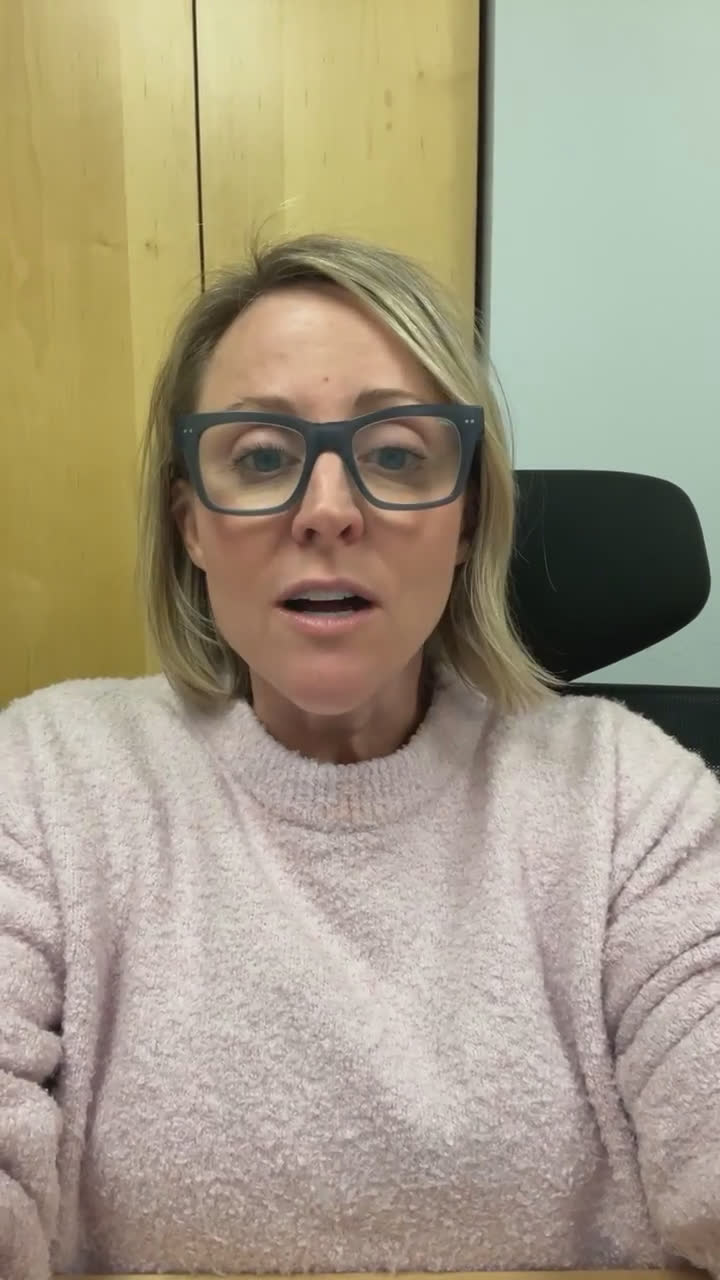
Shannon, Cadre COO, shares lessons from nine years of therapy and outlines five practical steps for moving out of survival mode. This session focuses on the first step, Knowing, with reflective prompts.
Shannon: Happy Friday. I am here today with my live stream, which is called How I Learned to Love Myself. The premise for this is I've spent nine years in therapy. I want to share them with you as a human. They might resonate with you, they might not.
Last week I shared with you what I have learned in my nine years of therapy. I've culled down into five practical steps that I used over time. The five steps include knowing, noticing, saying it out loud and practicing. This is one of the lifelong endeavors that over time, becomes your new life.
Five steps to learning to love yourself. What matters is inside of you and how you show up in the world every day. Your labels don't matter. And that's what we believe here on Cadre.
Cadre. Happy Friday. Welcome to our Cadre headquarters here in Minneapolis, Minnesota. It's an exciting time here at Cadre hq. Happy Friday. I'm Shannon. For those of you who don't know me, I'm the COO of Cadre. I am a human being who is not a clinician. I am not a mental health professional. I'm a human who lives with anxiety cptsd. And I am a caregiver for a child with autism. Sorry, I'm here at my headquarters, which sometimes can be busy and real humans are trying to come in. I am here today with my live stream, which is called How I Learned to Love Myself.
I first entitled it How I Stopped Living in Survival Mode. And now I'm going to bring those two together and say how I stopped living in survival Mode and how I learned to love Myself. So next week I'm going to adjust the title to include both of those things. But if you joined me last week, really, the premise for this is I've spent nine years in therapy. I've done a ton of work and I've learned a bunch of things. And so I want to share them with you as a human. They might resonate with you, they might not.
Either way, take it or leave it. I just want to share them in hopes that you will feel less alone if you're someone who's trying to figure out how to love yourself. So, hi, Jules. Good afternoon. It's nice to see you. And Dr. Leslie Davis. Hello. Great to see you too. So if you join me. Last week I shared with you that what I have learned in my nine years of therapy, I've sort of culled down into five practical steps that I used over time. I also shared that I have what's called cptsd. It's a diagnosis that I think is sort of controversial.
Dr. Davis, tell me if that's true or not. But essentially, it's when you're under long term trauma and so your body sort of lives in fight or flight mode. For me, anyway, that's been my life. And so in going through my therapy, it was called Air Network Therapy. If you want to Google it, feel free. But I learned a bunch of stuff. And so I learned how to stop living in survival mode, which basically meant how do I get into alignment with myself so that I am not trying to be someone that I'm not, so that I am really comfortable in my own skin, so that I can be authentic and outside of me and the inside of me match.
So the five steps that I have called it into. And today we're going to do the first one, which is called Knowing. I know, friends, I'm a nerd. I even have a worksheet here, the five steps. I'm going to briefly take them through you with you. Take them. Oh, my gosh. Take you through them with me. Number one is knowing. And that's what we're going to talk about today. And I'm just going to ask you to reflect on a few things that are on this worksheet. Essentially, it's knowing that what's happening inside of you and what's happening, happening in the way that you're showing up in the world are not in alignment, and that because of that, you don't feel great.
So that's step one. Number two is saying it out loud. For me, this was probably one of the hardest steps for me because saying it out loud means that you're manifesting it. It's tangible. If I say it out loud, someone might hear it. If I say it out loud, it's like that first step of making it real. And so that was step two for me. Step three is noticing. So noticing and slowing down and paying attention to this thing that you have now identified, said out loud, and noticing how it's manifesting in your life as number three.
Right? So now you have an awareness, you've acknowledged it, and now you're like, okay, what's the implication of this in my life? Number four is seeing a world where something new might exist. So this is where it turns the corner into hope. This is a really cool part of it because you're now able to say, okay, what if this new thing was true? And what if this thing that I held about myself for so long as my story now isn't, isn't me anymore? And so this really becomes a moment of opportunity, which is incredibly exciting.
And then the last one is practicing. So this is the lifelong endeavor that makes you want to scream because like anything you learn, you have to practice. This is one, though, that over time, becomes your new life. And this is how you shed that version of yourself that you didn't love. And this is how you become the you that you want to become. Okay, so those are the five steps, but I'm going to go back to knowing. And so knowing for me is very instinctual and gut and animal. Right? You know, when something's off, you know, in interactions you have in life with people or feelings, right?
We all know those feelings of like, this isn't right. This isn't me. This isn't what I believe, but we are taught culturally that we have to honor, respect others, that we, you know, aren't necessarily supposed to make waves, depending on your gender, depending on the thing that you have been classified as, culturally, socioeconomically, whatever that might be. So for me, I'll use myself as an example before we get into this little worksheet. I was raised in a very religious background, so I was raised to that.
My number one role was to be a wife and a mother. I was to be quiet, you know, don't make waves. If you do, that's. That's frustrating, right? To not be too loud, to like domestic things. Right? To really have my home be a manifestation of me. So a lot of those things I found over time were not in alignment with me. So that was part of my journey. So this is my own little version here of step one, knowing. So I'm just going to read to you some questions, and this is just an exercise you can do to think about things that might be bothering you when you think of your own story or to just think about, again, these are things that we might know in our gut, but we haven't been able to put words to yet.
Like this. What are your labels? When did you get them? Right? So if someone was described to you like, oh, that's Shannon. She is X. Where did I get that label? Did I give that label to myself? Did I earn that label through my behavior? Or is someone else labeling me that. That I don't necessarily want to receive? Is that label true for you now or has it ever been true? How does that label make you feel? Right? So that goes back to our gut intuition. Do I like it? Do I not like it? Is it true? Is it not true?
This next one is a big one. How do you think you're supposed to be? Right? I spoke about that a little bit. For me, I was supposed to be first and foremost a wife and a mother. And I actually, I've been both of those things. I'm a mother now. I'm not a wife anymore, but a mother is a huge part of my identity. But that. And that is what I was supposed to be. But where did I learn that? Right? And there's a whole bunch of pieces that play into that. Culture plays into that. Our family of origin plays into that.
The industry we work in plays into that. So there's a ton of things, social media plays into that. So I'm just going to read some labels just to give you some ideas of how they can be good and Bad and how really, actually inherently they're not either. But just for you to think about yourself. So adopted. That's a label. Advocate, grad student, coach, crazy, single, childless, the strong one. Divorced, emotional, athlete, widowed. So you can see, right, the black sheep. You can see when you think about all these labels, how inherently, I'm assuming something comes to mind for you, it does for all of us.
And whatever comes to mind to you for you is going to be colored by the experience you had. So I just want to go back to reframe us in today's live because I just want to bring us back to again. These are the five steps. And this step again is knowing. And it's step one. So it's just acknowledging, like there are labels that are. That exist. They are either put on you, you put them on yourself. They come from culture. They come from a lot of different places. So I think step one in learning to love yourself and learning to stop living in survival mode is to first just think about, what are your labels?
Where did you get them? Did someone else give them to you? Do you like them? Are they true? And I will put this in the community chat. It's just again, a place to start. For me, this was a profound experience. I realized that a lot of the labels that I had, whether I, and I will say I think I was putting them on myself, were definitely informed by my family of origin and my culture. And so that was really enlightening to me because then I learned that I have the opportunity to change those labels and to change my story.
So that is what I have for you today, friends. That is step one in how you can stop living in survival mode and start to learn to love yourself. I would love to hear what works for you all. Whether that's here in the chat, whether that's in the community feed, I will be posting this. This is a topic for me that I feel so passionate about and I think it's such a deep and interesting topic because it brings culture and family and all of the things into. Into the discussion. I would love to hear your thoughts on any of it.
And most importantly, I just want to know. Your labels don't matter. What matters is inside of you and how you show up in the world every day and who you are and you were born good enough. And so I just want you to hear that. And that's what we believe here on Cadre. And so we're thrilled that you're here. I hope you have a fantastic rest of your weekend. And just know that we're here rooting for you, and we are a community who's always going to be here, support you in who you are. So we will see you guys soon here in the Cadre Sphere, and I hope you have a great rest of your weekend.
Bye, guys.
Reactions and comments are for members. Joining is free and takes a minute.