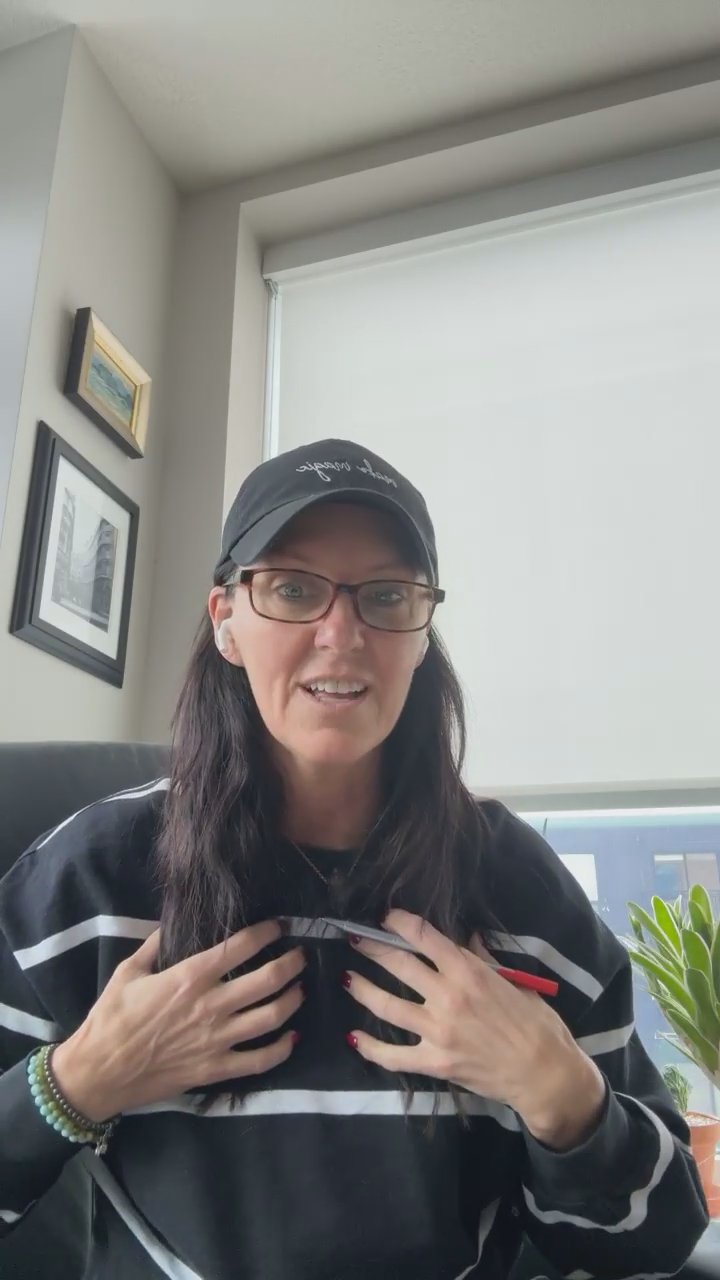
A live conversation on communication preferences and styles, exploring how different ways of expressing needs—storytelling, bullet points, analysis—shape interactions and what people need to feel heard and seen in conversations.
Good morning, Cadre. Happy Monday. Major and I are coming in live. For everybody calling in or dialing in today, I love to hear one word about how you're feeling on this beautiful Monday. Could be anything.
Today on this beautiful Monday, we're going to talk about communication. We all have a communication preference. How you think, how you communicate, what you need to be effective is uniquely different. With each style though, each style has a need, something that they need.
Jules: Communication is the only constant. What is your preferred communication style? Jules: Email or text is fine, but if it's questions, I prefer to have a call or be in person. If you have additional thoughts, post them in the comments.
Good morning, Cadre. Happy Monday. Major and I are coming in live. Hope your Monday is off to a great start. Hello Luke, Happy Monday. How are you today? Having a good day so far. I know this to be true because you pop in and you have all this energy on Mondays. Also, it's great to see you. My supervisor has decided that he is taking a nap during our conversation today. And that's okay because it's Mondays. Sometimes Mondays you need a little extra. Good morning Jules. Happy Monday. For everybody calling in or dialing in today, assuming you're not driving a car, I love to hear one word about how you're feeling on this beautiful Monday.
Could be anything. Maybe you have three words and maybe you have a full sentence, maybe you have a rant. Whatever it is, we'd just love to have a little check in with you today. So today on this beautiful Monday, leading with authenticity, we're going to talk about communication. And along with communication, we're going to talk about communication. Mrs. Why do I think this is important today? Most of the time when I'm bringing you topics, I'm bringing them to you live because there is an experience either with my team or a client or an aha, an article I just read or some other reasoning.
But today I want to talk about communication because we all have a communication preference. So if you're dialing in or you're listening on repeat, I'd love to hear about your communication preferences, your style preferences. Jewel physically tired, emotionally happy. You know, I feel that, I feel that I probably could have slept for another two hours after this weekend. Communication styles and preferences. We all have a need, right in a conversation. So if we're having a two way dialogue or even in this experience or this exchange, we all have our own way in which we talk.
Some of us are really great storytellers. Some of us are really great at bullet pointing things out and getting straight to the point. Others of us might talk so far in the future that the people that live in the analysis world get lost because they can't always think so far ahead. And sometimes those analytical people give us so much information in detail that we're just not quite ready for. So all styles have their own brilliant, unique gifts that they offer us. With each style though, each style has a need, something that they need.
I need, you need to feel heard and seen. Maybe that's a simple acknowledgement, like for all of us contributors out here, a simple you putting a heart up or typing something in the comments, that response, that's a beautiful way in which we know that what we might say is creating an impact. But when you're in a conversation with people, live or not in a forum like this one, communication can work in a variety of ways. And again, let's go back to the what do you need when you're having a conversation with someone?
What do you need when you're working or collaborating with someone so that you can feel heard, seen, so that you can feel as if you have all the information that you need to be successful or that you've given all the information that somebody else needs to be successful? Communication is hard, right? Because why in the world doesn't everybody think exactly the way that we do is simply don't understand? But in the world of strengths, if you think of the Strengths Finder inventory, there's a 1 in 33 million chance you and anyone else are going to have the same strengths.
Which means that how you think, how you communicate, what you need to be effective, what gifts you offer, on top of all your skills and knowledge and expertise is uniquely different and unique to you. Wow. That's chaos, right? So when I think about communication, I'm going to give you some examples. So this past weekend, I had the joy of working with a team of beautiful, brilliant, passionate people to put on a gala, or for some of you, that say gala, gala this weekend for a charity organization that we are all working together with.
And this charity organization provides scholarships to students who are graduating from high school out of the foster care system. And not only do they get scholarships, they'll also get assigned a mentor. And they have a small team of people that they can always contact if they need to have some stability and reliability. Now, I want you guys to all think about a time in which you were thrown into a very stressful situation and how to work with other people. And if you're telling me you've never had that happen, I'm going to ask, have you ever worked before?
And I say that in jest, laughing out loud, because what happens, especially when people are passionate and they have different communication styles and different things that they need to feel really heard, seen, felt and effective. When you're working in that moment where things are starting to spiral or everything gets sewn up in the air and you have to plot, twist your way, Communication can fall off our priority list because we are so excited about what it is that we're doing, but we also care so much about what it is that we want to make sure the best experience happens.
So this past weekend, there were some communication misses There always will be. But it's what happens after that that is the most important element. Because no matter what happens, the gala, it's going to come and it's going to go. We're going to raise money, people are going to get fed, people are going to dance, people are going to laugh. And at the end of the day, those are the things that people are going to remember. All the things behind the scenes that may not have gone right on our end might not be what they remember, but it does contribute to the experience and it contributes to our team's experience about how we show up for one another.
So. So ways in which we can communicate. Our team, like many teams, has several channels. We can use a text, we can pick up a call, we have meetings, we have a WhatsApp group. You might have Slack, you might have teams, you might have Google Chat. There's so many different ways in which we can communicate. Now, if you think about your style of communication, what do you prefer? I'd love to hear from you. What do you prefer in your communications? Do you prefer a text exchange? Get to it quick. Do you prefer a phone call?
What do you prefer? Type it in the chat. Put it out there into the world. Now, for me, I get peppered with a lot of conversations and a lot of different spaces. So. So I have our spin studio, we have this foundation. There is my client team. So I'm a consultant, right? I have an assistant that helps me with my energy healing practice. And so everybody that I work with, we all communicate on different channels. And so I have to be really adaptable, which is one of my strengths. But it also requires me to slow down and I don't always do that.
So sometimes my communication might come off a little more short than I intend it to be because I'm flying on all cylinders. Or I might send a WhatsApp chat. That bullet points out four key messages, which would be way easier if I could just pick up a phone and talk everybody through everything. But that's not always accessible sometimes because of different time zones that we're on. And so when I'm working on L cylinders that way, I find a few things happen. One, because I am really passionate about my work, as are all of you, that if someone sends a message response back to me that's too short or they don't acknowledge all of the really amazing work that has already happened, my brain, my heart, my passion instantaneously goes into a spiral like, wow, I'm failing.
I just failed my team. That simple element of Here are all the things that are going wrong right now. Takes all the things that I thought that I did really well and all the things that I thought I had in place for us to be successful, poof, go out the window. And I immediately go into, oh, snap, I'm failing everybody and I'm going to get in trouble. Where does that come from? Like where nobody said, hey, Jean, you failed in the text message. Nobody said, jean, everything is off the rails, you suck and we're gonna fire you.
Nobody said that. But that was a story that I tell myself because I, Jean, know a lot about myself. We know ourselves better than anybody anyway. I know that I'm a maximizer. Still, in the strengthsfinder language, I'm a maximizer. That means that everything can always be better. And I, when I'm super exhausted, will continue to finesse, tweak, change, anything, because it always has the possibility of making a bigger impact or being better or improving more. I also know that I'm high responsibility.
So if it feels like I missed the mark on something, my, my first thoughts aren't, wow, I just did a great job. It's, oh, snap, I'm failing somebody that I care about or something that I care about. I do that to myself. Nobody said those words out loud. So when we're doing all of this work and when we are so passionate about what we have to offer, communication is the only constant. So understanding what we need really, really well and actually thinking about it, jotting it down on a piece of paper.
What is my preferred communication style? Jules says it depends if it's an update. Email or text is fine, but if it's questions, I prefer to have a call or be in person. Yeah. So understanding, recognizing that, putting that out there is really, really important for us to help find that balance. Because it's inevitable that we will have communication Mrs. It is also inevitable that we will be thrust into a fire drill because something doesn't always go as planned. Now I actually really like when things are kind of going off script.
I love the element of solving problems on the fly and having what I like to call plot twists. For some insane reason, I really like working in that space because my brain starts to fire in all cylinders in different ways. If I am working on something that is very systematic, I'm like bored and I gotta go walk the dog like 10 times. Great for him. But it's really hard for me to focus on everything that's so process oriented. I like that on the fly. Let's figure it out. Let's create change. Let's come up with new ideas.
Let's do this. So in those instances when we're starting to spiral, our communication can come off really weird, right? I could be defensive, I don't mean to be. I could be short and get really super crisp and to the point, maybe to the point more so than I need to be, or I'm driving a point home because I'm not able in a two way conversation on Slack or WhatsApp or text to really understand what the problem is. Because I am also a very high strategic thinker. I want to understand all the things that are breaking so that I can figure out the best solution to fix all things by pulling one or two strings versus fixing every little bitty thing.
So those communication misses can then also feel like it's personal, like I'm getting attacked or someone on the receiving end could feel like I'm attacking them. And that's not even the case. So when you're going through experiences where you're not in a fire drill, look at how you communicate with one another. Look at how people communicate with you. The lightness, the joy, the ease. I love when I'm working with teams doing a workshop, doing some random problem they have to solve, like piecing together a book that is only a book of pictures, that tells a story only with photos and having them put the book together.
When you work on exercises that don't have to do with work, that aren't something you can feel responsible for or credible for or too personal about, it helps you understand how each of us communicate just really differently. So that when we come together for the really hard stuff, we have a foundation of understanding that we can take a pause and say, ah, let's assume positive intent. Because at the end of the day, we're all a bunch of people that have strengths. We have opportunities, we have passions, we have needs.
In how we communicate, we have contributions we will give to a team and to the world and to our community. And we all have a story we're going to tell ourselves based on our strengths, that if we're doing something right, we tell ourselves one story. And if someone helps us perceive or perceives that what we're doing isn't the way that they were doing it, we might go into a spiral or dig in our heels and all of that is okay. It's just recognizing where we at in the communication journey and what do we need to make that journey just a little bit better and to keep those beautiful relationships intact.
So if you have additional thoughts. I would love to hear them. Post them in the comments. Tell me that you're on replay. I always get a notification. I will come back and listen up again. Tune in at noon. We have another great opportunity for you to learn some more things about leadership and development for the rest of the day. And check out the schedule all week. We've got some really cool people out here. I hope you have the most magnanimously beautiful Monday. Whatever day it is, or whatever it is that you're going through today, find one great thing and just know that we love you.
We're here for you. We'll see you soon. Have a great day.
Reactions and comments are for members. Joining is free and takes a minute.