In part 3 of this passion series video, Evan, Cadre's Licensed Addiction and Mental Health Therapist, teaches writing and preparing social media content. First, watch and learn how to choose topics that draw in your followers. Then learn how to structure it to make it as engaging as possible.
The host welcomes viewers back to the content creation course, explains this is part three focused on writing and preparation, and mentions the change in location and recommends watching earlier parts for context.
The presenter outlines two main preparation styles—writing a full script or going off the cuff—explains pros and cons of scripting (clarity, completeness) versus spontaneity (authenticity), and describes their personal preference for scripting multiple takes.
The creator explains using word counts to time videos (e.g., 180 words ≈ 1 minute), platform limits for Instagram Reels and TikTok, and recommends keeping videos concise to repurpose across platforms.
This section covers social platform signals like watch time, engagement, and account visits that help decide whether content is promoted, while acknowledging algorithms change and no one fully knows them.
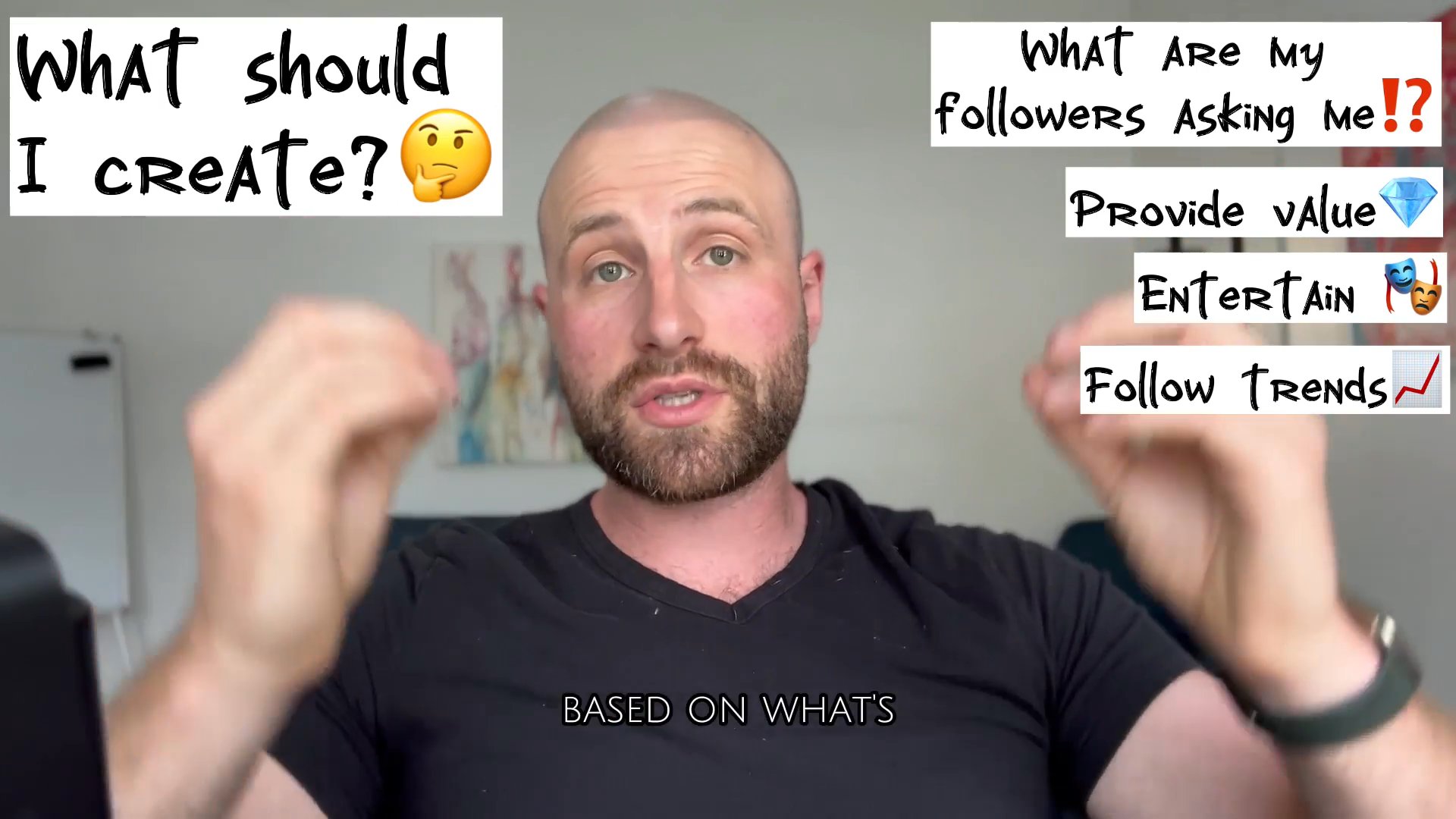
The speaker lists questions to identify content ideas—common follower questions, comments patterns, informational versus entertaining value, trends, and tools like Google Trends to find what audiences search for.
The host previews a second part focused on hooks and delivery, apologizes for the amount of material, and urges viewers to watch part two for more tips on keeping audience attention.
Welcome back to my content creation course where I teach you how to make video content that's simple, quality, and that's going to grow your follower base quickly. This is part three in the series and today we're talking about writing and preparing your content before you even film. I'm going to be going through my process on how I write, how I choose content, but I'm also going to go over some different strategies of other successful creators so that your videos could be high quality, that people are going to be engaged and they're going to watch your videos all the way through.
As you may notice, we're in a different location today. This is my office, aka my writing room. So if you haven't watched part one or two yet, I recommend go doing that because this series is in order. But if you just want to learn about writing and preparation, I guess just keep watching. Now there are a couple different ways that creators prepare content and I would basically sum them up in two different ways. One is you could write a script and the other is, well, you could just go off the cuff.
There's a few advantages to writing out a whole script. One, you're going to get everything that you want to say out and you're not not going to worry about missing anything. The other is it's going to be much more clear and concise without all the ums and the buts. But some people are really good speakers and even if they have a whole script written out they could follow it pretty closely and do a video in one or two takes. That's not me. Okay so that is why I tend to write a script and I do multiple cuts so that I'm making sure that I'm not stumbling over my words and it gives me a little bit more leeway.
Now one of the disadvantages of delivering a perfectly done script is that you lose some of the authenticity factor. Sometimes people like to see that you're human and that you have some of the ums and buts and for them it really is appealing. Whether you're going off of a script or off the cuff what's important is that you have a general outline. Even though I'm writing everything out I'm not saying everything word for word. I'm always able to go back and reference to be sure that I got everything I wanted out.
However you can do more of a simple outline and within that structure you could go impromptu go off the cuff and seem more authentic. When I'm actually writing the content I do it on a program where I could count the amount of words. For example, I know that if I use 180 words or less, it will be under a minute. For Instagram Reels, your videos cannot be over a minute. TikTok you can, but I like to try to keep them as concise as possible. If you are able to manage to do less than a minute on TikTok, you can repurpose it to Instagram Reels.
Now, when it comes to YouTube, it's usually recommended to make a video around 3-7 minutes. Of course, you can do more depending on the type of content, but usually for those different Those are the general amount of times where people are able to sustain their attention. On TikTok, people are used to seeing videos around one minute. On YouTube, people have a little bit better of an attention span if they're used to watching those longer videos. Another thing to mention is that sometimes for apps like Instagram and TikTok, videos often do really well that are under even 10 seconds.
So for those, you may not need to write a whole script, but for Instagram, the reels are typically under 10 to 15 seconds. Now for TikTok, you can have those minute long videos and they'll do quite well. However, often sometimes those really short little trend videos will blow up because people will tend to watch through the whole thing because they're shorter. Like I said before, I'm going to share with you some of the most important factors for writing content that is going to do well. When you look at some of these social media sites, nobody really truly knows what the algorithms are valuing because it constantly changes.
You'll have a lot of social media gurus tell you that they know, but then you'll look at their follower count and you'll see that, well, maybe they're not doing all that well. Now there are some very distinct commonalities. Now one is watch time. How long are people watching your videos in relation to how long they are? How long are they able to sustain people's attention? How many people are commenting, liking? How many people are going to your account to watch other videos after watching your first video?
And there are a bunch of other different factors that are commonly used to decide if your content is going to be pushed out or not. Now the question is, what types of videos do I make? What are my followers going to want to see? What is going to engage them? What are some of the questions that they want to know? So here are a list of a few things to consider. Despite what your niches, some of these variables are going to be attractive to your follower base. So ask yourself some of these questions.
The first really important question to ask is what common questions am I getting from my followers or customers. Now, one way to do this is looking at your comments. You're going to start to see patterns in your comments of what people want to see. Give it to them. The next question is how else do I provide value to my followers? One information is going to be beneficial for them to know what information can they use in their day-to-day lives that is going to help them. And the next question is going to be not only what is informative to them, but what is entertaining to them.
Not every video has to be educational per se. A lot of people like a mix of entertaining content, whether it's a dance or doing something funny. Check out what some of the trends are and just be yourself. Use whatever talents you have to entertain your audience. They're going to get to know you better, get to know you as a person and really start to bond with you in a way that they're going to want to continue watching your content. Like I mentioned in the last question, sometimes it can be of value to know what the trends are in the particular app you're using.
You'll see different ones in Instagram, in TikTok, in YouTube, how However, a lot of these are based on what's going on in the pop culture. So how can your content be relevant to what's going on in the greater culture, whether it be different news events, different dance trends, whatever that is, see if you could follow that and make it relevant to what you're doing. Another good tool that a lot of creators use is Google Trends. This gives you the ability to see what people are searching for. So many creators have found success by literally looking at Google Trends and answering those questions.
Now that we have a general outline and structure, let's go into some of the principles of how to deliver your content, whether it be verbally or visually. Even though there are differences in each social media app and what is valued and what viewers want to see, there are some common threads that go through all of them. Okay, I'm gonna admit something right now. I made a mistake. I did not realize how much information there is on writing and prep, so I'm sorry. I'm gonna be doing a part 2, but you really wanna check it out because I'm gonna teach you all the tips and tricks for hooking your audience and keeping them hooked to be sure that they're watching your whole video and your viewer count is going to skyrocket.
So don't miss it. Go check it out. We'll see you in part 2.
Reactions and comments are for members. Joining is free and takes a minute.