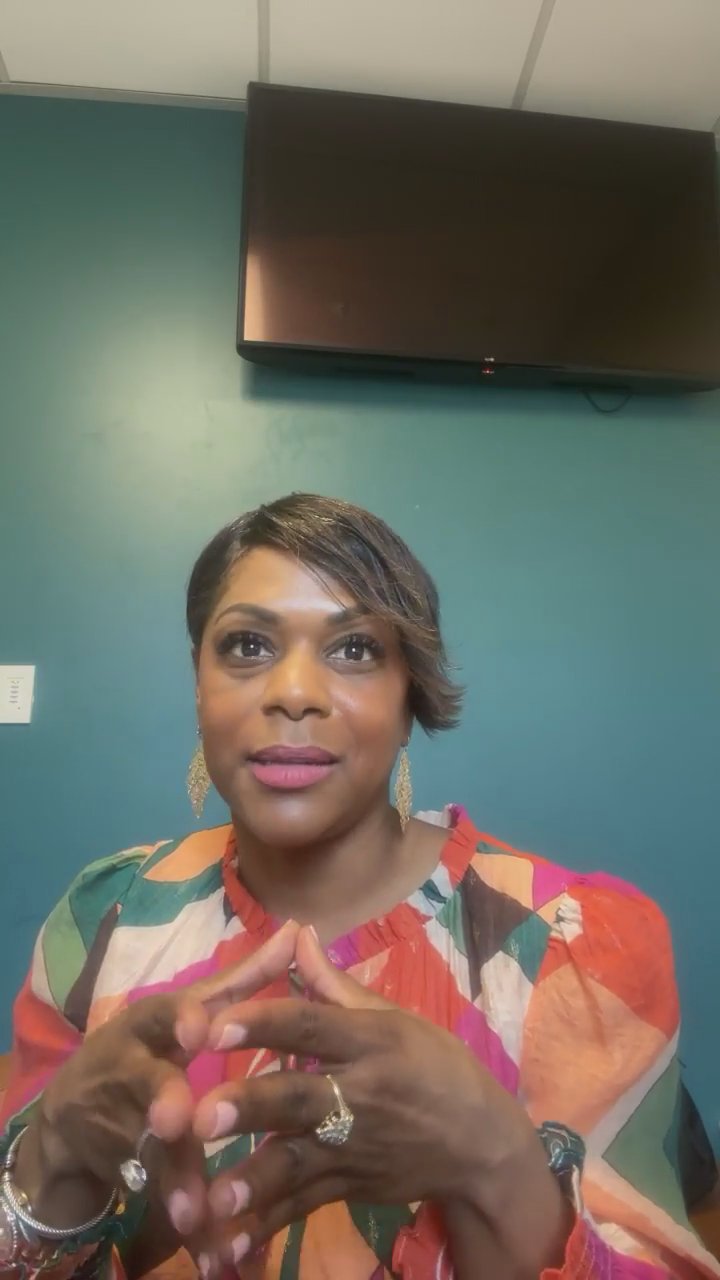
Dr. Jessica Green explores building emotional resilience, defining setbacks and how they show up, and offers practical prompts and an affirmation practice to help people pause, reframe, and respond.
Dr. Jessica Green: Today has been a busy Tuesday for me. I've had a speaking engagement this morning and it went wonderful. We're going to wait on a few others to come in. When we talk about personal growth, this is definitely one for the books today.
Today we are going to talk about the importance of building emotional resilience. How do we handle setbacks? Do we allow those setbacks to determine who we are and where we're going?
Focusing on our ability to be courageous, focusing on ways to restore that energy and that balance. When we think about building emotional resilience, I want to focus on what can I start doing to build that emotional resilience.
Hello, Cadre world, this is Dr. Jessica Green. And I tell you what, today has been a busy Tuesday for me. I've had a speaking engagement this morning and it went wonderful. The population was great and we had an amazing time. And guess what? It ran over. Hello. Be happy. Good afternoon, good morning. I should say thank you for joining and we're gonna wait on a couple more to join us. Update has joined us. Good morning. But today has been busy hitting the ground running. So when we talk about personal growth, this is definitely one for the books today, today.
So again we're going to wait on a few others to come in. And today we are going to talk about the importance of building emotional resilience. How do we handle setbacks? Do we allow those setbacks to determine who we are and where we're going? And when we define setbacks, setbacks look different for different individuals. You know, one setback may be at home. You know, for some of us it could be the simple task of I am still potty training my child and we see the other kids are potty trained. And sometimes we feel that's a setback.
It may be a financial setback, but based on that setback, are we recognizing, hey, that's a setback that I can't change. But based on that setback, what can I do in order to grow from that experience? What can I do to make sure I am continuing to bounce back stronger but also in healthy ways, recognizing that, hey, I am my greatest power, my ability to triumph begins with me. And not allowing sometimes those lived experiences and those emotions take over our actions. When that occurs, are we thinking about that emotional resilience bouncing back, but also taking a closer look at the cost and benefits of my emotions and my actions?
Because we can have those setbacks, right? And based on that experience, we were having a bad day. You know, we're at work and then all of a sudden, sudden we may feel as if that setback is taking over my emotions, my ability to be courageous, my ability to have compassion, and my ability to even build connections with those individuals at work. So what I want you to think about is what can I do to make sure that I'm resilient, to make sure that I'm not that soda bottle. You know, we have our moments even for, for some of us, it may occur in drop off line where we're already running late, we're busy, we need to get our kid to work, get our kid to school, I should say we drop them off, we get to work and our hands are full, right?
And we're like, oh, my gosh, today is going to be an awful day. So in that moment, we've already set ourselves up for failure. We've defeated ourselves before our day has even gotten started. So how can we bounce back stronger in that moment? I want you to use the affirmation and maybe saying, hey, this is a moment that I'm having. It's happening now in this moment, but it's not going to last all day. I'm going to walk through this moment because it is occurring right now, but I'm not going to allow it to ruin my the rest of my day.
Focusing on our ability to be courageous, focusing on ways to restore that energy and that balance, and maybe that moment where we need to contact someone on our personal board of directors. And when I say our personal board of directors, I call them your fab Five. You know, you can call them whatever you want to call them, but when it comes to your personal board of directors, it's those individuals you can contact. And when you call them, they're worthy to hear your story. And when I say that, if they're not available, they contact us and say, hey, I can't talk in this moment.
Let me, you know, call you back in five minutes or give me a couple of minutes so I can step out this meeting. It's those individuals. When we talk to them, it stays between you all. Those are individuals who are worthy to hear your story. It's your team, it's your village and even your team saying, this is my team I go to war with because I know they are doing what's in the best interest of me. So when we think about building emotional resilience, I want to focus on what can I start doing to build that emotional resilience.
So when I'm handling those setbacks, I do not catastrophize those situations. I do not create an entire story out of them. I focus on this happened, it's in the past. I can't do anything to change it. But what can I do moving forward so I can change the outcome? I want you to think about what's something that I need to stop doing and whether it's catastrophizing, realizing our worth, knowing your value. And what can I do to make sure I am being my true, authentic self. I'm being that person that I'm supposed to be and not that person that everybody else wants us to be.
Because that's easy to do sometimes in the workplace. We may want that, that promotion and we feel as if hope, you know, hey, I'm being someone that I'm not supposed to be, but what can I do to be my true authentic self? So when I have that setback, I can easily bounce back, but bounce back even stronger. What's something that's going great for you that you want to continue to do? So this could be with personal growth on the frame of time management with where, hey, I know this is due, so let me color code these tasks.
So the red light assignments are things that I have to do today, you know, those are those things that are due today. Those yellow tasks are hey things I have a couple of days to to get them done. But then your green light tasks are those things that I have at least a week to get them done. But when we talk about building emotional resilience, you know, handling setbacks and bouncing forward with the prioritizing those assignments and those tasks, we have to make sure we do not allow those red light.
Those green light assignments become red light because we have procrastinated. And before closing, even when we're talking about emotional setbacks, I want you to give yourself permission to want more for yourself. When we hit those setbacks, for some of us, we stop in our tracks. We feel as if I'm not worthy enough, I'm not strong enough. We catastrophize. And for some of us, we even got to the point where we stop trying and we give up. And that's not what I want for us. I want us to continue to build that personal growth.
I want us to focus on coping with our energy, finding that balance, being our true authentic self, but not giving up. So the information that I shared with you today, if you found it pertinent to you, your organization, family or friends, I want you to share it. I want you to continue that you are your greatest power. I want you to be courageous. I want you to have compassion. I want you to continue to build connections and then also be true to yourself. Thanks for listening and we'll see you soon.
Reactions and comments are for members. Joining is free and takes a minute.