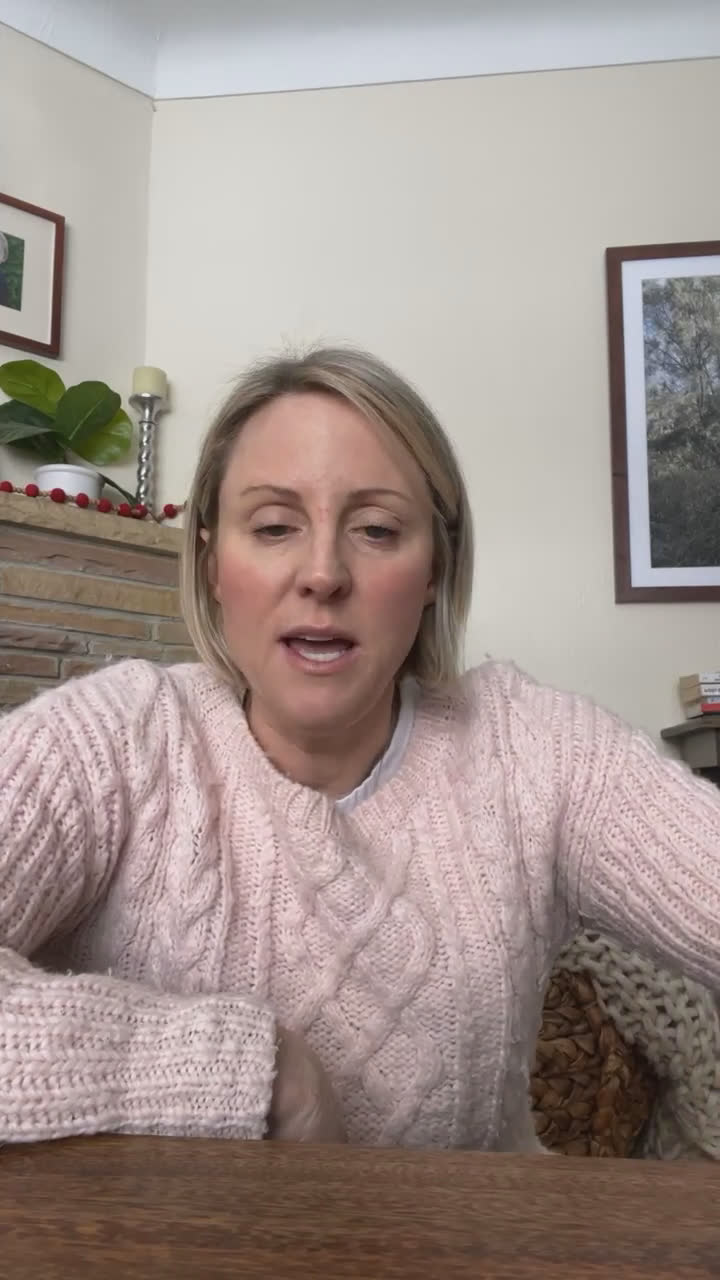
Shannon, a Cadre host who shares lived experience with CPTSD and anxiety, walks through her five-step approach to handling hard things—notice, name, and respond—and describes how therapy tools helped her set an official boundary when a relationship became unsafe.
Shannon: How I learned to stop living in survival mode and start loving myself. This week I had to create an official boundary with someone in my life. Here are five ways that Shannon approaches hard things and tackle them.
While hard things never end, this thing still happened to me this week. There's still growth in how we handle this stuff. What we can control is how we respond to it. The way we talk to ourselves and the way we treat ourselves in that process.
Hi, Cadre. Happy Friday. It is Shannon from Cadre. I'm just taking a quick spec off my phone here. Happy Friday, Everybody. It is 12:06 Central Standard Time, and welcome to how I learned to stop living in survival mode and start loving myself. That's the. That's the end of that sentence. So for those of you who don't know me or who have never joined this live stream before, my name is Shannon. I am part of the Cadre team and I come to you live every Friday as a person who has lived experience in living with cptsd, living with anxiety, generalized anxiety disorder, and someone who also parents a child with autism.
And so I come here every week to share my experience as someone who has lived with all these things. Then at 40 years old, really decided like, I don't want to be living in survival mode anymore. It's taking a toll on me. And so went through something called Air Network Therapy, did a bunch of work and put everything I learned into work or I'm sorry, into. I started doing work, put it into play, and applied what I learned to my life. And so I come here with no official clinical expertise, but just someone who lives through stuff.
And I apply what I've learned in my time in therapy and I share it with you all in hopes that it might be helpful to you. And so for those of you who have been here the last few weeks, you know that I sort of have these five steps that I go through and five ways that I approach hard things and tackle them. And usually I kind of go through them one at a time and break them down. And today I, or this week rather, I had one. I had something happen in life, right? Like all of us do, that was just a shock to my system, was something that kind of came out of the blue and that normally in life, and honestly even did, if I'm honest, kind of took me down a little bit this week.
And without going like fully into detail, I have a personal relationship that got unhealthy and. And hit a place where I had to create a boundary with someone in my personal life through a official way, right? So I had to sort of create a harassment order, right? So I had to create this official boundary with someone in my life. I've never done that before. I did not expect to have to do that in my life. It was a shock to me that I would have to do that. And frankly, it's something that would have knocked me off my axis in any other time in my life.
And why I wanted to bring it up today is how I was able to manage through it was I went back to the work I'd done in my therapy. And so if you have joined me before, you know that the way that I approach challenges like this are in five ways, which. Number one is to know that something's wrong, so notice that what's happening inside of me and outside of me in the world is not in alignment. Number two is to say it out loud, right? So if I'm in fight, flight or freeze mode and this thing happens, I have to notice, like, okay, this thing is happening.
I have to say it. I have to acknowledge it like it's real. Number three is I have to start to imagine that something different could exist, right? So, yep, this thing is happening. What if it might be different? Could I create a different scenario? Number four is then start to imagine, like, okay, there is a world that's different. Put that on for size. Try it on for size. And number five is to practice. So I say all those steps because this week I had to do that. So when this unexpected thing happened and something that felt not like something I wanted to happen in my life and something that, frankly, didn't feel like me, right?
I don't want to be a person that has that in my life. I don't want to have that type of activity be assigned to me in the world, right? But it did. And so I was able to say, okay, stop, Shannon. I'm going to stop for a second and I'm going to notice, like, I'm in freeze mode right now. This thing happened. I have a choice for how I'm going to respond. What's happening for me right now, though, in that moment was I froze. And I did have to say, okay, stop, you're freezing. You get to take a second to decide how you're going to respond to this.
And that's that saying out loud part, right? So I noticed I allowed myself 60 Minutes to sort of go through that process of like, wow, this is okay. I feel this in my stomach. I feel this in my chest. It doesn't feel great. And then to say, okay, I'm freezing. Yep, I'm freezing. And that makes sense because this is a weird situation. So I named it. I said it out loud, I'm freezing. I then was able to say, okay, in my past life, I might have started to blame myself. I might have started to say, what did I do wrong?
How could I have done this and made this long list of ways in which I was at fault? But what I did Instead, this time is say, okay, this happened. I know that I behaved within my own integrity along the way. So that was a new narrative for me. Right? And so if you look at sort of these moments in which we can behave differently, right? It's that opportunity to say, okay, there's a different way to approach this. What is that new way? That's what I was trying to do is to say, like, okay, so I'm going to say, you did this differently.
That's great. And then I played that out, and it was work. Right? I want to acknowledge that, and it will be work. And so I say all of this, and I'm taking great pains to narrate this process for myself because I think it's important as we all show up here, as I show up here every week with the intention of showing you or sharing with you what I learned and what work means to me from my therapeutic experience. Because I really want to share that while hard things never end, this thing still happened to me this week.
It still was a. It still was a little bit of a punch in the stomach. I mean, it was. There's still growth in how we handle this stuff. And while I was able to work through it in new and different ways, while I was able to talk to myself in a more loving way and be kinder to myself and sort of write that new narrative, and I was. I did end in a better place. And I ended in a place where I was like, you know what? That's okay that this happened. That's not your fault. Whereas before, I promise, I would have ended in a place where it was my fault.
And so there's my pup. So I think that's the point of the work. The output is that, yes, this experience happened. That was horrible, and that is life, and life will happen, and there's. We don't have control over that. Right? So for everyone here today, something will happen in your life that you don't love. Something will happen that will trigger you, something that will happen that doesn't feel great. And we can't control that, no matter what. But what I've learned is that what we can control is how we respond to it.
And what we control that can control then is the way we talk to ourselves and the way we treat ourselves in that process, so that no matter what happens at the end of that timeline, we get to decide if we treat ourselves with love. We get to decide if we treat ourselves with care. We get to decide how we talk to ourselves along the way. And I was really Grateful to myself and frankly to my therapist for teaching me this, that I was able to stop in the moment and say, this thing happened and it sucked.
And it did punch me in the gut. And I was really upset about it for a couple of hours. And I. And I. I allowed myself the time to be upset about it. Then I was able to say, yep, I feel this way. And now I'm going to say, I did that. I'm going to rename it, I'm going to reframe it, and I'm going to move to the next thing. And now I'm going to start to look at it in a different way. And so I think my hope for you all is that if you go back and just think about again those five steps of, all right, this thing's happening.
I'm going to notice it. I'm going to notice how I feel about it. I'm going to say it out loud. Because if I say it out loud, I can start to manage it, right? It's named. I can start to do something with it. Then I'm going to reframe it into something that I can do something with. So, again, I had this order of, you know, I had this thing, I had to produce this harassment order that I had to go through the process of creating. I had to rename it and say, this isn't about my behavior. I'm proud of how I behaved in this relationship.
This is just what's happening. So now I'm going to change the narrative from being it about me to about this happened. And I'm going to move forward with it. So I just hope that you all know that you have power in that and that if you talk to yourself nicely and you treat yourself nicely as you should, you can get through life. And I think the beauty of this week for me was sometimes we learn things and they're in theory. And I think sometimes therapy can feel that way. Like, great, sure, be nice to yourself.
What does that actually mean? And for me, it played out in practice yesterday and it was hard, but we can do it. So that's what I have for you today. Thank you so much for joining me, you guys. You're worthy of the time and the energy that you put into yourselves. And I'm just so grateful that you're here in the Cadre sphere. I hope you go into this weekend and know that you are amazing people who are worth loving and caring for. And we're so grateful you're here and we will see you again soon here in the Cadre Sphere.
So have a fantastic weekend, friends, and we'll see you soon.
Reactions and comments are for members. Joining is free and takes a minute.