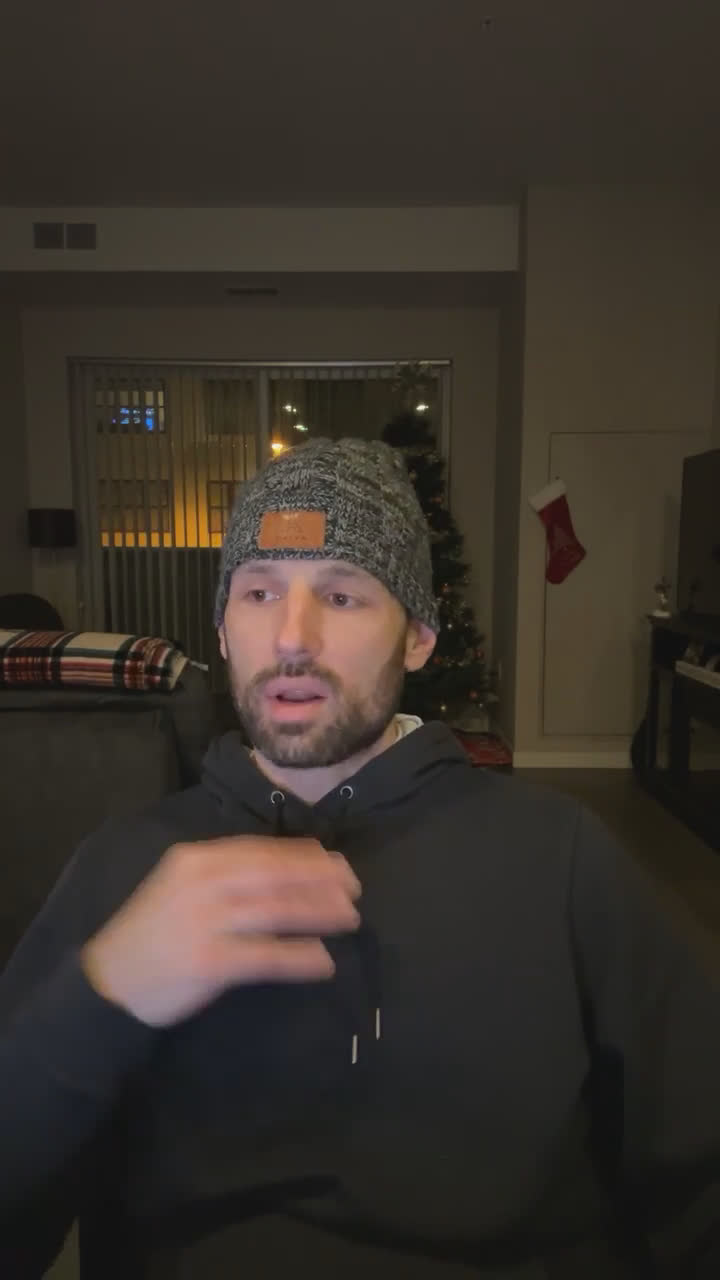
Jason Lennox leads a Sunday Serenity session on recovery-oriented goal setting, explaining his monthly goal approach, the importance of habits and consistency, and why writing goals down boosts the chance they'll be pursued.
Jason Lennox is your resident recovery champion. This is his series titled Sunday Serenity. I strongly believe that serenity is the key to recovery. When we're not seeking outside of us, seeking externally for things, our chances of recovery are a whole lot better.
I want you to think about and contribute even one goal that you have for this month to the conversation here. There's so much science behind what we do with goals and how we can actually attain them. Writing them down, I mean, automatically increases the chances that we get them done by.
Jules: Goals, again, I've been talking the last few weeks about consistencies and habits and why they're so important to recovery. He says goals are 42% more likely if we just write it down to accomplish it. Gotta love a vacation.
Sherry: We need something tangible that we're moving toward now. When we can create a direction and structure in our lives, we're so much better off. February is always a good time to set a goal to get the heck out of Dodge and go find somewhere warm.
Good evening, cadres here. Happy Sunday. It's good to be with you. My name is Jason Lennox and I am your resident recovery champion. And what that means is I'm here to talk to you about all things recovery within that mental health general well being. I think it's just all so interrelated. It's hard to talk about one without the other. So this is my series titled Sunday Serenity. And as I always say, as a little bit of a disclaimer, Sunday Serenity, why? What does that mean? Especially as it relates to recovery.
Good evening, Jules. Good to see you here as always. But Sunday Serenity, I just. Good evening, Sherry. I strongly believe that serenity is the key to recovery. When we're not seeking outside of us, seeking externally for things and we can be okay with where we're at, our chances of recovery are a whole lot better because the reality is I lived my life the way I did and I was on such a roller coaster of life because I just never really felt good inside and Good evening, Luke. Nothing better than having our founder here.
And I'm going to talk about something actually that I talked to and I hear a lot coming from Luke himself, our founder here at Cadre. And that's goals. I put a post in the community discussion and I want you to think about and contribute even one goal that you have for this month to the conversation here. I would love to kind of chime in as I see them come in. But just think about February. One very simple goal. Maybe it's a big goal, I don't know. But just drop one into the comments and we can kind of play off that a little.
But goals are so huge and I told you last month, I'm not a huge beginning of the year or new year resolution type goal because I think sometimes for me I just set myself up for failure if I have these massive outrageous goals versus just kind of adjusting all the consistencies and the habits in my life as I talked about. So. But that being said, I do come up with goals and I have goals in my life. Sometimes they're daily, sometimes they're weekly, but for sure monthly. I have kind of a way that I look at all the things I want to accomplish in the month and I don't make it a lot.
I think usually one personal goal, one professional goal, a few goals around people that I want to go visit if I haven't seen them, and then usually a place or two that I'll travel. And that's it's just worked for me time and Time again. And so drop your February goals if you have them into the comments. But I again, I believe strongly in them and I believe strongly in writing them down. And this is where I was referring to Luke earlier. I mean, he writes everything in his little notebook and, you know, comes back to it and reviews it and does all the things.
But there's so much science behind what we do with goals and how we can actually attain them. And writing them down, I mean, automatically increases the chances that we get them done by. It's just like 42% is the number when they did a study on this. And so I think, interestingly for me, I've. I've written goals down throughout the year, maybe not gone back to them. And then as I've reviewed at the end of the year, I go, well, even though I didn't pay much attention to that, like tactically throughout the year I accomplished that thing or that actually happened.
So I do that again, both professionally and personally. And I think writing it down. There are two reasons that they say that's so critical. One, we put it somewhere. It's in Luke's little notebook. Not to keep bringing Luke up, but he's very good at this. It's in his own notebook and he's going to go back and it's just going to be there. So it's stored here externally somewhere. And then the other is what they call encoding. That's the process of the brain going through the writing process. And it helps determine where and if we will store this thing in our brain.
And so, you know, writing it down actually has an impact on that process and makes it much more likely to actually stick here in this brain that stores all those memories. And so writing it down is huge. Again, I've just written things down in my life that, you know, I didn't spend a whole lot more time actually doing anything toward. I'm not recommending that, but I have gone back and seen that even those goals seem to get accomplished. So there's something about that vision board, the goals, just writing it down and getting to that point.
And then here we are talking about it with others. So Sherry's the first to jump in. Obtaining financial stability, taking a vacation and connecting more with family. I mean, those are, those are good high level goals. And then we get into kind of breaking them down and how do you do that? And I'm not going to get into that, you know, too far into the details there. But you have the smart methodology, which, you know, seems like the standard. And everybody always says it's got to be smart goal. But there's some science behind that.
Is it specific? Is it measurable? Is it achievable? Is it realistic? Isn't it. Is there a time component to it? And so I think whichever way you want to slice that up, there are all kinds of ways to deal with goals and break them down into too many parts. But my bigger points are how do we actually take the goal and turn it into something that we're looking to do, but also how do we. Lost my train of thought a little bit. But what I really wanted to do is go back to tying it to recovery and why goals matter in recovery.
I can tell you a couple things. One, for me, at least learned. I'll save this for the second part. The first part is, hey, good evening. It's never too late here. We're just talking about goals. And drop your February goals, your 20, 25 goals, any of them in. We can. We can pivot a little bit and talk about some of that. But two things. Goals, again, I've been talking the last few weeks about consistencies and habits and why they're so important to recovery. Because we don't have any of those when we come into this thing, really.
I mean, maybe we have some, but I feel like me, I just came in and I didn't even. I didn't even have consistency in what I did. Did I brush my teeth today? Did I have clothes to wear? What time did I wake up there? Like, none of that stuff was consistent in my life. So creating some kind of goal system and creating things in my life that would actually have me moving towards something was very critical for me early in recovery and even now to just continue to grow, because if I'm not growing, they're staying stagnant, which is almost the same as moving backward, in my opinion.
So it's critical for me in my own recovery. But the other kind of flip side of that and why goals are so important, they're so powerful. We can use them as long as we're writing these goals down, as long as we have some sense of where we want to go. I told you, 42% more likely if we just write it down to accomplish it. But I'm going to tell you that that number, I am certain, and I don't have any studies on this, but I am certain that that number goes up significantly for people like you and me.
Why do I say that? What do I mean by that? I say this often when people go through the kind of h*** and the Kind of lives that we have gone through when it comes to active substance use and drinking and drugs and just all the chaos and the. The trouble and the despair and the hopelessness and the helplessness, everything that comes with that, when we can go through that and we come out the other side. I mean, these little goals that we're setting that we're talking about being less critical of yourself.
Yeah. Pivoting when necessary. Those things stack them up against beating this thing that's a deadly disease. And they're pretty trivial right now. These are good goals, and these are good things for us to be doing. But I'd like to sum it up like this. When we stand at the doors of death and we're knocking over and over and over and over and over, and we lose all that hope and we feel all those things and we come out the other side and we survive, it just makes the rest of the world's issues and the things we want to set out to do so much smaller.
Also so much easier. Gotta love a vacation. That's right. We need. Vacation is absolutely a good goal. Spending some time this morning thinking about, where am I going to sneak away, where to when trying to fit all those things in. But we have to do that. Oftentimes. We go on the vacation and we come back and we've got even bigger and better goals. So anyhow, to move 20. Here we go. 20, 25 miles in 20, 25. Jules, that's. That's incredible. So you're doing one. One a day. It doesn't really matter.
You just sum that up. That's. That's huge. That kind of goal. Exactly. Those kinds of things. And we write them down and we make a little intention. We set out and we say, I'm going to do one per day. If I miss a day, fine, I'll walk two miles. I love that kind of thing. But again, we set these goals because they help our recovery, they help the foundation of the life we're living, and they help us continue to stay on the right path. But we also leverage them. We leverage the heck out of goals because, again, there's nothing that we really can't accomplish.
When you think about the kinds of lives that we've lived and what we've gone through to get to this point, We've survived one of the most deadly diseases there is. Really, if you think about it, we have survived one of the more deadly diseases on this planet. And more than that, one of the more baffling diseases, because many of the deadly diseases, they come they present, we see them, we're told we have them. This is a treatment plan. This is the way we deal with it. They and we don't think about it, but this has a psychological component that really makes it something else.
So when we can get to the other side of this again, rest of the world's troubles a little bit smaller, a little bit smaller. And we can be fooled a little bit because, yeah, maybe those troubles are a little bit smaller, but we haven't been used to dealing with them. So we do have to deal with them. The last thing I'll say about goals is we've been talking a lot about them. It's a little bit cliche, but I really believe we need something on paper. We need something tangible that we're looking at that we're moving toward now.
If you're like me, things happen in life. Something comes up. Sometimes our whole lives are upended, and it really makes accomplishing the things that we set out to accomplish harder. And you could end up with a list like me, where I feel like it's never ending and I'm doing nothing but trying to play catch up and stop from falling further behind. We get in those moments. I was having this conversation with someone last week. She said, I. I don't even know where to start. I don't even know what to do.
I've got this massive list of things that I want to accomplish. It's just so big, I don't know where to start. And all I said was, go. Go to that list. Find the thing that's going to take you the least amount of time, that's the smallest, maybe the simplest, and just do it. That's my approach. That's what I do when I get a world and a list full of things to do and to try to wrap up those goals in one place. What's the easiest one? What's going to take me two minutes, what's going to take four minutes?
Because when I can just accomplish something, I get a little momentum, I can breathe a little bit, I can grab the next one and the next one and the next one, and before you know it, there you go, we're knocking through our list. So I think, you know, goals are so incredible, and I just think at the end of the day, start with one. We can all come up with one thing. You know, if it's a weekly goal, if it's a monthly goal. I told you, one of mine was to launch a new brand for my business, to kind of expand it to not just me.
Doing the work that I do, but a team and a formal business structure. So that's my goal for February. And I'm not trying to add a whole lot more stress to that. I realize these things take time. And so that's my intention, that's my goal. And well on my way to get there already. And we're just beginning. So it's February 2nd. Maybe your goal is just to get the heck out of Minnesota. It's been a little bit warm. It was warm today, almost 50 degrees. We've had a few of these 40 degree days in the last week, but it's gonna get cold.
And February is always a good time for me to set a goal to get the heck out of Dodge and go find somewhere warm and, you know, really kind of regrouped from that sense. So if you've got goals, this brings up anything. Get to the piece of paper and the pen or if you're like me on a computer, I'm typing everything out in, you know, the Google Drive. But put that thing down. And even if it's just one and if you've got a long list, a laundry list of things, again, scan through that thing and pick the easiest and the simplest.
And Luke said He's heading to SoCal in exactly one month. Love it. Love that place. It's warm down there, so grab the simplest, grab the easiest. That's my biggest guidance for the week. It works for me every time. It allows me to start some momentum. So that's what I got in terms of goals and why it matters in recovery again, when we can create a direction and we can create some order and structure in our lives, we're so much better off. We get this serenity, we get this peace aligned with where we're going.
We're doing things, taking actions that feel good and aren't hurting other people and all the things that came with. So yeah, Luke, love that you're getting everybody and welcoming everybody here. And Sherry chiming in. Love when you guys are here sharing and commenting. So a little bit out of sorts here tonight, but it was good to be with you all anyway and talk about some goals. Love to keep hearing from you and look forward to seeing some of you maybe throughout this week again. Next. Actually, I should tell you ahead of time, next Sunday I will either be doing an earlier version of Sunday Serenity or probably the more likely outcome is that I'll do a Monday night version because it is a Super bowl next weekend and I'll be in the middle of that somewhere with someone I don't know where, but I think everybody should tune in.
This is maybe right about when they'll be doing the halftime show, so everybody will be watching. But yeah, look forward to catching up in one week, plus or minus a little bit of time. Either way, we'll talk about something fun and exciting then. I might actually start a little series of a four part series here as it relates to the four pillars of four pillars of recovery. So look forward to catching up. Thank you, Sherry, for your kind words. And Luke, as, as always, love seeing you here and love interacting with you all.
Look forward to doing it again next week. In the meantime, go set a goal or two and we'll talk about it a little more next week. Have good weeks, everyone.
Reactions and comments are for members. Joining is free and takes a minute.