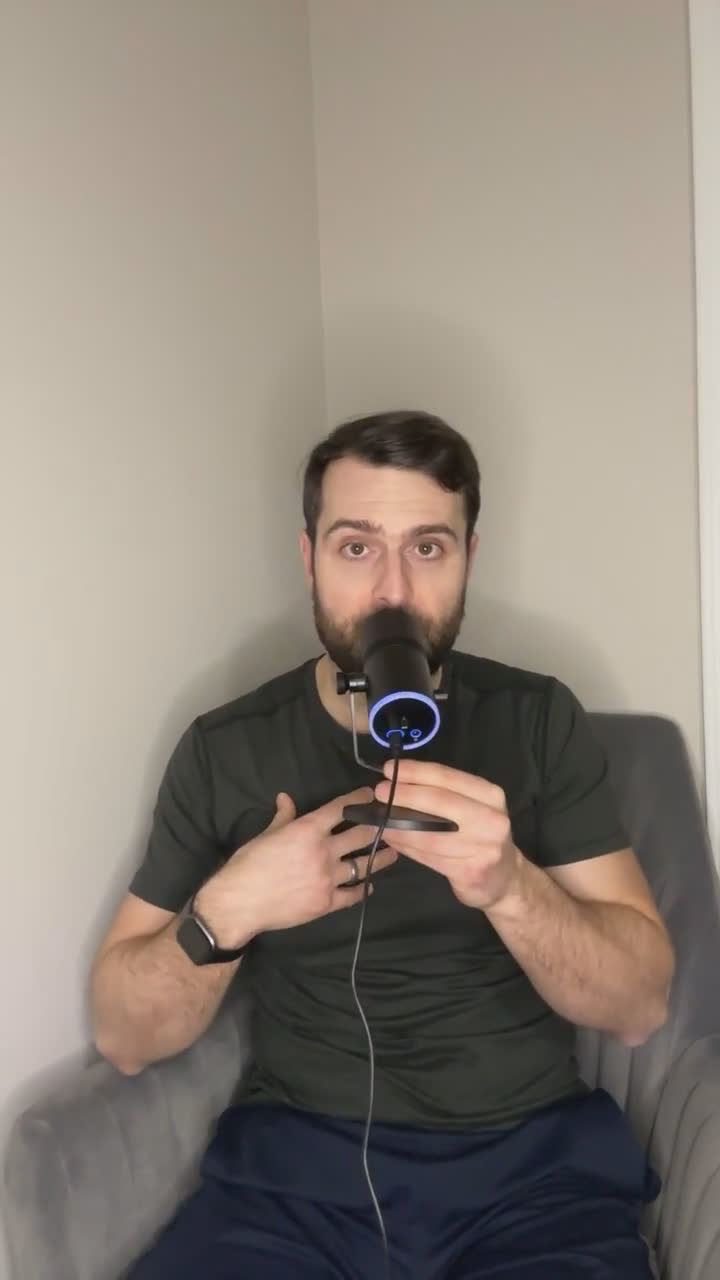
A Sunday evening Spark session exploring practical strategies to manage and work through anxiety, including meditation, breathwork, cold therapy, journaling and yoga, plus mindful cues and routines shared by the Mindset podcast host.
Another Sunday evening Spark session to set up yourself for the week. In today's session, we're going to be talking about how to overcome anxiety for good. Jules is the founder of the Mindset podcast.
There are many methods, many tools, tactics to overcome anxiety and to eventually get to the point where you can abolish it for good. meditation helps you calm down your mind. Breathwork helps you pull out, literally physiologically pull out the stress and breathe it out. It's gonna take a lot of deliberate practice and time.
Sometimes it's a temperature change that you need, right? If we're like getting heated our body, I feel our body temperature rising when we get anxious. Pay attention to your, your body and your mind and what you're feeling in that moment. There's tons of apps out there that are available for you if you're having difficult time managing your emotions.
Face wash, breath work, utilizing, like cold therapy. Third option, brain dump in a journal. Fourth, which I use, is yoga. Whatever your routine is that works for you, start utilizing some of these kind of daily practices.
Alex is the founder of Mindset Podcast. Stay tuned for Wealth Wisdom Wednesdays and Sunday Spark sessions. Help you prime your psychology for the week, for the days, weeks, months and years ahead.
And welcome, ladies and gentlemen, to another Sunday evening Spark session to set up yourself for the week, the month, the next few hours, whatever, whatever is coming up for you. I love starting Sundays to prep mentally, physically, spiritually for the week because I'm the founder of the Mindset podcast. Helping you flex your mind, body and soul is my mission. It's how I help people. It's how I optimize people mentally, spiritually, physically. And in today's session, we're going to be talking about how to overcome anxiety for good.
Now, I am someone that in my past, my past self, like growing up. Jules, welcome to the live. Happy to have you here. Now, I'm someone that started off as an anxious kid, like, very excited, very energized. I've always been very passionate, but my anxiety has always been quite high. But that was my kind of my past identity. Hey, good evening, Jules. Happy to have you here. Thanks for tuning in. So I want to start off by saying there is many methods, many tools, tactics to overcome anxiety and to eventually get to the point where you can abolish it for good.
So, yes, you can still have anxious thoughts, you can still have anxious moments, but there are ways and strategies that I've learned that might be able to help you overcome anxiety and get rid of it for good. So one of those areas which I've touched on on the previous two lives, I think on Wealth, Wisdom, Wednesdays, and the last Sunday Spark session, would be meditation. So the reason why meditation is so effective at helping to reduce anxiety or eliminate anxiety entirely is because it helps you calm down your mind.
And when we calm down our mind, we don't feel as anxious, we don't feel as wired. We don't feel like. Like our thoughts are taking over us. So it's just utilizing those tools, like meditation, reading, listening to a podcast, something to redirect your thoughts, right? Because just because we have these thoughts doesn't mean there are thoughts. It's. It's like finding ways to tweak our own psychology, right? Because many people, successful people especially, they're all scared, they're all anxious.
They're all having moments of like, oh, my God, like, I don't know if I can do this, but they learn how to do it anyway, and they learn how to not sit in that anxious state for very long. So a book that I've been listening to by Dr. Joe Dispenza pretty much finished it. I'm at the very tail end of the book called Breaking the Habit of Being Yourself, and he talks about how when you're feeling yourself start to. Like when your body and your mind are like, oh my God, I'm feeling anxious, I'm feeling overwhelmed, I'm feeling whatever he's like, yell inside your head or even say it verbally aloud.
Boom. Or just snap your fingers and be like, change, change, change. He says it's like kind of like a, like a verbal affirmation or a mental affirmation to yourself. Like, hey, snap out of it. I know I'm feeling this way, and I know it's easier said than done, but I've been working on it myself and I have been finding that it's been helping or. So we talked about meditation. We talked about kind of a verbal or a mental cue for yourself to snap out of that state faster, to help get back to whatever it is that you're trying to focus on.
Second piece of it is breath work. So it's like they go hand in hand meditation, right? Calming those mental thoughts, reducing that anxiety, reducing the, maybe the mental chaos or moments where you're feeling. It's mentally chaotic in there. Can help quiet the mind, can also help the body feel less tense. Because when the mind's tense, the body, you'll feel, you'll feel your stressors and your anxiety in your body or those anxious thoughts, which it translates into the body too. So with breath work, it's like I've been doing research on breathwork as well, and Dr.
Joseph Spencer talks about that in his book, and he says they're very integrative, they're very intertwined. Breathwork and meditation. Because breath work helps you pull out, literally physiologically pull out the stress and breathe it out. So literally when I'm doing a breathwork session, just five minutes, you don't have to do anything. Like when you're first starting off, I'm getting back into the, the meditation. So, like, I was really consistent with it. I was doing 30 minutes a day for months and months and months, and then all of a sudden I fell off of it.
I don't know what happened. I just, I was just, I was bogged down, you know, lots going on, and then I just fell off of it. It happens, right? What do we do when we fall off? We get right back on the saddle. And so that's what I did. So sometimes when you fall off something that you've been crazy consistent with, and then you've got to rebuild yourself back up to where you were, no problem. Like, it's. It happens, it's gonna happen, right? Well, we all have moments where we were crazy consistent.
Then all sudden, something happens, and we get derailed for a little bit. That's okay. It's all about getting back on the saddle. So what I did to get back on the saddle is I restarted again my practice from 10 minutes, and then I've been slowly get. I will slowly move and get back up to that half an hour a day. It's gonna take time. It's gonna take a lot of deliberate practice, a lot of patience, a lot of effort. But I know over time, it's gonna help reduce the anxiety for good. The. Those feelings of overwhelm will not sit.
I won't. I will work towards those emotions, not sitting in those emotions for far too long because they don't serve us right. They put us. It's. It's like, I don't want to be someone that sits in that state, that emotional state, where it's. It's having that power over me. Right? I'm trying to take that power back. So the way I'm taking that power back is through meditation and breath work and an app I recommend, which is totally amazing, which I talked about in the last couple I did, was oak O A K.
And it's just got, like, this picture of, like, a leaf or, like three leafs going like leaf, leaf, leaf, or something as the logo. But super, super helpful. You can do nighttime breath work and meditations together. You can do just breath work, and then you can do, like, mindful or guided mindful meditations. And it's been an absolute game changer for me. And. And I know it can be a game changer for you all. So give it a go. Even if you're someone that's pretty good at calming your mind, you could even try just using your timer on your phone and just start with.
I started with three minutes a day. When you're someone that's never meditated before, start really, really small. Make the bar really, really low. You're first starting off. Sometimes all we need is 60 seconds. I was actually in a call with my therapist. My last session with my therapist would have been a couple weeks ago. And she said sometimes when we're in that state of, like, overwhelm or shock or anxiety, she said all it takes is 60 to 90 seconds to kind of reset that inner state, that inner feeling of overwhelm and anxiety.
And she said a couple ways that you can do that is by using all of your senses. Sight, smell. Hey, Bizzle Bizzle Bit. Thanks for joining. Happy to have you here. Yeah, my Therapist was saying ways to kind of reset your mind when you're in a state of overwhelm or shock or anxiety or you're just, you're feeling heightened, right? She says sometimes you need temperature change. So she's like, go and wash your face. Like if you're feeling like you're getting elevated, you're getting angry or anxious.
Sometimes it's a temperature change that you need, right? If we're like getting heated our body, I feel our body temperature rising when we get anxious. If you're one of those, when you get anxious or angry, you get most of the time when we get anxious or angry. Sometimes when I get anxious, I feel cold or I feel really hot. Other times when I'm angry, I get really hot. So kind of like use. Gauge your, your own body and your mind and how like be more in tune. Learn how to be. Pay attention. Pay attention to your, your body and your mind and what you're feeling in that moment.
And my therapist recommended go wash your face like some cold water or try and reset your temperature if you're feeling cold or if you're. Or hot with hot. If, if that works for you, like she was saying. Or just handling a hot cup of tea. Like before you get about to sip a cup of tea or coffee, your preference. But she's like, temperature change. So cold or hot. Like cold, cold face wash or tea. And then she was like, like breath, like breath work. Like just do like a short 60 to 90 second breath work session.
So it was like box breathing. I'm a big fan of box breathing. So it's like, like inhale for four seconds, hold. So exhale for four seconds and then hold. And then you just keep doing that over and over again. It's like four seconds, hold four seconds or sorry, yeah, four seconds hold four seconds, hold. And then it's like, that's why they call it box because you're, you're breathing kind of in that cadence and it kind of feels like it's like a, it's a box. So give some of those tools a try. Meditation, very short session.
Start with as little as two to three minutes. You can do that. Even do. Do even less. There's tons of apps out there that are available for you if you're having really difficult time managing your emotions or just those triggers, those emotional triggers. There is, there is definitely tools out there. So there's a Calm app, there's Headspace app, there's the Oak app. There's even just on YouTube. You could try YouTube if that works better for you. Or even on Spotify or Apple, they have some meditation or yoga playlists or just deep focus.
Whatever works for you. There's lots of different options. And then so we talked about meditation, breath work, temperature change, utilizing, like cold therapy. Right. Face wash. I've seen a lot. I don't know if there's any signs behind it, but I've seen people also doing like, it's called a face plunge. They get a big bowl of water in the morning to wake up if you're an early riser or if you're trying to become an early riser. And then they put ice in there. And then they just, they do it like a face plunge.
And then they just sit in that face plunge for a few minutes just to kind of get the endorphins going. And. Right. They say, like, gets the endorphins going, reduces inflammation. Super helpful. So that's another strategy you can try. What else can I tell you? Another trick I found super helpful before bed if I'm feeling like my mind's racing or again, the meditation isn't enough, the breath work isn't enough. And I've done both of those things and it's still not quite enough sometimes. Third option, brain dump in a journal, whether that be on your phone or a piece of paper, or you got your own journal, kind of do like a little brain dump and just say, what are the top one to three things are causing me my anxiety right now?
You'll know what they are because they'll be top of mind for you. So you could put your top one to three things that you're anxious about and capture those in your journal, whether that be just a piece of paper, like if you just want to write it down on a piece of paper, or if you've got your own journal or in your own, like the journal app on your iPhone or I'm sure there's a journal app on Android as well. And then one other tool, so meditation, breathwork, journaling, and the last piece. So those are three tools.
Fourth, I would say, which I use, I've been using very regularly, and I'm trying to get better and better at it as well, is yoga. So stretching, mobility, range of motion, training. We carry when we. When we're stressed, when our. When our minds are stressed, that stress goes into our body. And then when our body stress, it causes tightness, causes inflammation, it causes potential injuries depending on how much stress we've been carrying. For let's say we've been carrying stress all day. And then we're just like.
What happens is like, the body is like, you're supposed to be loose. You're supposed. You're supposed to be loose. You're supposed to be like fluid, like dynamic motion, right? The body goes through periods of static and dynamic motion, right? But what stress does is if we hold on to the stress, it seeps into our body and we don't have a way to release it via meditation, breathwork, cardio, weight training, mobility, flexibility for not doing those things. Our body, it atrophies, it gets inflamed, it tightens up.
It's like, we're like this during the day and then boom. And then it's like we get all. We get all tight, we get all cramped. So, like, during the day, if you're feeling that way, for me especially, I feel it when I've had a stressful day. My body is cramped, it gets tight, it gets inflamed. So first thing I like to do after work, because I'm not really a morning training person, first thing I like to do after work is me and my wife walk. We walk the dog because it. It's great for bonding. We talk about the day and the dog gets his exercise, or we go straight into training, we make dinner, and then we walk the dog.
So whatever your routine is that works for you, start utilizing some of these kind of daily practices. Pick one of those areas that I mentioned, and I guarantee you your body and your mind and your spirit will thank you for it. So thank you for tuning in to this Sunday Sparksense. Hopefully this was helpful, informative, and I'll be back this Wednesday for Wealth Wisdom Wednesday to help with your Money Abundance Money mindset. Help you prime your psychology for the week, for the days, weeks, months and years ahead.
Thanks for tuning in and stay tuned for this upcoming Wednesday and then the following Sunday for Wealth Wisdom Wednesdays and Sunday Spark sessions. It's Alex, founder of Mindset Podcast, one of the newest members of the Cadre sphere. It's an honor to be here and I thank you all for tuning in. Take care. Have a great evening.
Reactions and comments are for members. Joining is free and takes a minute.