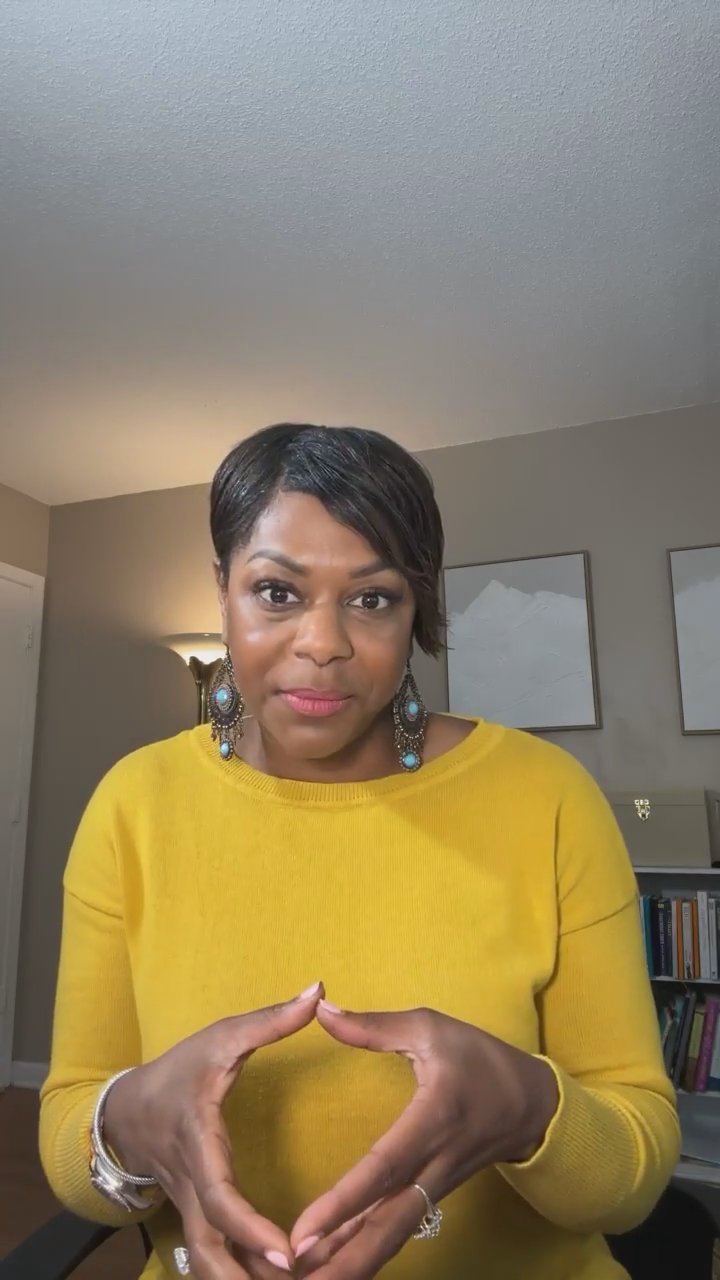
Dr. Jessica Green explores why career changes trigger fear and walks through practical ways to assess risks, protect mental health, and take one small action toward a transition, ending with a brief confidence-building activity.
Today we are going to talk about overcoming fear when changing paths. I want you to rate yourself on a scale of 1 to 10 how your day is going. Spring is coming. The it's getting warmer. But it is going to be an amazing week.
Dr. Jessica Green: I want you to rate your week from 1 to 10. Today we're going to talk about and navigate through career transitions. overcoming that fear when we are changing career paths.
With career changes and changing paths, it's one of the biggest life transitions. Today we're going to break down why career transitions trigger so much anxiety. We'll take a look at how to work through that fear and then we'll participate in a quick activity to help you feel confident about your next steps.
Your job isn't just a paycheck, it's a part of your identity. Write down one of your biggest fears about changing careers. Fear has a way of making us focus on the worst case scenario instead of the possibilities that exist on the Other side of change.
When we talk about transitioning into a new job or even just thinking about it, that can bring stress. Here are a few things to think about when we focus on protecting your mental health. Make sure you take care of your mind and your body.
So as we're wrapping up here, here is my challenge for you today. I want you to take one small action towards your career transition. Taking action, even if it's small, helps train your brain to see career change as something exciting as opposed to something scary.
Hello, Cadre world. This is Dr. Jessica Green. And today we are going to talk about overcoming fear when changing paths. So we are going to wait on some others to come in before we get started discussing career changes and how that affects our anxiety. So as we are waiting for some others to come in, I want you to rate yourself on a scale of 1 to 10, how your day is going. Good morning, Jules. Thank you for joining us. So I want you to rate yourself on a scale from 1 to 10 how your day is going.
So one would be, I have anxiety. It's not a good week. There's some areas of focus for me and. And then 10. This is an awesome week. Things are going well. I am excited and I cannot wait for Friday. Oh, Jewel says we have an eight for sure. So that means this is going to be a great week. Spring is coming. The it's getting warmer. The pollen is coming in as well because I feel a little congested today. But it is going to be an amazing week. Thank you, Jules, for sharing. Anyone else he wants to share?
Michelle, thank you for joining. So, so what we're doing right now, as others are coming in, we are rating our week from a scale from 1 to 10. One being it's not so good of a week and I have to focus on some coping strategies that I can use. Good morning, Ray. Ray. Or 10 where it's been an amazing week. I cannot complain. Or even five. Hey. This week is a work in progress for me, so. So I want you to rate your week from 1 to 10. And for some of you who are just joining us for the first time, My name is Dr.
Jessica Green and I am a licensed therapist and a supervisor here in South Carolina. I have a private practice here and I enjoy and I love what I do and I love bringing out the best of others because sometimes we have that gratification and that compassion and it also brings out the best in us. So we are going to have. Oh, Michelle is having a 10. Yes, I love it. So we're going to allow some. Oh, right. Ray says seven. So it looks like everybody's having an amazing week, which is wonderful. So today.
Oh, Tanisha has a seven. So today we're going to talk about and navigate through career transitions and then overcoming that fear when we are changing career paths. So we're going to talk about career changes. So maybe you're thinking about switching jobs, going back to school or stepping into a new field. And sometimes when we do that, we hear that voice in our head that says, what if I Fail, you know, what if I make a mistake? What if I'm not good enough? So we have those moments where we have that self doubt where we think, okay, I really want to make this change that, but I'm fearful at the same time.
So with career changes and changing paths, it's one of the biggest life transitions that we go through. And let's be honest, it can feel overwhelming. But here's the good news. I want us to realize that fear is normal. And it doesn't mean you're making the wrong choice. It just means we have to focus on and take a look at the cost and benefits of that transition. Sometimes we want that instant gratification where we're not liking it, liking that job, but we're not processing, you know, what is it going to cost me?
Is it going to benefit me? You know, what am I losing and what am I gaining? So today we're going to break down why career transitions trigger so much anxiety. We're going to take a look at how to work through that fear and then we're going to participate in a quick activity to help you feel confident about your next steps. So we're going to go ahead and start leaning in. So first we're going to talk about why career transitions feel so big. Your job isn't just a paycheck. It is a part of your identity, it's a part of your routine.
And in many cases it's a sense of stability because some of us are that breadwinner, right? So others are relying on us when it comes to the financial piece of. So there are some things that I want you to consider when we make that change because our brain sees it as a potential threat. We go into that fight or flight response because we do not like that sense of uncertainty and also that sense of the unknown. And if we think about the culture that we're in now, we're nervous about leaving that job because the potential of being laid off, the potential of not even finding employment, and that uncertainty is fuel for anxiety.
So thoughts like, what if I'm not good enough? What if I make less money and regret it? And then what if people think I'm failing? It's something that we think about and we worry about the perception that others have for us. So we defeat ourselves before we even get started. These thoughts are definitely normal, but I do not want you to focus on thinking or believing that they are necessarily true. So fear has a way of making us focus on the worst case scenario instead of the possibilities that exist on the Other side of change.
And when we talk about the worst case scenario, that's going to be catastrophizing situations where we take one small instance and we create an entire movie, an entire Netflix series out of one thing that didn't go our way. You know, for example, I have a project that's due, right? And I missed the deadline. So I missed the deadline. My boss is going to be upset with me, he's going to fire me. We're taking one scenario and catastrophizing it in thinking worst case scenario out of that situation.
So what I want you to do is this quick activity called fear versus reality refrain. So whether you're driving, I want you to think about this. But if you are in your office, if you're somewhere that's a safe environment for you, I want you to take out a notepad and a pen or pencil or even list it in the chat. But I want you to write down one of your biggest fears about changing careers. You know, and maybe I won't be successful or I may struggle financially, but I want you to write down and put in the comments one of your biggest fears.
So when I left the school system, it was a sense of stability, venturing into private practice. I definitely had that fear that if I'm not successful, am I going to be able to, you know, pay my bills? You know, in all transparency, am I going to have that caseload where I can continue to pay my bills and continue to enjoy life? So in the comments, I want you to list one of your biggest fears. You know, again, it may be I will not be successful, I may struggle financially. List those in the comments.
So after you list them or write them down in your notepad or even think about them, I want you to ask yourself, is this fear 100% true? What proof do you have? And Ray, Ray says struggling financially and losing her identity as an rn. Absolutely. And I want you to think about, do you have proof that, that you will definitely fail? And again, sometimes we defeat ourselves before we even get started. We already think about worst case scenario instead of setting up those goals. Financial stability, says Jules, setting up those goals where we are being proactive as opposed to reactive.
And Michelle says, you know, getting older, making sure I have everything lined up so I know I have that sense of financial stability and, and those things in place. If there ever comes a moment where I'm not able to take care of myself, I want you to think about what skills or experiences do you already have that make success possible? Yes. Michelle mentioned coping with management and co workers, new people that may think differently than we do and being able to find that balance. So you're able to also be your true, authentic self.
You know, being that person that you're supposed to be and not that person that everybody wants you to be. But we can highlight and show that authenticity within ourselves. And when we think about skills and experiences, I also want you to think about those mentors or even your sponsors that may be in that position, you know, who can armor up and also fight for you as well. And one other thing I want you to think about is flipping that script. So we're taking those negative thoughts and turning them into positive affirmations.
So instead of saying, I won't be successful, I want you to say, I am capable of learning and adapting. Instead of saying, I'll struggle financially, I want you to think about, I will plan carefully and take steps to protect myself. And one thought I want you to think about. So, sticky notes, but not just any sticky note. I want colorful sticky notes. So I want you to think about having a stack of colorful sticky notes, right? And we're going to write affirmations on them. But the most important piece is, where are we putting these sticky notes, These colorful sticky notes with those affirmations on it?
So I want to think about putting them a couple of places on that bathroom mirror, or if you have a long mirror in your room or you have someplace in your room where these sticky notes will hold. So I want you to put these sticky notes in your bathroom. And I say bathroom, because that bathroom is at one place we go to at least twice a day, in the morning when we wake up, and most likely, too, before we go to bed. Because there are going to be those moments where we get up and we talk about personal growth, but those moments where we get up, we're tired, we have that sense of fatigue, and we may say, oh, my gosh, I do not feel like this today.
But when we get into that bathroom and we cut that light switch on and we see those affirmations and those colorful sticky notes, color brings life. Color brings excitement. So when you get in that bathroom, we read those affirmations, and that helps start our day. And remembering, hey, we are our greatest power, Our ability to triumph begins with us. I am capable of learning and adapting. Today is going to be a wonderful day. And even if we're in there and then, you know, we're getting our day started and we have to listen to upbeat music to start our day, but it builds that excitement for the day and us reminding ourselves.
I am so excited for today because. So those are some things that I want you to think about. When we talk about personal growth, when we talk about overcoming fear, when we're changing paths, and those paths may not be with work, it may be getting married. It may be the adjustment of having a husband, a wife or a partner and being able to have that personal growth, finding that balance, and even if our spouse gains employment and we may have to move, it brings in that fear. It brings in that adjustment.
So when we talk about personal growth, when we talk about shifting paths, it doesn't always have to be work. But those same strategies can be used not only when we talk about career changes and changing career paths, but when it comes to our personal life. So I hope this exercise helps you shift your mind from panic mode to, to possibility mode where we can start building our confidence, building our self esteem, and reminding ourselves that we are our greatest power. And you were made for a time like this.
So shifting gears a little bit, leaning more into the mental health side of career changes, you know, when we talk about transitioning into a new job or even just thinking about it, that can bring stress and that can bring self doubt and sometimes imposter syndrome where we have that self doubt where we may be that person at the table and we feel like, am I worthy of this? Some of the language that they're using, I'm not understanding. Am I supposed to be in that position? And we start second guessing ourselves.
So that's why it's so important to check in with yourself emotionally, mentally and physically during that process. So here are a few things I want you to think about when we focus on protecting your mental health and especially during that career shift. So the first thing is making sure that we stay present in that moment. Because with anxiety, anxiety loves to make us obsess over what might happen, but not what will happen. So I want you to focus on small daily steps that keep us from spiraling into that worst case scenario.
Number two, lean on your support. Last time we talked about those individuals who may sit on our personal board of directors. They're your individuals. When you call them, they answer the phone. When it's time to armor up for the battlefield with you, they are ready. Whenever you have those individuals who sit on your personal board of directors, I want them to make sure they know that they sit on your personal board of directors. Whenever you call them, they answer. Because if they do not know or understand their role, they may not answer and they may get back with us a day or two after when we need them.
When you talk about your Mentos, your sponsors, those individuals who sit on your personal board of directors, make sure they know that they have that seat at the table with you. Number three, make sure you take care of your mind and your body. So when we say mind and body, we're talking about sleeping, we're talking about even practicing mindfulness. If there's an opportunity for you on lunch break to be able to take that walk, as you're taking that walk, I want you to think about, you know, using your senses.
What are five things we see, you know, four things we can touch, three things we can smell as we go through the senses and taking that deep breath because that allows us to be in the moment. If you're in your office and you feel like, you know, your anxiety is increasing and you need that moment, you know, take yourself to that, your magical place. Whether it's could be, you know, Cayman Islands, it could be the Bahamas, but you're pitching yourself on that beach and you're using your five senses.
What can I see, taste, touch, hear and smell? And then taking that deep breath. We may have to do it twice, we may have to do it three times to be able to calm down that heart rate and be able to put us back in that moment. But it's that opportunity for wellness and that opportunity to allow our brain to process our emotions so we can think clearly. So one thing I want you to realize is that your career matters, but so does your mental well being and your mental health and understanding that you do not have to burn yourself out to be successful.
So as we're wrapping up here, here is my challenge for you today. I want you to take one small action towards your career transition and maybe updating your resume. It may be reaching out to someone in your field, it may be researching a staff development or a CE opportunity. But I want you to take one small step towards your career transition. You know, not saying, hey, if I do this, this means I have to change careers. It does not. It just means you're making sure you're being proactive and as opposed to reactive.
And you continue to build your resume, continue to build your skills, continue to build those experiences, and also taking in some research for some courses and then some certifications. So what I want you to remember too is taking action, even if it's small, helps train your brain to see career change as something exciting as opposed to something scary. And remember, changing paths doesn't mean you know you're lost or I don't know what I want to do. It just means you're growing. And that fear is just a sign that you're stepping into something bigger than where you've been before.
So seeing the fear with overcoming changes, where the career paths, whether it's home, but not allowing that anxiety, not allowing that sense of the unknown to take over, you going for it, because fear has a way of making us push back. Right? That fear has a way of us seeing vulnerability as a negative. But I want us to see it as a positive. And I give you one other example before we wrap this up. So some of my parents, you know, we have our kids who, you know, we go to elementary school, middle school, high school, and if you're in South Carolina, you have those IGP meetings with your high school counselor.
And we come to that realization that my child is about to graduate high school. And for parents who have been there, we're like, oh my gosh, my child is graduating. You know, I'm not ready for this. But we have to remember we have built for this moment. We are made for a time like this. And also seeing vulnerability as a positive. Yes, we are fearful, but we have to be courageous at the same time. And realizing too with our children, we've showed them the path and we've showed them the way. But now it's time for us to release and let go, which is fearful, which also tests our own ability.
So as we talk about personal growth, as we talk about anxiety, the fear of transition, I want us to be proactive as opposed to reactive and be ready and be armored up. If you enjoy this podcast, I would definitely like for you to share it with your colleagues and your friends. But one thing I want us to also remember is continue to be courageous, to have these critical and crucial conversations, continue to have compassion, be that listener and continue to build connections. Think about our sponsors, think about your mentors, think about those individuals who are like minded, as you are or in the business that you're in and think about having those one on one conversations, and I like to call them informational interviews where we have in those coffee chats.
But we're talking about the industry, we're talking about what can we do to continue to be our best selves. So continue to be courageous, have compassion, build connections, and continue to be true to yourself.
Reactions and comments are for members. Joining is free and takes a minute.