J.C. shares a morning frozen-pizza moment and reflects on stigma, comfort behaviors and how perceptions of good or bad shape actions, inviting listeners to consider what’s stigmatized in their own lives.
Well, hey there. How are we doing? I hope we are doing great. As you show up, I'm going to take another bite of my oven frozen pizza.
J.C. North. had the craving for a frozen pizza. Why is he sharing his morning pizza journey with us? I hope you're doing great today. If you're not doing great, know that that is okay too.
Robert Greene: I have frozen pizza at 7:30 in the morning because my body asked for it. He says the perception of goodness or badness or rightness or wrongness changes the way that we act. Greene: Having something comforting at that time helps me respond to that.
LZ: We don't talk about our, our insides. Stigma, stress, anxiety, perception, guilt, shame. These things are really, really bad for your health. LZ: How many people are talking about the things that they really want to be talking about.
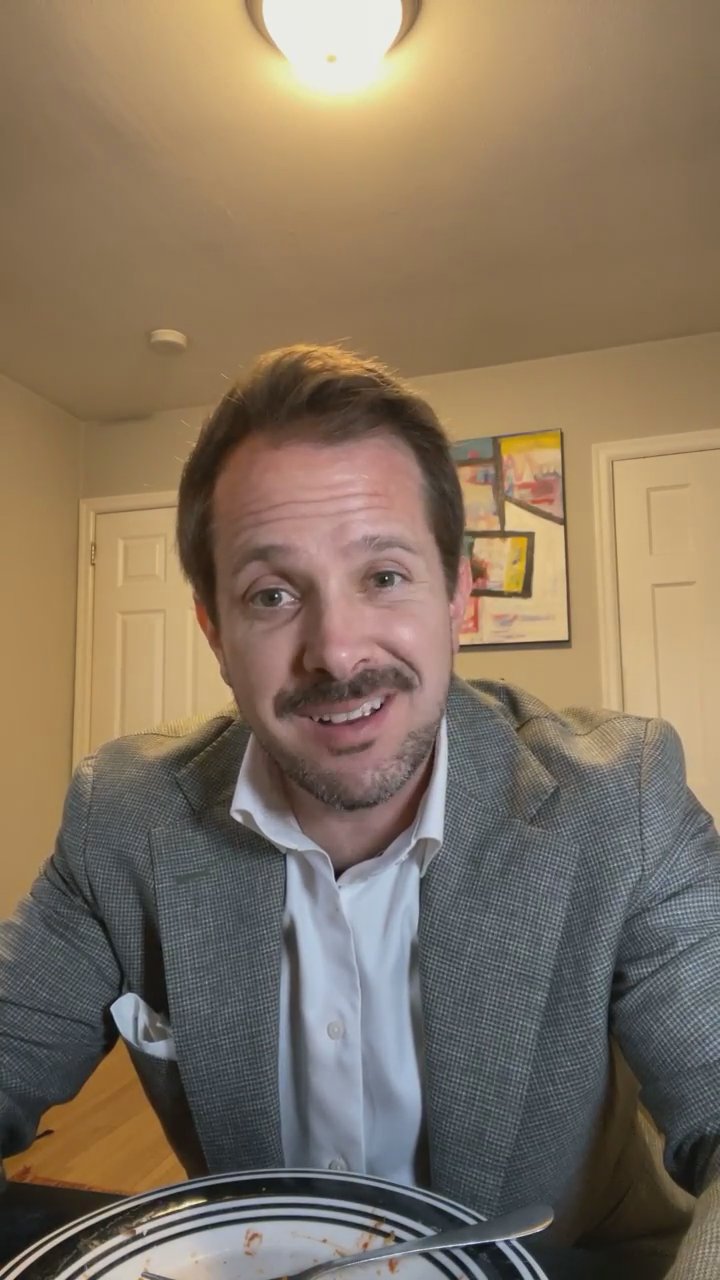
Well, hey there. Good morning, Cadre. How are we doing? I hope we are doing great. As you show up, I'm going to take another bite of my oven frozen pizza. Yes, it is 7:30 in the morning. And after my walk on the treadmill today at the gym, I had the craving for a frozen pizza. So I went to the grocery store where there is not many people there yet at 6:30 in the morning. And I walked to the frozen aisle. And I love that now they can turn off the lights when no one's shopping. So all the frozen, you know, freezers were.
Lights were off and I'm like. And I find. Walk, walk. Good morning everybody. Nice to see you. T. North. Jewels. T. North. Nice to see y' all. And I walked to up and down looking all the different frozen pizzas and I found the one I wanted a bellatoria thin crust with pepperoni and stuff. And then I came home and I got cleaned up while my frozen pizza cooked in the oven. And now I'm enjoying my pizza. C. why are you sharing your pizza journey, your morning pizza journey with us? And here's why. But before I tell you why, I hope you're doing great.
I really hope y' all are doing great today. And if you're not doing great, know that that is okay too. I'm not passing aside or downplaying your not greatness or not feeling good. But I am saying that I bet you're still capable. I bet you're still everything that you are, even if you don't feel like it. Right? Speak wonder. Yes. So back to my wonderful frozen pizza at 7:30 in the morning. There's probably a large chunk of the world that would be like, you're having a frozen pizza at 7:30 in the morning.
And I would say, yeah, I am. And they go, that's an interesting breakfast. Or they may question the healthiness of it or the timeliness of it. Or is the pizza of us like, what kind of pizza is and what is it made of and is it processed and is it not processed? And all of a sudden we get in this whole space of, of stigma, right? You know, there's a lot of stigma and a lot of things. It's kind of one of those very like hot button words. In the last five, 10, 15 years. Stigma shows up when we pick up vibes from the world that say, hey, this thing is is bad.
We may not dive into is it bad or not, but the perception of goodness or badness or rightness or wrongness changes the way that we act, the way that we talk, the way that we share. Morning, Robert. Nice to see you, my friend. So I thought I'm gonna go ahead and have some frozen pizza at 7:30 in the morning because my body asked for it and because I got a long day ahead and because I stress out when I have long days. So having something that's comforting for me at 7:30 in the morning helps me respond to that, helps me tell my body, hey, we're okay.
Hey, eat some pizza. Hey, that's okay. I invite you to think about those things that are stigmatized in your world. I'll share another one. Over the last four months or so, I've had a lot of colorectal gastrointestinal stuff going on. Now I'm a man in America, so we don't talk about our butts very often, do we? We don't talk about our, our insides. We don't talk about pain. We don't talk about the things that may be embarrassing, the things that people don't know that are going on. Well, a couple weeks ago I had surgery on my insides.
A couple months from now I'll have another surgery on my insides. I have some hardware inside my body right now that are attempting to help heal my insides. The funny thing is these are things that I never hear people talking about. Not that people need to, but it makes me wonder how many people are not talking about the things that they really want to be talking about. And as I always love saying, feeling like crap is bad for your health. Let me say it again. Feeling like crap is bad for your health.
You may be like, what, you having a perception that you are bad, you having a perception that you are wrong. You having a perception that you are not doing the correct things or living the correct way. The stress and the anxiety that that creates the stress and the anxiety are bad for you. You know, in a lot of the worlds in which I work, which has a lot of research associated to it, so often people say, we have found correlation between this and that. I'll give you a big one. We have found correlation between ultra processed foods and these negative health implications.
Correlation, correlation, meaning there is something this is true and this is true. And we find those two things to be true together, which is different than causation. This caused that. So whenever I'm at conferences and someone on stage is saying something like, I'll use the ultra processed food example, like, we have found correlation. There's like, our research has shown correlation between people who eat ultra processed foods and this thing, this, this condition. And I will from the audience ask him like, thank you, thank you for your research, thank you for your work, thank you for your passion.
And I'll say, I noticed that you found correlation. Have you found any causation? Have you found that people eating ultra processed foods is directly the cause of the thing? And guess what the answer is every single time. Now, again in my world, and again I deal in this world quite a bit, I worked on the first comprehensive research ever done on food, body and fitness shaming in the western hemisphere and then we've presented it and we've been at the conferences, we've talked to the dietitians and to the fitness professionals and the health professionals and the doctors and so on and so forth.
Whenever we present this or whenever we're watching other people present their research, they'll always talk correlation and not causation. There is no causation. But people make the jump of going, well if this is associated with this, then obviously that's what's causing it now. Stigma, stress, anxiety, perception, guilt, shame. These things are really, really bad for your health. So as I eat this very last big piece of my frozen pizza at 7:30am which may make some people go, how do you eat pizza at 7:30am?
I want you to think about that for a second. Bezel bits. No different than eating breakfast foods for dinner. Exactly right. Food is food. My friend Maya Feller, if you ever watch Good Morning America, she's the dietitian on Good Morning America. She always says there is no morality. There is no morality in the food that you eat. Meaning you choosing to eat perceived healthy food does not raise your morality higher than someone who's eating unhealthy food. The culturally that ain't how we live. Speakwonage says, I actually love that your body asks for pizza and you answer the ask.
Yeah, but is that something that is worthy of life changing love? Like let's say you got an itch on your cheek. Would anyone ever say I actually love that you had an itch on your face and you scratched it. No, no one would ever say that. Like you would never, you would never go, it's like, oh, I love how, like how like your eyes said blink and then you blinked. We would never say that. But to speak wonder's point, right, it seems that there's some applause that's needed for people eating pizza for breakfast or sharing that.
Wow, you know what, my b*** hurts today and I'm a 43 year old man And I've never heard another man talk about their b*** hurting. Like, those types of things change the way that our health presents. So my invitation for you today, everybody, is to go ahead and consider when you go, I need to not let the world know that I'm doing this and not that you have to go ahead and do what I just did and eat pizza on screen. But check the times when you are spending energy feeling bad about what you are doing because the world says you should feel bad about what you're doing.
I have my suit on. I don't wear a suit very often, but I'm on a panel today of three people for Twin Cities Business magazine talking about wellness in workplace culture. I am one of the experts today that people are putting on their fancy clothes to come eat a fancy breakfast to learn about wellness in the workplace. And how did I start my day? By eating some frozen pizza. Y' all, let's continue to flip the script. That's what we're doing here at Cadre. We're showing the world that there's many ways to be in.
Well, but I'll tell you, the one thing that ties them all together is you getting to know and you getting to listen to what your body's asking for when it's asking for it, because your body's on your side. Y' all have a good one. We'll see you tomorrow. Bye.
Reactions and comments are for members. Joining is free and takes a minute.