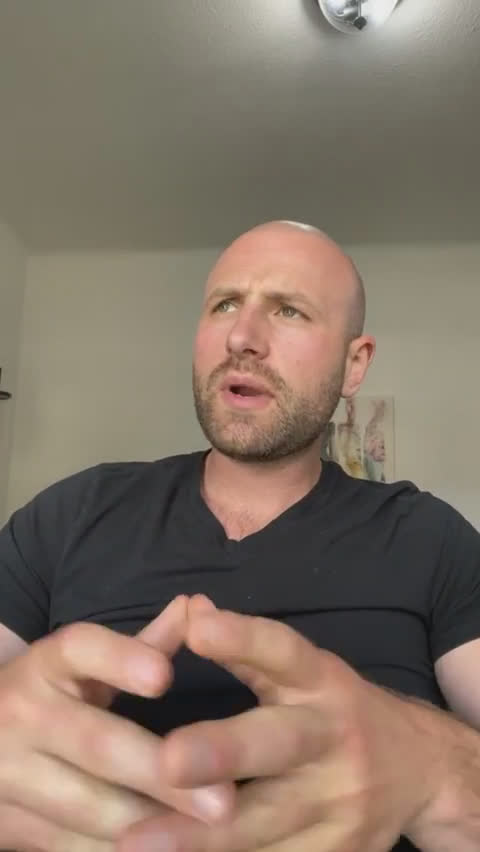
Today I am going to share a tool I use in therapy for clients struggling with clinical anxiety. This is a tool used in many forms but essentially you are challenging the logic around your anxiety and right-sizing the situation
Evan: I had a client today who's really struggling with anxiety. Nervous system is constantly activated. One of the things that she and I did was learn how to question anxiety. It's this sense of an alarm system going off that is disproportionate.
Ask yourself these questions if you are suffering from anxiety. Would this be the worst thing that could ever happen to you? Could you still find happiness and contentment in your life if it happened? And the last one, would others still be there and support you if it happens?
When he was starting up one of his businesses, he had a panic attack. A mentor asked him a series of questions. After days, it was like that, the anxiety went away. How can this apply to other people?
Having severe anxiety is not always illogical, right? This could be used to get you into a place where you're not anxious. But enough to motivate you to perform and dig yourself out of the situation. Go check out those other anxiety videos.
What's up, Cadre fam? Evan here, your resident mental health and addiction therapist. And I wanted to hop on live because I had some interesting thoughts today, let's call it. So whenever I do therapy with someone, I mean, there are lessons that I learn every day from my clients. So we could call this thoughts from the office that came up. You know, I had a client today who's really struggling with anxiety. Right. Nervous system is constantly activated, and I gave them an assignment to do one that I created a long time ago, and I haven't used it in quite a while, but I put it together after working with this other client and this client.
We're going to change some of the data around. But she was, I would say, like an executive, but she was, like, pretty high up at her company. She was, like a district regional manager or something, right? Something like that. So she worked at this, like, kind of retail type store, ground level. Like, worked her way up, you know, was getting close towards retirement. Never had, like, a big history of mental health addiction, but then, like, all of a sudden, out of nowhere, just started having this crippling anxiety.
And it was when she got a new boss, and she admitted that this boss was fine, but there was something about her that triggered her anxiety. And I think it was because of their leadership tactic, where they would sometimes they were kind of the liaison between corporate, and they would. And she would kind of use these tactics to kind of scare them a little bit, keep them in line, like, you know, corporate there things have changed over there, and we got to hit those metrics. And, you know, if not, I don't know.
You know, and then he just goes and plays golf. Meanwhile, she and her, you know, partner were, like, two of the best performers their district out of the, I don't know, hundreds of districts. I don't know, let's say 50 districts throughout the company. They were, like, number two or something like that, right? And they were really worried because, like, what if something were to happen? I'm, like, really close to retirement. Like, and it literally got to the point where they couldn't work. Like, they had to take time off of work because they were just so anxious and, like, could not perform because of this anxiety.
So they came to me, you know, and we worked on it. And one of the things that she and I did was learn how to question anxiety, because anxiety comes from this place, this deeper part of our brain, a more primitive part of our brain, the fight or flight part of our brain. It's our brain telling us that there's danger. Right. Red alarms going. And if you check it out, I did two videos about anxiety where I did, like, a skit, and I talk about this in a little more detail, so you could go check those out, too.
But so, you know, anxiety. Yeah. It's this sense of an alarm system going off that is disproportionate. Right. So the alarm is extremely loud. I always use this example. It's like the fire alarm going in your kitchen, but you just made a steak. Right. And it was smoking a little bit. And this is saying, you know, super loud. Get out of the house, run. Right. And you may know that, but it's still, like, really. It's still really disruptive. So, you know, for some people, they just have such a hard time controlling it, and it doesn't matter how much they, like, initially know that.
It's illogical. However, sometimes it is helpful, because when you're deep in that anxiety, then it does move you away from logic, and you really start to do fear these things. And it's a weird mix, as this client, like, knew they shouldn't fear it, but they just couldn't help it. And their brain was just consistently telling them that they were in danger, that they, like, started to believe it. So, you know, we did a lot of different exercises in mindfulness and calming, and those were helpful.
But I knew she was, like, a very logical person, and this stuff could help anybody, but I knew that. No, but I kind of figured that maybe doing something like this would appeal to them, being that they're extremely professionally focused, very cognitive. And so I wrote this out for her, and I've always done this with clients, but I'd heard about what's called. I don't know if you've heard of Socratic questioning. So Socrates, the ancient philosopher, the stoic, he would. He would actually drive people kind of crazy doing this, apparently.
But he was really known for, like, finding truth and logic through asking questions. So he wouldn't, like, debate. He wouldn't debate and tell you, I think this. Da da da da da. What he would do is he would literally just ask you questions. And sometimes that would lead to him, like, pinning you into a different corner. Like, pinning you into a corner, because if your argument was not logical, you wouldn't be able to answer some of these questions. And so it's called Socratic questioning. And I could be butchering this.
I'm not a philosophy major, but so I put together some questions that you could ask your anxiety. Right. I mean, really, you're asking yourself, but if you're experiencing that anxiety, how do we get from deep inside your body, the deeper part of your mind to the frontal part, the cognitive part, where you could start questioning why it is these, you know, fear responses are happening. So I wrote some of these questions down a while back, as I mentioned. So I'm just going to go ahead and read them to you, and I think they should be self explanatory.
Right. So what is the one thing you fear most? What about it is scary? What about it is the most scary? Is it likely to happen? If it did, is there anything you could do about it? Do you have any control of the situation, or is it 100% out of your hands? Who do you worry this would affect? Would they eventually be okay if it happened? Would this be the worst thing that could ever happen to you? If not, what are three things that would be worse? What are three things you could do to make the situation more tolerable if it did happen?
Could you still find happiness and contentment in your life if it happened? Is the situation dire enough that it's worth worrying about and sacrificing your serenity for? And the last one, would others still be there and support you if it happened? Right. And hopefully, as you hear those, it can highlight why something like that could be helpful. Because when you're in that mist of anxiety, you don't think about that. Right. It's like you're so hyper focused on it, right. I always say it's like Google maps.
You're, like, zoned in on, like, one little part of the street, right? Where is, if you pinch and zoom out, you get to see the bigger, bigger, bigger picture and things to be in context, right. And I think, like, another question I could add here is, like, you know, like, if it did happen, do you think would affect you in one year, five years from now? Usually the answer to almost all of these is no. Right? Now, some of them could be right. Now, when I had the client do these questions, I would have her sometimes do it multiple times because she did this and would find it extremely helpful.
And actually, it brought up a lot of thoughts. Even though this is not based in, you know, the anxiety, is not based in logic, this actually brought up things that she never thought about. She never thought about the big picture. I mean, she did, but she didn't really put it to scrutiny, put it to the test. Right. Again, like I mentioned, you know, she was really well favored at the company, had connections at the corporate office, was one of the top performers, was part of the top performing district in all the country.
And so I started to ask questions, too, about, like, the company structure. Do you know anyone that got fired? Well, out of all the district managers, hundreds that I knew, only one got fired because they got a DUI, and the company tried. I mean, it was like something pretty obvious and egregious. So, no, I never knew anyone that got fired. Okay, so based on your metrics, you know, would corporate be happy? Oh, yeah. We're number two. Like, so would they ever fire someone? Would you ever fire someone who is making those metrics and everything else?
Oh, no, never. That would never happen. And so it kind of went on and on, and he found that it was really helpful, especially to write these things out. And like I said, especially write them out multiple times when the body starts to react, because sometimes when you change the way you think about something and you actually tap into that more cognitive part of your brain, you're better able to quiet. It's like, you know, it's like soothing a baby, essentially. Right? So I think if you're someone who is experiencing anxiety and is prone to that, I think we all are to a certain degree.
There's some questions that you could ask yourself. So go back and I could, if anyone needs to, I could post in the description some of the questions here, but try it out, see if it works. See if it helps you. For a lot of people, it does. For a lot of people, maybe the anxiety is just so much that it doesn't. But I think if you, like, write these things out, it really does take away the power. I mean, at least a little bit. It's got it kind of one quick personal story. This was, like, a handful of years ago when I was starting up one of my businesses.
And, well, I actually had it for a little bit, but we got into a little bit of trouble, let's say, where we had a couple bad runs, a couple bad quarters, if you will. You know, to the point where I had to, like, lay off an employee, and I was, like, in debt pretty bad. I mean, the company was in the hole, like, pretty bad. And I mean, and for whatever reason, like, I didn't see it coming to the degree it was like I always thought because, you know, like, the company would always do that. It would always kind of dip, and it was kind of like a high risk, high reward kind of thing.
And, you know, like playing blackjack or something, you know, if you get five bad hands in a row, which is, like, not as likely, you know, you lose it. All right, and so I was kind of at hand number four. Well, I was actually way past. I was at hand number seven of losing. Right. I'm deep in the hole. And I started to, like, have a. Not like a panic attack. Like, a panic attack is in, like, a very short period of time where you, like, literally, like, I'm gonna die. You know, like, there's something, like.
Like, literally far past, beyond what you could handle in the moment. Right. And so that's why a lot of people get hospitalized. Anyway, it's another story. It's a panic attack. But I'd be more prone to these, like, anxiety attacks. Right, where it was, like, days where I was, like, it was trouble sleeping and stressed and worried and just always in fight or flight and panic. And I ran into one of my friends who. He's kind of like a mentor to me in a way. Like a. Like a father figure, if you will.
Maybe more like an uncle. But anyway, someone, like, I respect someone that I look up to, and he goes, you know, very supportive. Hey, how you doing? And I'm like, pretty good. And he's like, how you really doing? I'm like, not very good. See right through that. And he goes, why? And I explained the situation, and he's a pretty blunt. He's a lawyer. He's like, a pretty blunt guy. And he's like, stop. He's like, have you ever been in a situation like this before? Yeah. Like, is this something that you could, you know, I know you lost your employees.
This something that you could do and dig your way out of? Yeah, I've done it before. I could go take over her role, and that's how it all started anyways. And I could do it and slowly break out and, you know, there is a path, and it's like, okay, so that's what you're gonna do. You're gonna hop in. It'll be tough for a little bit, but you're gonna be able to do it. And, you know, and I think, actually, the first thing he asked me, he's like, he knows I'm in sobriety. Did you drink? No. Did someone die?
No. And it'll be okay, right? And, like, after you ask, like, a series of these questions, it was like that. After days, it was like that, that my anxiety went away. Like the panic attack, anxiety attack, whatever. It just went away. These things will happen to me. And I'm like, you know, as a therapist, I kind of look at it from, like, an academic angle. It's like, hmm. Like, I'm, like, studying my own brain. I'm like, hmm, that was interesting. I was panicking for three days. He asked me these questions, and it went away, just washed over me.
How the h*** did that happen? So I thought about it more and it started to make more sense. And I'm like, how can I apply this to work with other people? So here are some of the questions I came up. I'm not as blunt as him. Did someone die? Did you do drugs? No, but I do find this to be helpful. Not everything helps everybody in the same way. But try it out. Try to question it, try to write it down and see if that doesn't help. And again, sometimes, I guess, one other quick thing. Sometimes with anxiety, right?
Like, having severe anxiety is not always illogical, right? Because, like, maybe you're in a situation that it's logical to be pretty anxious about, right? That to be fearful that there maybe is potential for harm. Now, sometimes, at the end of the day, though, does that anxiety help? Is it going to help the situation? Going to help you get out of it? Is it going to help you accept the situation? Probably not, right? So even in those situations where anxiety may be warranted, this could be used to get you into a place where you're not anxious.
So anxious that you can't perform, but. But you still have some anxiety. But enough to motivate you to perform and dig yourself out of the situation. And even so, again, like in this list, even if it does happen, what does that look like? We call it, like, the downward arrow technique. So, okay, you lose your job. Then what? Then what's the worst thing? Then what's the worst thing? Then what's the worst? And then eventually you get to the point where, like, then I die a miserable, lonely death, and you're like, okay, how likely is that?
That it's gonna get to any one of these points? Right? So it's another way people employ this. But anyway, I hope you got something out of this. Go check out those other anxiety videos. I'm going to be doing some more lives this week. Come check it out. And folks, that stop button, until next time, we'll see.
Reactions and comments are for members. Joining is free and takes a minute.