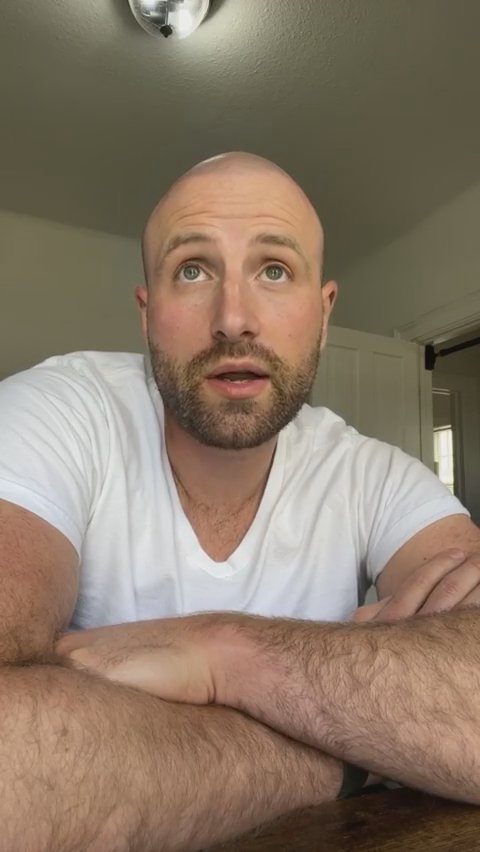
I am excited for this Livestream to share a story I have not told many people. Folks are always asking how I can be a therapist to hear sad stories of pain and trauma all day. But it's something you get used to, it's part of the job just like being a first responder or hospice nurse. Though I would argue less intense than that. Anyway, I am going to share the story that was the hardest to hear and how I worked with this client to find hope.
Evan Cadres is a mental health and addiction therapist. In therapy, it is an emotional exchange. It's really important to not take a lot of this stuff home. Never have difficult clients because that's what you sign up for.
A woman was directly responsible for the death of her son, who was two years old. A lot of times in these trauma situations, one of the features of trauma is feeling a sense of guilt and depression. Therapy is actually part of experiencing trauma.
Even in the toughest of situations, people do get better. Go check out my video on how to find a therapist that's the right fit. There's plenty of other reasons to want to do therapy.
Alright, folks, we're doing another live. I'm Evan Cadres, resident, mental health and addiction therapist, and I decided I wanted to reach out to you all and talk about a story. And I've never really told this story before, and I got to be careful, obviously, telling Klein stories because of HIPAA and privacy violations. Right. So. But I do like to tell stories, and when I do, I change them up. And I change them up enough so you'll never know who it was. A. But also, what's more important is the lesson in it.
So everything has been changed around a lot of the details. However, you know, the lesson and the overall principles are going to be the same here. So the reason I want to tell this story because. Is because a lot of people ask me, how do you do it, Evan? How do you do it? You know, you're listening to stories, trauma, addiction, and I don't always know how to answer them. And I guess the best way I could put it is, you know, they'll also ask you, how does this not, like, affect you? How do you not take it home with you?
How does this not, like, how do you not have some, like, vicarious trauma or something from this? And they're usually surprised when I answer them. Like, it doesn't. Like, it doesn't really affect me. Now, there are some caveats to that, because in therapy, it is an emotional exchange. I care about my clients, so it's not like I don't feel any emotions with it, you know, like, I'm happy when my clients are doing well, when they. When they get a win, when they get a job, when they're, you know, on the other, you know, kind of on the other side.
And we're actually able to stop doing therapy because they've really changed. Right. That makes me happy. Sometimes I get a little frustrated with clients. Believe it or not, that happens. I got to check myself there, but you know that. So there are emotions there. But I really. It's really important to not take a lot of this stuff home. Right. And some people have an easier time than others, but every once in a while, one can really penetrate your armor and, you know, it doesn't cripple, debilitate you as a therapist.
And again, it's different for everybody. Some people will be therapists, and then they will stop being therapists. Like, for that reason, I know I'm jumping all over the place a little bit, but what I have found with therapists is that they, very few of them quit because of clients, even because of tough clients, almost always, a therapist quits because of the work environment and their leadership in the work environment and how hard and how hard they work them. And if they're appreciated, that is like, the biggest factors.
Never have difficult clients because that's what you sign up for. You know, you're not going into this being like, oh, this is going to be a bunch of easy, boring. No, like, for some reason, whatever, you kind of like the level of drama in some way, the level of intensity, but really under it all, you want to help people really in need, people who are really struggling. And the people who tend to be difficult, really difficult, are the ones that tend to be struggling now, there's always caveats to that as well, where some people are overly difficult, and especially in a residential environment where you're trying to manage a whole group of people, and then, you know, that's not fun, and that could burn you out pretty quick.
But usually people get burned out because of the institution, not because of the clients that they work with, per se. So every once in a while, one will get through to you. And as you can imagine, I have heard a lot of stories, a lot of trauma, horrible s***. But again, that doesn't usually affect you because you desensitize. And again, like, I feel the same way when someone's like, I'm a hospice nurse. Well, all your clients are gonna die. You know, like, and not only that, I mean, we're talking about, like, severe, debilitating physical issues and care and, you know, doing stuff that I would never want to do.
You know, a first responder, someone in the military, like, how do you do it? Right? Like, that's how I look. And so that's how I best understand how people feel about me, because I'm like, oh, that's how I feel about them. Right. And then when I ask a hospital, they say literally the same thing that I would. Right. And of course it's going to get through to you sometimes, but in order to be effective at your job, you know, you have to have some level of healthy detachment for a therapist. You know, you can't be too far, but you can't be too close to it.
You can't be taking it home with you. Anyway, so one of the most tragic stories I've ever heard. And again, fun topic, right? But it's. It's interesting. Sad, but it's interesting, and there's a message in it. So I had a client who, she came to a location that I was working at for people coming out of treatment and early recovery. And like, we were hesitant to even take her because of her history, but apparently, you know, she was pretty directly responsible for the death of her son, who was two years old.
And basically. So the story was she was a really successful person. She had a child later in life, so it may have been her only opportunity to have a kid, really wanted one, finally had one, had a husband. You know, life was going well for her. And basically she, you know, she wasn't an alcoholic, someone with a use disorder. She did like to drink, and there was a party that they had, like, on a special occasion, a holiday, and she probably had a couple too many, and something happened where she, like, left the oven or the stove on or something like that, and there was a carbon monoxide leak one way or the other.
And of course, I'm kind of making this s*** up anyway, but, like, the actual situation is, like, very close to this. Right. So carbon, when I said leak, let's just say, and her two year old died, right. And so it's tough because a lot of times in these trauma situations, one of the features of trauma is feeling a sense of guilt and depression as well as feeling a sense of guilt. And almost always, like, any outsider could be like, that's not your fault, and, like, mean it because, like, it's not.
You know, they take responsibility for things that aren't their fault. Now, how are you going to say that to somebody who had that situation, right, who literally drank? Who literally. Because they drank, they turned the stove on and, you know, did something that was reckless. I guess if you want to call it, like, I do it all the time. I guess I leave the stove on. But I'm just saying the real story is a little bit. A little bit more than that. But you get the point. So it's really hard to second be like, it wasn't your fault.
Right. Yeah, we all make mistakes. True. They obviously weren't trying to do it, but, you know, they were pretty, you know, negligent in the situation and it, you know, ruined their life. You know, they couldn't draw a sober breath. And I mean, even the husband was, like, trying to be supportive, but she just self destructed, lost her career, actually did have some legal trouble from it. I think she had to do some jail time for child neglect. So just honestly, the most horrific thing I've ever heard, right.
At least, I mean, of course, maybe I've heard things that are worse than that, but, like, as far as working one on one with someone or actually, let's just say if anyone I've ever met or known. Like, that would be the last thing I would want to have happen. And because it wasn't just the loss of a kid. And, I mean, that's one of the worst tragedies a parent or anyone could go through is the loss of a child. But imagine if that was the case and it was pretty directly your fault. You know, imagine that.
Imagine having that way on you and, you know, multiple suicide attempts, multiple hospitalizations, literally liver failure from drinking so much. And eventually they made it to us, and we're like, we'll see how this goes. But it's just. It's not a good prognosis, you know, for someone in that state. And they hadn't really done therapy. Maybe they did try a handful of times, but I became their therapist. Talk about some heavy stuff right there, right? I'm just like, oh, well, I mean, I like to take on some tough cases.
Don't get me wrong. I was kind of known for it there. That's why they put them in my caseload, because they're like, oh, throw Davin. He likes this kind of stuff. I'm just like, oh, heavy, heavy. But we started working together, and over time, this. They started to get better and better. Now we're talking, like, from the lowest point possible, but they were going to treatment. They started to make a group of friends from treatment. From where they were at with us in the community, they got a lot of support.
Everybody knew about the situation and supported her and didn't judge her, right? Because at the end of the day, it was all her judging herself and her projecting. So, you know, and then eventually, when she was right, we started to do some trauma therapy. And part of trauma therapy is actually experiencing, you know, is actually thinking about it, feeling it, putting yourself there, desensitizing you to those feelings and triggers. And she obviously hated it because, you know, it was horrible. But she still kept coming back because she really wanted to get better.
She got a great job again and started to make a lot of friends. And again, like I was saying, and really made progress in therapy. I mean, she. And I guess the proof is in the pudding. With what her life became, she started to find more purpose behind it. But again, it was still so hard. I mean, she still had very constant triggers, you know, and some of the trauma therapy people were like, oh, yeah, well, you could do that and desensitize them and get to a level of zero distress. And personally, I don't believe that's possible in this situation.
You can't undo that but I guess at the end of the day is like, how can you make your life worth living? Make it so that you want to live and make it so that it's a life worth living. And that was the goal. And she was really getting there. You know, recovery is complicated, you know, and she. Over the, you know, and I've known her for many years, and she had some slip ups and, you know, at times would wind up back in the hospital. She'd pretty quickly dust off and, like, kind of get back and build up and, you know, so she continued to struggle, but never really got back to that place where she was before.
And at least, like, during those times, there was, like, a glimmer of hope, and there still remains hope now for the. Because before, it was absolutely hopeless. But when I talk to her, she'll still say that, like, you know, at the time of doing the therapy was one of the best places she's ever been. Because before, it's not just like my magic, maybe a little bit my magic, let's be honest. But it was the fact that she was open and willing to do it, because what would happen is if you avoid the issue, if you avoid the feelings, what do you do?
You drink them away. They don't go away. They're not going to go away fully anyways, but they're going to be much, much less intrusive on you and your life. So, you know, is it the happiest ending? We don't know. I don't know. I don't know what it's going to say. She could go back to how it was before, but as of right now, you know, there's some. There's some hope there, and there's some reasons to live, right? So I guess the message here is that there can be hope and even the greatest of tragedies, right.
Whatever you're going through, I'm not even gonna. I'm not trying to do this to minimize it, you know, but whatever you're going through can't be much worse than that, right? To have that on you, to have that on your conscience. Right? So even in the toughest of situations, people do get better, right? And if you have, like, a lot of trauma, you can work. It's tough. It's tough work, don't get me wrong, you gotta be ready to do it, but it can get better. And even today, I saw a client of mine, and she was at one of the hardest cases, too, some of the worst ptsd I've ever worked with.
And she is doing so much better after working together for about a year and a half. To be honest, I didn't believe she could get to the place that she's at now from where we met and how tough it was for like, a year. And it's unbelievable. You know, one of the coolest stories, too, with this client as well. So it's possible, if you're into it, go to therapy. Go check out my video on how to find a therapist that's the right fit. Someone who does trauma therapy or for whatever reason you'd want. Maybe it's not trauma.
There's plenty of other reasons to want to do therapy. But I do this. I do therapy. I do content creation because I believe in it, right? And not only just from my perspective, but it has saved my life, too. So with that, go find a therapist if you don't have one already or if you haven't called your therapist, and I'll give them a call and reschedule with them. So anyways, folks, it's been awesome. I hope you got something out of that, and we'll see you.
Reactions and comments are for members. Joining is free and takes a minute.