A live session explores ikigai and living with purpose, outlining key components and how to apply them in personal and professional life. Includes a guided breath practice to reconnect with the body and reflect on decision-making.
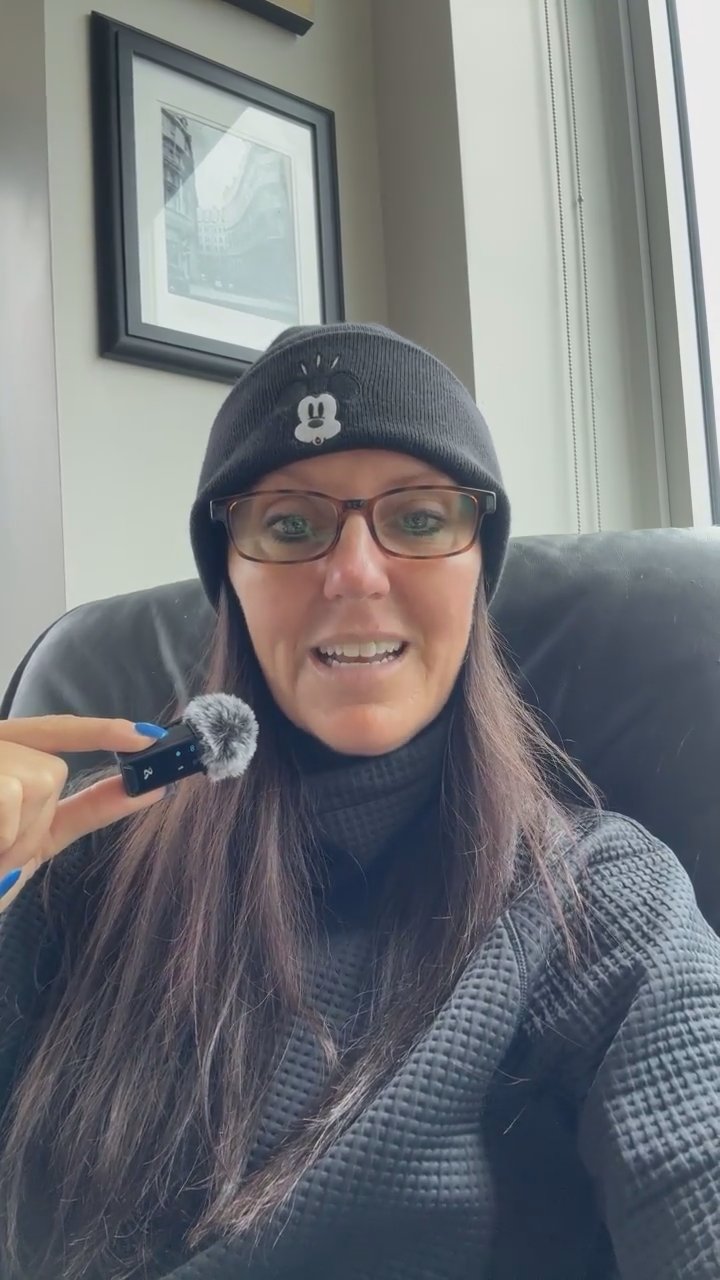
Happy Monday. I'm testing a new microphone. When you dial in, I'd love to hear if you can hear me. If not, I'll put my headphones back in. Happy, happy Monday.
As you dial in to listen live, or if you're on replay, I'm going to invite you to do one quick thing. An action and a commentary. Just take up a long, slow inhale, pause for a second, and exhale real slow. Use breath often, especially in my work speak Wonder.
The topic for today is igigai, and it's around purpose. It really boils down to living with purpose. There are different key components. How we can apply them in personal lives and professional lives.
By practicing breath, it allows me to connect back into my body and diffuse some of the emotion. My purpose is to help create positive change. Sometimes we need to lean into those moments, find new ways to work through those moments.
Rick Steves: What is your purpose? Type it here. My purpose is to create positive change. I love this to equip and encourage people to plan to be your best as you navigate pain.
Jules I love helping and encouraging people. Is that all change? Yeah, I think so. Here's my little challenge for you. Do you love helping, encouraging all people for all things. Sometimes maybe you need to fine tune it and sometimes you don't. Only you will know.
Our purpose can sometimes interfere, get in the way, which might cause us to need to take a step back and breathe. How our purpose can ground us in decisions that we make moving forward. We can bump our purpose against all areas of our life. We are learning about ikigai Japanese methodology for having purpose and living along life.
I hope that you have one step today that feels strong and powerful. If you have a step that takes you backwards, you remember that it's an opportunity for you to grow and learn. We'll see you soon.
Happy Monday, everybody. I'm trying this new little microphone, so when you dial in, I'd love to hear if you can hear me. If not, I'll put my headphones back in. Hanging out for just a hot second on this Monday as people dial in. Excited to be here with you guys and just holding some space and time. Hi, Jules. I'm testing a new microphone. Hi. Speak Wonder, will you let me know if you guys can hear me? Okay. And if not, then I'll put my headphones in if it seems really super quiet. Happy, happy Monday.
So as you're calling in live, or maybe you are dialing in remote on a replay later, like to hear that the sun is coming out. Okay, good. It sounds good. Yay. Oh, my goodness. Okay, great. I am testing a new microphone, so if you ever want a new microphone, let me know. I have one now for you. And I take feedback really well and I had some issues with my headphones, so I thought I'd try a new option. And here we are. And it's kind of cute. It looks like a little, like, bunny rabbit cottontail. Anyway, so Happy Monday.
As you dial in to listen live, or if you're on replay, I'm going to invite you to do one quick thing. An action and a commentary. So the action I'm going to invite you to, eyes open or close, just take up a long, slow inhale, pause for a second, and exhale real slow. What does that feel like in your body when you just take a pause and breathe? Now, I'm going to use that breath in part of my example today as we get started and before we kick into our real topic. Jules, you woke up to snow. It is cold and windy here today.
We are almost in spring. But just remember that snow is a different form of water. So it really is April showers. So when we come in and we take a breath, I use breath often, especially in my work speak Wonder. It says it feels good. Ever notice those days that you're sitting in a meeting and you're super passionate about a topic? Or on the other end of the spectrum, somebody is talking over you and you feel annoyed and dejected even from. From that conversation? So I use breath in those moments as much as possible, but I try to not make it as dramatic as the breath that I do when we dial in so I can create an example, set an example for you.
But oftentimes what I'll do when I'm in different situations, especially last week, I was in a meeting. And I am extremely passionate about change and Creating the best experience for employees and for my clients. So one of my hats that I wear as a consultant is change management. So I design strategies and I write communications, facilitate meetings to take people through change and sometimes large scale transformations. And we were creating a SharePoint site, so. So when you think about your company, if you're working currently, you can go out to like your Internet, whatever, maybe it's Google Chrome or Safari or Edge, whatever it is for you.
And that main screen that pops up is your organization's homepage. We're building one of those. It's a small company, they've never had anything like this before. And the other person that I'm working with has a really hard time listening, actively listening, because she is very passionate about what she does, but also has kind of a mindset sometimes that she's always right now, I love this person. We have this conversation. I would say the same things to her face that I'm saying right now. So I'm not talking behind her back.
We actually laugh about it often. And sometimes when we're sitting in meetings, I have to turn to her and say, I need you to stop. You need to hear my whole thought before you can react because you're going down the wrong direction. But on this particular day, we were with our other colleague who happens to be our client boss. So I'm a consultant, she's a consultant, and we have a boss. We'll call my consultant friend Amy and we'll call our client boss, Jackie. Keep it simple. So Jackie, our boss, had a lot of ideas and was getting extremely frustrated.
You could tell she'd put her hands in her head, her head in her hands. She was getting really short with her words. And my consultant partner, Amy just kept talking and I had things to say and interject, but I just couldn't do it. So I would take breaths and then I would take a sip of water. Because every time I took a sip of water, just that simple act of taking a sip of water allowed my body to simply reset. I went through a 90 minute period of time, two 24 ounce bottles of water. That was a lot of breathing and a lot of listening.
And after the conversation, I had a debrief with my client boss and asked her how she felt that went and she was extremely frustrated. And I then went to my consultant partner and asked her the same questions. And she also felt very frustrated. And so what I did in that moment is I helped us design a set of working norms and ways in which we could just work differently so that when we're talking about things or topics that we're really passionate about, we can have a white flag moment, take a pause, go get snacks, come back, reset if we need to so that that doesn't happen again.
Now, the topic for today is igigai, and it's around purpose. And so I started off with that story of breathing and then the story of how I use breath in tense situations and sometimes drink water and using that water as a way to deflect my emotion. Because I can focus on drinking the how it feels as it's moving through my body, has it feel as it enters into my stomach, I can focus on that which allows me the opportunity to reset my system. Because here's what I know. My purpose is to create forward movement, forward progress.
I am passionate about creating positive change, and I am passionate about lifting people up and helping them move forward. Now, why is this important? Yesterday, if you listened in on my live conversation, I talked about igigai, which is a philosophy in Japan, and it really boils down to living with purpose. And there are different key components. And I'm going to start talking about each of these components and how we can apply them in personal lives and professional lives. So when I understand what my purpose is, and a purpose could be simply what is my purpose in this meeting?
So the meeting that I was sharing with you, my purpose was to do two things. It was to do an overview with our client of the work that we had accomplished. Because I knew that my client and my consultant colleague were not seeing eye to eye and I was the mediator. My purpose in that meeting was to also mediate and ensure that we met our objectives. But sometimes that requires me to suspend some of my own judgment and also suspend some of my own emotion. So by practicing breath, it allows me to connect back into my body and diffuse some of the emotion, some of the thoughts that are transitioning in my mind by drinking the water, a tactile, active movement, one, I'm nourishing my body, I'm hydrating my body, which also means I'm hydrating my brain.
And our brain needs a lot of water so that we can think clearly. But also in that moment, it allows me to reset my emotions just enough so that I can listen to what's happening in this situation and I can do my purpose. And my purpose is to help create positive change. How might I do that if there's so much back and forth battling? I can't. So sometimes we need to lean into those moments, find new ways to work through those moments so that we can continue to do what our mission is, what our job is.
And in this moment, my job is to think about every stakeholder in this company. This company is a small company. There's only 30 people. They've been around for 75 years and they're family owned. And all of the things that we're implementing a technology for them to set goals, a new intranet site that they never had before so they can quickly access resources. I need to take into consideration 31 people's perspectives, how they may or may not embrace this change and ensure that my client boss looks amazing because she's the one who's investing a lot of money and a lot of time to create these changes.
And my job is to help her lift up, challenge her when the perspectives might seem askew, or challenge her when some decisions might be passionate decisions, but maybe not the best decisions for the team or the organization. And to help make sure that when she's paying for our consultant's time, she's getting the value that she's looking for. That's my purpose. But I also love it. I love walking into sticky situations and creating a clear path forward. I love chopping down the weeds. I love seeing what's in the roots.
I love watching the flowers blossom from all of the work that we've created together and the positive impact it's going to have. But I recognize that we can't get there without some tough conversations first. That is my purpose. So my question to you, I would love if you would type in the chat a phrase, a few words. Whether it's work related, if you're actively employed, whether it's life related, if you're in job transition or on a leave or retired. What is your purpose? Type it here. And if you don't know, that's okay.
Because sometimes it requires us to do some exploration. It requires us to do some start stops and fails. I don't really like the word fail. It's just learning opportunities. We don't ever really fail. We just learn and pivot. So what might that be for you? And how might your purpose help you align with showing up just a little bit differently today or communicating in a slightly different way today? What's your purpose? So as I mentioned, my purpose is to create positive change. I do that in coaching.
I do that in, in my consultant work. I do that when I lead spin classes. I do that when I lead sound bath meditations. When I'm looking for classes to take, I always bump against my purpose. What's my why before I sign up for the course. And let's be clear, I sign up for courses a lot and sometimes I start the class or certification or whatever it is and I get a little bit in and I'm like, ah, this isn't exactly what I thought it was going to be. So I'll finish it and I'll glean a couple of things.
Or maybe I won't. Maybe I'll give someone else that might need my password instead and give it to somebody on my team and they can grow Rick I love this to equip and encourage people to plan to be your best as you navigate pain. How beautiful is that? It's crystal clear. Plan to be your best. I can attach to that. I can feel that as a human as I navigate my plan that is very giving. Helping me to navigate, helping me to understand what a great purpose. Rick thank you for sharing. Jules I love helping and encouraging people.
I Amazing. Here's my little challenge for you. Do you love helping, encouraging all people for all things or do you love helping and encouraging them for a specific thing and there's no wrong answer? Sometimes we just need to have some of those questions so we can fine tune a little bit. I know I love helping people navigate change. Is that all change? Yeah, I think so. I love when people have a new idea when they want to start a new company. I love when they want to start a new fitness plan. I love when they want to create a change that might require them to let something go to begin something new.
I love working with clients that are going through messy changes because sometimes in the mess it's really hard to create a path. But you can always chop down one weed at a time to move forward. So really doing a litmus test against what your purpose is and sometimes maybe you need to fine tune it and sometimes you don't. Only you will know. So in this beautiful day, we checked in on a few things. We started off taking a deep breath. I gave you an analogy around drinking water. Sometimes when you're in tense conversations to help deflect emotions so you can stay grounded and present and maybe not speak when you're waiting for the right moment versus reacting to a moment.
And we talked about purpose and how our purpose can sometimes interfere, get in the way, which might cause us to need to take a step back and breathe. But how our purpose can ground us in decisions that we make moving forward for job opportunities, for speaking engagements, for job transitions, promotions. We can bump our purpose against all areas of our life. So as we continue our conversation and are learning about ikigai Japanese methodology for having purpose and living along life. I give that one to you today.
I hope you have the best day. I'm proud of you for showing up today. I love you with all my heart. And I hope that you have one step today that feels strong and powerful. And if you have a step that takes you backwards, you remember that it's an opportunity for you to grow and learn. We'll see you soon.
Reactions and comments are for members. Joining is free and takes a minute.